Kentucky Safe Boating Certificate and the 1975 Birthdate Rule
There’s nothing quite like the feeling of being out on the water in Kentucky, whether you’re casting a line on Kentucky Lake, cruising Lake Cumberland, or zipping across the Ohio River. But before you fire up that engine, it’s crucial to understand the rules of the road – or rather, the rules of the water. Many seasoned boaters and newcomers alike get tripped up by Kentucky’s boating education requirements, especially the often-misunderstood "1975 Birthdate Rule." This comprehensive guide will clear up all the confusion, explaining who needs a Kentucky Safe Boating Certificate, why it matters, and how to get yours so you can enjoy Kentucky’s beautiful waterways safely and legally.
Understanding Kentucky's Boating Education Requirements
It’s easy to assume that if you know how to operate a boat, you’re good to go. But just like driving a car, operating a boat comes with responsibilities and specific legal requirements. Kentucky, like many states, has put regulations in place to ensure that everyone on the water has a basic understanding of safety and navigation. These aren't arbitrary rules; they're designed to protect you, your passengers, and every other boater enjoying our magnificent lakes and rivers.
The Core Purpose of the Safe Boating Certificate
At its heart, the Kentucky Safe Boating Certificate is about education and prevention. The goal isn't to make things harder for boaters, but to equip them with the knowledge necessary to prevent accidents, respond to emergencies, and be courteous to others. Think of it as a foundational course in waterway etiquette and safety protocols. It covers everything from basic navigation rules and distress signals to understanding different types of vessels and environmental responsibilities.
For instance, many boating incidents involve collisions or capsizing, which can often be mitigated or avoided entirely if operators understand right-of-way rules, safe speeds, and proper boat handling in various conditions. The certificate program dives into these practical aspects, giving you the tools to make split-second decisions that can mean the difference between a minor inconvenience and a serious tragedy. It also touches on vital topics like the dangers of boating under the influence and how to identify and react to hazardous weather, ensuring you're prepared for more than just smooth sailing.
Who Needs to Take the Course? The 1975 Birthdate Rule Explained
This is where a lot of the confusion usually begins, and believe me, you're not alone if you've scratched your head over this one! Kentucky's regulations specifically target younger operators to ensure they have formal safety training. The "1975 Birthdate Rule" is the linchpin of this requirement: anyone born on or after January 1, 1975, who operates a motorboat or personal watercraft (PWC) must possess a Kentucky Safe Boating Certificate. If you were born before that date, you are generally exempt from this mandatory education requirement, although taking a course is still highly recommended for anyone who wants to brush up on their skills or learn new ones.
This rule means that if you're a younger angler hitting the waters of Barren River Lake in your bass boat, or a teenager enjoying a PWC on Lake Barkley, you absolutely need to have that certificate. It doesn't matter if you've been boating since you were in diapers; the law is clear. It's not about your experience, but about fulfilling a specific legal requirement designed to enhance overall safety on Kentucky's waters. For specific details on who needs this, you might find more clarity in Who Needs a Boating Education Card in Kentucky or Do You Need a Boating Certificate If You Were Born After 1975 in Kentucky?.
Navigating the 1975 Birthdate Rule
Understanding the letter of the law is one thing, but truly grasping its implications and how it applies to your specific situation is another. The 1975 birthdate rule isn't just a random date; it's a marker set to impact future generations of boaters.
The "Why" Behind the 1975 Cutoff
Why January 1, 1975? Well, many states adopted similar age-based boating safety education requirements around that time or in the years following, aiming to reduce boating accidents through increased operator knowledge. The idea was to mandate formal training for operators who were generally younger and might not have grown up with the same level of informal boating education or long-standing family traditions on the water that older generations often had. By setting a cutoff, it created a clear line in the sand for future boaters.
This rule helps ensure that every new generation of boaters entering the scene is equipped with a baseline understanding of safety, navigation, and emergency procedures. It's a proactive measure, acknowledging that as boating becomes more accessible and popular, formal education becomes even more critical for maintaining safe waterways for everyone. It's about building a culture of safety from the ground up, one certificate at a time.
Scenarios: Does This Rule Apply to Me?
Let's break down a few common scenarios to make it super clear:
- Scenario 1: You're 35 years old and driving a fishing boat. Since you were born after January 1, 1975 (e.g., in 1989), yes, you absolutely need the certificate. Even if you're just putting around in a small jon boat with a trolling motor, if it's considered a motorboat, the rule applies.
- Scenario 2: Your father is 60 and operates a pontoon boat. If he was born before January 1, 1975 (e.g., in 1964), he is exempt from the mandatory certificate requirement. However, it’s always a good idea for any boater to periodically review safety guidelines.
- Scenario 3: Your 14-year-old child wants to drive the family PWC. Yes, they definitely need the certificate. In Kentucky, anyone under the age of 12 is generally prohibited from operating a motorboat over 10 horsepower or a PWC, even with a certificate. But once they hit the eligible age and are born after the cutoff, the certificate is a must. For more on this, you can check out Kentucky Life Jacket Rules for Personal Watercraft Riders.
- Scenario 4: You're from Ohio but fishing Kentucky waters. The rule typically applies to anyone operating a vessel on Kentucky waters, regardless of their state of residency, if they meet the birthdate criteria. Always check reciprocity rules, but generally, Kentucky's safety education requirements apply to non-residents, too.
Remember, ignorance of the law is no excuse. A game warden on Kentucky Lake or the Ohio River will be checking for these certificates, just like they check for your Kentucky Fishing License Guide. It's your responsibility to ensure you and anyone operating your vessel are properly certified.
How to Obtain Your Kentucky Safe Boating Certificate
So, you've figured out that you need the certificate. Great! Now, let's talk about the easiest and most convenient ways to actually get it. The good news is that the Kentucky Department of Fish and Wildlife Resources (KDFWR) has made the process relatively straightforward, offering flexible options to fit different schedules and learning preferences.
Online Course Options and What to Expect
For many busy individuals, online courses are a game-changer. They offer the flexibility to learn at your own pace, from the comfort of your home, whenever it suits your schedule. Several approved online providers offer comprehensive boating safety courses that fulfill Kentucky's requirements. These courses are typically interactive, featuring modules on topics like navigation rules, aids to navigation, emergency procedures, environmental responsibilities, and specific Kentucky boating laws.
You'll usually go through several chapters, often with quizzes along the way to test your understanding, before taking a final exam. Once you pass the exam, you'll receive your certificate. Look for courses approved by the National Association of State Boating Law Administrators (NASBLA), as these are generally accepted in Kentucky. Many people find these online courses through a quick search, or sometimes directly from the KDFWR website. Some might even find relevant study guides or materials on platforms like Amazon if they prefer to read offline before taking an online test. The convenience of these options means there's really no excuse not to get certified if you need to be.
In-Person Classes and Hands-On Training
While online courses are fantastic for flexibility, some people prefer the structure and direct interaction of an in-person class. These courses are often taught by certified instructors, sometimes through local marinas, boating clubs, or even the U.S. Coast Guard Auxiliary and the U.S. Power Squadrons. The benefits here are clear: you get to ask questions in real-time, engage in discussions with other boaters, and sometimes even benefit from hands-on demonstrations or practical advice tailored to local Kentucky waterways.
These classes typically run over a few days or weeks, depending on the schedule. They can be particularly beneficial for those who learn best in a traditional classroom setting or who want the opportunity to network with other boaters in their community. Check the KDFWR website or local boating organizations for a schedule of upcoming in-person classes near you. These courses ensure that beyond just passing a test, you truly internalize the critical safety information.
Receiving and Carrying Your Certificate
Once you successfully complete an approved course and pass the final exam, you'll be issued your Kentucky Safe Boating Certificate. This isn't just a piece of paper you can tuck away and forget about. When you're out on the water, you need to have proof of your certification readily available. This means carrying the physical card with you, or at least a clear digital copy on your phone or other device, that you can quickly present to a game warden or law enforcement officer if requested.
Imagine being stopped on Lake Cumberland for a routine safety check. The warden will typically ask for your fishing license, boat registration, and, if applicable, your safe boating certificate. Fumbling around or admitting you left it at home won't cut it. Just like your driver's license, it needs to be with you. It’s part of your Kentucky Boating Safety Gear Checklist and shows you’re a responsible boater. If you lose your card, there’s usually a process to get a replacement, often through the same organization that issued your original certificate.
What Vessels Are Covered by the Rule?
The "1975 Birthdate Rule" doesn't apply to every single vessel on the water. It's specifically aimed at types of boats that pose a higher risk due to their speed, maneuverability, or engine power. Clarifying this can save you a lot of confusion, especially if you dabble in various water sports or fishing methods.
Motorboats and Personal Watercraft (PWCs)
The primary targets of this regulation are motorboats and personal watercraft (PWCs). A motorboat is generally defined as any vessel propelled by machinery, regardless of horsepower. This means your bass boat, pontoon boat, runabout, or even a small johnboat with an outboard motor, all fall under this umbrella if you were born on or after January 1, 1975. The more powerful the boat, the more critical this certification becomes, as higher speeds mean less time to react to hazards.
Personal Watercraft (PWCs), like Jet Skis (a common brand name for PWCs, though there are others), WaveRunners, or Sea-Doos, are also explicitly covered. These vessels are known for their speed and agility, and their operators require specific training to ensure safe use, especially around swimmers, other boats, and shorelines. In fact, PWC operation often has additional rules beyond general motorboat operation, making the certificate even more vital for these craft. You'll find specific details related to PWC operators in Kentucky Boating Certificate for PWC Operators.
Exceptions and Unregulated Vessels
It's important to know what isn't covered. Generally, the following are exempt from the mandatory certificate requirement, though basic safety knowledge is always a good idea:
- Vessels powered solely by sail: If your sailboat doesn't have an auxiliary motor or you're not using it, you're typically exempt.
- Canoes, kayaks, paddleboards, and rowboats: Human-powered vessels are generally not subject to the motorboat education requirement. However, if you attach even a small electric trolling motor to your kayak for fishing on Taylorsville Lake, and you meet the birthdate criteria, you'd likely need the certificate. This is a common oversight for kayak anglers!
- Boats less than 10 horsepower: While the general rule is "motorboats," some states have exceptions for very low horsepower vessels. Always double-check current Kentucky regulations, but generally, if you're operating any motorboat (regardless of horsepower) and were born after 1975, the certificate is required. The key is "motorboat," not just "powerful motorboat."
- Vessels operating solely on private lakes or ponds: If you're fishing on your own private pond, far from public waterways, the state's boating education requirements usually don't apply. However, if that private pond is large and accessible by multiple property owners, or if it connects to a public waterway, the lines can blur. For clarity on private pond rules, you can refer to Kentucky License Rules for Fishing Private Ponds.
It's easy to make assumptions, especially when you're just getting into a new type of boating. Always err on the side of caution and ensure you're compliant, rather than facing a potential fine or, worse, being involved in an accident without proper certification.
Here’s a quick overview to help clarify who needs what:
| Birthdate | Operates Motorboat/PWC | Needs Certificate? | Additional Notes |
|---|---|---|---|
| Before Jan 1, 1975 | Yes | No (but recommended) | Exempt from mandatory education. |
| On or After Jan 1, 1975 | Yes | Yes | Mandatory for all motorboats and PWCs. |
| Any Birthdate | Human-powered only (kayak, canoe, rowboat) | No | No certificate needed for non-motorized vessels. |
| Any Birthdate | Under 12 years old | No | Generally prohibited from operating larger motorboats/PWCs. |
The Importance of Boating Safety Beyond Certification
While getting your Kentucky Safe Boating Certificate is a crucial step towards legal and responsible boating, it's really just the beginning of a lifelong commitment to safety on the water. The certificate provides the foundational knowledge, but true safety comes from continuous practice, awareness, and adherence to all boating regulations.
Essential Safety Gear and Practices
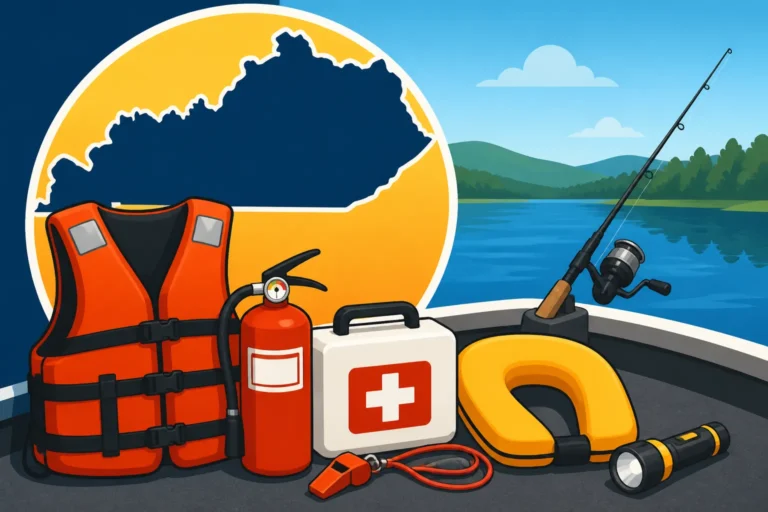
Having the right gear isn't just about complying with the law; it's about preparedness for the unexpected. Every boat, regardless of size, needs certain safety equipment on board. For instance, having enough Coast Guard-approved life jackets for every person on board is not just a good idea, it's the law. This is especially critical for children under 12, who have specific requirements in Kentucky. You can dive deeper into this at Life Jacket Rules for Boats in Kentucky or Kentucky Life Jacket Law for Kids Under 12.
Beyond life jackets, consider what other items you should have in your boat, much like a well-stocked tackle box from Bass Pro Shops or an essential outdoor kit from Amazon. A whistle or horn for sound signals, a fire extinguisher if your boat has an enclosed engine, navigation lights for dusk or nighttime operation, and a throwable flotation device are all standard requirements. Furthermore, always file a float plan with a trusted contact, let someone know your itinerary, and check the weather before you depart. These simple practices, though not always mandatory by law, dramatically increase your safety margin.
Staying Informed on Kentucky's Boating Laws
Boating laws, like fishing regulations, can sometimes change. What was permissible last year might have a new caveat this season. Being a responsible boater means staying proactive about these changes. The Kentucky Department of Fish and Wildlife Resources (KDFWR) is your best resource for the most up-to-date information on boating laws, registration requirements, and safety guidelines. Regularly checking their official website or picking up a copy of their annual fishing and boating guide will keep you informed.
Participating in boating clubs or online forums can also be a great way to stay connected to the boating community and learn about local nuances or newly implemented rules. Remember, your safe boating certificate is a testament to your initial education, but continuous learning and vigilance are what truly make you a safe and exemplary boater on Kentucky's beautiful waters. Enjoy your time on the water, but always with safety and responsibility at the forefront of your mind.
Disclaimer
This article is for general informational purposes only and does not constitute professional advice. Laws, prices and regulations vary by location and change over time. Consult a qualified professional for guidance on your specific situation.