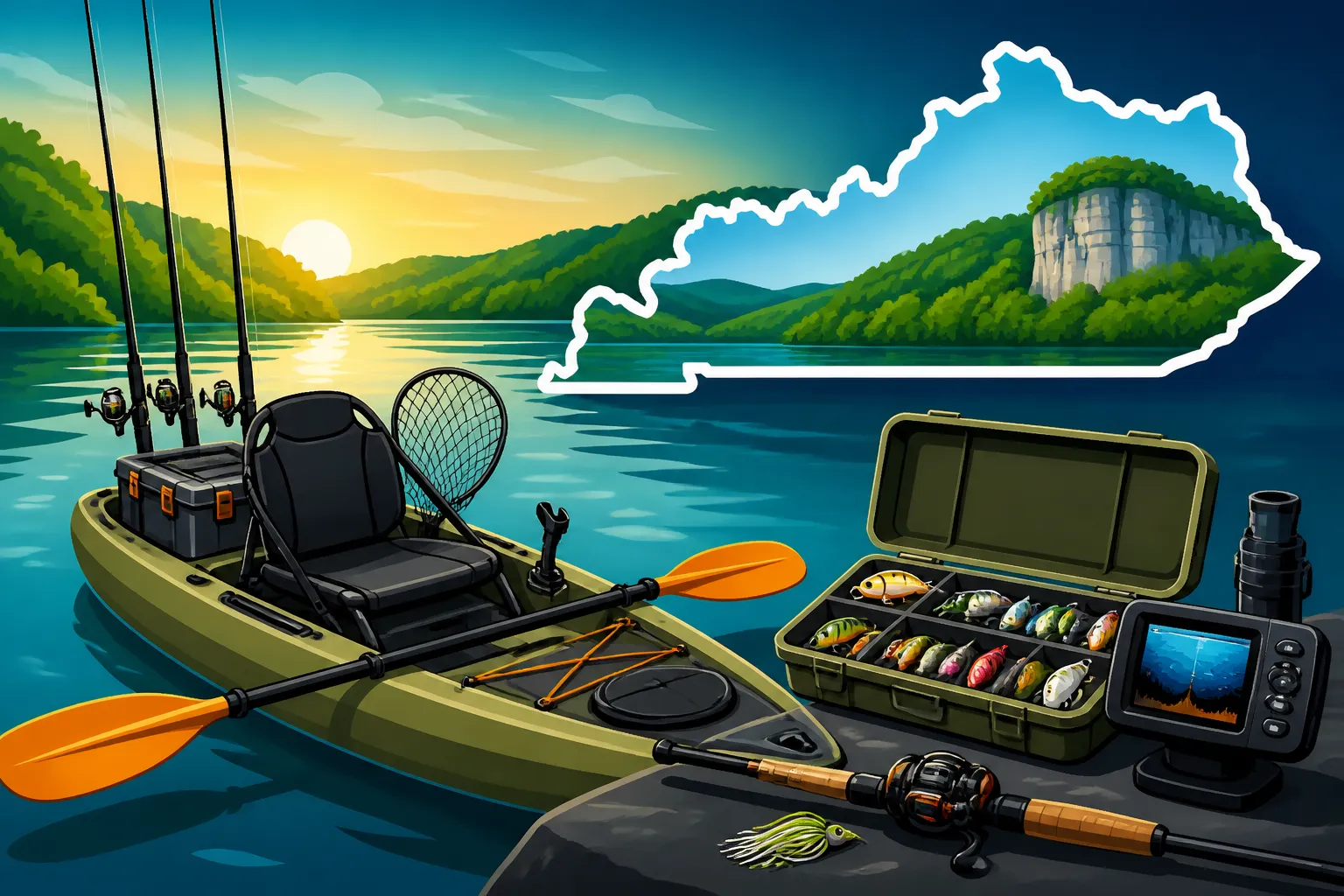
Kayak Fishing Gear for Kentucky Lakes
For many anglers, the lure of Kentucky's stunning lakes and rivers is strong, but the thought of navigating large boats, dealing with launch ramps, and the sheer cost can feel overwhelming. If you've ever yearned to access those quiet coves, explore lily pad fields, or stalk the shallows where bigger boats simply can't go, then kayak fishing is your answer. This guide is all about equipping you with the right gear to transform your Kentucky fishing dreams into a quiet, efficient, and incredibly rewarding reality on the water.
Why Kayak Fishing is a Game Changer on Kentucky Lakes
There's something uniquely satisfying about propelling yourself across a serene Kentucky lake, feeling completely connected to the water, and knowing you can slip into spots untouched by larger vessels. Kayak fishing isn't just a trend; it's a philosophy that offers unparalleled access and an intimate angling experience that's hard to beat.
The Unique Advantages of a Kayak on Kentucky Waters
One of the biggest draws of kayak fishing is its stealth factor. Imagine silently gliding along a tree line on Lake Barkley Fishing Guide for Kentucky Anglers or creeping up on a bass hiding in the submerged timber of Herrington Lake Fishing Guide, Kentucky's Deep Water Bass Lake. The minimal draft and quiet paddle strokes of a kayak mean you can approach fish without spooking them, often getting much closer to the action than a roaring outboard motor ever could. This stealth isn't just about silence; it's also about vibration. Larger boats send out a lot of underwater vibration that fish can detect, whereas a kayak leaves a much lighter footprint.
Beyond stealth, kayaks offer incredible access. Those skinny backwaters, shallow creeks, and overgrown coves that are impossible for bass boats or pontoon boats become your personal playground. You can easily navigate over submerged logs, through narrow passages, and right up to the bank where trophy fish often lurk. This access opens up countless new fishing opportunities, allowing you to explore parts of Kentucky's diverse waterways that remain largely unfished. It’s also much easier to launch a kayak from almost any shoreline, bypassing crowded boat ramps on busy weekends.
Finally, there’s the physical engagement. Kayak fishing is an active sport. Paddling to your spot, maneuvering around structure, and battling a feisty fish all contribute to a truly immersive outdoor experience. It's a fantastic way to combine your passion for fishing with a bit of exercise and enjoy the natural beauty of Kentucky from a unique perspective.
Common Challenges and How Gear Helps Overcome Them
While the advantages are many, let's be realistic – kayak fishing isn't without its challenges, especially on some of Kentucky's larger, wind-prone lakes. The good news is, with the right gear, you can effectively mitigate these hurdles and enjoy a safe, productive day on the water.
One major concern for many new kayak anglers is stability. Nobody wants to feel tippy, especially when you're trying to cast or land a fish. Modern fishing kayaks are designed with stability in mind, featuring wider hulls and sometimes even pontoon-like structures. But beyond the kayak itself, specialized outriggers can be added for extra stability, allowing you to stand up and cast with confidence, even on choppier days.
Storage is another common challenge. Unlike a traditional boat with multiple compartments, a kayak has limited space. This means every piece of gear needs to be thoughtfully selected and organized. This is where clever tackle management systems, dry bags, and integrated storage options become invaluable. We'll delve into specific solutions that help you keep your essentials accessible without cluttering your limited deck space.
Current and wind can also be formidable foes, particularly on big lakes like Kentucky Lake: The State's Top Bass Fishing Destination or the Ohio River. Trying to hold your position while fighting a fish or making a precise cast can be frustrating. This is where a good anchoring system, such as a drag chain or a stake-out pole, becomes a game-changer. For those who frequent windy areas or cover long distances, pedal-drive kayaks or even small electric motors can provide hands-free propulsion, allowing you to maintain your position or troll without constantly paddling. The right gear truly empowers you to overcome these natural forces and focus on the fishing.
Choosing the Right Kayak for Kentucky's Diverse Waters
Selecting the perfect kayak is perhaps the most crucial decision you'll make in your kayak fishing journey. Kentucky offers such a variety of waterways – from vast, open reservoirs to winding rivers and serene ponds – that considering your primary fishing grounds is key.
Sit-on-Top vs. Sit-Inside Kayaks for Anglers
When it comes to fishing kayaks, the main distinction you'll encounter is between sit-on-top (SOT) and sit-inside (SINK) models. Each has its devotees, and for good reason, depending on your priorities and the type of fishing you plan to do in Kentucky.
Sit-on-top kayaks are overwhelmingly popular among anglers, and it's easy to see why. Their open deck design offers excellent accessibility to gear, making it simple to grab a lure, manage your rod, or even unhook a fish without feeling cramped. Most importantly, SOTs are generally more stable than SINKs of comparable length, often featuring wider hulls. This increased stability is a huge advantage when casting, reeling in a heavy fish, or even standing to get a better vantage point. If you happen to capsize (which is rare in a stable fishing kayak), a SOT is much easier to re-enter from the water. They also have scupper holes that allow water to drain, so you won't be sitting in a puddle after a wave washes over. For fishing the big, open waters of Kentucky Lake or Lake Cumberland: Kentucky's Best All-Around Fishing Lake, where a bit of chop is common, a stable SOT offers peace of mind.
Sit-inside kayaks, on the other hand, offer a more traditional paddling experience. You sit lower in the boat, which can feel more secure and offers protection from the elements, like wind and spray. They tend to be faster and track straighter, making them efficient for covering long distances, especially on calmer rivers or smaller lakes. However, accessibility to gear is more limited, and re-entry after a capsize can be more challenging without proper technique. While not as common for dedicated fishing, a SINK can be a great option for minimalist anglers targeting quiet streams or small, protected lakes where speed and maneuverability are prioritized over stability and open deck space. For instance, if you're exploring some of Kentucky's smaller, less-frequented creeks for panfish, a sleek SINK might be a comfortable choice.
Stability, Length, and Weight Capacity Considerations
Beyond the sit-on-top vs. sit-inside debate, three critical factors dictate a kayak's performance and suitability for fishing: stability, length, and weight capacity. Getting these right will directly impact your comfort, safety, and fishing success on Kentucky's waters.
Stability is paramount for kayak anglers. A stable kayak allows you to focus on fishing, not on balancing. Wider kayaks (typically 30 inches or more) and those with flatter hulls or multi-chine designs offer greater initial stability, making them feel solid underfoot when you're casting or reaching for gear. If you plan to stand and fish, look for kayaks specifically designed for standing, often denoted as "stand-up fishing kayaks" or having wide, flat decks. Always prioritize stability, especially if you're new to kayak fishing or will be tackling open, potentially choppy water.
Length plays a significant role in how a kayak performs. Shorter kayaks (under 11 feet) are generally more maneuverable and easier to transport and store. They excel in tight spaces like narrow creeks or densely vegetated coves. However, they tend to be slower and don't track as well in a straight line, meaning you might put in more effort to stay on course, especially in wind. Longer kayaks (12 feet and up) are faster, track straighter, and can cover more water with less effort. They are often better suited for larger lakes like Kentucky Lake where you might paddle long distances or need to handle waves. The trade-off is they are heavier, harder to turn, and can be more cumbersome to transport and store. For a good all-around fishing kayak in Kentucky, many anglers find a sweet spot around 12-13 feet.
Weight capacity is not just about your body weight; it's about everything you plan to bring with you. This includes your body weight, gear (rods, tackle, cooler, electronics, anchor), and any fish you might keep. Exceeding the kayak's stated weight capacity can compromise its stability, make it sit lower in the water, and severely impact its performance and safety. Always check the manufacturer's specified weight limit and give yourself a comfortable buffer. If you carry a lot of gear or are a larger individual, opting for a kayak with a higher weight capacity is a wise investment. You might find a great selection of high-capacity models suitable for Kentucky fishing at Bass Pro Shops.
Propulsion Methods: Paddles, Pedals, and Motors
How you move your kayak across the water greatly influences your fishing experience. While the traditional paddle is still the heart of kayak fishing, advancements have introduced pedal drives and even small electric motors, offering exciting new possibilities for Kentucky anglers.
Paddles are the classic and most fundamental propulsion method. They are simple, reliable, and require no additional mechanical parts to maintain. Learning efficient paddle strokes allows you to maneuver with precision, ideal for sneaking into tight spots or silently repositioning for a cast. For many, the rhythmic motion of paddling is part of the allure of kayak fishing. Always carry a reliable, lightweight paddle, even if you have other propulsion methods, as a backup. When choosing a paddle, consider its length (suited to your height and kayak width) and blade shape (larger blades for power, smaller for endurance).
Pedal-drive systems have revolutionized kayak fishing for many, offering a hands-free experience that is incredibly appealing. Systems like those from Hobie (MirageDrive) or Old Town (PDL Drive) allow you to propel the kayak using your legs, leaving your hands free for casting, reeling, or managing your tackle. This is a huge advantage, especially when trolling or trying to hold position against a current or wind. Imagine being able to cast to a schooling bass on Kentucky Lake while subtly pedaling to stay in range! Pedal drives are generally faster and more efficient for covering long distances than paddling, making them excellent for exploring larger lakes. The main drawbacks are increased cost, added weight, and potential maintenance of the mechanical parts. They also can't navigate as shallow as a paddle-only kayak, as the prop or fins need a certain depth.
For those who want even more power or plan to cover significant distances, small electric motors can be mounted to many fishing kayaks. These motors, often powered by a 12V battery, provide effortless propulsion, allowing you to cruise across expanses of water on Lake Barkley or fight strong currents on the Ohio River. They are especially useful for trolling multiple lines or when you need to quickly move from one fishing spot to another. Some kayaks come pre-wired for motors, while others require aftermarket mounting kits. Keep in mind that motors add significant weight, require battery management, and generally mean a higher upfront cost. Always check Kentucky Boat Registration Requirements Explained as motorizing your kayak may change its classification and require registration, even if it’s a small electric motor.
Essential Safety and Navigation Gear
When you're out on the water, whether it's a peaceful pond or a sprawling reservoir, safety should always be your top priority. Accidents can happen, and being prepared is key to enjoying your time kayak fishing in Kentucky.
Must-Have Safety Equipment for Every Trip
No matter how calm the water looks or how short your trip, certain safety items are non-negotiable. The most crucial piece of gear is a personal flotation device (PFD), or life jacket. You might think you're a strong swimmer, but cold water shock, unexpected currents, or a sudden capsize can quickly disorient anyone. In Kentucky, there are specific regulations, such as Kentucky Life Jacket Law for Kids Under 12, but it's wise for everyone on board to wear a Coast Guard-approved PFD at all times, not just have it stowed away. Choose one designed for paddling, as these are typically less bulky and allow for a full range of motion while casting and paddling.
Beyond your PFD, a whistle or other sound-producing device is essential for signaling distress or alerting other boaters to your presence, especially in fog or low light. Many PFDs come with an integrated whistle, but if not, attach one securely. For visibility, especially if you're fishing at dawn, dusk, or in busy areas, a 360-degree white light is required by law if you're on the water between sunset and sunrise. Even during the day, a bright flag or safety pole can make you more visible to larger boats, which might not easily spot a low-profile kayak.
Finally, communication is key. Always carry a fully charged cell phone in a waterproof dry bag. While it's not a substitute for proper safety, it can be invaluable for calling for help in an emergency or letting someone know your location. Consider also sharing your float plan with a trusted friend or family member, detailing where you're going and when you expect to return.
Navigation Tools for Staying on Course
Kentucky's lakes can be vast and winding, and it's surprisingly easy to get disoriented, especially on unfamiliar waters or when fog rolls in. Having reliable navigation tools is crucial to ensuring you can find your way to the best fishing spots and back to the launch.
A handheld GPS unit or a reliable GPS app on your smartphone can be a lifesaver. These devices show your current location, allow you to mark waypoints (like your launch spot or a productive fishing area), and often display bathymetric (depth) charts. Knowing the contours of the lake bottom can be incredibly helpful for finding structure where fish hold. Before heading out, download offline maps if using a phone app, as cell service can be spotty in some remote areas of Kentucky. Many anglers use compact, marine-specific GPS units that are rugged and waterproof, ensuring reliability even if they get wet.
Even with electronic navigation, always carry a physical compass and a local paper map of the lake as a backup. Batteries die, and electronics can fail. Knowing how to read a map and use a compass is a fundamental outdoor skill that could one day save you a lot of trouble. Familiarize yourself with prominent landmarks around the lake that can serve as visual reference points. For larger lakes like Lake Cumberland, detailed maps often show boat ramps and access points, which are good to know. You can often find excellent topographic maps or lake charts at outfitters like Bass Pro Shops.
Emergency Preparedness and Basic Repair Kits
While we hope for smooth sailing every time, preparing for minor mishaps or even bigger emergencies is just responsible angling. A little foresight goes a long way in turning a potentially bad situation into a minor inconvenience.
Every kayak should have a basic first-aid kit. This doesn't need to be elaborate, but it should contain essentials like band-aids, antiseptic wipes, pain relievers, and any personal medications. Fishing often involves sharp hooks, so being able to quickly treat a small cut or scrape is important. Keep it in a waterproof container, easily accessible but out of the way.
A small repair kit is also a wise addition. This could include a multi-tool with pliers, a knife, and screwdrivers, along with some heavy-duty duct tape (which can temporarily fix surprisingly many things) or specialized kayak repair tape. A small patch kit for punctures, if your kayak is inflatable, is also crucial. And speaking of punctures, an air pump is vital for inflatable kayaks. For hardshell kayaks, a small bilge pump or sponge is great for bailing out any water that accumulates in the hull.
Finally, and perhaps most overlooked by paddle-drive kayakers, always carry an extra paddle. If your primary paddle breaks, gets lost, or drifts away in a current, you don't want to be stranded. A breakdown paddle that separates into two or more pieces can be easily stowed on deck or in your kayak's hull. These are small investments that provide immense peace of mind.
Rods, Reels, and Tackle for Kayak Angling
The way you approach your rod, reel, and tackle selection for kayak fishing is a bit different than for traditional boat or bank fishing. Space is at a premium, and ease of use in a seated position becomes a significant factor.
Kayak-Specific Rods and Reel Setups
When you're confined to the cockpit of a kayak, the length of your rod suddenly matters a lot more. Long, unwieldy rods that are perfect for open casting on a bass boat can become a liability in a kayak, snagging on brush, interfering with your paddle stroke, or making it awkward to land a fish.
Many kayak anglers opt for slightly shorter rods, typically in the 6-foot 6-inch to 7-foot range. These lengths offer a good balance of casting distance and accuracy while being much more manageable for overhead casting and maneuvering around the boat. A medium-light or medium action rod is often preferred for its versatility, allowing you to effectively cast a variety of lures and handle different species, from crappie on Barren River Lake Crappie Size Limit in Kentucky to a feisty largemouth bass.
For reels, spinning reels are a popular choice due to their ease of use, especially for beginners or when fishing with lighter tackle. They are less prone to backlashing than baitcasting reels, which can be frustrating to deal with when you're trying to stay balanced in a kayak. However, experienced anglers often use baitcasting setups for heavier lures and more powerful fish, appreciating their accuracy and control. The key is to choose a reel that balances well with your rod and is comfortable to operate with one hand, as your other hand might be busy with a paddle or maintaining balance. Consider a compact, lightweight setup that won't add unnecessary bulk or strain.
Space-Saving Tackle Management Solutions
This is where kayak fishing really shines a spotlight on efficiency. You simply can't bring every tackle box you own. Smart, space-saving tackle management is essential to keeping your deck clear and your most-used lures within easy reach.
Traditional bulky tackle boxes are often too cumbersome for kayak fishing. Instead, look for soft-sided tackle bags or compact, waterproof tackle boxes designed for small boats or kayaks. These often feature multiple clear compartments, allowing you to quickly identify and access your lures without rummaging. The goal is to bring only what you need for that specific trip and target species. If you're targeting Kentucky Crappie Daily Limit Rules, you'll likely pack different jigs and minnow imitations than if you're chasing Kentucky Statewide Bass Size and Daily Limit Rules.
Many kayak anglers utilize a "milk crate" system – a plastic milk crate modified with PVC pipe rod holders and bungee cords to secure tackle trays. This provides an organized, elevated storage solution right behind the seat. Gear tracks, installed along the gunwales of your kayak, are another fantastic addition. These tracks allow you to mount various accessories like rod holders, fish finder mounts, and camera mounts, all without drilling permanent holes in your kayak. This modularity means you can customize your setup for each trip, optimizing your limited space. Check Amazon for a wide array of kayak-specific tackle storage and organization solutions.
Essential Baits and Lures for Kentucky Species
Knowing which baits and lures to pack can make or break a kayak fishing trip. Given Kentucky's diverse fish population, versatility is a good strategy.
For bass, which are abundant in almost all Kentucky lakes, a selection of soft plastics (worms, creature baits), spinnerbaits, and crankbaits will cover most situations. Soft plastics rigged Texas-style are incredibly effective for fishing around submerged timber and grass, common in lakes like Taylorsville Lake's Best Bass Fishing Spots. Spinnerbaits are great for covering water and triggering reaction strikes, while shallow-diving crankbaits can be deadly when retrieved over submerged vegetation or along rocky banks. Don't forget a topwater lure for exciting early morning or late evening bites.
Crappie are another popular target, especially during their spring spawn. Small jigs (1/16 to 1/8 ounce) in various colors (chartreuse, pink, white) are standard. Tipping them with a small minnow can be irresistible. A simple bobber-and-jig setup can be incredibly effective when fishing around brush piles or standing timber. For catfish, popular on the Ohio River and Kentucky Lake, cut bait, chicken livers, or prepared stink baits fished on the bottom are often the most productive.
Always remember that fishing conditions (water clarity, temperature, time of year) will dictate the most effective presentations. Pack a variety of colors and sizes, but don't overdo it. The key is to have enough options without overwhelming your limited storage space. Regularly check the Kentucky Fishing Seasons: What to Catch Each Month to help you decide which lures to bring.
Comfort and Convenience: Making Your Day on the Water Better
Kayak fishing can be an all-day affair, and your comfort directly impacts your endurance and enjoyment. A few thoughtful additions can transform a good trip into a great one.
Seating Upgrades and Ergonomics
The seat that comes with your kayak might be perfectly adequate for short paddles, but for hours of fishing, an upgrade can be a game-changer. Standard kayak seats often lack sufficient padding or back support, leading to aches and pains that cut your trip short.
Many modern fishing kayaks come with elevated, adjustable, stadium-style seats that offer excellent comfort and support. These seats often feature breathable mesh material, preventing that sweaty, uncomfortable feeling. The elevated position also offers a better vantage point for spotting fish and more comfortable leg positioning, reducing fatigue. If your kayak has a simpler seat, consider an aftermarket cushion or an attachable backrest with lumbar support. Even small improvements in ergonomics can make a huge difference over several hours on the water. Proper lumbar support is vital for maintaining good posture and preventing back strain, allowing you to cast and fish without discomfort.
Being able to adjust your seating position—whether it's sliding it forward or back, or adjusting the recline—can help you stay comfortable throughout the day as your body naturally shifts positions. Investing in a truly comfortable seat isn't a luxury; it's a necessity for serious kayak anglers who spend long hours pursuing their passion.
Storage and Organization Beyond the Tackle Box
We've talked about tackle, but what about everything else? From snacks to spare clothes, you need smart storage solutions to keep your gear dry, safe, and easily accessible without creating a cluttered mess.
Dry bags are your best friend in a kayak. These waterproof bags come in various sizes and are essential for protecting electronics (phone, keys, camera), spare clothing, and your lunch from splashes, rain, or an accidental dip. Even if your kayak has dry storage hatches, an extra layer of protection is always a good idea, especially for truly sensitive items.
Many kayaks feature bungee cord systems on the bow and stern, which are perfect for securing gear like your dry bag, a small cooler, or your extra paddle. Some also come with integrated storage hatches with waterproof lids, providing secure spots for valuable items. For larger items, a cooler specifically designed for kayaks or small boats is invaluable. Look for models that are slim and tall, or wider and shorter, to fit your kayak's deck space. These keep your drinks cold and your catch fresh. Remember, every item should be tethered or secured in some way; a sudden capsize or wake from a passing boat can send loose items overboard in an instant. Online retailers like Amazon offer a wide range of kayak-specific dry bags and coolers that are perfect for maximizing your space.
Weather Protection and Personal Comfort Items
Kentucky weather can be unpredictable, ranging from scorching summer days to crisp, cool mornings. Being prepared for the elements ensures your comfort and safety.
Sun protection is non-negotiable. Days spent on the water expose you to intense UV rays, which are reflected off the water, increasing your exposure. A wide-brimmed hat, sunglasses (polarized ones will also help you spot fish beneath the surface!), and plenty of high-SPF sunscreen are essential. Long-sleeved, breathable fishing shirts offer excellent protection without overheating.
Layering your clothing is always a smart strategy, especially for early morning trips when temperatures can be cool but quickly warm up. A waterproof, breathable jacket can protect you from sudden rain showers or a cool breeze. Consider bringing a small towel for drying hands or wiping down gear. Hydration is also paramount; always carry plenty of water or other fluids, especially on hot days. A reusable water bottle secured within easy reach is ideal.
Electronics and Advanced Kayak Fishing Gear
For many kayak anglers, taking their game to the next level involves embracing technology. Fish finders, specialized anchors, and portable power solutions can significantly enhance your ability to locate fish and precisely control your position.
Fish Finders and Transducer Mounting Options
A fish finder is a powerful tool for any angler, and kayak anglers are no exception. While you might not have the large screens and elaborate systems of a bass boat, compact, portable fish finders can give you invaluable insights into what lies beneath your kayak.
These units allow you to see depth, water temperature, bottom contour (structure), and, most importantly, fish. Understanding the underwater landscape – where ledges, humps, or submerged brush piles are located – can dramatically improve your success. Many popular brands offer "ice fishing" or "portable" versions that are perfect for kayaks, often running on small, rechargeable batteries. Look for units that offer CHIRP sonar for clearer target separation and even side-imaging or down-imaging if you want to identify structure more precisely.
Mounting the transducer (the part that sends and receives sonar signals) is a key consideration. Some kayaks have a dedicated scupper hole or a transducer mount built into the hull. Others might require an aftermarket mounting arm that attaches to a gear track, placing the transducer in the water beside the kayak. For a cleaner setup, many anglers choose an "in-hull" mount, where the transducer is glued inside the hull with silicone, shooting through the plastic. While this might slightly reduce signal clarity, it protects the transducer from damage and eliminates anything hanging off the side of your kayak. Learning How to Read a Fish Finder for Bass Fishing can elevate your kayak angling significantly.
Kayak Anchors and Positioning Systems
One of the most frustrating aspects of kayak fishing can be getting blown off your spot by the wind or pulled away by a current. A good anchoring or positioning system is vital for maintaining control and focusing on your fishing.
For calm, shallow water, a stake-out pole is a simple and effective solution. This is a long, rigid pole that you can push into the soft bottom to temporarily anchor your kayak. They are quiet, lightweight, and perfect for holding position in a lily pad field or along a shallow bank.
For deeper water or when facing more wind, a small traditional anchor (grapple anchor or folding anchor) with a short length of chain and anchor rope is necessary. Kayak anchors are typically much smaller and lighter than boat anchors, usually weighing between 1.5 to 3 pounds. An anchor trolley system is an incredibly useful accessory that allows you to move your anchor line from the bow to the stern of your kayak. This lets you position your kayak perfectly into the wind or current, optimizing your casting angles and preventing the kayak from swinging wildly. For very specific spot-holding or slow trolling, especially on larger, windy lakes, some kayak anglers even employ small micro-anchors or drag chains, which slow drift rather than fully stopping. These are useful for covering large areas efficiently. Best Anchors for Fishing on Kentucky Lake covers this in more detail.
Power Solutions for Electronics and Charging
Running a fish finder, charging your phone, or powering a small electric motor all require a reliable power source. Managing battery life is a crucial part of your advanced kayak fishing setup.
Most fish finders run on a small 12V sealed lead-acid (SLA) battery or a more lightweight lithium-ion battery. These batteries are typically stored in a dry bag or a waterproof battery box in your kayak. The size of the battery you need depends on the power draw of your electronics and how long you plan to be on the water. Many anglers carry multiple smaller batteries or a single larger one.
For charging phones, action cameras, or other small USB devices, a portable power bank is a convenient solution. These can be recharged at home and offer several full charges for your devices. Some kayak anglers even integrate small solar panels into their setup, especially for multi-day trips or for topping off smaller batteries while on the water. When installing any electronics, ensure all wiring is waterproofed and connections are secure to prevent corrosion and electrical issues. Understanding your power needs and having backup options will prevent frustrating dead batteries when you're far from shore.
| Kayak Gear Category | Essential Items | Benefits for Kentucky Anglers |
|---|---|---|
| Kayak Type | Sit-on-Top (SOT) Fishing Kayak | Offers superior stability, easier re-entry, and ample space for gear. Ideal for diverse Kentucky lakes, from vast reservoirs to intimate coves. |
| Safety Gear | PFD (Life Jacket), Whistle, Safety Flag/Light, Dry Bag for Phone, First-Aid Kit, Spare Paddle | Non-negotiable for personal safety on all waters. Ensures visibility, distress signaling, and emergency communication. Essential for navigating busy areas or unexpected conditions. |
| Propulsion | Lightweight Paddle, Pedal Drive (Optional), Electric Trolling Motor (Optional) | Paddle for quiet maneuverability and backup. Pedal drive for hands-free fishing, faster travel. Motor for long distances, fighting currents, trolling. |
| Tackle Management | Compact Soft-Sided Tackle Bag, Waterproof Tackle Boxes, Milk Crate System, Gear Tracks | Maximizes limited space, keeps lures organized and accessible. Prevents clutter and ensures quick lure changes. |
| Rod & Reel | 6'6" – 7' Medium Action Rods, Spinning or Baitcasting Reels | Manageable length for kayak casting. Versatile for various species. Balanced setups for comfortable, one-handed operation. |
| Navigation | GPS Unit/App, Physical Map, Compass | Prevents getting lost on large lakes, helps locate productive fishing spots, provides backup if electronics fail. |
| Comfort | Upgraded Seat/Cushion, Sunscreen, Hat, Polarized Sunglasses, Hydration | Prolongs fishing time by reducing fatigue. Protects from sun exposure and ensures comfort throughout the day. |
| Electronics | Compact Fish Finder, 12V Battery, Portable Power Bank | Locates fish and underwater structure. Powers electronics and charges devices, enhancing fishing efficiency. |
| Positioning | Small Anchor (Grapple/Folding), Anchor Trolley, Stake-Out Pole | Holds kayak on spot against wind/current, allows precise casting, and quiet shallow water anchoring. |
Disclaimer
This article is for general informational purposes only and does not constitute professional advice. Laws, prices and regulations vary by location and change over time. Consult a qualified professional for guidance on your specific situation.