Best Boats for Ohio River Catfishing in Kentucky
Navigating the mighty Ohio River for trophy catfish is an exhilarating pursuit, but it comes with unique challenges that can make or break your trip. Trying to tackle those powerful currents and unpredictable conditions in the wrong boat can turn a dream day into a frustrating or even dangerous experience. This guide is all about helping you understand what kind of vessel truly stands up to the demands of Ohio River catfishing in Kentucky, ensuring you’re equipped for safety, comfort, and success.
Understanding the Unique Challenges of Ohio River Catfishing
The Ohio River isn't your average placid lake or gentle stream. It's a powerhouse, a major waterway with its own distinct personality, and ignoring its quirks when choosing a fishing boat is a recipe for disappointment. Before you even think about boat types, it’s crucial to understand what you're up against.
The Mighty Current and Debris
Anyone who has spent time on the Ohio River knows its current can be relentless. It's not just a gentle push; it can be a powerful force, especially after heavy rains or when navigating near dams and locks. You'll often find yourself battling to hold position, trying to keep your lines in the strike zone without being swept downstream. This constant fight against the current demands a boat that can handle it without excessive strain on the motor or the angler. A smaller, underpowered boat might struggle to stay put, constantly drifting and forcing you to burn extra fuel just to maintain a stationary presence over a promising catfish hole.
Beyond the current, the Ohio River often carries a significant amount of debris. Logs, branches, plastic, and even larger objects can be found floating, especially during high water periods. This isn't just an inconvenience; it's a hazard. Your boat needs to be robust enough to withstand potential impacts, and its maneuverability is key to avoiding these underwater and surface obstacles. Imagine hooking into a monster blue catfish, only to have your line snagged on a submerged tree limb that your boat couldn't clear or easily avoid. It’s a common frustration that can be mitigated by choosing a vessel designed for such conditions.
Shallow Runs and Deep Holes
The Ohio River is a study in contrasts when it comes to depth. You have stretches of surprisingly shallow water, particularly in certain back channels, feeder creeks, and near sandbars, where a boat with a deep draft could easily run aground. Yet, just a short distance away, you'll encounter deep holes, scour marks, and structure that plummet to impressive depths, holding those massive blue and flathead catfish. A good catfishing boat for the Ohio needs to be versatile enough to navigate both extremes.
This means you need a boat that can handle varying depths without putting your prop or hull at risk. Many anglers want to explore those shallower, less pressured areas where catfish might be feeding, especially during certain times of the year. Simultaneously, when you're anchored or using a Trolling Motors for Kentucky Lake Bass Fishing in the main channel, battling a strong current, you need a stable platform that feels secure in deeper, often choppier water. The ability to glide over a shallow flat and then confidently drop anchor in a 50-foot trench is a critical advantage on this river system.
Weather Vulnerability and Exposure
The Ohio River is wide, often exposed, and can quickly turn from calm to chaotic with a sudden change in weather. A squall line can blow up quickly, bringing high winds, choppy waves, and heavy rain. Unlike a small, sheltered pond, there’s often nowhere to hide on the open river. Being caught in these conditions in an unsuitable boat isn't just uncomfortable; it can be downright dangerous. You need a vessel that instills confidence, one that feels substantial and safe when the weather turns sour.
This vulnerability extends to sun exposure in the summer, biting winds in the fall, and chilling spray in the colder months. While a hardy angler can endure a lot, a boat that offers some protection or can safely get you back to shore quickly is invaluable. Thinking about the long hours often spent catfishing, especially during Night Fishing Techniques for Catfish, a boat that minimizes your exposure to the elements and maximizes your safety when conditions inevitably change is paramount.
Key Boat Characteristics for Ohio River Success
Given the challenging environment of the Ohio River, certain boat characteristics rise to the top as non-negotiables for successful and safe catfishing. This isn't just about catching fish; it's about comfort and peace of mind on the water.
Stability and Freeboard
When you're wrestling with a fifty-pound blue catfish in a strong current, the last thing you want is a tippy boat that feels like it's going to capsize with every lunge of the fish. Stability is absolutely paramount on the Ohio River. This translates to a boat with a wide beam – the width of the boat – which provides a much more stable platform. A wider boat will cut through choppy water more smoothly, reducing the rocking and rolling motion that can be unsettling and make precise fishing difficult. Think about being able to move around the boat, land a large fish, or even reel in a snag without feeling like you're on a teeter-totter.
Equally important is freeboard, which refers to the height of the boat's sides above the waterline. High freeboard offers several key advantages. First, it provides a greater sense of security, especially when you're battling big fish and leaning over the side to net them. It acts as a barrier, keeping you and your gear safely inside the boat. Second, high sides offer crucial protection from waves and spray, keeping you drier and more comfortable during windy conditions or when other boat traffic creates wakes. Finally, and perhaps most importantly, in the event of rough water, higher freeboard makes the boat less likely to take on water, significantly enhancing safety. You'll thank those extra inches of freeboard when a rogue barge wake rolls by!
Power and Control
Fighting the Ohio River's currents requires more than just a boat; it demands adequate power. An underpowered boat will constantly struggle to maintain position, burn through fuel, and simply won't have the muscle to quickly get you out of a tight spot if needed. You'll want an outboard motor with sufficient horsepower to not only propel your boat upstream effectively but also to hold steady against the current while you're fishing. This doesn't necessarily mean the biggest engine on the market, but one that is appropriately sized for your boat's length and weight. A strong engine also allows for quicker runs to new spots, maximizing your fishing time.
Beyond raw power, precise control is essential. This often comes down to the steering system and, increasingly, advanced trolling motors. A responsive steering system allows you to navigate tight spots, maneuver around debris, and quickly adjust your position when a fish is on. For serious catfishing, a bow-mounted electric trolling motor with GPS capabilities, like those offered by Best Trolling Motors for Kentucky Lake Bass Fishing, can be a game-changer. These motors can automatically hold your boat in place against the current (a feature often called "spot lock" or "anchor mode"), freeing you up to focus entirely on your rods. This level of control means less effort spent on boat positioning and more time spent fishing, which is particularly valuable when you're anchored over a deep hole and waiting for that big bite.
Deck Space and Storage
Catfishing, especially for larger specimens, is a gear-intensive sport. You'll need ample deck space for multiple rods – often heavy-duty ones – bait buckets, coolers for your catch and refreshments, tackle boxes, landing nets big enough for monster fish, and perhaps even a portable grill for a shore lunch. A cramped boat is a frustrating boat, leading to tangled lines, tripping hazards, and general disorganization. Look for designs that prioritize an open, uncluttered deck layout, allowing you and your fishing partners to move freely and safely without constantly stepping over gear.
Dedicated storage is equally critical. This isn't just about keeping things neat; it's about protecting your valuable equipment and ensuring everything is accessible when you need it. Think about rod lockers that can accommodate longer catfishing rods, dry storage compartments for electronics and personal items, and dedicated spaces for life jackets and safety gear. A large, aerated livewell is also a must-have, not just for keeping live bait frisky but also for temporarily holding any legal keepers or even reviving a trophy catch before release. The ability to neatly stow away anchors, ropes, and other essential items means a safer, more enjoyable day on the water.
Top Boat Types for Ohio River Catfishing
When it comes to selecting the perfect vessel for battling those Ohio River cats, a few boat types stand out as consistent performers. Each has its own strengths and weaknesses, so understanding them is key to making the right choice for your specific needs and budget.
Aluminum Jon Boats (Modified V-Hull)
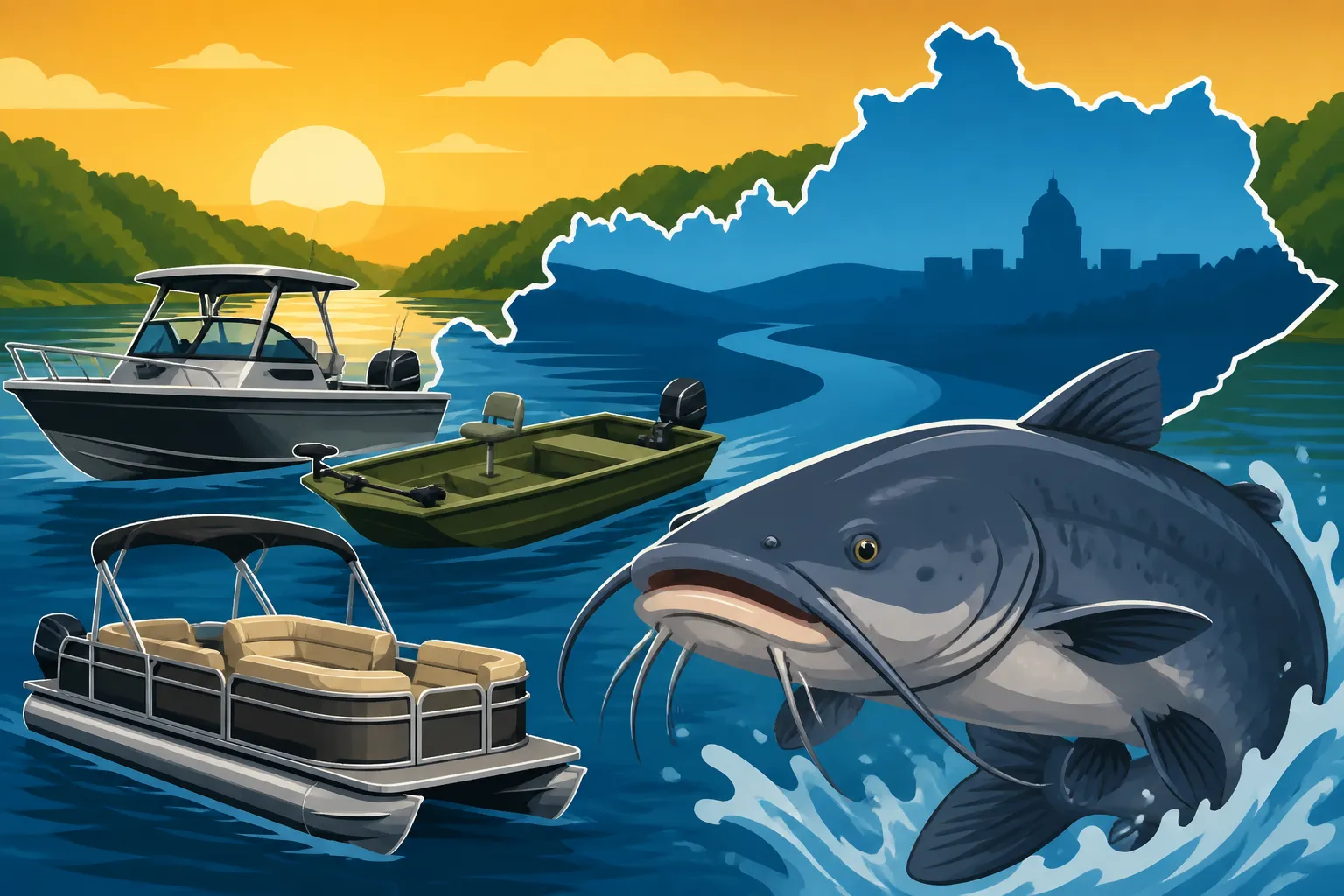
The classic aluminum jon boat is a common sight on many Kentucky waters, and for good reason. For Ohio River catfishing, however, we're talking about a modified V-hull jon boat, not the flat-bottomed models designed for very shallow, calm waters. The modified V provides a slightly softer ride than a pure flat bottom, helping to shed some of the chop you'll encounter on the river, though it's still not as smooth as a deep-V. These boats are known for their rugged durability, making them a fantastic choice for an environment where you might encounter submerged logs or bumpy bottom transitions. They can take a beating and keep on going, which is a major plus on a big river.
Their relatively shallow draft means they can access many of the shallower backwaters and feeder creeks where big catfish might be found, areas that larger, deeper-draft boats simply can’t reach. They are also generally more affordable than fiberglass alternatives, both in initial purchase and in ongoing maintenance. While they might offer less comfort in really rough conditions and can be wet in heavy chop, a well-outfitted, larger jon boat (18-24 feet) with a good outboard can be a very effective catfishing platform. You'll often see anglers customizing these with elevated casting decks, specialized rod holders, and advanced electronics. You can find many of the necessary customization parts and accessories, from heavy-duty rod holders to storage solutions, at places like Bass Pro Shops or on Amazon.
Center Console Boats
If you’re looking for a versatile, open-deck design that excels on larger bodies of water, a center console boat is an excellent contender for Ohio River catfishing. These boats feature the helm station (console) in the center of the boat, leaving ample open space both fore and aft for anglers to move around freely. This 360-degree fishability is a huge advantage when you have multiple lines out or when you’re fighting a fish that decides to run all around the boat. Visibility from the helm is also generally excellent, making navigation and spotting debris easier, which is crucial on the Ohio River.
Center console boats typically boast a deeper V-hull design, which allows them to handle choppy conditions with much more comfort and stability than a jon boat. They tend to offer a drier ride and feel much more secure when you’re out in the main channel or dealing with boat wakes. While often more expensive than jon boats, their robust construction and superior rough-water handling make them a popular choice for serious anglers who prioritize comfort and safety on big rivers. Many models come with large livewells, plenty of storage, and are rigged for powerful outboards, making them ready to tackle those trophy blue and flathead catfish.
Walleye/Multi-Species Boats
While named for walleye, these boats are often designed with versatility in mind, making them surprisingly well-suited for Ohio River catfishing. Walleye boats typically feature a deep V-hull that provides exceptional stability and a smooth, dry ride in rough water – perfect for the often-choppy conditions of the Ohio. They are built to cut through waves and handle big water, giving you confidence even when the weather isn't cooperating. This deep V-hull also makes them very stable when drifting or anchored, which is a huge plus when you're battling powerful catfish in a strong current.
These boats also come equipped with many features that translate perfectly to catfishing. They often have spacious cockpits, ample rod storage (including secure horizontal and vertical options), large aerated livewells (perfect for keeping big skipjack or shad frisky), and robust transoms designed for powerful outboards and heavy-duty trolling motors. The bow area often features a dedicated platform for a trolling motor and electronics. While they might not be able to navigate the absolute shallowest backwaters like some jon boats, their overall performance, comfort, and safety on the main stem of the Ohio River make them a fantastic choice for anglers targeting big catfish consistently. Best Boats for Ohio River Paddlefish Run are often similar in design.
Essential Features and Rigging for Catfishing Boats
Once you’ve got a boat type in mind, it’s time to think about the crucial features and rigging that turn a good boat into a great catfishing machine on the Ohio River. These are the elements that enhance your efficiency, safety, and overall success.
Rod Holders and Storage Solutions
Catfishing, particularly for trophy fish, means using robust rods and often having multiple lines in the water simultaneously. Standard bass boat rod holders often aren't up to the task of withstanding the brute force of a large blue cat hitting a bait in a strong current. You'll need heavy-duty, marine-grade rod holders that can be securely mounted to your boat, capable of holding your rods firmly even when a monster fish is attempting to pull them overboard. These are typically stainless steel or heavy-duty plastic, with adjustable angles to position your baits perfectly. Many anglers prefer flush-mount or rail-mount holders that can handle the stress of a big bite without bending or breaking.
Beyond the holders themselves, think about how you store your rods when not in use or when running between spots. Vertical rod holders on the console or gunwales keep rods accessible but out of the way, preventing tangles and damage. Dedicated rod lockers in the boat's floor or sides offer secure, protected storage for your valuable gear, especially when trailering or storing the boat. Consider how you'll organize your tackle as well. Custom tackle storage boxes, either built-in or readily available on Amazon, that fit neatly into compartments will keep your baits, hooks, weights, and tools organized and easily accessible. Nobody wants to be fumbling for a specific hook while a fish is busting the surface!
Livewells and Bait Systems
For serious catfishing, fresh, lively bait is often the key to success. This means having an effective livewell system onboard. A good livewell for catfishing needs to be large – much larger than what you might find on a typical bass boat – to accommodate multiple large baitfish like skipjack, shad, or even smaller panfish. It also needs excellent aeration and circulation to keep those baits alive and kicking for hours, even in warm weather. Look for wells that have rounded corners to prevent baitfish from bruising themselves, and adequate insulation to maintain a stable water temperature.
Some dedicated catfishing boats or custom rigs will even feature separate bait tanks specifically designed to keep a variety of baits lively. These might include additional pumps, oxygenation systems, or even chillers to ensure your bait is in prime condition. Imagine filling your livewell with a fresh supply of shad you just netted; a well-designed livewell ensures they stay vibrant and enticing, giving you the best chance at attracting a trophy cat. Ensuring your livewell is functioning perfectly is just as important as having the right rods and reels.
Electronics and Navigation
In the vastness of the Ohio River, good electronics aren't a luxury; they're a necessity. A powerful fish finder (sonar) is crucial for locating submerged structure – old riverbeds, rock piles, ledges, and drop-offs – where catfish love to ambush prey. Look for units with high-definition side-imaging and down-imaging capabilities, allowing you to scan wide areas and pinpoint exactly where those big cats are holding. Being able to "read the water" and identify prime feeding zones is a skill, but good electronics provide the eyes to do it effectively.
GPS navigation is equally vital. The Ohio River is full of subtle nuances, and being able to mark waypoints for productive spots, navigate safely through channels, and return to specific areas (especially when fishing at night) is invaluable. A reliable GPS unit will also help you understand how the current is affecting your drift or anchor position, allowing you to make precise adjustments. Many modern fish finders integrate GPS seamlessly. Furthermore, don't overlook the importance of a robust marine battery system to power all your electronics, trolling motor, and other accessories. Having a dedicated trolling motor battery bank separate from your starting battery is a common setup to ensure you never get stranded. For insights on specific gear, check out Best Fish Finders for Kentucky Lake and Lake Barkley which share many functional similarities with Ohio River needs.
Buying and Customizing Your Ohio River Catfishing Boat
Deciding on the best boat for Ohio River catfishing is a significant investment. Whether you're eyeing a brand-new vessel or a trusty used one, and regardless of your initial choice, there are always opportunities to tailor it precisely to your needs.
New vs. Used Boats
The choice between buying a new or used boat is often a balance of budget and features. A new boat offers the peace of mind of a warranty, the latest technology, and the ability to customize it from day one without worrying about previous owners' modifications. You know its history, and you typically get current model year improvements in design and efficiency. However, new boats come with a higher price tag and often depreciate quickly. For those with a healthy budget and a desire for cutting-edge features and maximum reliability, a new boat from a reputable dealer, perhaps even a specific manufacturer often stocked by Bass Pro Shops, is a fantastic option.
On the flip side, a used boat can be an incredible value, allowing you to get a larger or more feature-rich boat for your money. Many used boats have already had some depreciation, and you might even find one that's already rigged for catfishing. The downside is the unknown history; you'll need to be diligent with inspections, checking the hull for damage, the motor for maintenance records, and all electronics and systems for functionality. A pre-purchase inspection by a qualified marine mechanic is highly recommended. While you might not get the newest gadgets, a well-maintained used boat can provide years of reliable service and get you on those Ohio River cats without breaking the bank. Don't forget to understand the Kentucky Boat Registration Requirements Explained for any vessel you purchase.
Outboard Motor Selection
Your outboard motor is the heart of your catfishing boat on the Ohio River. It needs to be reliable, powerful enough to fight the current, and as fuel-efficient as possible for those long days or nights on the water. When choosing, consider the maximum horsepower rating for your chosen boat hull – never exceed this for safety and performance reasons. Larger outboards generally offer more torque, which is crucial for getting on plane quickly with a heavy load of gear and anglers, and for maintaining control in strong currents.
Modern four-stroke outboards are typically preferred for their fuel efficiency, quieter operation, and lower emissions compared to older two-stroke models. Reliability is key; you don't want to be stranded on the Ohio River. Research different brands, read reviews, and consider what kind of service and parts availability are present in your area. For serious catfishing, a high-thrust, well-maintained outboard is not just about speed; it's about confident control and safety on a powerful river system.
Customizing for Specific Needs
Even the "perfect" boat might need a little tailoring to truly meet your specific catfishing style. Customization can range from simple additions to more extensive modifications. One popular upgrade is adding more heavy-duty rod holders, perhaps custom-fabricated ones that offer specific angles or mounting points not available on factory models. You might want to install additional lighting for Night Fishing Tips for Beginners, such as LED strips for the deck or powerful floodlights for navigating safely after dark.
Anchoring systems are another area ripe for customization. Given the strong currents of the Ohio River, many catfishermen install heavy-duty anchor winches or multiple anchor points for precise boat positioning. You might also consider adding custom decking for extra storage or casting platforms, or installing additional electronics like a dedicated GPS display or a second fish finder. For parts and accessories, Bass Pro Shops and Amazon are excellent resources, offering everything from advanced trolling motors to custom marine wiring components. Don't forget essential Safety Gear Checklist for Kentucky Boaters, like extra throwable flotation devices or a high-quality marine first-aid kit.
Comparing Popular Ohio River Catfishing Boat Options
To help you visualize the differences and choose the best option for your style of fishing, here’s a quick comparison of the common boat types discussed for Ohio River catfishing.
| Feature / Boat Type | Modified V-Hull Jon Boat | Center Console Boat | Walleye/Multi-Species Boat |
|---|---|---|---|
| Durability | Very High (Aluminum) | High (Fiberglass) | High (Fiberglass/Aluminum) |
| Rough Water Ride | Fair to Good (Can be wet) | Excellent | Excellent |
| Stability | Good | Very Good | Very Good |
| Draft (Shallow Access) | Very Good | Fair to Good | Fair |
| Deck Space | Excellent (Open, customizable) | Excellent (360-degree) | Good (Dedicated platforms) |
| Protection from Elements | Minimal (Open) | Minimal (Open) | Moderate (Often deeper sides) |
| Cost (New) | Lower to Moderate | Moderate to High | Moderate to High |
| Ideal Use | Versatile, some shallow, good for customization, budget-friendly | Big water, multiple anglers, open fishing | Big water, heavy chop, versatility, dedicated features |
This table provides a general overview, but remember that specific models within each category can vary widely in features and performance. Always consider your individual fishing habits, budget, and the specific stretches of the Ohio River you plan to fish most often. For a more general overview of licenses and rules, you might want to review the Kentucky Fishing Regulations Explained. Also, it's a good idea to research Kentucky Fishing License Requirements for Kids if you're planning family trips. And don't forget to check out Kentucky Fishing License Guide to ensure you're compliant before hitting the water. If you're considering a tournament, be sure to read Tournament Angler License Rules and Requirements. Before you head out, always remember to verify the Kentucky Statewide Bass Size and Daily Limit Rules and other specific species regulations.
Disclaimer
This article is for general informational purposes only and does not constitute professional advice. Laws, prices and regulations vary by location and change over time. Consult a qualified professional for guidance on your specific situation.