Fire Extinguisher Requirements for Kentucky Boats With Enclosed Engines
Navigating the myriad of boating regulations can feel like trying to untangle a knotted fishing line – frustrating, confusing, and sometimes, you just want to give up. One area that often leaves Kentucky boaters scratching their heads is the specific requirement for fire extinguishers, especially when your vessel sports an enclosed engine compartment. It's not just about having a fire extinguisher; it's about having the right one, in the right place, for your particular boat setup. This guide aims to clear up all that murky water, ensuring you understand exactly what Kentucky law expects to keep you and your passengers safe on the beautiful lakes and rivers.
Why Fire Extinguishers on Boats Are Non-Negotiable
Let's be honest, nobody wants to think about a fire on their boat. It's one of those nightmare scenarios that can turn a peaceful day on the water into an absolute disaster in mere seconds. But understanding why fire extinguishers are so critical, beyond just legal compliance, helps put things into perspective. Boats, by their very nature, carry a significant risk of fire. You've got fuel lines, electrical wiring, hot engines, and often, highly flammable materials like upholstery and plastics all concentrated in a relatively small space.
Even a small spark can escalate quickly, especially with gasoline or diesel fuel involved. Think about a minor fuel leak, a loose wire, or even an overheated battery – these are all common culprits for boat fires. Having a properly maintained and easily accessible fire extinguisher isn't just a rule; it's your first and often your only line of defense against a rapidly spreading blaze that could jeopardize lives and destroy your beloved vessel. It's about preparedness, plain and simple, and ensuring that if the unthinkable happens, you have the tools to fight back immediately.
Kentucky's Specific Rules for Enclosed Engine Compartments
Now, let's get down to the nitty-gritty of Kentucky's regulations, particularly for those of us with enclosed engines. The Kentucky Department of Fish and Wildlife Resources, which oversees boating safety, follows federal guidelines for fire extinguishers. The key distinction here is whether your engine compartment is "enclosed" or "open." An enclosed engine compartment is typically one where air cannot circulate freely, allowing fuel vapors to accumulate. This is common in many inboard or sterndrive boats.
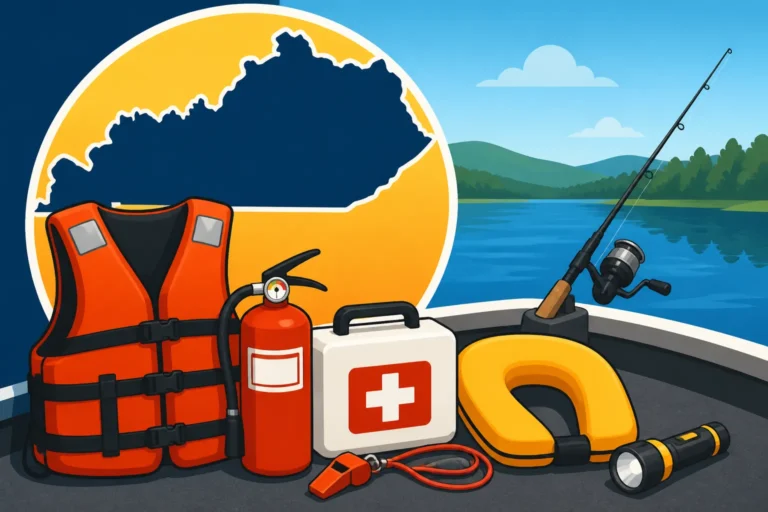
For boats with permanently installed fuel tanks and enclosed engine compartments, the regulations are more stringent because of the increased risk of vapor buildup. These vessels generally require either a fixed fire extinguishing system or specific types and quantities of portable fire extinguishers. If you have an automatically fixed system (like a Halon or FE-25 system), that often takes care of the requirement for that compartment. However, if you don't have a fixed system, you'll need portable extinguishers, and the requirements are based on the boat's length. This is crucial to understand because simply having any extinguisher might not be enough. You need the right class and size. We'll talk more about the classes in the next section, but generally, Class B extinguishers are designed for flammable liquids like fuel. For more general details on broader boating equipment, check out our guide on Essential Safety Gear for Every Boat in Kentucky.
Understanding "Enclosed Engine" and Your Boat
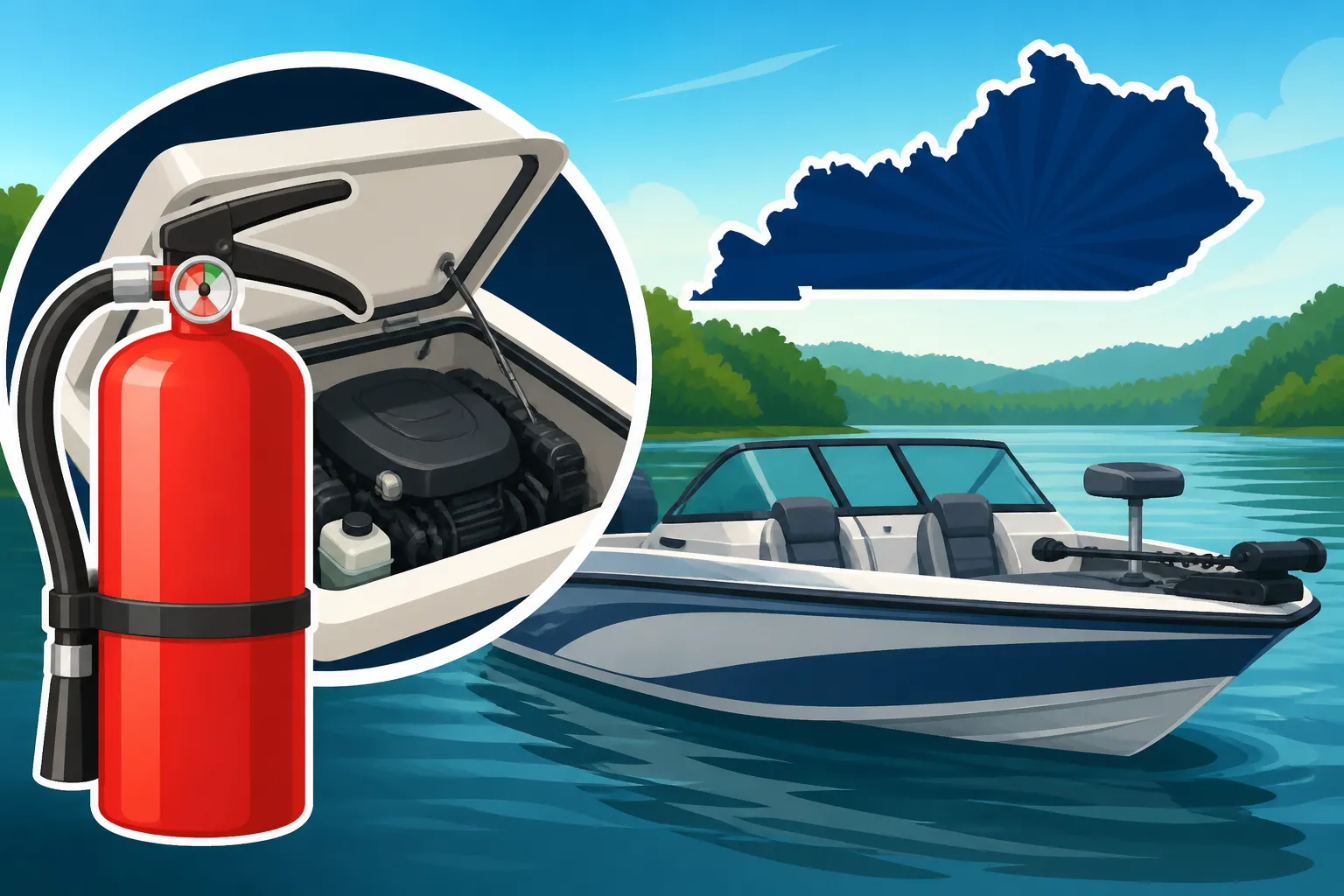
So, what exactly counts as an "enclosed engine compartment" in the eyes of the law? This isn't just some vague term; it has specific criteria. Generally, if your engine is not entirely exposed to the open air, and especially if it's covered by a cowling, deck, or compartment that restricts natural ventilation, it's likely considered enclosed. This includes most inboard and sterndrive boats where the engine is typically hidden beneath a deck or hatch, or even smaller boats with outboard motors that have a tightly fitting, permanent enclosure around them.
The primary concern with an enclosed space is the potential for gasoline or diesel fumes to accumulate. These vapors are heavier than air and can settle in the bilge, creating an invisible, highly explosive atmosphere. Even a tiny spark from an electrical connection or a hot engine component can ignite these fumes. Because of this heightened risk, Kentucky's boating regulations, aligning with federal standards, mandate specific fire suppression measures. This is why a boat with an enclosed engine might require more, or different, firefighting equipment than, say, a small jon boat with an open outboard engine that dissipates fumes freely. Always assume your engine compartment is enclosed if there's any doubt, and err on the side of caution.
Portable Fire Extinguisher Requirements for Boats with Enclosed Engines
If your boat has an enclosed engine compartment and doesn't have a Coast Guard-approved fixed extinguishing system, you're going to need portable fire extinguishers. The type and number depend on your vessel's length. It's not a one-size-fits-all situation, and getting this wrong could lead to fines and, more importantly, put your safety at risk.
Here's a breakdown of the typical requirements:
- Vessels less than 26 feet in length: You'll need at least one B-I type Coast Guard-approved portable fire extinguisher.
- Vessels 26 feet up to less than 40 feet in length: You'll need two B-I type, OR one B-II type Coast Guard-approved portable fire extinguisher.
- Vessels 40 feet up to less than 65 feet in length: The requirement goes up to three B-I type, OR one B-II type and one B-I type Coast Guard-approved portable fire extinguisher.
A B-I extinguisher typically contains 2 pounds of extinguishing agent (like dry chemical), while a B-II contains 10 pounds. The "B" class signifies it's suitable for flammable liquids and gases, which is precisely what you need for a boat fire involving fuel. It's important to note that these requirements are the minimum. There's absolutely nothing stopping you from carrying more fire extinguishers for added peace of mind. For a full rundown of specific rules, you might want to look into Kentucky Fire Extinguisher Rules for Boats With Fuel Storage.
Choosing the Right Fire Extinguisher for Your Boat
So you know you need a Class B extinguisher, but what kind? And where do you even buy one? This is where understanding the different types of extinguishing agents comes into play, as well as practical considerations for marine use. Most marine fire extinguishers use a dry chemical agent, typically monoammonium phosphate or sodium bicarbonate. These are effective at smothering fires involving flammable liquids and electrical components (Class B and C fires, respectively), which are the most likely scenarios on a boat.
When you're shopping, you'll see extinguishers labeled with a classification system. For example, a "5-B:C" rating means it has an extinguishing capacity equivalent to 5 square feet of Class B fire and is suitable for Class C (electrical) fires. For boats, the "B" rating is paramount. You can find these extinguishers at marine supply stores, big-box retailers, or online at places like Bass Pro Shops or Amazon. Always look for the Coast Guard approval stamp – it's typically a small label with "UL Marine Type" and a Coast Guard approval number. Without that stamp, it doesn't count towards your legal requirements, no matter how shiny it looks.
Dry Chemical Extinguishers: The Most Common Choice
Dry chemical extinguishers are the most common type found on recreational boats, and for good reason. They're relatively inexpensive, easy to use, and highly effective against Class B (flammable liquids) and Class C (electrical) fires. This makes them versatile for the kinds of fires you might encounter on a boat – a fuel leak fire or an electrical short.
However, they do have a couple of downsides. When discharged, they release a fine powder that can make a huge mess. This powder can be corrosive to electronics if not cleaned up promptly, which is a real concern in an engine compartment. Also, while they put out the flames, they don't cool the fuel, so there's a risk of re-ignition if the heat source isn't completely removed or the fuel isn't isolated. Despite these drawbacks, their effectiveness and accessibility make them the go-to for most Kentucky boaters. When you're stocking up on your Best Tackle and Gear for Bank Fishing, don't forget to swing by the safety section for a good extinguisher!
Halon and Clean Agent Extinguishers: Advanced Options
While less common on smaller recreational boats due to cost, Halon and other "clean agent" extinguishers offer significant advantages. Halon 1301 systems, in particular, were once the gold standard for enclosed engine compartments because they discharge a gas that suppresses fire without leaving a corrosive residue. This means less damage to your engine and electronics after a discharge. However, Halon production was phased out due to its ozone-depleting properties.
Today, modern clean agents like FM-200 or FE-36 are used in fixed systems (often automatic ones) that detect heat or smoke and deploy the agent into the engine compartment. These systems are incredibly effective for enclosed spaces, as they can put out a fire before it gets out of control and without manual intervention. If your boat came with one of these fixed systems, congratulations – it usually covers your primary fire extinguisher requirement for the engine compartment. Even if you have a fixed system, most regulations still require at least one portable extinguisher elsewhere on the boat for other potential fire sources. Learning about different options, including these advanced systems, is part of understanding Best Fire Extinguishers for Boats.
Maintenance and Placement: Keeping Your Boat Safe
Having the right fire extinguisher is only half the battle; the other half is making sure it's always ready to go when you need it and that you can grab it in a hurry. A rusty, expired extinguisher tucked away in a locker you can't reach won't do you any good in an emergency. This is where regular checks and strategic placement become critical.
Think about it: a fire on a boat is an immediate threat. You don't have time to rummage through a cluttered storage bin or wrestle with a mounting bracket that's seized up. The ability to deploy that extinguisher within seconds could be the difference between a minor incident and a total loss. This level of preparedness is part of a broader commitment to safety that includes things like knowing the Life Jacket Rules for Boats in Kentucky and having a valid Kentucky Boat Safety Certificate Requirements if applicable.
Regular Checks and Inspections
Just like checking your oil or tire pressure in your car, your fire extinguisher needs regular attention. Most portable fire extinguishers have a gauge that shows if it's properly charged. You should check this gauge before every trip out on the water. The needle should be in the green zone, indicating it's ready. If it's in the red, it's either under-pressurized or over-pressurized and needs to be serviced or replaced immediately.
Beyond the gauge, physically inspect the extinguisher. Look for any signs of corrosion, damage, or a broken tamper seal. The nozzle should be clear of obstructions, and the hose (if it has one) should be in good condition. For dry chemical extinguishers, it's also a good idea to gently invert it and shake it a few times monthly to prevent the powder from compacting, which can hinder its discharge. Most extinguishers have an expiration date or a service tag indicating when they need professional inspection or replacement. Don't ignore these dates! A simple checklist for these items can be found in our Kentucky Boating Safety Gear Checklist.
Strategic Placement for Quick Access
Placement is absolutely key. The rule of thumb for fire extinguishers on a boat is that they should be "readily accessible." What does that mean in practice? It means they should be mounted in plain sight, or in an unlocked, easily opened compartment, near areas where a fire is most likely to start, but also within easy reach from the helm or main activity areas.
For boats with enclosed engine compartments, one extinguisher should be as close as possible to the engine compartment hatch or access point. If you have a galley or an electrical panel, placing an extinguisher near those areas is also smart. Avoid stowing them deep in a locker, under a pile of fishing gear, or in a cabin that might become inaccessible during a fire. A good mounting bracket keeps it secure but allows for quick removal. Consider mounting one near the helm, another near the galley, and a third closer to the engine if space allows. When you're outfitting your boat, remember that things like Fish Finders and Electronics for Kentucky Lake Fishing are great, but safety gear comes first. You can grab a sturdy marine-grade bracket and an extinguisher from Amazon or your local Bass Pro Shops.
Portable Fire Extinguisher Compliance Checklist
To help you stay on the right side of the law and, more importantly, stay safe, here's a quick reference table summarizing the typical requirements for portable fire extinguishers on boats without fixed systems, based on length. Always double-check current Kentucky Fish and Wildlife Resources regulations, as these can change.
| Boat Length (Feet) | Minimum Number of Portable Extinguishers (B-I Type) | Or Alternative (B-II Type) | Notes |
|---|---|---|---|
| Less than 26 | 1 | N/A | Must be readily accessible and Coast Guard approved (e.g., 5-B:C). |
| 26 to less than 40 | 2 | 1 | Extinguishers must be readily accessible. A single B-II can replace two B-I types. |
| 40 to less than 65 | 3 | 1 B-II and 1 B-I | Extinguishers must be readily accessible. One B-II and one B-I can replace three B-I types. |
| 65 feet and over | Specific requirements vary | N/A | Larger vessels typically have more complex requirements, including multiple B-II types and/or fixed systems, often requiring professional consultation or adherence to specific marine vessel inspection standards. |
Note: This table assumes no fixed fire extinguishing system is installed in the engine compartment. If a fixed system is present, requirements for portable extinguishers may be reduced or waived for the engine compartment, but portable extinguishers are still generally required for other areas of the boat.
Staying compliant with fire extinguisher requirements for your Kentucky boat, especially with an enclosed engine, isn't just about avoiding a ticket – it's about safeguarding your life, the lives of your loved ones, and your investment. Take the time to understand the rules, equip your boat properly, and maintain your safety gear. It's a small effort that could make a world of difference when it counts the most.
Disclaimer
This article is for general informational purposes only and does not constitute professional advice. Laws, prices and regulations vary by location and change over time. Consult a qualified professional for guidance on your specific situation.