What Safety Equipment Is Required on a Kentucky Boat?
It's incredibly frustrating to get out on the beautiful waters of Kentucky, ready for a relaxing day of fishing or cruising, only to worry if you've got all your ducks in a row when it comes to required safety equipment. Nobody wants to deal with a stop from a game warden that could have been easily avoided, especially when you're just trying to enjoy the lake or river. This guide aims to clear up all that confusion, walking you through exactly what safety gear is required on your Kentucky boat, so you can focus on making memories, not making mistakes.
The Absolute Essentials: Life Jackets
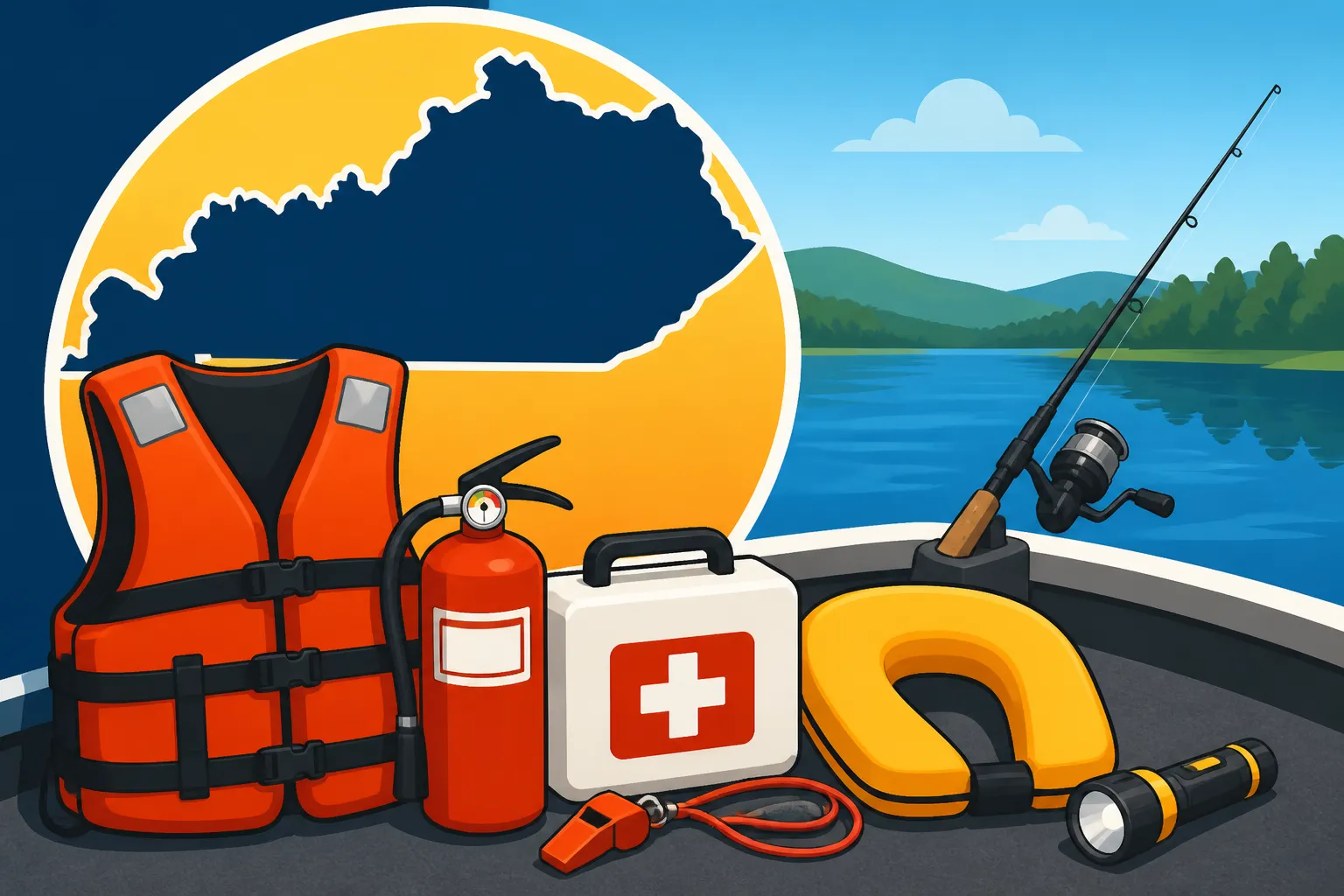
Let's start with the one piece of equipment everyone knows, but sometimes still gets wrong: life jackets, also known as Personal Flotation Devices (PFDs). These aren't just good ideas; they are legally mandated and could literally save a life. The rules surrounding them are pretty clear, but the details can sometimes trip people up.
Understanding US Coast Guard Approved Life Jackets
Not just any old floatation device will do. Every life jacket on your boat must be approved by the U.S. Coast Guard (USCG). This approval means it meets specific safety standards for buoyancy, construction, and performance. When you're shopping, look for the USCG approval stamp prominently displayed on the label. This isn't a suggestion; it's a hard requirement. You'll find a wide range of Coast Guard-approved life jackets at reputable retailers like Bass Pro Shops, catering to different activities, sizes, and comfort levels. Investing in good, comfortable life jackets means people are more likely to wear them, which is the whole point.
There are different types of USCG-approved PFDs, categorized by their intended use and buoyancy. Type I (Offshore PFDs) offer the most buoyancy and turn most unconscious wearers face-up. Type II (Near-Shore Vests) are good for calm, inland waters. Type III (Flotation Aids) are often the most comfortable for continuous wear and activity, like fishing or water skiing, but may not turn an unconscious person face-up. Type IV (Throwable Devices) are designed to be thrown to someone in distress, not worn. And Type V (Special Use Devices) are approved for specific activities, like kayaking or windsurfing, often needing to be worn to count towards carriage requirements. Understanding these types can help you choose the best fit for your boating activities, especially if you're looking for more comfort or specialized features.
Life Jacket Requirements by Age and Accessibility
Kentucky law, in line with federal regulations, has specific rules about who needs to wear a life jacket and how many need to be on board. The most critical rule revolves around children: any person under 12 years of age must wear a USCG-approved life jacket at all times while the boat is underway on Kentucky public waters. This isn't just about having it on the boat; it must be properly fitted and worn. This rule is in place because younger children can fall overboard quickly and silently, and having a life jacket on is their best chance for survival. Parents and guardians often find it easiest to make sure kids have comfortable, brightly colored jackets that they don't mind wearing. For more details on this, check out Kentucky Life Jacket Law for Kids Under 12.
For everyone else on board, the rule is that you must have one readily accessible, USCG-approved life jacket for each person on the boat, regardless of their age. "Readily accessible" means it can be reached quickly in an emergency, not buried under a pile of gear in a locker. While adults aren't always required to wear them, having them available and knowing where they are is paramount. Many experienced boaters choose to wear their life jackets anyway, especially when conditions are rough, or they are engaged in activities like fishing where an unexpected fall overboard is a possibility.
You also need at least one Type IV throwable device (like a cushion or ring buoy) on board if your boat is 16 feet or longer, excluding canoes and kayaks. This throwable device must be immediately available for use. This adds an extra layer of safety, allowing you to quickly assist someone who has fallen overboard without entering the water yourself.
Visual and Audible Signals: Making Yourself Seen and Heard
Being able to signal for help or warn other boaters is a crucial part of boating safety. Kentucky law requires certain visual and audible signaling devices to be on board, ensuring you can communicate effectively, especially in emergencies or low visibility conditions.
Sound-Producing Devices
Every recreational boat needs a sound-producing device on board. This can be as simple as a whistle for smaller boats like kayaks and canoes, or a horn for larger vessels. The key is that it must be capable of producing an efficient sound signal audible for at least one-half mile. For boats under 40 feet in length, a whistle, horn, or other mechanical device is usually sufficient. For boats 40 feet and over, a whistle and a bell are generally required. This sound device is used for collision avoidance signals, distress signals, and to signal your presence in fog or limited visibility. Imagine you're rounding a blind bend on the Ohio River, and a sudden blast from a horn alerts you to an approaching vessel – that's why these are so vital. When browsing for these, you'll find plenty of options online through Amazon, from compact air horns to marine-grade whistles.
Here’s a quick overview of sound-producing device requirements:
| Boat Length (feet) | Required Sound Device(s) | Use Cases |
|---|---|---|
| Less than 16 | Whistle, air horn, or similar | Distress, warning other vessels |
| 16 to 39.4 | Whistle, air horn, or similar | Distress, warning other vessels |
| 39.4 or more | Whistle and a bell | Distress, warning, fog signals, maneuvering signals |
Always ensure your device is in working order before heading out. A dead battery in an electric horn or a missing pea in a whistle won't do you any good in a pinch.
Visual Distress Signals (VDS)
While not always universally required on inland waters, Visual Distress Signals (VDS) are critical for signaling for help in an emergency, especially when you're out of sight of shore or other vessels. On federal waters, which include certain parts of the Ohio River and large lakes, boats 16 feet and over must carry USCG-approved visual distress signals. These can be pyrotechnic (flares) or non-pyrotechnic (flags, electronic lights).
Pyrotechnic devices, like flares, are highly effective but have expiration dates and must be handled carefully. Non-pyrotechnic devices, such as an orange distress flag and an electric distress light, offer a non-expiring alternative for daytime and nighttime use respectively. Even on waters where they aren't strictly mandated, having some form of VDS is a smart safety practice. You never know when mechanical trouble or an unforeseen event might leave you stranded, and being able to signal for help can dramatically speed up rescue efforts. You can usually find a good selection of VDS kits at marine supply stores or through online retailers.
Fire Safety and Ventilation: Preventing and Fighting Fires
Fires on boats can be catastrophic, spreading rapidly due to fuel, oil, and other combustible materials. That's why fire safety equipment and proper ventilation are non-negotiable requirements for many boats in Kentucky.
Portable Fire Extinguishers
Most motorboats in Kentucky are required to carry at least one USCG-approved portable fire extinguisher. The specific type and number of extinguishers depend on the size of your boat and whether it has a permanently installed fire extinguishing system in the engine compartment. Generally, extinguishers are classified by letters (B for combustible liquids like fuel) and numbers (indicating size/capacity). A common requirement is a B-I type extinguisher.
When is a fire extinguisher required?
- Any boat with an enclosed engine compartment.
- Any boat with permanently installed fuel tanks (not portable ones).
- Any boat with an enclosed cabin or sleeping area.
- Any boat with a double bottom not sealed to the hull or not completely filled with flotation materials.
- Any boat with closed living spaces.
- Any boat with a galley (kitchen facilities).
These are just general guidelines, and it's always best to check the specific regulations for your vessel type and size. The extinguisher must be readily accessible and in good working condition, with the gauge showing adequate pressure. It's also a good idea to know how to use it! Many boaters keep one near the helm and another near the engine compartment or galley. Portable fire extinguishers, easily found at marine supply stores or online through Amazon, are crucial. Make sure you understand the difference between Type B-I and Type B-II, as larger boats might require more robust options.
Backfire Flame Arrestors and Ventilation
For gasoline-powered inboard engines, a USCG-approved backfire flame arrestor is required on each carburetor. This device prevents engine backfires from igniting fuel vapors in the engine compartment, a common cause of boat fires. It's a critical, often unseen, safety component.
Additionally, boats with enclosed engine or fuel tank compartments must have proper ventilation systems. This usually involves natural ventilation (ducts and cowls to allow air circulation) and/or powered ventilation (blowers). The purpose is to remove explosive fuel vapors from these enclosed spaces. Before starting your engine, especially after fueling, it’s always a good practice to run your blower for several minutes to clear any accumulated fumes. A simple sniff test can often tell you if you have fuel vapors present – if you smell gas, do not start the engine and investigate the source of the fumes.
Additional Gear for Specific Boats and Situations
Beyond the core requirements, certain situations or boat types in Kentucky call for additional safety equipment. These rules are designed to cover specific risks that might not apply to every vessel.
Navigation Lights for Nighttime Operation
If you're out on the water between sunset and sunrise, or during periods of restricted visibility (like fog or heavy rain), your boat must display appropriate navigation lights. These lights include red and green sidelights, and a white stern light, or an all-around white light, depending on your boat's size and type. These lights are crucial for other boaters to see you and to understand your vessel's direction of travel, preventing collisions in the dark.
For example, a typical powerboat under 20 feet will usually display separate red and green sidelights and an all-around white light visible for 360 degrees. Larger vessels have different configurations, often with a masthead light in addition to sidelights and a stern light. Always check your lights before heading out for a night trip. Fines for operating without proper navigation lights can be steep, and more importantly, it's incredibly dangerous. Make sure your batteries are charged and your bulbs are working correctly. Many anglers enjoy Night Fishing Techniques for Catfish, but it’s vital to have your lights working.
Anchors and Dock Lines
While not always explicitly listed as "required safety equipment" by law, having an appropriate anchor and ample dock lines is essential for safe boating. An anchor isn't just for holding your position while fishing; it's a critical safety device. If your engine fails or you're caught in a strong current, deploying an anchor can prevent you from drifting into hazardous areas. The anchor should be heavy enough for your boat's size and the typical bottom conditions you encounter, and you should have sufficient anchor rode (rope and/or chain) for the depths you'll be anchoring in. A good rule of thumb is 7:1 scope, meaning seven feet of rode for every one foot of water depth.
Dock lines are necessary for safely tying your boat to a dock, but also for securing it during towing or for use in an emergency. Always have at least two strong dock lines on board.
First-Aid Kits and Emergency Repair Supplies
Again, a first-aid kit isn't always a strictly mandated item for all recreational boats, but it is an absolute must-have for any responsible boater. Minor cuts, scrapes, stings, or even more serious injuries can occur on the water, far from immediate medical help. A well-stocked first-aid kit, kept in a waterproof container, can make a huge difference. Think about what you'd need for common boating ailments and a few unexpected ones.
Similarly, a basic emergency repair kit can turn a bad day into a minor inconvenience. This might include spare spark plugs, basic tools, electrical tape, zip ties, a propeller wrench, and a spare propeller if you venture far from shore. These items don't take up much space and can be invaluable if you experience a minor breakdown. It’s a good idea to have a Kentucky Boating Safety Gear Checklist to help you remember everything before each trip.
Special Considerations for Specific Watercraft
Not all boats are created equal when it comes to safety requirements. Smaller vessels like kayaks, canoes, and stand-up paddleboards often have slightly different, though no less important, rules.
Kayaks, Canoes, and Paddleboards
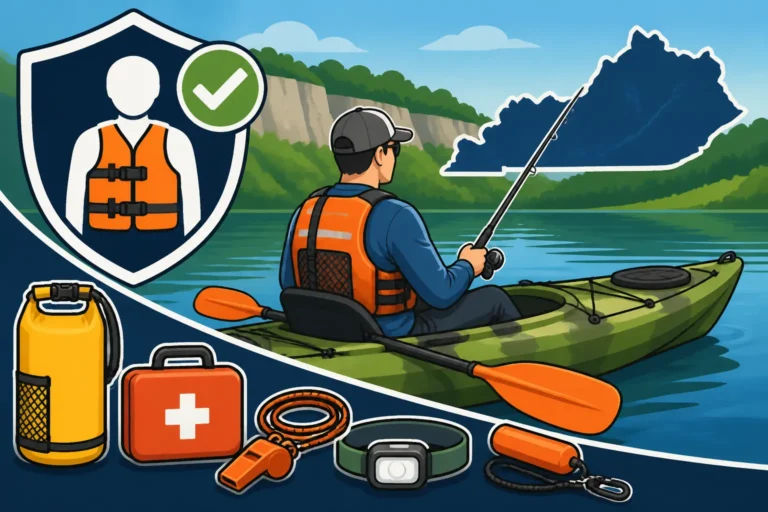
For these human-powered vessels, the life jacket rules are the same: a USCG-approved PFD for each person, and those under 12 must wear it. Additionally, if you're operating between sunset and sunrise, you must have an efficient sound-producing device (like a whistle) and a white light visible for 360 degrees that can be displayed in time to prevent a collision. This white light can be a flashlight or lantern; it doesn't need to be permanently affixed, but it must be ready to show. Many kayakers attach a battery-powered white light to their vessel for easy compliance during evening paddles. Remember, even though these might seem like small craft, the rules are there for your safety and the safety of others on the water. For more on safe paddlecraft, you might be interested in Kayak Fishing Safety Gear for Kentucky Waters.
Personal Watercraft (PWCs)
PWCs, often called jet skis, also have specific requirements. Everyone on a PWC must wear a USCG-approved life jacket. This is a crucial distinction from larger boats, where adults aren't always required to wear them. Additionally, a PWC must be equipped with a lanyard-type engine cut-off switch, and the lanyard must be attached to the operator's person, clothing, or life jacket. This ensures that if the operator falls off, the engine immediately shuts down, preventing the PWC from becoming a runaway hazard.
Understanding and adhering to these safety requirements isn't just about avoiding a ticket; it's about ensuring a safe and enjoyable experience for everyone on board and on the water. Taking the time to gather and maintain your safety equipment is an investment in peace of mind.
Disclaimer
This article is for general informational purposes only and does not constitute professional advice. Laws, prices and regulations vary by location and change over time. Consult a qualified professional for guidance on your specific situation.