Does Your Boat Need a Fire Extinguisher in Kentucky?
One of the most common questions new boaters, or even seasoned ones with a new vessel, ask in Kentucky is about safety equipment, specifically fire extinguishers. It's not always clear whether your specific boat needs one, what kind, or where to keep it, leading to a lot of guesswork and potential headaches with game wardens. This guide aims to clear up that confusion, detailing exactly when and why your boat needs a fire extinguisher in Kentucky, ensuring you're safe and compliant on the water.
Understanding Kentucky's Boating Safety Regulations
Navigating the waters of Kentucky's beautiful lakes and rivers is a joy, but it comes with a responsibility to understand and follow safety regulations. These rules aren't just bureaucratic red tape; they are designed to protect you, your passengers, and other boaters from potential hazards. Fire is a serious concern on any vessel, given the presence of fuel, electrical systems, and often heat-generating engines in a confined space.
It’s easy to feel overwhelmed by all the rules. You've got to remember Life Jacket Rules for Boats in Kentucky, how to properly register your vessel, and now whether you need a fire extinguisher. It’s a lot to keep track of, but each piece of equipment serves a vital purpose in preventing accidents or minimizing their impact. Think of it as a crucial part of your overall Kentucky Boating Safety Gear Checklist.
Who Sets the Rules? Kentucky vs. Federal Guidelines
Boating safety regulations in Kentucky are a blend of state and federal guidelines. The Kentucky Department of Fish and Wildlife Resources (KDFWR) is responsible for enforcing boating laws within the state. However, many of these state laws are derived from or aligned with federal regulations set by the U.S. Coast Guard, particularly for recreational vessels. This means that if your boat is operating on navigable waters in Kentucky, it generally needs to meet both state and federal requirements.
The overlap can sometimes be confusing, but the good news is that by meeting the stricter of the two, you're usually covered for both. For fire extinguishers, the general rule of thumb often comes down to engine type and fuel system. These regulations are in place to provide a baseline for safety, but as any seasoned boater knows, having more safety gear than required is never a bad idea. It's about being prepared for the unexpected, whether you're out for a leisurely cruise on Lake Cumberland or fishing for bass on Kentucky Lake.
The Importance of Fire Safety on the Water
Imagine you're miles from shore on Lake Barkley, enjoying a perfect day, when suddenly you smell smoke from the engine compartment. Or perhaps a small grease fire starts on your portable grill. Without a readily accessible and properly maintained fire extinguisher, a minor incident can quickly escalate into a life-threatening emergency. Unlike on land, where help might be a quick phone call away, you're often isolated on the water, with limited resources to combat a fire.
Fuel leaks, electrical shorts, discarded smoking materials, and even cooking incidents are common causes of boat fires. The synthetic materials used in boat construction can burn rapidly and release toxic fumes, making a quick response absolutely critical. Having a fire extinguisher isn't just about avoiding a ticket; it's about potentially saving your boat and, more importantly, the lives of everyone on board. It's a proactive measure, like making sure you know What Safety Equipment Is Required on a Kentucky Boat? before you even leave the dock.
Specific Fire Extinguisher Requirements for Kentucky Boats
Alright, let's get down to brass tacks. Does your boat need a fire extinguisher? The answer largely depends on your boat's construction, engine type, and whether it carries fuel in certain ways. It's not a one-size-fits-all rule, which is where some of the confusion comes in.
The main factor that triggers the requirement for a fire extinguisher is often the presence of an enclosed engine compartment or fixed fuel tanks.
Boats with Enclosed Engines or Fuel Storage
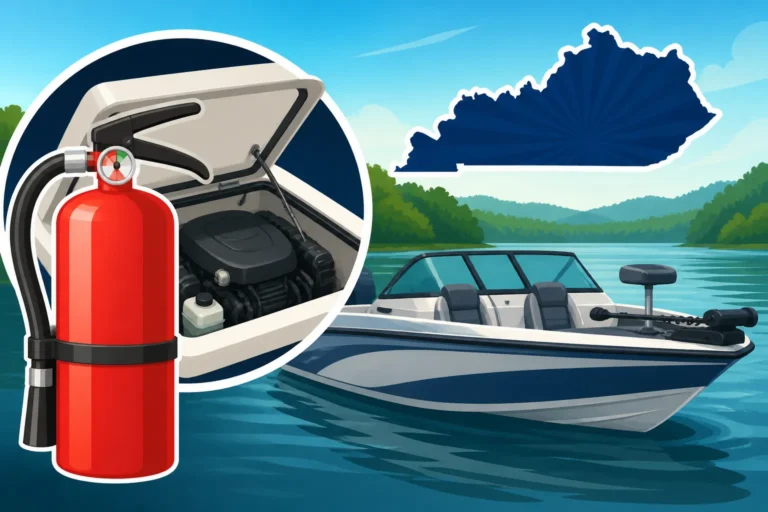
If your boat has an inboard engine or a permanently installed fuel tank, especially if it's located in an enclosed compartment, then yes, you absolutely need a fire extinguisher. This applies to most larger recreational boats, cruisers, and many bass boats. The reason is simple: enclosed spaces can trap fumes, and a spark or overheating engine part can quickly ignite them. These boats often have gasoline or diesel engines that run hot, and electrical wiring that could short.
The regulations typically specify the type and quantity of extinguishers based on the boat's length. For instance, a boat less than 26 feet in length, with an enclosed engine compartment or permanently installed fuel tank, usually requires at least one B-I type extinguisher. Longer boats might need more or larger extinguishers.
Here’s a simplified breakdown of typical requirements based on boat length and engine type:
| Boat Length (Feet) | Engine Type & Fuel System | Minimum Extinguisher (Type B) |
|---|---|---|
| Less than 26 | Inboard or enclosed engine, or fixed fuel tanks | One B-I |
| 26 to less than 40 | Inboard or enclosed engine, or fixed fuel tanks | Two B-I OR One B-II |
| 40 to less than 65 | Inboard or enclosed engine, or fixed fuel tanks | Three B-I OR One B-I and One B-II |
Note: Always verify the most current regulations with the KDFWR or U.S. Coast Guard, as requirements can change.
It’s crucial that these extinguishers are easily accessible, not buried under a pile of fishing gear. Imagine trying to dig for it while flames are spreading. Many boaters purchase marine-specific extinguishers from retailers like Bass Pro Shops or even online through Amazon, ensuring they meet the necessary U.S. Coast Guard approval standards.
Open Boats and Smaller Vessels
What about smaller boats, like canoes, kayaks, rowboats, or even some small open-hull fishing boats with only portable fuel tanks? This is where many people get tripped up. Generally, if your boat is less than 26 feet in length, does not have an enclosed engine compartment, and only uses portable (carry-on-deck) fuel tanks, you might be exempt from the fire extinguisher requirement.
For example, if you're out on a simple jon boat with a small outboard motor and a 6-gallon fuel tank that sits openly on the deck, you likely won't be legally required to carry an extinguisher. The open air helps dissipate any fumes, reducing the risk of a flash fire. Similarly, a kayak or paddleboard has no engine or fuel, so no extinguisher is needed.
However, and this is a big "however," just because it's not legally required doesn't mean it's not a good idea. A small boat can still have an electrical short from a trolling motor battery, or you might accidentally ignite something from a dropped cigarette. Carrying a small, readily available extinguisher is a smart personal safety choice, even for these smaller craft. Think of it as an added layer of protection, just like carrying a Best First Aid Kits for Boaters for minor injuries.
Exemptions and What Doesn't Require One
Let's clarify some common scenarios where a fire extinguisher is typically not required:
- Vessels less than 26 feet in length without enclosed engine compartments: As discussed, if your boat has an open construction and only uses portable fuel tanks (which must be properly secured and visible), you're generally exempt. This covers many smaller fishing boats, runabouts, and utility boats.
- Boats without any fuel-burning engines: Canoes, kayaks, rowboats, paddleboards, and sailboats under sail power (without an auxiliary engine or fuel storage) do not require a fire extinguisher. No fuel, no fire risk in that regard.
- Boats equipped with a fixed fire extinguishing system: If your boat has a permanently installed, U.S. Coast Guard-approved fire extinguishing system in the engine compartment (often found in larger, more complex vessels), it may reduce the number of portable extinguishers you need. These systems automatically deploy fire retardant and are usually a feature of higher-end boats.
It's important to remember that these exemptions are for legal requirements. The spirit of safe boating encourages all boaters to consider the potential for fire and to equip their vessels appropriately, regardless of strict mandates. A small, inexpensive extinguisher can provide immense peace of mind.
Choosing the Right Fire Extinguisher for Your Boat
So, you've figured out your boat needs one. Now, which one? Picking the right fire extinguisher isn't as simple as grabbing the first red can you see. Marine fires are distinct, and the extinguisher needs to be designed to handle the types of fires most likely to occur on a boat.
The most common mistake is assuming any old household extinguisher will do. Marine-grade extinguishers are built to withstand the harsh marine environment (moisture, vibrations) and are specifically rated for the types of fires you're likely to encounter.
Types of Marine Fire Extinguishers Classes
Fire extinguishers are classified by the types of fires they are effective against. For marine use, you'll mostly be concerned with Type B extinguishers, as they combat fires involving flammable liquids, like gasoline, diesel, and oils – the most common fire hazard on boats.
Here's a quick rundown of fire classes:
- Class A: Fires involving ordinary combustibles like wood, paper, cloth, and plastics.
- Class B: Fires involving flammable liquids and gases, such as gasoline, oil, and propane. This is your primary concern on a boat.
- Class C: Fires involving energized electrical equipment, like wiring, motors, and appliances.
Many marine extinguishers are rated B-C, meaning they are effective against both flammable liquid and electrical fires, which are ideal for boats. You might also see A-B-C ratings, which cover ordinary combustibles too. The "size" of the extinguisher is also important, indicated by Roman numerals (I or II).
- Type B-I: Contains 2 pounds of dry chemical, equivalent to 1.25 gallons of foam.
- Type B-II: Contains 10 pounds of dry chemical, equivalent to 2.5 gallons of foam.
The U.S. Coast Guard requires B-I or B-II rated extinguishers for most recreational boats. When shopping, look for "USCG Approved" or "Marine Rated" on the label. Brands like Kidde, First Alert, and Amerex are common and widely available from marine supply stores or online retailers like Amazon and Bass Pro Shops.
Sizing and Placement on Your Vessel
Once you know the type, you need to consider the size and where to put it. As mentioned in the table above, the size and quantity of extinguishers depend on your boat's length and setup. Make sure you have at least the minimum required. It's perfectly fine, and often recommended, to have more than the minimum.
Placement is critical. Your extinguisher needs to be readily accessible. This doesn't mean it's in a locked cabinet or at the bottom of a storage locker. It should be mounted with a bracket in an obvious, easy-to-reach location. Common spots include:
- Near the helm or steering station.
- Near the engine compartment (if accessible from the main cabin).
- In the galley or cooking area.
- Near the exit to the main cabin or cockpit.
For larger boats, having multiple extinguishers spread out ensures that one is always close by, no matter where a fire might break out. For example, if you have a fire in the galley, you don't want to run to the helm to get an extinguisher, losing precious seconds.
Maintenance and Inspection
A fire extinguisher is only useful if it's in working order. Regularly inspecting and maintaining your extinguisher is a non-negotiable part of boat ownership. This isn't just a "set it and forget it" piece of equipment.
Here's a simple maintenance checklist:
- Check the Pressure Gauge: Most dry chemical extinguishers have a gauge that should be in the "green" zone, indicating it's properly charged.
- Inspect the Seal and Pin: Ensure the tamper seal is intact and the safety pin is in place. If either is broken, the extinguisher might have been discharged or is faulty.
- Examine the Nozzle and Hose: Make sure they are clear of obstructions, dirt, or insect nests.
- Look for Physical Damage: Check the cylinder for dents, corrosion, or other damage.
- Shake Dry Chemical Extinguishers: Periodically invert and shake dry chemical extinguishers to prevent the powder from compacting at the bottom, which can render them ineffective.
- Know the Expiration Date: While many extinguishers don't have a strict expiration, they have a lifespan. Some disposable types are marked for replacement after a certain number of years. Rechargeable ones need to be serviced periodically by a professional.
Think of it like checking your boat's oil or making sure your Kentucky Boat Registration Renewal Deadline: April 30 is met. It’s part of responsible boat ownership. Failing to maintain your extinguisher not only puts you at risk but could also lead to issues during a game warden inspection.
Penalties and Enforcement for Non-Compliance
While safety is the primary reason to carry and maintain a fire extinguisher, it's also important to understand the legal ramifications of not doing so. Kentucky's KDFWR game wardens are active on the waterways, performing routine safety checks. Getting caught without the required equipment can lead to fines and citations, putting a damper on your day out.
Game Warden Checks and Inspections
Game wardens have the authority to stop any vessel on Kentucky waters to conduct safety inspections. During these checks, they'll verify that you have all the necessary safety equipment, including life jackets, navigation lights, sound-producing devices, and, of course, a fire extinguisher if your boat requires one. They'll also check its condition, pressure gauge, and accessibility.
It's common for wardens to perform these checks at popular boat ramps on lakes like Lake Barkley or Lake Cumberland, or while patrolling busy sections of the Ohio River. They aren't trying to ruin your fun; they're ensuring everyone's safety. Being prepared for a Game Warden Enforcement and License Checks While Fishing is just part of responsible boating.
Fines and Safety Citations
If your boat requires a fire extinguisher and you don't have one, or if the one you have is not functional (e.g., discharged, low pressure, unapproved type), you can expect to receive a citation. The specific fines can vary, but they are generally designed to be a deterrent, and they can certainly add up. Depending on the severity and whether it's a repeat offense, you might also be required to correct the deficiency within a certain timeframe or face further penalties.
These citations aren't just an inconvenience; they're a matter of public record. It's far better to spend a little time and money upfront to get the right extinguisher and keep it in good condition than to face a fine and the potential danger a fire without an extinguisher presents. For new boaters, understanding requirements like Kentucky Boat Titling and Registration Rules and safety equipment is paramount.
Impact on Insurance and Liability
Beyond legal penalties, there are potential insurance and liability implications for not having the required safety equipment. In the event of a boat fire, if your vessel was not equipped with a legally mandated fire extinguisher, your insurance company might deny or reduce coverage for damages. This could leave you financially responsible for thousands of dollars in repairs or even a total loss.
Furthermore, if a fire on your boat causes injury to passengers or damage to other vessels or property, you could face significant personal liability. Demonstrating that you adhered to all safety regulations, including having a functional fire extinguisher, helps protect you legally and financially. It shows due diligence and responsible boat ownership. Just as you ensure your boat meets Kentucky Boat Registration Requirements Explained, you should ensure it meets all safety equipment requirements.
Having the right fire extinguisher on board your boat in Kentucky isn't just about avoiding a fine; it's a critical component of responsible boating and personal safety. Whether your boat technically requires one or not, a small, functional marine fire extinguisher is a smart addition to any vessel. It provides peace of mind, knowing that you're prepared for one of the most serious emergencies you can face on the water. Stay safe out there, Kentucky anglers and boaters!
Disclaimer
This article is for general informational purposes only and does not constitute professional advice. Laws, prices and regulations vary by location and change over time. Consult a qualified professional for guidance on your specific situation.