Best Fish Finders for Kentucky Lake and Lake Barkley
If you've ever spent a day out on the sprawling waters of Kentucky Lake or Lake Barkley, you know it's an incredible experience – but it can also be incredibly frustrating when the fish seem to vanish. These massive reservoirs, while abundant with game fish, also present an immense challenge due to their sheer size and complex underwater terrain. You can spend hours covering water, casting into what feels like empty space, and wonder if you're even in the right zip code for a fish. This guide is here to cut through that frustration, helping you understand how modern fish finders work and which features are most crucial for successfully locating fish on these iconic Kentucky waters.
Understanding the Unique Challenges of Kentucky Lake and Lake Barkley
Fishing Kentucky Lake and Lake Barkley isn't like dropping a line into your local farm pond. These are enormous bodies of water, each with a distinct personality, that demand a strategic approach. Without the right tools, you're essentially just guessing, and that's not a recipe for consistent success, especially when you're targeting specific species or trying to win a tournament.
Navigating Vast Open Water
Imagine trying to find a needle in a haystack – now imagine that haystack is tens of thousands of acres of water. Kentucky Lake, stretching over 160,000 acres, and Lake Barkley, covering 57,000 acres, are incredibly vast. You could spend days just exploring small sections. Covering this much territory efficiently is a challenge in itself, let alone actually finding where the fish are holding. When you're out on these open waters, wind and current can play a huge role, making it even harder to pinpoint structure or schools of fish without some technological help. Drifting across a potential hotspot, you need real-time information to confirm if your current location holds promise or if it's time to move on. Best Boats for Kentucky Lake and Lake Barkley Fishing often come equipped with good electronics, but understanding why these systems are critical is the first step.
The old-school approach of simply trolling around and hoping for a bite just doesn't cut it anymore for serious anglers. With so much water to cover, blind casting is a massive waste of precious fishing time. You need to be able to identify contours, depth changes, and hidden cover that might be holding fish, even when they're miles offshore or suspended in the water column. A good fish finder acts as your eyes beneath the surface, transforming vast, featureless expanses into readable maps of fish habitat. This is especially true when you’re exploring new areas of the lake or trying to relocate fish that have moved from their usual haunts.
Dealing with Diverse Depths and Structure
Both Kentucky Lake and Lake Barkley are renowned for their incredibly diverse underwater environments. You've got everything from shallow, stump-filled coves and expansive flats to deep river channels, sharp drop-offs, and submerged creek beds. Fish on these lakes don't just hang out randomly; they relate to specific structures, depths, and cover. For example, during the Kentucky Bass Fishing: The April-May Peak Season, bass might be found shallow around spawning beds, but later in the summer, they'll often retreat to deeper, cooler waters along ledges or humps. Finding these subtle changes in depth or identifying submerged brush piles, rock formations, or old roadbeds is nearly impossible with traditional methods alone.
Think about trying to find a small brush pile in 20 feet of water. You can't see it from the surface, and your lead-core line or heavy jig might snag it, but you won't know the full extent of the cover or if fish are actually using it. A high-quality fish finder provides a detailed picture of what lies beneath your boat, allowing you to distinguish between a single rock and a dense cluster of stumps. This detailed imagery is crucial for understanding the fish's environment and presenting your lure effectively. It helps you dissect the lake floor, revealing hidden ambush points for predators and schooling areas for baitfish.
Essential Fish Finder Technologies for Big Lakes
Modern fish finders are a far cry from the blinking lights of yesteryear. Today's units pack incredible technology designed to give you a clear, almost photographic view of the underwater world. For big, complex lakes like Kentucky Lake and Lake Barkley, having the right suite of technologies isn't a luxury; it's a necessity.
Sonar 2D Traditional
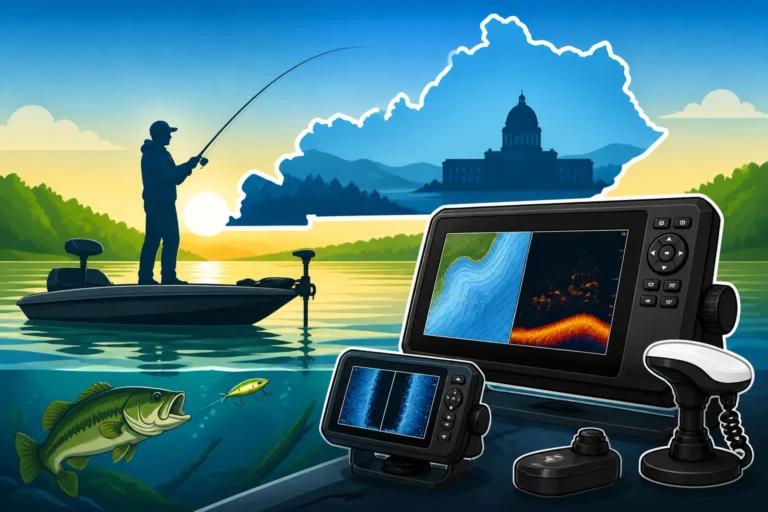
This is the bedrock of all fish finder technology, the classic "ping" that returns an image of what's directly beneath your boat. Traditional 2D sonar works by sending a sound wave down into the water and interpreting the echoes that bounce back. Stronger echoes from solid objects like fish, logs, or the lake bottom appear as arches or lines on your screen. While it might seem basic compared to newer technologies, a good 2D sonar is still incredibly effective for quickly identifying fish, bait balls, and significant structure directly under your transducer. It provides a real-time feed that helps you understand the immediate water column beneath your boat.
On Kentucky Lake, for instance, you might be idling over a deep river channel edge, and your 2D sonar will clearly show baitfish schooled up, followed by larger arches indicating predatory fish like bass or catfish lurking nearby. It's excellent for understanding the depth and density of a school, allowing you to adjust your presentation to the precise depth the fish are holding. Many anglers still rely heavily on 2D sonar for a quick read on activity directly below, using it as a primary indicator before switching to more detailed imaging for a closer look.
Down Imaging and Side Imaging
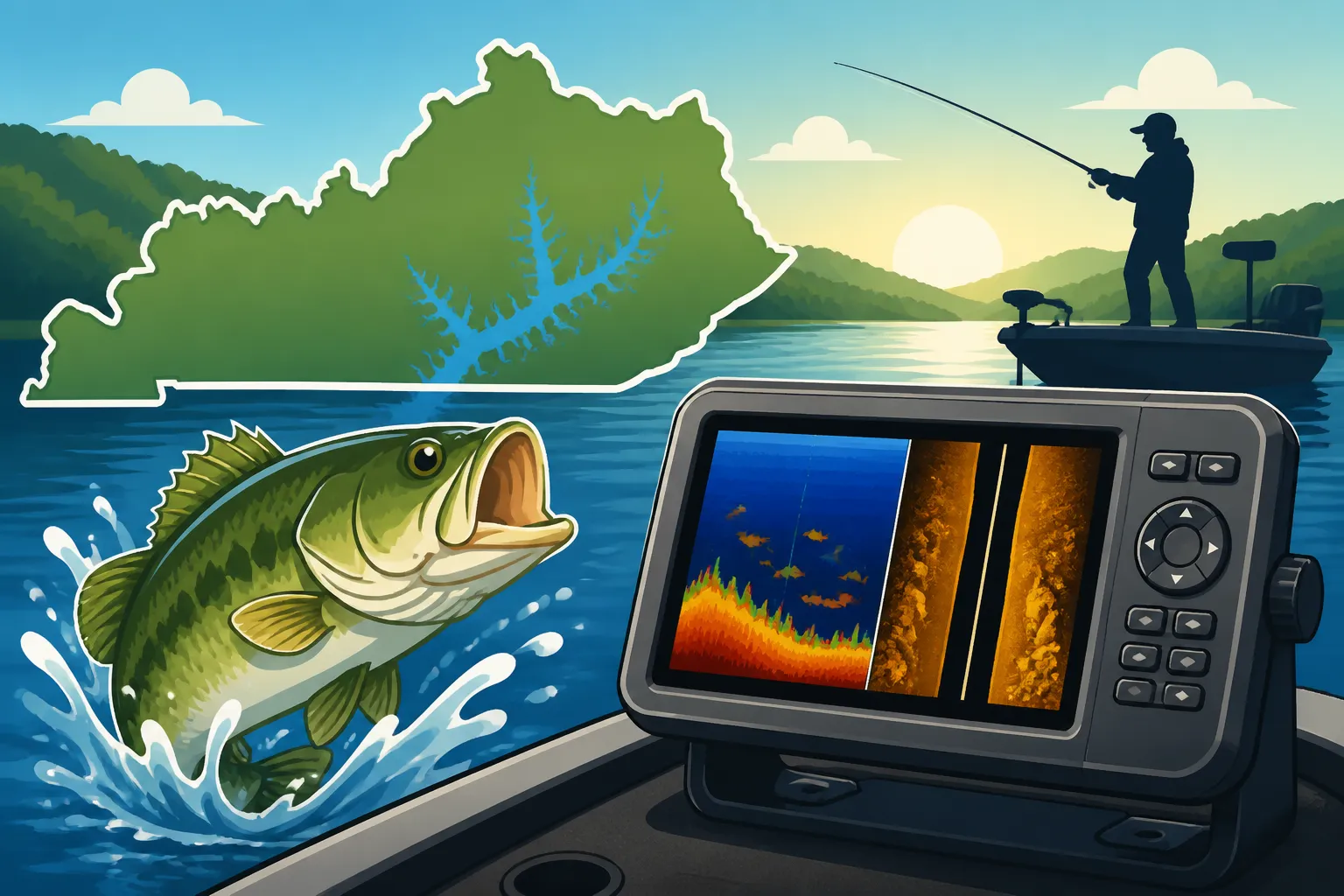
Now we're getting into the really cool stuff! Down Imaging (often called DownScan or DownVü) provides a picture-like view of what's directly below your boat. Instead of arches, you see objects and fish with much greater detail, almost like an X-ray of the water column. You can clearly differentiate between a submerged tree, a brush pile, and individual fish holding within or around that cover. This is a game-changer for deciphering complex structures on the bottom of Kentucky Lake, allowing you to pick apart subtle details that 2D sonar might just show as a blob.
Side Imaging (or SideScan, SideVü) takes it a step further, allowing you to see out to the sides of your boat, often up to hundreds of feet on either side. This technology is absolutely indispensable for covering vast areas efficiently on lakes like Barkley. Instead of having to drive directly over every piece of potential cover, you can scan wide swaths of water, identifying stumps, ledges, humps, and even schools of Kentucky Crappie Daily Limit Rules at a distance. If you're looking for Best Bass Fishing Spots on Kentucky Lake, Side Imaging helps you quickly eliminate unproductive water and focus on areas where fish are likely to be hiding. It allows you to literally "see" entire brush piles, rock formations, or even old foundations of homes that are now submerged. This broad view significantly reduces the time spent searching and increases your time fishing.
GPS and Mapping Capabilities
A fish finder without a robust GPS and mapping system is like having a car without a steering wheel on these big lakes – you're just drifting. Modern fish finders integrate high-precision GPS, allowing you to mark waypoints, track your path, and navigate confidently. But it's the detailed lake maps that truly transform your fishing. These units often come pre-loaded with high-definition bathymetric charts that show contours, depth changes, navigation markers, and even submerged roads or creek channels.
Imagine you're targeting Lake Barkley's Best Sauger Fishing Spots in Kentucky. With detailed mapping, you can easily identify the river channel, mark specific humps, or follow contour lines to stay on the fish. You can drop a precise waypoint the moment you find a school of fish or a productive brush pile, ensuring you can return to that exact spot later or on another trip. The ability to create your own custom maps by recording sonar data (often called "contour mapping" or "Genesis Live" with some brands) takes this to another level, allowing you to uncover hidden structure not even on commercial maps. These mapping features are crucial for tournament anglers trying to pattern fish and for anyone who wants to return to a productive spot time and time again.
Key Features to Look For in a Fish Finder
Choosing a fish finder isn't just about picking the newest, shiniest model. It's about understanding what features truly matter for fishing the unique characteristics of Kentucky Lake and Lake Barkley. Every component plays a role in how effectively you can find fish and structure.
Screen Size and Resolution
When you're out on the water, battling sun glare and trying to interpret complex sonar images, a clear, large display makes a world of difference. Screen size directly impacts how much information you can view simultaneously, especially if you like to run split screens with 2D sonar, Down Imaging, Side Imaging, and your map all at once. For the sprawling waters of Kentucky Lake, a larger screen (7 inches or more) can significantly reduce eye strain and make it easier to discern details at a glance, allowing you to quickly spot a fish from a brush pile.
Resolution, measured in pixels (e.g., 800×480, 1024×600), determines the clarity and detail of the image. Higher resolution means a sharper, more defined picture, which is critical for distinguishing subtle features like individual fish, small pieces of cover, or tiny bait balls. A high-resolution screen will make your Down Imaging and Side Imaging truly shine, rendering those photographic views with precision. Trying to decipher a blurry image on a small, low-resolution screen can lead to missed fish and frustration, especially when trying to identify productive spots in deeper water or dense cover.
Transducer Quality and Frequencies
The transducer is the unsung hero of your fish finder – it's the part that actually sends and receives the sonar waves. The quality of your transducer directly impacts the clarity and detail of the images you see on your screen. A cheap, low-quality transducer will deliver fuzzy, unreliable readings, no matter how fancy your head unit is. For big lakes with varying depths and targets like Kentucky and Barkley, you want a transducer capable of multiple frequencies.
Traditional 2D sonar often uses frequencies like 83 kHz (wider cone, good for shallower water and scanning large areas) and 200 kHz (narrower cone, better for deeper water and higher detail directly below). Down Imaging and Side Imaging typically use much higher frequencies (e.g., 455 kHz, 800 kHz, or even 1.2 MHz) to achieve their photographic detail. These higher frequencies are excellent for showing precise detail of structure and fish but don't penetrate as deep into the water. Having a transducer that can effectively handle all these frequencies and provide clear returns across a range of depths is paramount. Many modern transducers are "all-in-one" designs, combining multiple sonar types into a single unit for convenience and optimal performance.
User Interface and Ease of Use
No matter how powerful a fish finder is, if you can't easily navigate its menus, adjust settings, or quickly switch between views, it's not serving you well. The user interface (UI) and overall ease of use are critical factors, especially when you're out on a windy day, trying to stay on fish. Intuitive controls, clearly labeled buttons, and a logical menu structure can save you valuable fishing time and reduce frustration. Some anglers prefer touchscreens for their smartphone-like interaction, while others opt for traditional button controls for better tactility in wet conditions or with gloves on.
Consider how easy it is to mark a waypoint, adjust sensitivity, or zoom in on a specific area. Can you customize your screen layouts to display the information most important to your fishing style? Features like quick-access buttons or customizable shortcuts can make a big difference. Before committing to a unit, it's a good idea to research reviews and even watch videos of people using it on the water to get a sense of its usability. A complex unit that requires constant fiddling will distract from the actual fishing.
Making Your Choice: Matching a Fish Finder to Your Fishing Style
With so many options on the market, choosing the "best" fish finder really boils down to your specific needs, fishing frequency, and budget. Whether you're a casual weekend angler or a serious tournament contender, there's a fish finder out there that's perfectly suited for tackling Kentucky Lake and Lake Barkley.
Budget-Friendly Options for Beginners
If you're just dipping your toes into the world of fish finders, or you only hit the lakes a few times a year, you don't necessarily need a top-of-the-line unit. There are many excellent entry-level and mid-range fish finders that offer a fantastic balance of features and affordability. Look for units that include at least 2D sonar and basic GPS with mapping capabilities. Some budget-friendly options might even offer Down Imaging, which is a huge advantage for identifying structure.
Brands like Humminbird and Lowrance offer several models in this category that provide impressive performance for their price point. For instance, a basic 5- or 7-inch unit with 2D sonar and GPS will give you a significant advantage over fishing blind. You can find these units readily available at large outdoor retailers like Bass Pro Shops or online through Amazon. They'll help you see depth, identify basic contours, mark waypoints, and get a general idea of where fish are present. While they might not have all the bells and whistles of their more expensive siblings, they provide an excellent starting point for learning how to use a fish finder effectively on big water.
Mid-Range Models for Serious Hobbyists
For the angler who spends a good amount of time on Kentucky Lake or Lake Barkley, participates in local club tournaments, or simply demands more detailed information, a mid-range fish finder is likely the sweet spot. These units typically offer larger, higher-resolution screens (7-9 inches), and crucially, they almost always include both Down Imaging and Side Imaging. This combination of technologies truly unlocks the full potential of a fish finder on these vast lakes.
With a mid-range unit, you'll be able to precisely locate brush piles, ledges, and schools of fish with photographic clarity on your Down Imaging, and quickly scan wide areas for structure using Side Imaging. Enhanced GPS with more detailed pre-loaded maps or the ability to create custom contours becomes standard. These units often feature faster processors and more robust transducers for clearer returns in various conditions. They offer a significant step up in capability and detail, allowing you to confidently target specific species, like the trophy Kentucky Catfish Daily Limit and Trophy Fish Rule, by precisely locating their hiding spots. You'll find a strong selection of these models at your local Bass Pro Shops, where you can often see them in person and ask questions, or browse a wide array on Amazon.
High-End Units for Tournament Anglers
If you're a serious tournament angler, a guide, or simply someone who wants every possible advantage on the water, a high-end fish finder system is what you're after. These are the workhorses of professional fishing, typically featuring large (9-12+ inches), super high-resolution screens, the most advanced transducers, and cutting-edge networking capabilities. Expect to find ultra-detailed Down and Side Imaging, often with even higher frequency options for unparalleled clarity, and features like Forward-Looking Sonar that lets you see what's ahead of your boat.
These systems are designed for seamless integration with other boat electronics, such as trolling motors with GPS spot-lock features, radar, and multiple networked displays. They offer highly customizable screens, powerful processors for instant data refresh, and the ability to record massive amounts of sonar data. For competitors on Kentucky Lake, the ability to quickly differentiate a single fish from a submerged branch on Side Imaging, or precisely follow a subtle contour line with a super-accurate GPS map, can be the difference between a winning bag and coming up empty. While a significant investment, these units provide the ultimate in underwater intelligence, giving you a competitive edge.
Here's a quick comparison of what you might expect at different price points:
| Feature | Budget-Friendly (Entry-Level) | Mid-Range (Hobbyist) | High-End (Tournament/Pro) |
|---|---|---|---|
| Screen Size | 5-7 inches | 7-9 inches | 9-12+ inches |
| Resolution | Standard (e.g., 480×272) | Good (e.g., 800×480, 1024×600) | Excellent (e.g., 1280×800+) |
| Sonar Types | 2D Sonar, Basic GPS | 2D Sonar, Down Imaging, Side Imaging, GPS | All of the above + Forward-Looking Sonar, Ultra HD imaging |
| Mapping | Basic pre-loaded charts, Waypoints | Detailed pre-loaded charts, Custom mapping | Advanced custom mapping, Multiple map layers, Satellite overlay |
| Transducer | Basic single-frequency (or dual) | Multi-frequency (DI/SI enabled) | High-performance multi-frequency, Dedicated DI/SI, Chirp |
| Networking | Limited to none | Basic (e.g., trolling motor link) | Advanced (multiple units, radar, engine data) |
| User Interface | Button-driven, Simple menus | Mix of buttons/touch, Customizable menus | Advanced touch/button, Highly customizable, Fast processor |
Ultimately, the best fish finder for you on Kentucky Lake and Lake Barkley is one that fits your budget, matches your fishing style, and provides the features you need to find more fish confidently. Take the time to research, compare models, and consider what truly matters for your next adventure on the water.
Disclaimer
This article is for general informational purposes only and does not constitute professional advice. Laws, prices and regulations vary by location and change over time. Consult a qualified professional for guidance on your specific situation.