Boat Size Guide for Kentucky Lake and Lake Barkley
One of the biggest head-scratchers for anglers looking to fish Kentucky Lake or Lake Barkley is figuring out what size boat they truly need. These aren't your average local ponds; they're massive bodies of water that can feel like inland seas, and showing up with the wrong boat can quickly turn a dream trip into a nerve-wracking experience. This guide will walk you through everything you need to consider to make an informed decision on the ideal boat size for tackling these magnificent Kentucky waters.
Why Boat Size Matters on Kentucky Lake and Lake Barkley
Let's be real, these aren't small bodies of water. Kentucky Lake and Lake Barkley are giants, connected by a canal, forming one of the largest man-made lake systems in the eastern U.S. Because of their sheer size, choosing the right boat isn't just about comfort; it's about safety, capability, and maximizing your fishing experience. A boat that feels perfectly adequate on a small local reservoir might feel downright tiny and unsafe once you're out on the main channel of Kentucky Lake.
Navigating Expansive Waters and Open Crossings
Imagine heading out across Kentucky Lake on a seemingly calm morning. You're making good time, enjoying the sunrise, when suddenly the wind picks up. Those gentle ripples can quickly transform into significant waves, especially in the wider, more exposed sections of the lake. A smaller boat, say a 14-foot jon boat, will feel every bump and splash, making for a rough, wet, and potentially dangerous ride. You'll be forced to slow down, pound through the waves, and your journey across the lake might take twice as long, or worse, you might have to cut your trip short and head back to the ramp.
On the other hand, a larger boat, perhaps an 18-20 foot bass boat or a multi-species craft, will cut through that chop with far more ease and stability. The increased length and deeper V-hull design of larger vessels provide a smoother ride, allowing you to maintain a more comfortable speed and reach your fishing spots efficiently. This difference becomes even more pronounced when you're making long runs, perhaps from Paris Landing all the way up to Blood River, where you're covering many miles of open water.
Safety Considerations in Big Water
Beyond comfort and speed, safety is paramount. The larger the body of water, the more unpredictable it can be. Sudden squalls can roll in, recreational boat traffic can create large wakes, and underwater hazards might not always be visible. A boat with more freeboard – the distance from the waterline to the top of the boat's side – offers better protection against waves swamping your vessel. This is a critical factor on lakes known for their choppiness.
Furthermore, a larger, heavier boat naturally offers more stability. This translates to a more secure feeling when standing to cast, reeling in a heavy fish, or simply moving around the deck. If you're out with family, especially young children, the added stability of a larger boat can make a world of difference in their overall comfort and your peace of mind. It allows you to focus on the fishing, rather than constantly worrying about the boat's reaction to every ripple. Having all the necessary Kentucky Boating Safety Gear Checklist items on board, along with properly fitted Life Jacket Rules for Boats in Kentucky, becomes even more crucial when dealing with bigger water.
Understanding Different Boat Types and Their Ideal Sizes
Kentucky Lake and Lake Barkley are incredibly diverse fisheries, attracting anglers with all sorts of preferences. Because of this, you'll see a huge variety of boats out on the water. Each type has its own sweet spot when it comes to size and suitability for these big lakes.
Bass Boats and Their Sweet Spot
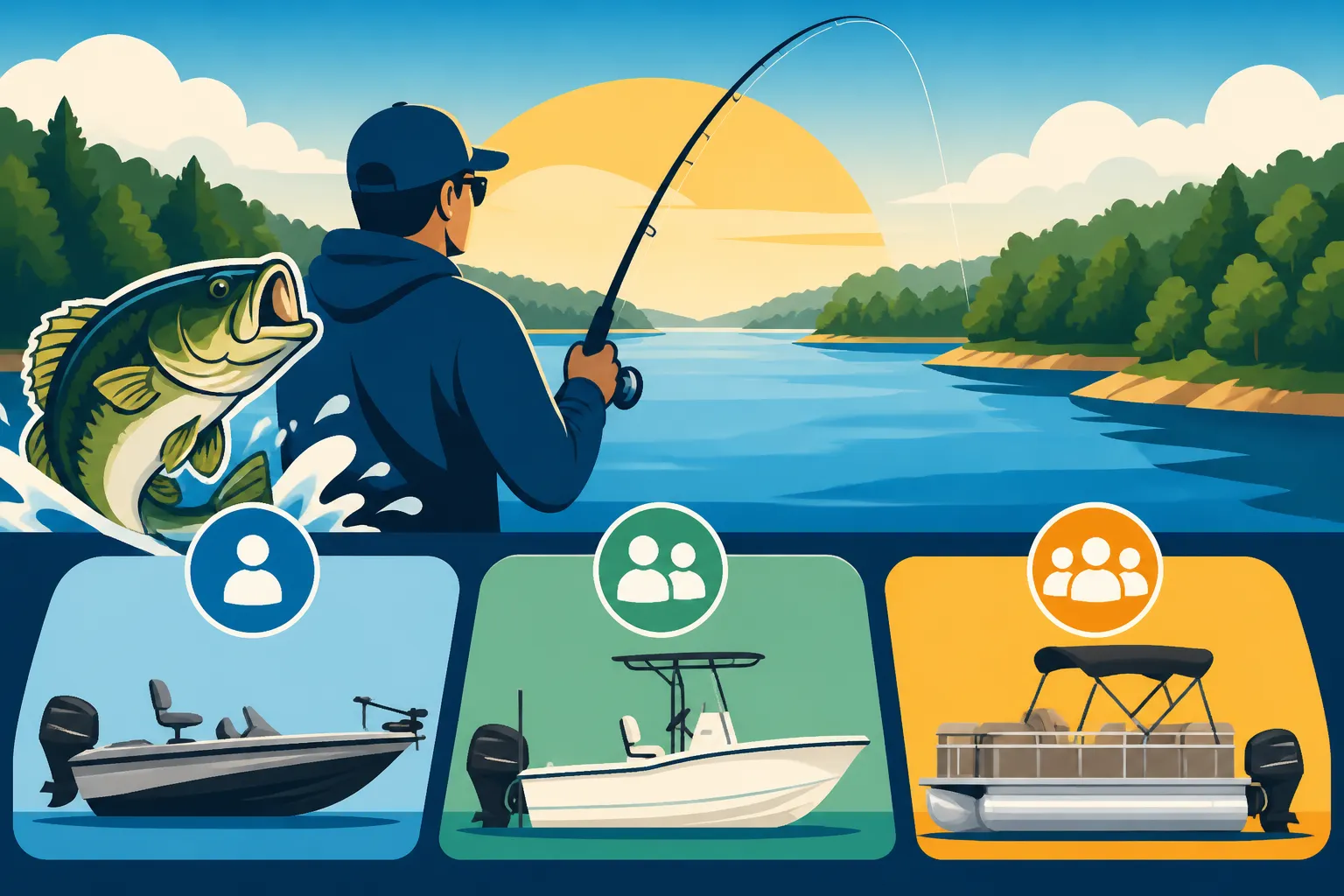
Ah, the classic bass boat! These sleek, powerful machines are designed for speed and getting you to those prime bass spots fast. They typically feature expansive casting decks, livewells, and powerful trolling motors. For Kentucky Lake and Lake Barkley, the "sweet spot" for bass boat size usually falls between 18 and 21 feet. An 18-foot bass boat offers good maneuverability and is relatively easy to trailer, while a 20 or 21-footer provides superior stability, a smoother ride in chop, and more deck space for multiple anglers and their gear.
While a 16-foot bass boat might work for very calm days or sticking to sheltered bays, you'll quickly find its limitations if you venture into the main lake or if the wind picks up. The lower profile and shallower V-hull of smaller bass boats can make them prone to taking on water in rough conditions. Best Bass Boats for Kentucky Lake and Lake Barkley often emphasizes models in this 19-21 foot range for their blend of performance and big-water capability.
Multi-Species Boats and Walleye Rigs
Multi-species boats, sometimes called walleye boats, are gaining popularity on these lakes because of their versatility. These boats typically have deeper V-hulls than traditional bass boats, offering a much drier and smoother ride in rough water. They often range from 17 to 20 feet. This deeper hull design makes them excellent for trolling, drifting, or even vertical jigging for various species like sauger, crappie, and even catfish.
They might not be as fast as a dedicated bass boat, or have quite as much open casting deck, but their ability to handle diverse conditions and fishing techniques makes them a fantastic all-around option for Kentucky Lake and Lake Barkley. If your fishing plans include everything from chasing bass to trolling for sauger, a multi-species boat in the 18-20 foot range provides a great balance of comfort, safety, and fishing utility.
Pontoon Boats for Comfort and Family Fishing
Pontoon boats, with their flat decks and multiple pontoons, are the champions of stability and comfort. They range widely in size, but for big lakes like Kentucky Lake and Lake Barkley, you'll typically see pontoons from 20 to 24 feet, or even larger. These boats offer ample space for family and friends, comfortable seating, and often come equipped with amenities like stereos, grills, and even changing rooms. They're fantastic for leisurely cruises, swimming, and relaxed fishing trips where you're not trying to cover vast distances quickly.
While incredibly stable at rest or in calm conditions, pontoons are generally not designed to slice through heavy chop like a V-hull boat. They tend to "pound" on waves, making for a less comfortable ride in rough water. However, if your main goal is to enjoy the lake with a large group, engage in light fishing, and prioritize comfort and space, a larger pontoon boat (22 feet and up) can certainly hold its own in many areas of these lakes, especially on calmer days or in more sheltered coves.
Aluminum Jon Boats and Utility Boats
Aluminum jon boats and utility boats are the workhorses of the fishing world. They are durable, relatively inexpensive, and versatile. For smaller ponds or sheltered creeks, a 14-foot jon boat is perfectly fine. However, for Kentucky Lake and Lake Barkley, if you're considering a jon boat, you'll want to lean towards the larger end of the spectrum, perhaps 16 to 18 feet, and even then, understand its limitations.
A larger jon boat can offer decent stability for bank fishing close to shore or exploring backwaters and calm coves. Some even come with V-hulls or modified V-hulls to improve their ride. However, even an 18-foot jon boat will struggle significantly in open, choppy water compared to a purpose-built bass or multi-species boat. Their lower sides mean you'll take on more spray, and their flatter bottom can lead to a very jarring ride. They are best suited for anglers who plan to stick to protected areas or venture out only on the calmest of days.
Factors to Consider When Choosing Your Boat Size
Deciding on the perfect boat size isn't a one-size-fits-all answer. It's a personal choice that needs to align with how you plan to use the boat, the conditions you expect to encounter, and your practical limitations. Thinking through these factors can save you a lot of headaches (and money) down the line.
Primary Fishing Style and Target Species
Your fishing habits play a huge role in boat size selection. If you're a hardcore bass angler, you might prioritize a larger bass boat (19-21 feet) for its powerful motor, speed, ample casting decks, and specialized storage for multiple rods and tackle boxes. These boats are built for competitive fishing, where getting to the next spot quickly and having a stable platform to work from is key. You'll want a boat that can handle the long runs across open water to chase those tournament-winning fish.
Crappie anglers, on the other hand, might value stability and trolling capability more than raw speed. A multi-species boat or even a larger jon boat (17-20 feet) might be ideal, allowing for "spider rigging" multiple poles off the sides or leisurely drifting over brush piles. Catfish anglers often need plenty of deck space for large coolers, bait buckets, and heavy-duty rods, making a spacious multi-species boat or a sturdy utility boat (18-20 feet) a good choice, especially if you're fishing the Ohio River arm of Lake Barkley. Each species demands a slightly different approach, and your boat should support that.
Anticipated Water Conditions and Weather Patterns
Kentucky Lake and Lake Barkley are big, and big water can get rough. It's not uncommon for a calm morning to turn into a white-capping afternoon, especially during windy seasons. A larger boat, generally 18 feet or more with a good V-hull, will offer a much safer and more comfortable ride when the waves kick up. The increased length helps the boat bridge wave crests, reducing pounding, while a deeper V-hull cuts through the water rather than slapping over it.
If you plan to primarily fish the main lake channels or make long runs across open water, leaning towards a larger boat is a wise decision. If your fishing is confined to smaller, more protected coves or bays, then a slightly smaller boat might suffice. Always err on the side of caution. Unexpected weather changes happen, and being in an under-sized boat on a big lake when a squall rolls in can be a genuinely frightening experience. Always check the weather forecast, but remember that conditions can change rapidly on these expansive lakes.
Number of Anglers and Gear Capacity
Consider who you'll typically be fishing with. If you're usually a solo angler or fish with just one buddy, you might not need the largest boat on the water. However, if you frequently bring along family, friends, or plan on guiding trips, then a larger boat with more seating and deck space becomes essential. Cramped quarters can quickly lead to frustrated anglers, making the trip less enjoyable for everyone.
Think about your gear, too. Do you carry multiple rod and reel setups for different techniques? Do you need a large cooler for drinks and a big livewell for your catch? A bigger boat offers more storage compartments, more room for tackle bags, and greater weight capacity. Overloading a small boat not only makes it perform poorly but also creates a significant safety hazard. Always check the boat's maximum weight and person capacity ratings.
Trailering, Storage, and Budget
Let's talk logistics and your wallet. Generally, the larger the boat, the more expensive it will be to purchase, insure, and maintain. Larger boats also require a more capable tow vehicle, often a full-size truck or a powerful SUV, which is another cost to consider. Trailering a large boat can be more challenging, especially for new boaters or when navigating busy ramps. Boat Trailer Tips for Launching on Lake Barkley are essential if you're going with a sizable vessel.
Storage is another factor. Do you have space at home for a 20-foot boat on a trailer, or will you need to pay for off-site storage? Larger boats take up more room. When you visit a place like Bass Pro Shops or browse options online, pay close attention to the overall length of the boat and its trailer. This "boat size guide" isn't just about the length of the hull; it's about the entire package from hitch to prop. Your budget and practical considerations for transportation and storage should heavily influence your final decision.
Navigating Kentucky Lake and Lake Barkley with Different Sizes
Understanding the pros and cons of various boat sizes when directly applied to fishing on Kentucky Lake and Lake Barkley can really help solidify your decision. Each size category offers a different experience and comes with its own set of advantages and limitations on these specific waters.
Advantages of Larger Vessels (18-24+ Feet)
If you're serious about fishing Kentucky Lake and Lake Barkley frequently and in diverse conditions, larger boats (typically 18 to 24 feet or more) offer a distinct advantage. Their primary benefit is how they handle rough water. When a sudden afternoon thunderstorm whips up waves, a larger boat provides a significantly more comfortable and safer ride, allowing you to get back to the ramp or relocate to a calmer spot with less worry. This capability means fewer cancelled trips and more productive time on the water.
Beyond safety, larger vessels often mean more space. More deck space for casting, more storage for gear, more comfortable seating for multiple anglers, and larger livewells to keep your catch healthy. They can also typically carry more fuel, extending your range and allowing you to explore more distant fishing spots without constantly worrying about refueling. If you're planning multi-day trips or want to fish the entire length of these massive lakes, a bigger boat offers the range and resilience you'll appreciate.
Considerations for Mid-Size Boats (16-18 Feet)
Mid-size boats, generally in the 16 to 18-foot range, represent a fantastic compromise for many anglers on Kentucky Lake and Lake Barkley. They are often more affordable than their larger counterparts, easier to trailer, and require a less robust tow vehicle. While they won't handle extreme chop with the same grace as a 20-footer, a well-designed 17 or 18-foot boat with a decent V-hull can still provide a comfortable and safe ride in moderate conditions.
These boats are incredibly versatile. They can access many of the shallower coves and backwaters while still being capable enough to venture out into the main lake on calmer days. If you primarily fish with one or two other people, a mid-size boat offers ample space and capacity without feeling oversized. Just remember that when the wind really starts blowing, you'll need to exercise more caution and might be limited to more protected areas. They are a great choice for anglers seeking a balance between capability and practicality.
Limitations of Smaller Boats (Under 16 Feet)
For boats under 16 feet, such as smaller jon boats or older utility boats, their limitations on Kentucky Lake and Lake Barkley become quite significant. While these boats are excellent for small local ponds, calm rivers, or highly sheltered coves, they are simply not designed for the open water conditions of these large reservoirs. Their low freeboard means waves can easily break over the bow, filling the boat with water, and their lighter weight and flatter hull designs lead to a very rough, wet, and often unsafe ride in anything but perfectly calm conditions.
Anglers with smaller boats on these lakes must be hyper-vigilant about weather forecasts and stick strictly to protected areas. Even a modest breeze can create uncomfortable chop on the main lake. While they are certainly more budget-friendly and easier to launch from less developed ramps, the trade-off in safety and capability on big water is substantial. If your heart is set on a smaller boat, consider Bank Fishing Techniques for Beginners or Best Shore and Bank Fishing Spots in Kentucky as alternative ways to enjoy these waters safely.
Table: Boat Size Comparison for Kentucky Lake and Lake Barkley
Here’s a quick overview to help you compare different boat types and sizes as they relate to fishing on Kentucky Lake and Lake Barkley:
| Boat Type | Typical Size Range (Feet) | Pros for Kentucky Lake/Lake Barkley | Cons for Kentucky Lake/Lake Barkley |
|---|---|---|---|
| Bass Boat | 18-21 | Excellent for speed, large casting decks, stable fishing platform, handles moderate to rough chop well. | Can be wet in rough conditions (low profile), not ideal for diverse fishing techniques (e.g., deep trolling). |
| Multi-Species/Walleye | 17-20 | Deeper V-hull provides smooth, dry ride in chop, versatile for various fishing styles (trolling, jigging), good stability. | Slower than bass boats, less dedicated casting deck space, may not have as much specialized storage. |
| Pontoon Boat | 20-24+ | Unmatched stability at rest, spacious for large groups, comfortable amenities, great for leisure and relaxed fishing. | Poor performance in rough water (pounds on waves), slow, not designed for fast travel or serious fishing runs. |
| Aluminum Jon Boat | 16-18 | Affordable, durable, easy to maneuver in shallow or sheltered waters, good for bank-adjacent fishing. | Poor performance in open, rough water; very wet, jarring ride; limited capacity and speed. Not ideal for main lake conditions. |
Practical Tips for Choosing the Right Size
Making a final decision on your boat size for Kentucky Lake or Lake Barkley doesn't have to be overwhelming. With a few practical steps and some research, you can confidently choose a vessel that meets your needs and ensures a great experience on the water.
Research Local Conditions and Launch Points
Before you commit to a boat size, spend some time researching the specific areas of Kentucky Lake or Lake Barkley you plan to fish most often. Are you mostly targeting the calmer, more protected bays and river arms, or do you intend to make long runs across the wide, open main lake? Conditions can vary significantly from one section to another. The lower end of Kentucky Lake, for example, can be much wider and more exposed to wind than some of the narrow creeks leading into Lake Barkley.
Also, consider the Kentucky Boat Ramp Guide for Major Lakes. Are the ramps you'll use regularly suitable for larger boats, or are they better suited for smaller, lighter vessels? Some ramps might be steep or have limited maneuvering room, making launching a very large boat a challenge. Knowing these local specifics will help you refine your boat size requirements.
Test Drives and Expert Advice
There's no substitute for hands-on experience. If you're seriously considering a significant investment, try to take a test drive in different boat sizes and types. Many dealerships or boat shows offer this opportunity. Pay attention to how the boat handles in different conditions, if possible. Does it feel stable? Is the ride comfortable? Can you easily access all the areas you'd use for fishing?
Beyond test drives, talk to seasoned anglers who regularly fish Kentucky Lake and Lake Barkley. They've experienced firsthand what works and what doesn't. Join local fishing forums, visit a local Bass Pro Shops, or strike up conversations at the boat ramp. Most anglers are more than happy to share their knowledge. Ask them about their boat choices, what they love, and what they'd change. Their real-world insights can be invaluable.
Safety Gear and Preparation
Regardless of the boat size you ultimately choose, never compromise on safety. Even the largest, most stable boat can encounter unexpected issues on big water. Always have enough U.S. Coast Guard-approved life jackets for everyone on board, and make sure children wear theirs at all times. Carry essential emergency gear like a first-aid kit, a horn or whistle, navigation lights, and a fire extinguisher, especially if your boat has an enclosed engine. Many of these safety essentials can be easily sourced from retailers like Amazon or any marine supply store.
Beyond physical gear, preparation is key. File a float plan with someone on shore, letting them know where you're going and when you expect to return. Always check the marine weather forecast before heading out, and if conditions look questionable, err on the side of caution. A fun, safe day on the water is always more important than catching a trophy fish.
Disclaimer
This article is for general informational purposes only and does not constitute professional advice. Laws, prices and regulations vary by location and change over time. Consult a qualified professional for guidance on your specific situation.