Fishing Border Lakes Shared With Tennessee
It can be incredibly confusing and honestly, a bit intimidating when you’re planning a fishing trip to a lake that literally straddles two states. You’re left wondering, "Do I need two fishing licenses? What if I drift across the border? Are the rules different depending on where I launch my boat?" These are completely valid questions that plague many anglers. This guide is here to untangle the complexities of fishing border lakes between Kentucky and Tennessee, ensuring you stay legal and enjoy your time on the water without unnecessary stress.
Navigating the Dual State Waters: Why Border Lakes Are Tricky
Fishing on lakes that share a border between Kentucky and Tennessee presents a unique set of challenges and opportunities. For many anglers, the initial thought is often, "If I'm fishing in Kentucky, I need a Kentucky license; if I'm in Tennessee, I need a Tennessee license." While that's the general rule for most situations, border waters often have special agreements in place, known as reciprocity agreements, that aim to simplify things for recreational anglers. However, these agreements aren't universal, and misunderstanding them can quickly lead to an unexpected interaction with a game warden and potentially a fine. The frustration comes from the invisible line that runs through these vast bodies of water, making it almost impossible to know which side you're on without constant GPS monitoring.
Imagine you're out on the water, having a fantastic day, only to realize you've drifted a few hundred yards and are now technically in another state's jurisdiction without the proper paperwork. It’s a common scenario, and it’s why understanding these rules before you even hit the ramp is so crucial. Even if you have the best intentions, ignorance of the law is never an excuse. That little bit of extra research can save you a lot of headache and allow you to focus on what you love: catching fish. This is especially important for those new to the area or who typically fish only within one state's boundaries.
Understanding Kentucky and Tennessee Reciprocity Agreements
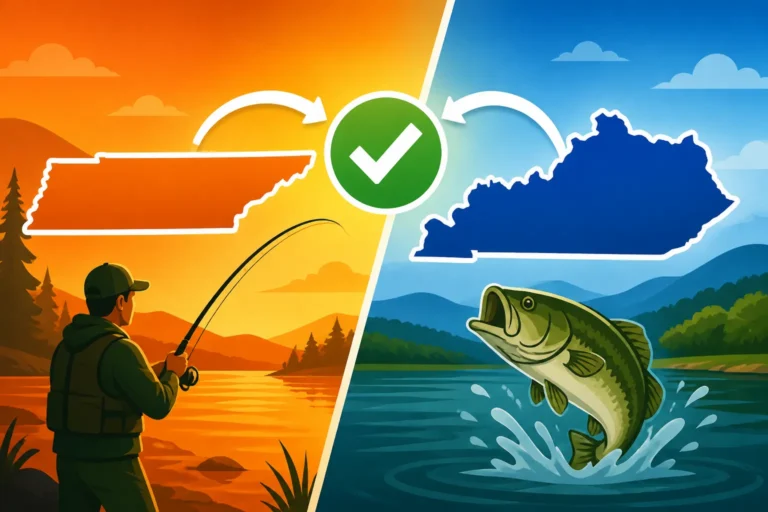
The good news is that Kentucky and Tennessee do have some longstanding agreements in place for specific border lakes, making life a little easier for anglers. These agreements generally mean that if you possess a valid resident or nonresident fishing license from either state, you can legally fish the reciprocal waters of those specific lakes. But here's the critical distinction: this reciprocity isn't blanket coverage for every inch of water between the two states. It applies to certain designated lakes only.
Key Reciprocal Lakes and Their Specifics
When we talk about Kentucky and Tennessee border waters, three major lakes immediately come to mind: Kentucky Lake, Lake Barkley, and Dale Hollow Lake. These are magnificent fisheries, each offering incredible angling opportunities, but they come with their own nuances regarding licensing.
- Kentucky Lake: This massive impoundment is renowned for its fantastic bass fishing and crappie fishing. It stretches across both states, and thankfully, there's a reciprocal agreement. If you have a valid Kentucky fishing license, you can fish the entire Kentucky Lake. Similarly, if you have a valid Tennessee fishing license, you can also fish the entire lake. This means you don't need to purchase two separate licenses to traverse the state line while on the water. However, always remember that while your license covers the act of fishing, you must adhere to the more restrictive creel and size limits of the state you are physically in, or the specific regulations that apply to the lake as a whole, which are often a blended set of rules agreed upon by both states. Checking the latest Kentucky Fishing Regulations Explained is always a good idea before you head out, and don't forget to check Tennessee's rules too!
- Lake Barkley: Just like Kentucky Lake, Lake Barkley is another prime fishing destination with a reciprocal agreement between Kentucky and Tennessee. Anglers holding a valid fishing license from either state can fish the entire lake. This is a huge relief for anyone looking to explore the vast waters of Lake Barkley, especially those targeting species like sauger and white bass. Again, the same principle applies regarding fish limits: be aware of the specific lake regulations, which often supersede individual state-wide limits due to these agreements. For instance, specific bass size limits might apply to Lake Barkley that differ from the statewide Kentucky limits. You can find excellent advice on Lake Barkley Fishing Guide for Kentucky Anglers in our other resources.
- Dale Hollow Lake: This beautiful lake, famous for its world-class smallmouth bass, also participates in a reciprocity agreement. A valid fishing license from Kentucky or Tennessee allows you to fish the entire lake, regardless of which state's side you're on. This is particularly beneficial for anglers who might launch their boat from one state but want to fish areas deep within the other. It really simplifies things, allowing you to focus on finding those big smallmouths rather than worrying about imaginary lines on the water.
What Reciprocity Doesn't Cover
It's crucial to understand the limitations of these agreements. Reciprocity applies to fishing on the designated waters only. It does not extend to:
- Hunting or Trapping: These activities require a separate license for the specific state you are hunting or trapping in.
- Private Waters: If you step off your boat and onto private land, or fish a private pond, the rules for that specific state and property apply.
- Other State Waterways: The agreement does not grant you the right to fish in other non-border lakes or rivers within the adjacent state. For example, a Tennessee license won't let you fish the Ohio River in Kentucky, or vice versa.
- Special Permits: If a specific permit is required (like a trout permit), you generally need the permit for the state whose waters you are fishing, even if your base fishing license is reciprocal. Always double-check this. For example, a Kentucky Trout Permit Guide might be necessary if you're targeting trout in specifically stocked reciprocal waters and the agreement doesn't explicitly waive it.
The best practice is always to have a current copy of the regulations for both states (or at least the specific lake) on hand. Many anglers keep a digital copy on their phone, or even print out a small booklet. You can also find a lot of useful gear, like waterproof maps with state lines marked, on platforms like Amazon.
Here's a quick reference table to help visualize the reciprocity on these popular border lakes:
| Border Lake | Kentucky License Valid? | Tennessee License Valid? | Special Notes |
|---|---|---|---|
| Kentucky Lake | Yes | Yes | All reciprocal waters. Adhere to agreed-upon lake regulations for bag/size limits. |
| Lake Barkley | Yes | Yes | All reciprocal waters. Adhere to agreed-upon lake regulations for bag/size limits. |
| Dale Hollow Lake | Yes | Yes | All reciprocal waters. Adhere to agreed-upon lake regulations for bag/size limits, especially for smallmouth bass. |
| Ohio River | No | No | No general reciprocity with Tennessee. Separate licenses required for each state's waters. |
| Mississippi River | No | No | Reciprocity usually handled through specific bi-state agreements, check current rules. |
Remember, while the general principle is "one license covers the whole lake," it’s always wise to verify current regulations, as rules can occasionally change. The Kentucky Department of Fish and Wildlife Resources (KDFWR) website is your best friend for up-to-date information, as is the Tennessee Wildlife Resources Agency (TWRA) site.
What to Do When Reciprocity Isn't an Option
Not every shared waterbody between Kentucky and Tennessee falls under a reciprocal agreement. For instance, the Ohio River borders Kentucky, but not Tennessee directly for much of its length. And while the Mississippi River forms part of the border, its reciprocal agreements are typically with Missouri or Arkansas, not usually a blanket deal with Tennessee across all shared waters without specific local rules. So, what happens when you want to fish a body of water that crosses state lines but doesn't have a clear reciprocity agreement?
Purchasing a Nonresident License
Your safest and only legal bet in non-reciprocal border waters is to purchase a nonresident fishing license for the state whose waters you intend to fish. If you're a Kentucky resident fishing in a non-reciprocal Tennessee waterbody, you'll need a Tennessee nonresident license. Conversely, a Tennessee resident fishing in non-reciprocal Kentucky waters would need a Kentucky Nonresident Fishing License Guide. This might seem like an extra expense, but it’s far less costly than a citation for fishing without a license.
Consider a scenario where you're planning a multi-day trip. A Tennessee resident might want to fish their home state's non-reciprocal waters one day, and then venture into Kentucky's non-reciprocal waters the next. In this case, having both a Tennessee license and a Kentucky nonresident license would be essential. Options include an annual nonresident license, or if your trip is short, a 1-day or 7-day nonresident license. You can easily buy a Kentucky Nonresident 1-Day Fishing License Costs $15.86 if you’re only visiting for a brief period. You can often purchase these licenses online through the respective state's wildlife agency website, or at authorized vendors like bait shops, sporting goods stores, or even big box retailers that carry fishing gear. Many people find it convenient to buy their licenses online through the official state portals or use apps like Go Outdoors Kentucky, which are often available on platforms like Amazon and make purchasing licenses a breeze.
Staying Within Jurisdiction
If you opt not to buy a nonresident license, your only option is to ensure you strictly stay within the waters of the state for which you hold a valid license. This requires diligence and careful navigation, especially on rivers with strong currents or lakes where shorelines might be ambiguous. Using a GPS with detailed mapping (many modern fish finders and chartplotters display state lines) becomes critical. You really don't want to get caught accidentally drifting across an unseen border. Game wardens from both states routinely patrol these areas, and they know the common crossing points. It’s better to be overly cautious than to risk a fine or confiscation of your catch.
Remember, the rules also apply to children. While kids typically have different Kentucky Fishing License Requirements for Kids, those rules are state-specific. If your child is fishing in a non-reciprocal Tennessee waterbody, they would need to abide by Tennessee's youth fishing license requirements.
Essential Gear and Rules Beyond Licenses
Beyond the crucial aspect of licensing, there are several other considerations when fishing shared border waters. These range from safety equipment to understanding local regulations that might differ slightly from statewide norms. Being prepared ensures a smooth and enjoyable fishing experience, free from unexpected issues.
Safety First: Life Jackets and Boat Regulations
Safety should always be your top priority, especially on large, busy border lakes like Kentucky Lake or Lake Barkley. Both Kentucky and Tennessee have strict boating safety regulations, including life jacket requirements. Generally, all boats must have a Coast Guard-approved life jacket for every person on board. Additionally, children often have more stringent requirements, such as those under a certain age (e.g., under 12 in Kentucky) being required to wear a life jacket at all times while the vessel is underway.
It's not uncommon to see game wardens from both states conducting routine safety checks on these shared waters. They'll be looking for proper registration, working navigation lights, throwable flotation devices, and of course, sufficient Life Jacket Rules for Boats in Kentucky. Investing in good quality, comfortable life jackets, especially for kids, is a smart move. You can find a wide array of options on Amazon, making it easy to outfit your whole crew safely. Don't forget other safety gear like a fully charged fire extinguisher, a sound-producing device (like a whistle or horn), and an emergency kit.
Understanding Site-Specific and Statewide Limits
Even with reciprocity for licensing, fish limits can get a bit complicated. While many border lakes have agreed-upon reciprocal limits for popular species like bass and crappie, some species or specific areas might revert to the individual state's regulations. It's not enough to just know the Statewide Bag and Size Limits by Fish Species for Kentucky; you also need to be aware of any site-specific rules that apply to the particular border lake you're fishing.
For example, Lake Barkley might have a specific bass size limit that's part of the reciprocal agreement, which could be different from Kentucky's general statewide bass regulations. The same goes for crappie or catfish. Before every trip, take a few minutes to review the latest fishing guides from both the Kentucky Department of Fish and Wildlife Resources (KDFWR) and the Tennessee Wildlife Resources Agency (TWRA) for the specific lake you plan to visit. These guides will typically outline any special reciprocal rules or clarify when statewide limits apply.
Where to Access Information and Buy Licenses
Accessing accurate, up-to-date information is key. Both Kentucky and Tennessee provide comprehensive resources online.
- Kentucky: The KDFWR website (fw.ky.gov) is your go-to source for all regulations, license purchasing, and fishing reports. You can easily navigate to sections on How to Get a Fishing License in Kentucky or even How to Buy a Kentucky Fishing License Online.
- Tennessee: The TWRA website (tn.gov/twra) offers similar resources for Tennessee anglers.
Many physical locations, like bait shops, sporting goods stores, and even some county clerk offices, also sell licenses and often have printed copies of the current regulations. Supporting local businesses when you buy your bait, tackle, and even a fishing license is a great way to contribute to the communities around these fantastic fishing destinations.
Whether you're planning a trip to the famed Kentucky Lake: The State's Top Bass Fishing Destination or exploring the pristine waters of Dale Hollow, understanding these licensing and safety nuances will ensure a hassle-free and memorable fishing experience on the Kentucky-Tennessee border.
Disclaimer
The information provided in this guide is for general informational purposes only and is subject to change. Fishing regulations, license requirements, and reciprocal agreements can be updated by state wildlife agencies at any time. Always consult the official websites of the Kentucky Department of Fish and Wildlife Resources (KDFWR) and the Tennessee Wildlife Resources Agency (TWRA) for the most current and accurate regulations before engaging in any fishing activities.