When Does Crappie Spawning Start in Kentucky
There’s nothing quite as frustrating as hearing all the buzz about the crappie spawn starting, only to head out to your favorite spot and find nothing but quiet waters. It can feel like everyone else has a secret calendar for when these slabs decide to move shallow and get aggressive. You're not alone in wishing for a definitive date on the calendar. This comprehensive guide is here to demystify exactly when the crappie spawning season kicks off in Kentucky, focusing on the environmental cues that truly matter.
Understanding the Crappie Spawn Trigger: Water Temperature
Let's be real, Mother Nature doesn't consult a human calendar, and neither do crappie. The single most important factor dictating when crappie begin their spawning ritual in Kentucky, and frankly, anywhere, is the water temperature. If you've been relying solely on the date on your phone, you might be missing the real signals. It’s a common pitfall that can lead to many frustrating, fish-less trips.
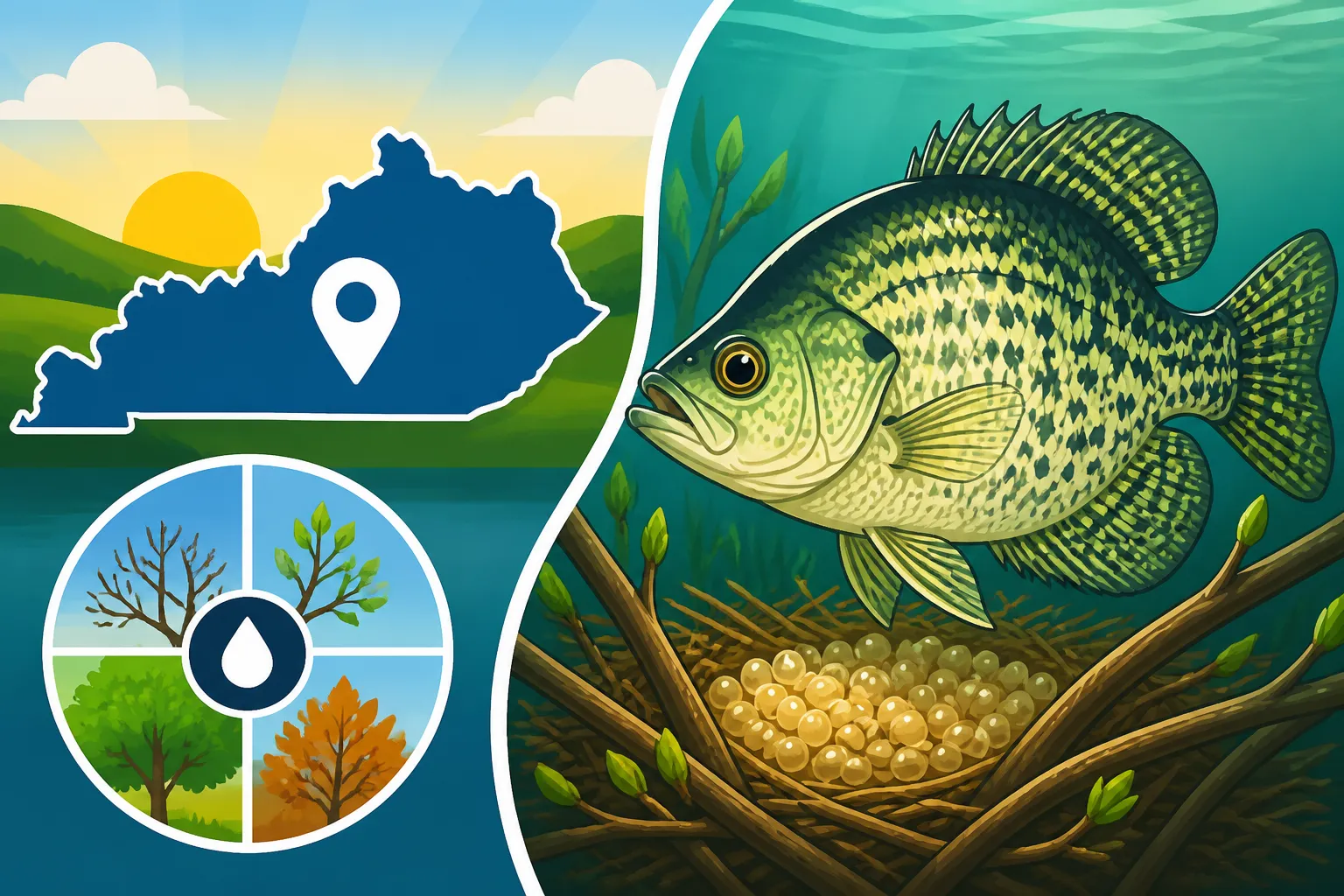
Crappie, both black and white varieties, are driven by their biological clocks, which are primarily synced with the warming water. As the days grow longer and the sun sits higher in the sky, surface water temperatures slowly but surely climb. This gradual warming acts as an unmistakable invitation for crappie to move from their deeper wintering haunts into shallower areas to begin building nests and reproducing. Think of it like a gradual alarm clock that gets louder and louder as the water warms up.
The sweet spot, the magic number that truly triggers the crappie spawn, generally falls between 58 to 68 degrees Fahrenheit. When the water consistently hits that lower 58-degree mark, you'll start to see the initial movements. Fish might move into transition areas, staging in slightly deeper water adjacent to prime spawning grounds. As the temperature pushes into the mid-60s, that's usually when the full-on, aggressive spawning action really gets going. You might have heard whispers about "What Water Temperature Triggers the Crappie Spawn in Kentucky" – it all comes down to this thermal window.
It's important to remember that this isn't an instant flip of a switch. There will be fluctuations, especially in early spring when a cold front can drop water temps temporarily, sending fish back to deeper water. But as the average temperature settles into that range, the crappie will commit to the spawn.
Black crappie tend to spawn slightly earlier than white crappie, often preferring the lower end of that temperature range, around 58-62 degrees. They also typically seek out clearer water and more dense cover. White crappie, on the other hand, are a bit more tolerant of slightly warmer, often murkier water, and might wait until temperatures are consistently in the 60-68 degree range. While these are general tendencies, it's always good to keep in mind the "Black Crappie Vs White Crappie: Key Differences" to fine-tune your approach. Understanding these subtle differences can make all the difference in your early spring fishing success.
The Crappie Spawning Season: A Kentucky Timeline
Knowing the temperature range is one thing, but how does that translate to the calendar in Kentucky? Given our state's varied geography, from the big western reservoirs like Kentucky Lake to the central and eastern lakes and rivers, the exact timing can shift by a week or two. However, we can lay out a general timeline that gives you a solid starting point for when to expect the action. This isn't a hard-and-fast rule, but rather a guide based on historical patterns and average warming trends.
Generally speaking, in Kentucky, you can anticipate the crappie spawn beginning in earnest from late March to early April in the southernmost and western parts of the state, where waters warm up faster. Think about those big, sprawling reservoirs like Kentucky Lake and Lake Barkley. These are often the first to see the crappie move shallow, sometimes even catching anglers by surprise if a warm spell hits early. The "Kentucky Crappie Fishing: Spring Spawn Run Guide" dives deeper into these exciting periods.
As spring progresses into mid-April and early May, the crappie spawn will be in full swing across most of the central and northern regions of Kentucky. Lakes like Taylorsville Lake, Barren River Lake, and even some of the smaller impoundments will experience their peak spawning activity during this window. This is when the fishing can be absolutely phenomenal, as crappie are focused on reproduction and often less wary. It’s a fantastic time to hit the water, especially if you're looking for consistent bites.
It's not uncommon for the spawn to extend into late May, particularly in cooler, deeper lakes or during years with prolonged cold snaps in spring. Even within a single lake, different bays or coves might warm at different rates, leading to a staggered spawn. Some sections, especially those exposed to more direct sunlight or shallower depths, might see fish spawning earlier, while deeper, shadier areas could lag by a week or two. This is a crucial point many anglers overlook; just because the spawn is on in one part of the lake doesn't mean it's finished everywhere else. Always be prepared to adjust your strategy based on the specific water you're fishing.
To give you a clearer picture, here's a general breakdown for Kentucky:
| Region of Kentucky | Typical Water Temperature Range | Expected Spawn Start | Peak Spawn Period |
|---|---|---|---|
| Western/Southern Lakes (e.g., Kentucky Lake, Lake Barkley) | 58-68°F | Late March – Early April | Early – Mid April |
| Central Lakes (e.g., Taylorsville Lake, Barren River Lake, Herrington Lake) | 58-68°F | Early April – Mid April | Mid April – Early May |
| Eastern/Northern Lakes (e.g., Cave Run Lake, Yatesville Lake) | 58-68°F | Mid April – Late April | Late April – Mid May |
Remember, this table provides averages. Always check local conditions and water temperature readings before heading out. A reliable fishing thermometer, easily found on Amazon, can be your best friend during this season.
Where to Find Spawning Crappie in Kentucky Waters
Once you know when the crappie spawn is happening, the next logical step is figuring out where these elusive slabs will be hiding. Crappie aren't just randomly swimming around waiting for love; they have very specific preferences when it comes to their spawning grounds. If you're not targeting the right habitat, even at the perfect temperature, you'll likely come up empty-handed. This is a common frustration for anglers who spend hours casting into unproductive water.
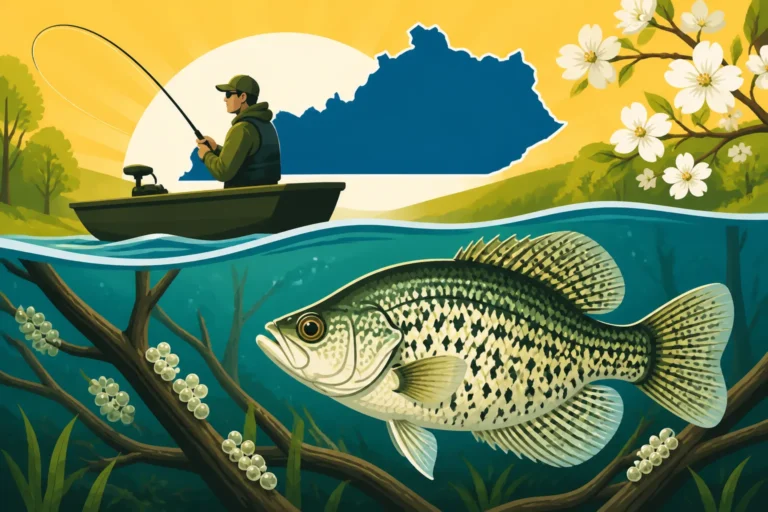
During the spawn, crappie will push into shallow water, typically ranging from 1 to 6 feet deep, though sometimes even shallower in very protected areas. They are looking for hard bottom where they can fan out a nest, and crucially, they want cover to protect their eggs and fry from predators. Think about all those places that offer both a firm substrate and some kind of concealment.
Here's a detailed look at prime spawning habitats:
- Woody Cover: This is almost always a crappie magnet, especially during the spawn. Submerged brush piles, fallen trees (laydowns), standing timber, and stumps are absolutely key. Crappie will tuck right into the thickest parts of these structures. They feel secure there, and it gives their eggs a place to adhere. If you've ever wondered about "Crappie Fishing Around Brush Piles," the spawn is the prime time to explore these areas.
- Docks and Piers: Don't overlook man-made structures! The pilings of docks, especially those with brush sunk nearby, create excellent cover and shade. The underside of floating docks can also be prime territory. Crappie will stage around these structures, often relating to any shade lines or irregularities created by the dock. This is particularly true in highly pressured lakes where natural cover might be sparse.
- Lily Pads and Aquatic Vegetation: As the water warms, aquatic vegetation like lily pads, cattails, and submerged grasses start to grow. These lush green areas provide perfect protection and spawning substrate for crappie. Look for the edges of these beds, or even cast into pockets within them. The dense growth offers both camouflage and a buffet of insects and small baitfish, which are attractive to spawning crappie.
- Rocky Banks and Riprap: In some lakes, particularly those with steeper banks or areas around bridges and causeways, crappie will utilize rocky banks and riprap. The crevices and voids between the rocks offer protection, and the rocks themselves can absorb sunlight, creating slightly warmer pockets of water. These areas can be very productive, especially if there's also some woody debris mixed in.
When you're searching for these spots, pay attention to points that drop off into slightly deeper water, or creek channels that lead into shallow spawning flats. Crappie will use these deeper avenues as travel routes to and from their spawning beds. Areas that offer a quick retreat to deeper water are always attractive, as it allows them to escape pressure or sudden changes in conditions.
Effective Techniques and Baits for Spawning Crappie
Once the crappie are in the shallows and actively spawning, they become incredibly focused, which can lead to some of the most exciting fishing of the year. However, their intensity doesn't always mean they'll bite anything; a refined approach often yields the best results. The good news is, you don't need a boat full of fancy gear to catch them.
One of the most consistently effective techniques during the spawn is jigging. Crappie jigs, especially small ones ranging from 1/32 to 1/16 ounce, are deadly. Colors can vary, but chartreuse, white, black, and various two-tone combinations (like black and chartreuse or white and pink) are perennial favorites. When they are shallow and aggressive, you don't need to overthink it. Just a slow, steady retrieve with a subtle twitch or two can often trigger a strike. For deeper dives into this, check out "How to Jig for Crappie in Shallow Water." You can find a huge variety of these jigs on Amazon, often in multi-pack assortments that give you options for different water clarity and light conditions.
Live minnows are another absolute powerhouse, especially when crappie are finicky or during slower periods of the spawn. Rigged under a small slip bobber, a minnow suspended just above a brush pile or a submerged log is almost irresistible. The slip bobber allows you to easily adjust your depth, which is critical when pinpointing exactly where the fish are holding. A simple split shot a few inches above the hook is usually all you need to get the minnow down to the strike zone. Sometimes, pairing a minnow with a small jig head instead of a plain hook can give you the best of both worlds – the natural appeal of live bait with the added color and action of a jig.
Don't forget spider rigging if you're fishing from a boat. This technique involves using multiple long rods, typically from the front of the boat, to cover a wide swath of water at various depths. Each rod can have a different jig color or bait, allowing you to quickly determine what the crappie are keying in on. While often used for deeper water, it's incredibly effective when covering large flats with scattered cover during the spawn, allowing you to present a bait to many potential fish holding areas simultaneously. Many anglers purchase specialized spider rigging rod holders, available on Amazon, to make this technique much more manageable.
When selecting your gear, light spinning tackle is the way to go. A 6 to 7-foot light or ultralight action rod paired with a small spinning reel spooled with 4 to 6-pound test monofilament or fluorocarbon line is perfect. This setup allows for sensitive feel to detect subtle bites and provides enough backbone to land even slab crappie. You don't need heavy gear when the fish are in shallow cover; finesse often wins the day. And don't forget the importance of a good pair of polarized sunglasses – they'll help you spot that crucial cover and even cruising crappie in the shallows.
Navigating Fluctuations and Adapting Your Strategy
One of the biggest challenges during the crappie spawn in Kentucky is its inherent unpredictability. It’s rare for the weather to cooperate perfectly, offering consistently warm temperatures. You might experience a glorious week of 70-degree days, followed by a sudden cold front that drops the air temperature by 20 degrees and brings heavy rain. These fluctuations can dramatically impact crappie behavior and location, leading to those frustrating "they were just here yesterday!" moments.
A significant cold front after the crappie have moved shallow to spawn can cause them to retreat temporarily. They might pull back from the very shallowest water into slightly deeper, adjacent cover, perhaps moving from 2 feet to 6-8 feet deep. They'll become less aggressive, and you might need to slow down your presentation considerably. Instead of an active retrieve, a dead-sticked minnow under a bobber or a very slow, almost motionless jig presentation can be more effective. This is when patience really pays off, as they’re still in the area, just less willing to chase. Sometimes, they'll even pull down into the deeper creek channels if the cold snap is severe and prolonged.
Heavy rains can also muddy up the water, especially in feeder creeks and shallower arms of lakes. When visibility drops, crappie often rely more on their lateral line to detect vibrations. This might mean trying jigs with more thump or rattle, or using brighter, more contrasting colors like chartreuse or neon orange. Scented baits or tipping your jig with a live minnow can also be highly effective in murky conditions, giving the fish another sensory cue to hone in on. It's also worth noting that after heavy rains, the warmest and clearest water might be found further out in the main lake, as the shallowest areas get flushed with colder, dirtier runoff.
Always pay attention to the fishing reports for your specific lake or body of water. Anglers are often very good at sharing what's working and where the fish are being caught. Websites, local bait shops, and even social media groups dedicated to "Best Crappie Fishing Lakes in Kentucky" can provide invaluable, up-to-the-minute information. Don't be afraid to experiment with different depths, retrieve speeds, and bait colors until you crack the code for that particular day. Having a variety of crappie jigs and soft plastics, perhaps a tackle box full you curated from Amazon, can be a game-changer when conditions are unpredictable.
The crappie spawn is a dynamic period, and successful anglers are those who can adapt. Be observant, be patient, and don't be afraid to try something different if your usual tactics aren't producing. Remember, the fish are there, you just need to figure out what they want on that specific day. And always be mindful of "Kentucky Crappie Daily Limit Rules" to ensure sustainable fishing for everyone.
Disclaimer
Fishing conditions and regulations in Kentucky can change. Always consult the latest Kentucky Department of Fish and Wildlife Resources (KDFWR) regulations before heading out on the water. This guide is for informational purposes only and does not supersede official KDFWR rules and guidelines.