Best Rigs for Catfish Fishing in Current
Oh, the mighty current! If you've spent any time chasing those whiskered beauties in Kentucky's rivers or even the main channels of our larger lakes like Kentucky Lake or the Ohio River, you know the struggle is real. The current can be your best friend, bringing food to hungry catfish, or your worst enemy, dragging your bait into snags, tangling your line, and generally making a mess of your fishing experience. There's nothing more frustrating than casting out, only for your carefully selected bait to immediately get swept away or become an immovable obstacle on the bottom.
But don't despair! Mastering catfish fishing in current isn't about fighting the flow; it's about understanding it and choosing the right setup to work with it. This comprehensive guide is going to walk you through the best rigs for catfish fishing in current, ensuring your bait stays where the fish are, your lines stay untangled, and you can finally enjoy the thrill of battling a big Kentucky cat.
Understanding Catfish Behavior in Current
Before we even talk about specific rigs, it's vital to understand why current matters so much to catfish and how they interact with it. It’s not just a force of nature; it’s a living, breathing part of their habitat, and savvy anglers learn to read it like a book.
Why Catfish Love Current (and How They Use It)
Catfish, especially big blue catfish and channel catfish, are incredibly well-adapted to living in flowing water. For them, current is essentially a conveyor belt of opportunity. It carries food – baitfish, insects, and organic debris – right to their doorstep. Instead of expending precious energy chasing down every meal, they can simply sit in a strategic location, let the current do the work, and ambush whatever comes their way. This makes areas with current highly productive fishing grounds.
Beyond food delivery, current also provides vital oxygenation, which is particularly important in warmer months. They'll often seek out areas where the water is moving, even slightly, to stay comfortable. Different species use current differently: while a big blue cat might hold its own in a powerful main channel, a channel cat might prefer slightly gentler flows, and flatheads often lurk around structure, using the current to bring food to their hidden ambushes. Knowing that a big flathead might be waiting patiently behind a submerged log or a powerful blue cat is parked on a current seam is half the battle. If you're looking for more general insights, our guide on Kentucky Catfish Fishing: Ohio River and Kentucky Lake Guide offers excellent background on these species and where to find them.
Identifying Current Breaks and Slack Water
This is where the real art of current fishing comes in. Catfish don't typically sit in the strongest part of the current all day, expending energy. Instead, they position themselves in "current breaks" or "slack water" zones where they can rest, conserve energy, and dart out into the faster water to grab passing food. Think of it like a hunter waiting in a blind – they want to be close to the action but out of the direct line of fire.
These current breaks can be found in several places:
- Eddies: These are swirling areas of water, often behind large obstructions like rocks, bridge pilings, or points of land. The water here moves in a circular pattern, providing a low-energy zone.
- Seams: This is the dividing line between fast-moving water and slower-moving water. Catfish will often sit right on this seam, facing into the faster water, ready to intercept anything that drifts by. Look for visual cues on the surface – a slick line, a foam line, or a difference in ripple patterns.
- Submerged Structure: Logs, rock piles, ledges, and drop-offs all create current breaks. The water slows down or diverts around these features, creating perfect ambush points.
- Behind Islands or Points: As water flows around these landmasses, it creates calmer zones downstream.
- Inside Bends: The current is often weaker on the inside bend of a river or creek, making it an attractive resting spot.
Successfully fishing in current means casting your bait upstream of these current breaks and allowing it to drift naturally into the strike zone, or positioning your boat directly over a break and dropping your bait vertically.
Essential Rig Components for Current Fishing
When the current is pulling at your line, every component of your rig needs to be up to the task. Skimping on quality here can lead to lost fish, lost tackle, and a lot of frustration.
Weight Selection: Fighting the Flow
This is arguably the most critical component for current fishing. Your weight's job is simple: hold your bait firmly in the strike zone, resisting the force of the current. The wrong weight means your bait either gets swept away or you're using so much lead that you can't feel a bite.
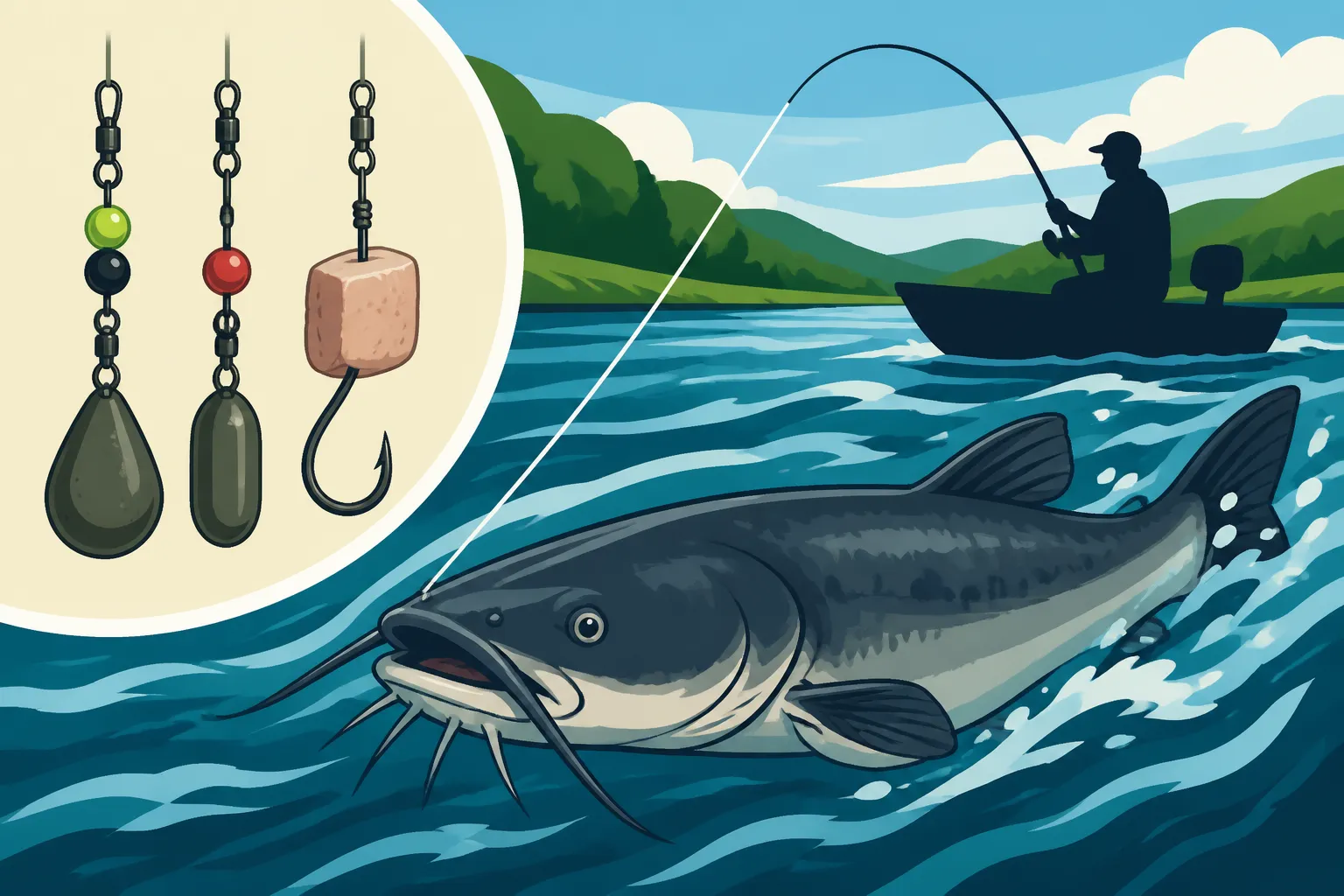
- Pyramid Sinkers: These are a go-to for many river anglers. Their four-sided pyramid shape digs into the bottom, providing excellent holding power in moderate to strong currents. They resist rolling, which can prevent snags. You can find a good selection of these on Amazon.
- No-Roll Sinkers: As the name suggests, these are designed to resist rolling. They typically have a flattened, tear-drop or flat-sided shape. They're fantastic for softer bottoms where a pyramid might dig too deep, or when you want your bait to stay exactly put without burying itself.
- Bank Sinkers: These are common, tear-drop shaped weights. While versatile, their rounded shape means they're more prone to rolling in strong currents, which can lead to snags or your bait drifting out of position. Best for lighter current or if you want a subtle drift.
- Coin/Flat Sinkers: Specifically designed for current, these flat, often round weights hug the bottom and offer good resistance to rolling without digging in excessively.
Choosing the right weight comes down to trial and error. Start with enough weight to hold bottom, then adjust. If your line is constantly bowing downstream, you need more weight. If you're having trouble feeling bites or your bait is burying too deep, reduce it. It’s a delicate balance!
Line and Leader Choices for Durability and Sensitivity
Current puts immense stress on your fishing line. You need something strong, abrasion-resistant, and sensitive enough to detect those subtle catfish bites.
- Main Line: For heavy current, many anglers opt for monofilament or braided line in heavier tests.
- Monofilament: It has some stretch, which can act as a shock absorber against surging fish or strong current pulls. It's also generally more forgiving on knots and less expensive. Look for abrasion-resistant varieties.
- Braided Line: Offers superior strength-to-diameter ratio and virtually no stretch, providing incredible sensitivity. This is excellent for feeling subtle taps in fast current. However, it's less abrasion-resistant against sharp rocks or shells if not paired with a good leader. You might find a wide selection of braided lines and leader materials on Amazon.
- Leader Material: A fluorocarbon or heavy monofilament leader (20-80 lb test, depending on target size and snags) is crucial. Fluorocarbon is nearly invisible underwater and highly abrasion-resistant, which is key when your line might be rubbing against rocks or debris on the bottom. Keep leaders relatively short, usually 12-24 inches, to minimize tangles in current.
- Swivels and Beads: A quality barrel or ball-bearing swivel is essential to prevent line twist, especially when your bait might be tumbling or spinning in the current. Placing a bead between your sinker and the swivel can protect your knot from abrasion. A strong swivel is critical when connecting your main line to your leader and rig.
When it comes to your overall setup, having a robust Best Rod and Reel Combo for Catfish Fishing that can handle heavy lines and big fish is equally important.
Hooks: Holding Power in a Fight
Catfish have tough mouths, and in current, you need hooks that will penetrate reliably and hold tight.
- Circle Hooks: These are by far the most popular choice for catfish, especially when fishing with live or cut bait. Their design makes them virtually self-setting. When a fish takes the bait and swims away, the hook rolls into the corner of its mouth, leading to consistent jaw hookups and very few gut hooks. This is better for the fish if you plan to release them. Ensure you use the right size – often 5/0 to 10/0 depending on your bait and target species.
- J-Hooks: While effective, J-hooks require a definitive hookset. They are often preferred by anglers who like to actively feel the bite and set the hook themselves. However, there's a higher chance of gut hooking if the fish swallows the bait deeply.
- Hook Size: Match your hook size to your bait. A smaller hook for a small piece of cut bait, a larger one for a whole shad or a big glob of chicken liver. Ensure the hook point is exposed for good penetration.
For a deeper dive into the right food for your target, check out our guides on Best Bait for Blue Catfish Fishing and Best Bait for Channel Catfish Fishing.
Proven Catfish Rigs for Varying Current Conditions
Now that we've covered the components, let's put them together into effective rigs designed to tackle the current. Each rig has its strengths and is suited for different situations.
The Classic Carolina Rig (or Santee Cooper Rig) for Versatility
The Carolina rig, sometimes adapted for catfish as the Santee Cooper rig, is a phenomenal all-around choice for current fishing. It's simple, effective, and keeps your bait presented naturally.
How it works: This rig consists of a weight (usually a no-roll or pyramid sinker) that slides freely on your main line, followed by a bead, a swivel, and then your leader and hook. The sliding weight allows the fish to pick up the bait and move off without immediately feeling the resistance of the sinker.
Components:
- Main Line: Braided line (e.g., 50-80 lb test) for sensitivity and strength.
- Sliding Sinker: A 2-6 oz pyramid or no-roll sinker is common, adjusted for current.
- Bead: A plastic or glass bead to protect the knot from the sliding sinker.
- Swivel: A strong barrel or ball-bearing swivel (e.g., 100 lb test) to connect the main line to the leader.
- Leader: 12-24 inches of heavy monofilament or fluorocarbon (e.g., 30-80 lb test).
- Hook: A 5/0 to 10/0 circle hook.
When to use it: The Carolina rig excels in moderate currents, especially over relatively clean bottoms. It allows your bait to move slightly and naturally with the current, while the sinker holds it in the general strike zone. If you add a foam float (a "peg float" or a small cigar float) a few inches above the hook on your leader, it becomes a Santee Cooper rig, which lifts your bait just off the bottom, making it more visible and preventing it from getting buried in silt or mud. This is often the rig of choice for Bottom Fishing Techniques for Channel Catfish in areas with some flow.
The Three-Way Swivel Rig for Heavy Current
When the current is really ripping, and you need your bait to stay put and off the bottom, the three-way swivel rig (also known as the "dropper rig" or "bell sinker rig") becomes your best friend.
How it works: This rig uses a three-way swivel to create two separate lines coming off your main line. One line goes to your sinker, and the other goes to your leader and hook. This configuration keeps your bait suspended off the bottom, away from snags, and allows it to flutter enticingly in the current.
Components:
- Main Line: Braided line (e.g., 50-100 lb test) for maximum strength.
- Three-Way Swivel: The key component.
- Sinker Line: A short (6-18 inch) piece of lighter monofilament line (e.g., 15-30 lb test) attached to one eye of the swivel, with your weight at the end. Using lighter line here is a smart trick: if your sinker snags, this line will break before your main line, saving your entire rig.
- Sinker: A heavy bell sinker, pyramid, or bank sinker (4-12 oz or more), attached to the sinker line.
- Leader: A 12-36 inch piece of heavy monofilament or fluorocarbon (e.g., 30-80 lb test) attached to another eye of the swivel.
- Hook: A 5/0 to 10/0 circle hook.
When to use it: This rig is ideal for very strong currents in deep water, especially over rocky or snag-filled bottoms. The suspended bait avoids most bottom snags, and the heavy sinker holds firm. It's fantastic for fishing below dams or in the main channels of big rivers like the Ohio. Just remember that setting up one of these bad boys correctly takes a bit of practice.
The Slip Sinker Rig for Stealth and Sensitivity
For those times when the current is lighter, or the catfish are being particularly finicky, a simple slip sinker rig can offer a more natural presentation and enhanced sensitivity. This is similar to a Carolina rig but often used with smaller weights and a focus on letting the line move freely.
How it works: A weight (often an egg sinker or a small no-roll) slides directly on your main line, sometimes with a bead, and then tied directly to your hook or a short leader with a swivel. The "slip" action means the fish can take the bait and swim a short distance without feeling the weight, allowing them to fully commit to the bite before you detect it.
Components:
- Main Line: Monofilament (e.g., 20-50 lb test) or braided line (e.g., 30-65 lb test).
- Sliding Sinker: An egg sinker, flat sinker, or small no-roll sinker (0.5-3 oz), adjusted for current.
- Bead (Optional): To protect the knot if tying directly to the hook.
- Swivel (Optional): To connect a short leader to the main line, and prevent line twist.
- Leader (Optional): If using a swivel, a 6-18 inch leader of fluorocarbon or mono.
- Hook: A 3/0 to 8/0 circle or J-hook, depending on bait size.
When to use it: This rig shines in lighter currents, such as river bends, seams, or back eddies, where a stealthy presentation is key. It's excellent for fishing with smaller baits like worms, cut bait, or chicken livers for channel catfish. The ability for the line to slip through the sinker often leads to more confident bites. You can learn more about this general approach in our Bottom Fishing Techniques for Channel Catfish article.
Fixed Sinker Rigs (Ledger Rigs) for Specific Situations
While less common for heavy current, fixed sinker rigs – where the weight is tied directly into the main line – have their place, particularly in specialized bottom fishing scenarios or lighter currents.
How it works: In a typical fixed ledger rig, the weight is either crimped directly onto the main line or tied to a dropper loop that's part of the main line. The hook leader then comes off another point on the main line, typically above the sinker.
Components:
- Main Line: Heavy monofilament (e.g., 30-60 lb test).
- Fixed Sinker: A pyramid or bank sinker (1-4 oz), fixed to the main line.
- Leader: A shorter leader (6-12 inches) with a hook.
When to use it: These rigs are generally simpler to tie and best suited for very light current, still water, or when you want your bait to be absolutely immobile on the bottom. In strong currents, the fixed weight can make it harder for a fish to pick up the bait without feeling immediate resistance, and the rig is more prone to tangles if not tied precisely. They're not the primary choice for heavy current, but understanding them helps appreciate the advantages of sliding or three-way systems.
Here's a quick comparison of the most popular current-fishing rigs for catfish:
| Rig Type | Ideal Current Strength | Key Advantage | Primary Disadvantage | Common Baits |
|---|---|---|---|---|
| Carolina Rig | Moderate to Strong | Natural bait presentation, good sensitivity | Can snag in very rocky areas if not Santee Cooper | Cut bait, live bait, large worms |
| Three-Way Swivel | Strong to Very Strong | Keeps bait off bottom, reduces snags in heavy cover | More components, can be prone to tangles if not tied well | Cut bait, live bait, large chunks of prepared bait |
| Slip Sinker Rig | Light to Moderate | Stealthy, high sensitivity, natural drift | Less effective in heavy current, can snag | Worms, cut bait, chicken liver, prepared bait |
Tips for Deploying and Managing Your Rigs
Having the right rig is only part of the equation. How you deploy and manage that rig in the current is equally important for consistent success.
Anchoring and Boat Positioning
If you're fishing from a boat, your ability to anchor effectively and position your boat correctly is paramount. You want to present your bait in the most natural way possible, and that means fighting the current as little as possible.
- Anchor Upstream: Always anchor your boat upstream of where you want your baits to land. This allows you to cast downstream, or drop your baits directly into the current, letting them settle into the target zone.
- Use Two Anchors (in strong current): In particularly strong currents, using two anchors – one off the bow and one off the stern – can help you hold your position more steadily and prevent the boat from swinging, which can cause your lines to drag and tangle. Make sure you have good, heavy anchors that are appropriate for the size of your boat and the strength of the current.
- Watch Your Boat's Swing: Even with one anchor, observe how your boat settles. You want it to be as stable as possible. Sometimes, adjusting the length of your anchor rope can help.
- Multiple Rods: If you're running multiple rods, spread them out to minimize tangles. Rod holders are your friend here!
For those fishing from a boat, our guide on How to Anchor for Catfish on a River provides invaluable advice on how to secure your position effectively and efficiently.
Reading the Water and Adjusting Your Setup
The current isn't static; it changes with depth, river stage, and even wind direction. A successful current angler is constantly observing and adapting.
- Look for Visible Cues: Pay attention to swirling water, foam lines, debris slicks, and boils. These all indicate current breaks, eddies, and seams where catfish might be holding.
- Feel the Bottom: With your rig cast out, pay attention to what your line is telling you. Are you dragging? Are you snagging frequently? This tells you about the bottom composition and the current strength.
- Adjust Weight: If your bait is washing out, increase your weight. If you're constantly snagging or can't feel the bite, try reducing it. Don't be afraid to experiment with different weights and even different sinker shapes until you find what works.
- Change Leader Length: A longer leader allows your bait more natural movement; a shorter one keeps it closer to the bottom and reduces tangles. Adjust based on the activity level of the fish and the number of snags.
- Monitor Debris: Current often carries debris. If you're constantly pulling in leaves, twigs, or grass, it might be time to move, adjust your bait height, or use a rig that keeps your bait cleaner, like a Santee Cooper or a three-way.
Bait Presentation and Hooksets in Current
Even the best rig won't work if your bait isn't presented correctly or you miss the bite.
- Natural Drift: The goal is to make your bait look as natural as possible. Cast upstream of your target zone and let the current carry your rig into position. This mimics how real food would drift.
- Keep a Tight Line (but not too tight): In current, it's easy for slack line to develop, which makes it hard to detect bites. Try to maintain a relatively tight line, but not so tight that your weight is constantly dragging or lifting off the bottom. A slight bow in the line is often acceptable.
- Detecting Bites: Bites in current can feel different. Sometimes it's a hard thump, other times it's a subtle slowing or a steady pull as the fish moves off. With circle hooks, often all you need to do is pick up the rod, reel down, and apply steady pressure. The fish will hook itself. With J-hooks, a firm, sweeping hookset is usually required.
- Use Fresh Bait: Always use fresh, potent bait. The scent trail from good cut bait or live bait will be carried downstream by the current, attracting catfish from a distance. Consider what you're targeting – Best Baits for Summer Catfish Fishing might be different from colder water periods. You can easily find a good variety of attractants and prepared baits on Amazon.
Remember, practice makes perfect. The more you fish in current, the better you'll become at reading the water, choosing the right rig, and adapting to the conditions. There's a whole world of incredible catfish action out there in Kentucky's flowing waters, and with these rigs and techniques, you're well on your way to experiencing it!
Disclaimer
This article is for general informational purposes only and does not constitute professional advice. Laws, prices and regulations vary by location and change over time. Consult a qualified professional for guidance on your specific situation.