How to Fish for Sauger in Cold Water
There’s a special kind of satisfaction that comes from catching fish in the dead of winter, especially a challenging, hard-fighting species like sauger. But let's be honest, those icy blasts and numb fingers can make you question your sanity. Many anglers get frustrated trying to crack the code of cold-water sauger, often finding themselves staring at an empty stringer or a quiet transducer. This comprehensive guide is designed to cut through the confusion, helping you understand exactly where sauger hide, what they’re biting on, and the precise techniques to employ when Kentucky's waters turn frigid.
Understanding Sauger Behavior in Cold Water
Fishing for sauger in cold water isn't like fishing for them during the milder months. Their entire world shifts, and if you don't adjust your approach, you'll be left out in the cold, literally and figuratively. The key to success lies in understanding their physiological changes and how those changes dictate their location and feeding patterns. It's a challenging puzzle, but once you start to piece it together, you'll find those winter bites can be incredibly rewarding.
The Sauger's Winter Metabolism Shift
As water temperatures plummet, typically into the 40s and even high 30s in Kentucky, sauger undergo a significant metabolic slowdown. Think of it like a bear preparing for hibernation, though sauger don't truly hibernate. Instead, their digestive processes slow down dramatically, meaning they don't need to feed as frequently or as aggressively. This isn't to say they stop eating entirely – quite the opposite. They still need calories, but their feeding windows become shorter, and their movements are less energetic. This makes them less likely to chase down a fast-moving bait or dart across a wide area for a meal. You'll need to present your offerings right in front of them, almost tempting them into a reaction strike rather than relying on a vigorous pursuit. It's a game of inches, and understanding this reduced metabolism is your first step to getting that subtle tug on the line.
This metabolic shift also affects how sauger react to being caught. They tire more quickly and are more susceptible to stress, especially when exposed to freezing air temperatures. That's why careful handling and quick release, if you're not keeping them, become even more paramount. Their recovery time is longer in cold water, so minimizing their time out of the water is crucial for their survival. It’s not just about catching them, but about respecting their delicate state during these colder months.
Where Sauger Go When Temperatures Drop
Unlike some other fish species that might scatter or go dormant, sauger tend to school up tightly and seek out specific types of cover and structure in colder water. They become very structure-oriented, often hugging the bottom in deeper sections of rivers and large reservoirs. They are looking for stability – stable water temperatures, stable currents, and ample ambush points. You'll typically find them in deeper holes, along current seams, behind submerged structures like rock piles or bridge pilings, and at the base of sharp drop-offs. These areas provide them with refuge from strong currents while still allowing food to drift by.
In river systems like the Ohio River or the Cumberland River below dams, sauger will often congregate in tailwaters, where the water is typically more oxygenated and baitfish are more concentrated due to the turbulent flow. They'll also hold in the deeper channels and scour holes. On large reservoirs such as Lake Barkley, you might find them in the old river channels, especially where there are significant depth changes or areas with woody cover. The key is to think "deep and defined structure." They aren't going to be cruising the shallow flats like they might in spring.
Identifying Prime Cold-Water Sauger Holding Spots
Pinpointing these cold-water sauger hotspots requires a combination of knowledge and technology. Start by studying maps, especially contour maps of your chosen lake or river. Look for those deep channels, sharp bends, and sudden depth changes. Remember, sauger are often found in the deepest available water adjacent to a consistent current. Bridge pilings, especially those with scour holes around their base, are perennial favorites. Sunken barges, old roadbeds, and major creek channel junctions can also be goldmines.
Once you have a few potential spots identified, this is where your fish finder becomes an indispensable tool. A quality fish finder, particularly one with side-imaging or down-imaging capabilities, can reveal those subtle changes in bottom contour and show you baitfish schools or even individual sauger hugging the bottom. Don't just look for fish; look for the features that hold fish. A good example might be a steep ledge dropping from 20 feet down to 40 feet, with a subtle current break along the edge. Sauger will stack up on that ledge, facing upstream, waiting for an easy meal to drift by. Patience and careful graphing of these areas are crucial for success.
Essential Gear for Cold-Water Sauger Fishing
Winter fishing presents its own set of challenges, and your gear needs to be up to the task. From the responsiveness of your rod to the warmth of your layers, every piece of equipment plays a role in your comfort and success. Skimping on the right tools can quickly turn a potential banner day into a miserable, unproductive outing.
Rods, Reels, and Lines for Winter Sauger
When targeting cold-water sauger, you need gear that offers sensitivity and control, even when dealing with light bites in deep water. A medium-light to medium power spinning rod, typically 6'6" to 7' in length, with a fast action tip is often ideal. The fast action allows for quick hook sets and better feel for those subtle taps. A graphite rod will transmit vibrations much better than fiberglass, making it easier to detect faint strikes when your fingers are already a bit numb. A good quality rod can often be found on platforms like Amazon, offering a range of options for different budgets.
Pair your rod with a lightweight, smooth-operating spinning reel in the 1000 to 2500 size range. Smooth drag is essential when a good sauger decides to make a run, preventing line breaks on lighter lines. For line, a 6 to 10-pound test fluorocarbon or a braided line with a fluorocarbon leader is highly recommended. Fluorocarbon is nearly invisible underwater, has low stretch for excellent sensitivity, and sinks, which is beneficial for vertical presentations. If you opt for braid, which offers superior sensitivity and strength, always tie on a 6-10 lb fluorocarbon leader of about 3-5 feet. This provides the stealth you need and a bit of shock absorption. Monofilament can also work in a pinch, but its stretch and visibility are often less than ideal for this precise style of fishing.
Specialized Lures and Baits for Cold Water
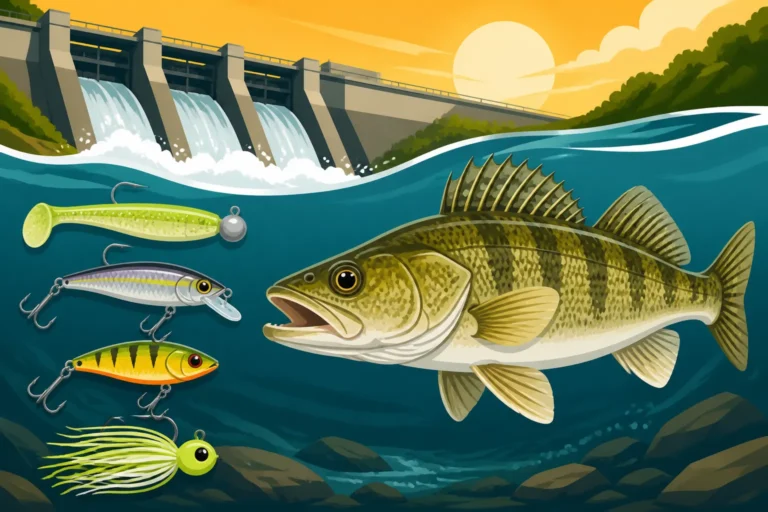
Cold-water sauger are notoriously finicky, so your lure selection needs to match their sluggish demeanor. Generally, smaller, slower-moving baits that mimic dormant or struggling baitfish are most effective. Jigs are undoubtedly the king of cold-water sauger fishing. Often, a 1/4 to 3/4 ounce lead head jig, tipped with a live minnow, a soft plastic grub (like a Berkley Gulp! Minnow or a simple curly tail grub), or a hair jig, will be your primary weapon. The weight of the jig will depend on the current and depth; you want just enough weight to maintain bottom contact without getting swept away.
Blade baits, like a Silver Buddy or a Z-Man Chatterbait Micro, are also incredibly effective. Their vibration and flash can entice a sauger that might otherwise ignore a slower presentation. These baits are excellent for vertical jigging directly under the boat. Small crankbaits or jerkbaits that suspend and can be retrieved very slowly or twitched in place can also provoke strikes, particularly in slightly shallower (but still cold) water or when fish are a bit more active. Don't forget the power of live bait; a lively minnow on a hook, fished on a drop shot or a simple jig head, is often irresistible to a lethargic sauger. The natural scent and movement can be the deciding factor when nothing else seems to work.
| Lure/Bait Type | Ideal Presentation | Conditions | Notes |
|---|---|---|---|
| Lead Head Jig + Minnow | Vertical Jigging, Drifting | Deep water, Light current | Classic, highly effective. Use fresh, lively minnows. |
| Blade Bait | Vertical Jigging, Lift-Drop | Moderate current, Deeper | Vibrating flash can trigger reaction strikes. |
| Soft Plastic Grub | Vertical Jigging, Slow Retrieve | Varies, can be shallow | Versatile, mimics baitfish. Pair with appropriate jig head. |
| Hair Jig | Vertical Jigging, Slow Drift | Clear water, Finesse | Subtle, natural movement. Often best in clear, calm conditions. |
| Suspending Jerkbait | Twitching, Pause-Retrieve | Shallower cold water | Excellent for triggering strikes from suspended sauger. |
| Live Minnow (Hooked) | Drop Shot, Bottom Rig | All cold-water depths | Irresistible, natural scent and movement. Use smallest hook possible. |
Apparel and Safety Gear for Winter Conditions
Your comfort and safety are paramount when fishing in cold water, especially in Kentucky where winter weather can change on a dime. Layering is key: start with a moisture-wicking base layer, add insulating middle layers like fleece or wool, and top it off with waterproof and windproof outerwear. A good quality insulated jacket and bibs are non-negotiable. Don't forget your extremities – insulated gloves or mittens (often fingerless options are best for fishing), a warm hat, and waterproof, insulated boots are crucial. Hand warmers can be a lifesaver.
Beyond clothing, safety equipment is non-negotiable. A PFD (Personal Flotation Device), or life jacket, should be worn at all times, especially when fishing from a boat. Cold water immersion can quickly lead to hypothermia, and a PFD can save your life if you accidentally go overboard. Keep an extra set of dry clothes in a waterproof bag, along with a charged cell phone in a waterproof case, and a fully stocked first-aid kit. Consider having an emergency blanket and a thermos of hot coffee or soup. When the temperatures really drop, especially near freezing, fishing can be a dangerous endeavor, so always be prepared. Remember, even experienced anglers can fall victim to unexpected conditions, so checking weather forecasts before you head out is an absolute must. For more information on staying safe, you might want to review Life Jacket Rules for Boats in Kentucky.
Top Techniques for Cold-Water Sauger Success
Sauger are finicky biters in cold water, often just "thumping" or putting a slight weight on your line rather than delivering a definitive strike. This means your technique needs to be refined and patient. Aggressive presentations that work in warmer months will often spook these lethargic fish. It's all about presentation, sensitivity, and understanding how to tempt a strike from a fish that's not eager to chase.
Vertical Jigging: The Go-To Method
Vertical jigging is hands down the most effective technique for cold-water sauger. This involves positioning your boat directly over the fish, as indicated by your fish finder, and dropping your lure straight down. The goal is to keep your bait hovering just above or occasionally tapping the bottom, right in the sauger's strike zone. This minimizes line drag and maximizes sensitivity. You'll typically use a 1/4 to 3/4 ounce jig head, tipped with a minnow or soft plastic, or a blade bait. The key is to lift the bait slowly, a few inches to a foot, and then let it fall back down on a semi-slack line. The bite often occurs on the fall, so watching your line for any twitch or slackening is critical.
When vertical jigging, keep your rod tip low and use your wrist for subtle movements. Maintain constant contact with the bottom, but avoid dragging the lure unnecessarily. You want it to look like a dying or struggling baitfish. In areas with current, the jig will naturally swing slightly downstream, creating an even more enticing presentation. This technique is particularly effective in deeper river channels, around bridge pilings, and along sharp ledges where sauger tend to stack up. It takes practice to master the feel for the bite, but once you do, you'll be consistently hooking into sauger. For more specific insights, check out How to Jig for Sauger in Deep Water.
Slow Trolling and Drifting Strategies
While vertical jigging is often performed stationary or with minimal boat movement, slow trolling or drifting can also be highly productive, especially when sauger are spread out over a larger area or when you're trying to locate schools. This involves moving your boat very slowly, often with the aid of an electric trolling motor or by using the current to your advantage, while dragging jigs or bottom-bouncing rigs behind or beside the boat. Speed is critical here; you want to move just fast enough to impart a subtle action to your lure, but slow enough that sauger can easily intercept it.
When drifting, use drift socks or a precise trolling motor to control your speed and angle. This allows your baits to cover a wider swath of the bottom, increasing your chances of finding scattered fish. Bottom-bouncing rigs, often consisting of a lead weight on a wire arm with a snelled hook trailing behind, are excellent for presenting live minnows or worms right along the bottom without snagging. Another effective method is to use a three-way swivel rig with a bell sinker on one dropper and a jig or bait on another, allowing the bait to dance just above the bottom. This method is particularly popular on the Ohio River for covering extensive channels.
Understanding Current and Structure Presentation
Sauger are masters of using current to their advantage, especially in cold water. They will position themselves just out of the main current, often in seams or eddies behind structure, where they can ambush baitfish without expending too much energy. This means understanding how water moves and interacts with submerged features is paramount. Look for areas where the current creates a "cushion" or a calmer zone – this could be behind a large rock, a bridge piling, or a sharp bend in the river channel.
When presenting your lure, aim to have it drift or jig naturally into these current breaks. If you're fishing from a boat, position yourself upstream of the structure and let the current carry your bait into the "strike zone." You want your lure to appear as easy prey, swept along by the current, rather than fighting against it. This might mean adjusting your boat's position frequently or making subtle adjustments to your jigging retrieve. The goal is to make it effortless for a lethargic sauger to snap up your offering. Pay attention to how the current affects your line and lure, as this will help you fine-tune your presentation for maximum effectiveness.
Best Times and Locations for Kentucky Cold-Water Sauger
Kentucky offers some fantastic cold-water sauger opportunities, but knowing when and where to go can drastically improve your chances. It’s not just about finding water; it’s about finding the right water under the right conditions.
Prime Months and Weather Patterns
For cold-water sauger, the season generally kicks off in late fall, typically November, and continues strong through the winter months, often peaking in January and February. As spring approaches and water temperatures begin to rise into the high 40s and low 50s, sauger will start their spawning migrations, changing their locations and behavior. So, your prime window is truly those deep winter months.
Regarding weather patterns, stability is often key. While a warming trend after a prolonged cold snap can sometimes trigger a bite, prolonged periods of stable, cold weather are generally best. Avoid days immediately following a drastic cold front, as fish tend to get lockjaw. Overcast days can be particularly good, as low light conditions seem to encourage sauger to be more active. A light drizzle or snow can also be productive, as it can reduce fishing pressure and keep baitfish disoriented. What you want to avoid are strong winds, which make boat control difficult and can create dangerous conditions, or extremely clear, bluebird skies following a front, which often result in a tough bite. Always check Kentucky Fishing Seasons: What to Catch Each Month to align your trip with peak activity.
River Systems and Tailwaters: Kentucky's Sauger Hotspots
Kentucky's river systems, particularly the Ohio River and the tailwaters below major dams, are legendary for cold-water sauger. The Ohio River, forming the northern border of Kentucky, is a phenomenal fishery. Its deep channels, numerous bridge pilings, and lock and dam systems provide ideal winter habitat. Anglers often find success focusing on the deeper scour holes below the dams, as well as the main river channel where there are sharp drop-offs and current breaks. Places like the Markland Dam pool or the Meldahl Dam area can be excellent.
Another prime location is the tailwater below Lake Cumberland, where the Cumberland River flows cold and deep, supporting a strong sauger population. While known for its trout, the sauger also thrive in the consistent cold currents. These tailwaters offer a stable environment and a constant supply of baitfish, drawing sauger in by the thousands. When fishing these areas, remember that currents can be extremely strong, requiring heavier jigs and careful boat positioning. Always be aware of fluctuating water levels caused by dam operations, as these can quickly change fishing conditions.
Specific Lake Barkley and Ohio River Sections
When we talk about specific locations in Kentucky, Lake Barkley absolutely stands out for its cold-water sauger fishery. The lake is essentially a flooded river system, retaining that critical deep channel structure that sauger love. Anglers often focus on the main river channel, especially where it meets major creek channels or features significant depth changes. Points and humps that drop into the main channel can be highly productive. The areas near the Lake Barkley Dam and the canal connecting Lake Barkley to Kentucky Lake are also perennial hotspots, as sauger congregate in these deeper, current-rich zones. You can find more detailed information in our Lake Barkley Fishing Guide for Kentucky Anglers.
For the Ohio River, as mentioned, the sections below the dams are phenomenal. However, you don't necessarily need to be right below a dam to find fish. Explore the deeper sections of the river near major cities like Louisville or Paducah. Look for areas with commercial barge traffic, as the prop wash can stir up baitfish and create temporary current breaks. The mouths of major tributaries where they join the Ohio River can also hold sauger, as these confluence points often feature deeper water and concentrated bait. The key is to cover water slowly and methodically, using your electronics to locate schools of fish or suitable structure. For more comprehensive insights, consider reading about Best Catfish Fishing Spots on Kentucky's Ohio River, as many deeper channels and structures are shared by both species.
Reading the Water and Interpreting Electronics
In cold-water sauger fishing, your eyes and ears (or rather, your electronics) are your most valuable tools. You can't just blindly cast and hope for the best. Understanding what your fish finder is telling you and how the water itself behaves are critical skills for consistently finding and catching these elusive fish.
Utilizing Fish Finders for Deepwater Sauger
A high-quality fish finder is non-negotiable for serious cold-water sauger anglers. Sauger are typically found hugging the bottom in deeper water, making them incredibly difficult to locate without good electronics. Use your unit to scan the bottom for depth changes, hard bottom areas (often depicted as a thicker, more intense line on your screen), and most importantly, schools of baitfish. Where there's bait, there are usually predators. Sauger will often appear as distinct arches or thick lines very close to the bottom, sometimes even looking like part of the bottom contour itself.
Side imaging and down imaging are particularly useful for covering wider areas and identifying subtle structures that might hold fish. Side imaging can reveal submerged trees, rock piles, or current breaks off to the sides of your boat, allowing you to approach them quietly. Down imaging provides a photo-like view directly beneath your boat, making it easier to discern sauger from bottom clutter. Mark any productive spots with your GPS to revisit them later. Remember, Fish Finders and Electronics for Kentucky Lake Fishing delves deeper into optimizing these tools, which is highly applicable to sauger fishing across Kentucky's big waters.
Identifying Key Structure and Current Breaks
Sauger are ambush predators, and in cold water, they become even more reliant on structure and current breaks to conserve energy while still having access to food. The structure itself might be obvious, like a bridge piling or a rock pile. But it's how the current interacts with that structure that truly creates the sauger's preferred habitat. A current break is essentially an area of calmer water adjacent to faster moving water. This might be a slack water eddy behind a point, the downstream side of a submerged hump, or even the inside bend of a river channel.
To identify these, look for visual cues on the surface if you're in a river (e.g., swirling water, debris lines), but primarily rely on your electronics to understand the underwater topography. Your fish finder can help you map out those subtle ledges, depressions, and channels where current will be disrupted. Sauger will sit on the "down-current" side of these breaks, facing upstream, waiting for baitfish to be swept past. They want the easiest meal possible. Your job is to present your lure in a way that mimics that easy meal, drifting naturally into their ambush point.
Recognizing Subtle Bites in Cold Water
This is perhaps the most challenging aspect of cold-water sauger fishing. Unlike a largemouth bass that might smash a topwater lure, a cold-water sauger bite is often incredibly subtle. It can feel like a slight "thump," a sudden increase in weight on your line, or even just your line going slack as the fish inhales the bait while moving toward you. Sometimes, it's just a momentary pause in your jig's fall. Because of this, extreme focus and a sensitive rod are paramount.
Keep your eyes glued to your rod tip. Any unnatural twitch, bend, or straightening of the line should be met with an immediate, firm hook set. Don't "wait for it" like you might with other species, or the fish will likely spit the bait. The low stretch of braided or fluorocarbon line also aids significantly in bite detection. Practice makes perfect here; the more you fish for sauger in cold water, the more attuned you'll become to their delicate takes. When you feel anything out of the ordinary, set the hook – it's often better to set on a snag than to miss a sauger.
Adapting Your Approach for Challenging Conditions
Kentucky's winters can be unpredictable, throwing everything from mild, sunny days to brutal blizzards at anglers. Successfully fishing for cold-water sauger means being able to adapt your strategy to whatever Mother Nature decides to dish out. Rigidity in your approach will lead to empty livewells.
Dealing with Extreme Cold and Ice
When temperatures really plunge, and especially if skim ice starts to form on the water, sauger can become even more lethargic. Extreme cold makes both fish and anglers move slower. Your presentations need to slow down accordingly. Instead of aggressive lifts and drops, think about barely moving your jig. Just a gentle quiver, a slow drag, or letting a minnow sit almost perfectly still can be the ticket. Focus on areas that offer the most thermal stability, such as the very deepest holes in rivers or the tailwaters below dams where water temperatures are often slightly warmer and more consistent.
Navigating ice is also a major concern. If you're on a boat, even thin skim ice can damage your hull or motor. Always use extreme caution. If lakes start to freeze over, ice fishing for sauger can become an option in areas where it's safe. However, Kentucky rarely has consistent, safe ice thick enough for prolonged ice fishing, especially on larger lakes and rivers. If you do encounter ice, make sure you understand Kentucky Fishing Regulations Explained regarding ice fishing rules and safety. On open water, ensure all your gear, especially your electronics, is rated for cold temperatures, and that your boat's systems are winterized to prevent damage.
Adjusting to Water Clarity and Flow Changes
Water clarity and flow are two of the most critical factors influencing cold-water sauger behavior. After heavy rains or snowmelt, rivers can become muddied and swollen. In these conditions, sauger might retreat to even deeper, calmer eddies where the current is less turbulent and the water might be slightly clearer. They'll also rely more on their lateral line and sense of smell to find food. This is when lures that produce strong vibrations, like blade baits, or those with strong scent, especially live minnows or scented soft plastics, can be more effective. Brighter colors, like chartreuse or orange, might also become more visible in stained water.
Conversely, in extremely clear water, often found during prolonged dry, cold spells, sauger can become very spooky. This calls for a finesse approach. Scale down your line size, use natural bait colors (like browns, greens, or translucent shades), and reduce the size of your jigs. Lighter jig heads, subtle presentations, and longer fluorocarbon leaders are key. In clear water, fish might also be found slightly shallower or more spread out, as they have better visibility to hunt. Always observe the water conditions and adjust your tackle and technique accordingly.
The Importance of Patience and Persistence
Perhaps more than any other type of fishing, cold-water sauger angling demands patience and persistence. You might spend hours graphing spots, making perfect presentations, and feeling nothing but the current. It's easy to get discouraged, to question your technique, or to think the fish just aren't there. But sauger, especially in winter, often bite in very short, intense windows. You might go two hours without a bite, only to have a flurry of activity in a 15-minute window.
That's why sticking with a productive-looking area, even when it's slow, is crucial. Make countless casts, try slight variations in your jigging cadence, and meticulously work every inch of a promising piece of structure. If you're confident in your location and technique, keep at it. Moving constantly might mean missing those brief feeding periods. Remember, you're looking for subtle cues, not aggressive slams. Persistence is the difference between a frustrating day and a memorable catch.
Advanced Tips for Experienced Anglers
Even seasoned anglers can benefit from refining their cold-water sauger strategy. These nuanced approaches can elevate your game, helping you find fish when others struggle and coaxing bites from the most hesitant sauger.
Finesse Presentations and Bait Choices
For truly challenging conditions, or when targeting heavily pressured sauger, a finesse approach is often necessary. This goes beyond simply using smaller jigs; it's about the entire presentation. Consider using a lighter line, perhaps down to 4 or 6-pound test fluorocarbon, and the smallest jig head you can get away with while still maintaining bottom contact (1/8 to 1/4 ounce). Instead of a full minnow, try just a small piece of minnow or a minnow head on the hook, or switch to micro soft plastics, like 1-2 inch paddle tails or grub bodies.
The action you impart to these baits should be minimal – more quiver than lift, more gentle drag than distinct hop. Think about the subtle movements of a dying baitfish, barely able to swim. A drop shot rig can also be incredibly effective for presenting a small minnow or soft plastic just off the bottom without imparting much motion, allowing it to flutter naturally in the current. This method is particularly deadly when sauger are tightly schooled and extremely inactive, requiring an almost irresistible, stationary offering right in their face. This level of detail in presentation can be the difference between catching a few fish and getting skunked.
Understanding Thermoclines
While thermoclines are more commonly associated with warmer water fishing in summer, understanding water temperature stratification can still play a role in cold-water sauger behavior, particularly in large, deep reservoirs like Lake Cumberland or Lake Barkley. While a distinct warm-water thermocline won't be present, sometimes there can be subtle differences in temperature layers, especially below dams where colder water is released. Sauger, being sensitive to temperature, might stack up at a specific depth where the water is most stable and comfortable for their cold metabolism.
Your fish finder's temperature gauge can sometimes pick up these subtle changes, but often it's more about knowing the general patterns. In very deep lakes, the absolute deepest water might maintain a slightly more stable (and comparatively "warmer") temperature than the shallower layers, drawing sauger down. Conversely, in tailwaters, constant cold water releases mean sauger are adapted to that cold, but might still seek out specific depths where baitfish are concentrating due to the flow. Observing where you get bites relative to depth can help you identify these preferred strata, even if a classic thermocline isn't present.
Multi-Species Opportunities in Cold Water
One of the great joys of cold-water sauger fishing in Kentucky is the potential for multi-species catches. Many of the same deep structures and current breaks that hold sauger will also attract other cold-tolerant species. Walleye, often considered a close cousin to sauger, share similar habitats and can frequently be caught using the same techniques and baits. It's not uncommon to land a trophy walleye while jigging for sauger, especially in rivers and tailwaters.
Channel catfish and blue catfish also frequent these deeper channels and scour holes, especially on the Ohio River. While your sauger gear might be a bit light for a monster blue cat, smaller channel cats will readily take a jig-and-minnow or a small piece of cut bait. Sometimes, you'll also encounter hybrid striped bass or white bass, particularly below dams, as they chase schools of baitfish in the turbulent water. Be prepared for anything; you never know what might grab your lure in the depths of a Kentucky winter. For a broad understanding of the region's game fish, check out Kentucky Fish Species Guide: 265 Types You Can Catch.
Conservation and Responsible Cold-Water Fishing
As anglers, we have a responsibility to protect our fisheries, especially when targeting vulnerable species in sensitive conditions like cold water. Practicing responsible angling ensures that sauger populations remain healthy for future generations of Kentucky fishermen and women.
Handling Sauger in Freezing Temperatures
Sauger, like many fish, are more susceptible to stress and injury in cold water. Their metabolic processes are slowed, and their immune systems are less robust. When you land a sauger in freezing temperatures, minimize its time out of the water. Have your camera ready, and if you plan to release it, unhook it quickly and gently. Avoid handling the fish with dry hands, as this can remove their protective slime layer. Instead, use wet hands or a wet towel, or better yet, use a fish gripper to secure the lower jaw without touching the body.
If the air temperature is significantly below freezing, try to keep the fish's body from freezing to the boat deck or exposing its gills to the cold air for too long. A quick measurement and photo, then an immediate release, is the best practice. Gently lower the fish back into the water headfirst and support it until it swims away under its own power. Sometimes, a sauger might need a moment to re-oxygenate before it's ready to go.
Understanding Kentucky's Sauger Regulations
Before you even launch your boat, always familiarize yourself with the current Kentucky fishing regulations for sauger. These regulations are designed to manage fish populations and can vary by water body. They typically cover minimum size limits and daily creel limits. For instance, Kentucky Fishing Regulations Explained is a crucial resource. You might find specific rules for the Ohio River that differ from those for Lake Barkley or other state waters. These rules are subject to change annually, so never assume last year's regulations are still in effect.
Ignorance of the law is not an excuse. Getting caught with undersized fish or over your daily limit can result in hefty fines and even the loss of your fishing privileges. This also ties into being ready for Kentucky Game Warden Checks: What to Have on Hand. Always carry a current Kentucky fishing license and any required permits, and be prepared to present them to a conservation officer. These regulations are in place to ensure the sustainability of the fishery, so abiding by them is a critical part of responsible angling.
Practicing Catch and Release Effectively
For anglers who practice catch and release, especially with sauger in cold water, using appropriate techniques is crucial for the fish's survival. Beyond minimizing handling time, consider using single, barbless hooks, or simply crimping down the barbs on your treble hooks. Barbless hooks make removal much easier and cause less damage to the fish's mouth. If a fish is deeply hooked, especially in the gills or throat, it's often best to cut the line as close to the hook as possible rather than trying to rip the hook out, as this can cause fatal injury.
Always release fish gently, back into the water from which they came. Avoid tossing or dropping them. If a fish seems sluggish, hold it upright in the water, facing into the current if possible, until it regains its strength and can swim away on its own. Practicing these effective catch-and-release methods contributes directly to the health and abundance of Kentucky's sauger population, ensuring that these challenging and rewarding fish continue to thrive for years to come.
Disclaimer
Fishing involves inherent risks, including but not limited to adverse weather conditions, boating accidents, and encounters with wildlife. Always prioritize safety, wear appropriate personal flotation devices, and adhere to all local, state, and federal regulations. The information provided in this guide is for informational purposes only and should not be considered a substitute for professional advice or current official regulations. Consult the Kentucky Department of Fish and Wildlife Resources for the most up-to-date rules and safety guidelines before any fishing trip.