Kentucky Fish Species Guide: 265 Types You Can Catch
Heading out to fish in Kentucky can be an incredible adventure, but let's be honest, it can also feel a little overwhelming when you realize just how many different fish species call our beautiful waters home. You might be dreaming of a feisty bass, but then wonder what else is lurking beneath the surface of Kentucky Lake or a quiet stream. This guide is here to cut through that confusion, giving you a deep dive into the diverse fish species you can encounter across the Commonwealth, from the mighty Ohio River to the smallest farm ponds, and help you understand what makes each one unique.
The Bass Family: Kings of Kentucky Waters
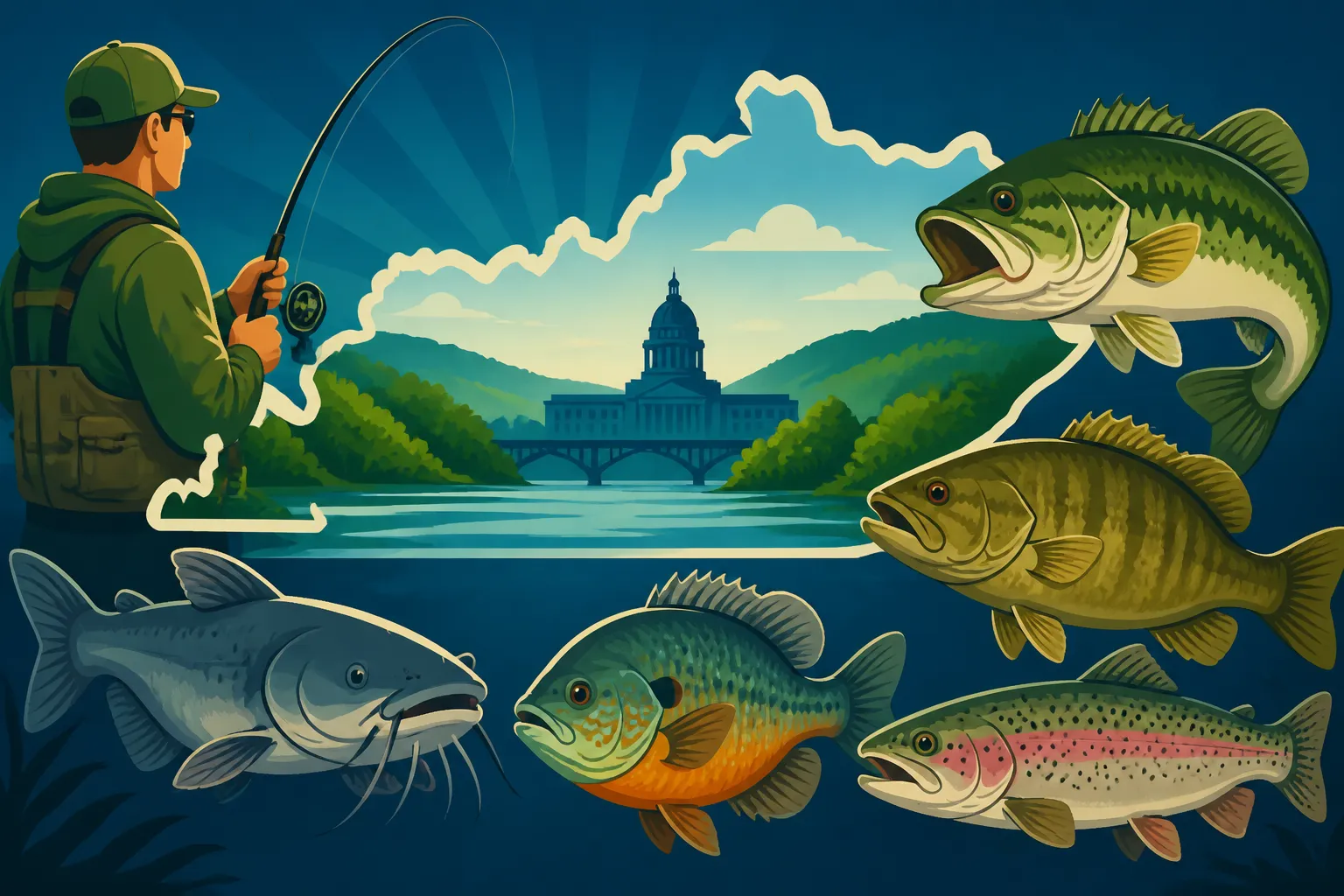
When you think of fishing in Kentucky, chances are, bass are one of the first things that come to mind. These aggressive, hard-fighting fish are beloved by anglers across the state, offering thrilling challenges and often rewarding catches. Kentucky boasts several distinct bass species, each with its own preferred habitats and behaviors, making them a diverse and exciting target.
Largemouth Bass: The Classic Kentucky Challenge
Ah, the largemouth bass – the undisputed heavyweight champion in many Kentucky lakes and ponds. There's just something iconic about a chunky largemouth exploding on a topwater lure or putting up a serious fight as you try to wrestle it out of a brush pile. These fish are characterized by their large mouths (extending past the eye) and a dark, lateral stripe running down their sides. They absolutely thrive in our warmer, nutrient-rich reservoirs like Kentucky Lake, Lake Barkley, and Taylorsville Lake, where they can grow to impressive sizes. You'll often find them lurking around submerged cover – think fallen trees, weed beds, docks, or rocky points – waiting to ambush unsuspecting prey. They're opportunistic eaters, devouring everything from minnows and crawfish to frogs and even small birds or rodents, which is why a wide variety of lures and baits can be effective. Catching a true trophy largemouth is a badge of honor for many Kentucky anglers. Largemouth Bass Fishing in Kentucky: The Complete Guide
When targeting largemouths, especially in spring and early summer, shallow-running crankbaits, spinnerbaits, and soft plastics like worms or creature baits are often key. As the water warms in summer, they might retreat to deeper, cooler waters, making jigs and deep-diving crankbaits more effective. Early mornings and late evenings are prime times, particularly for topwater action, which is, in my opinion, one of the most exciting ways to fish. You can find an incredible array of proven largemouth bass lures, from popular brands like Strike King and Zoom, readily available on platforms like Amazon, making it easy to stock up for your next trip. Remember, presentation is often more important than the exact lure; mimicking natural prey movement can make all the difference.
Smallmouth Bass: River Fighters and Deep-Water Dwellers
While the largemouth prefers the murky depths of a reservoir, the smallmouth bass is a creature of clearer, cooler waters, often associated with rocky bottoms and flowing rivers or deep, clean lakes. You'll find these bronze beauties in the Cumberland River, and in deeper, cooler reservoirs like Lake Cumberland and Dale Hollow Lake, where they are absolute legends. Identifying a smallmouth is fairly easy: their mouth doesn't extend past the eye, they have vertical bars or splotches on their sides rather than a solid stripe, and their overall coloration is a beautiful bronze or brown. What they lack in sheer size compared to the biggest largemouths, they more than make up for in fighting spirit. Pound for pound, a smallmouth is often considered the hardest-fighting bass, known for acrobatic jumps and powerful runs. Smallmouth Bass Fishing in Kentucky: The Complete Guide
Fishing for smallmouth often involves different techniques than for largemouth. In rivers, small crankbaits, tube baits, and jig-and-pig combinations fished near current breaks, rock piles, and eddies can be incredibly effective. On deeper lakes, drop-shot rigs, swimbaits, and Ned rigs are popular choices for targeting them on rocky ledges and humps. They're particularly fond of crawfish, so lures that imitate these crustaceans are often a good bet. If you're looking for a serious challenge and a fish that will test your tackle and your patience, chasing Kentucky smallmouths will quickly become an addiction.
Spotted Bass: The Often-Overlooked Powerhouse
The spotted bass, sometimes affectionately called a "spot," is often confused with its largemouth cousin, but it has its own distinct characteristics and preferred haunts. You'll find spotted bass widespread across many Kentucky waterways, including Lake Cumberland, Herrington Lake, and parts of the Ohio River. They have a smaller mouth than the largemouth, but larger than a smallmouth, extending only slightly past the eye. Their most distinguishing feature is the rows of dark spots below the lateral line, almost like a "spotted" belly. They often occupy a niche between largemouth and smallmouth, comfortable in both clearer, rocky environments and areas with some submerged timber. How to Identify a Spotted Bass in Kentucky
Spotted bass are known for their schooling behavior and aggressive nature. They'll readily hit a variety of lures, often mimicking largemouth tactics, but sometimes preferring slightly smaller baits. Crankbaits, spinnerbaits, and soft plastic jigs are all effective. One common frustration for anglers is catching a string of aggressive spotted bass when they're actually targeting largemouth, as spots rarely grow to the trophy sizes of their bigger cousins. However, what they lack in individual size, they make up for in numbers and sheer tenacity. When you find a school of spots, you can often have an action-packed day of consistent hook-ups, making them a fantastic target, especially for beginners or when you just want to bend a rod.
Kentucky's Catfish Giants: Bottom Dwellers and Trophy Hunters
Kentucky's rivers and lakes are home to an impressive array of catfish species, ranging from widespread, delicious pan-sized fish to true freshwater giants that can test the limits of any angler's tackle. Catfishing offers a different kind of thrill than bass fishing – often a waiting game followed by a powerful, sustained fight.
Channel Catfish: The Widespread Delicacy
The channel catfish is probably the most commonly caught catfish in Kentucky and for good reason. They are found in virtually every major lake, river, and larger pond across the state. Easily identifiable by their deeply forked tail, spotted sides (though these spots can fade with age), and sleek bodies, channel cats are popular for their excellent table fare and relatively easy catchability. They're not picky eaters and will readily take a variety of natural baits. Channel Catfish Vs Blue Catfish: How to Tell Them Apart
You can find channel catfish practically anywhere, from the shallow flats of Kentucky Lake to the deeper holes of the Green River. They're scavengers and opportunistic predators, feasting on insects, crawfish, smaller fish, and even decaying organic matter. For anglers, this means a wide range of baits work well, including nightcrawlers, chicken livers, cut bait, and various prepared stink baits. Setting up a simple bottom rig with a weight and a hook, casting it out, and waiting is a classic and effective method. These fish are fantastic for family fishing trips, as they provide consistent action and are often willing biters. You don't need fancy gear to catch a mess of channel cats, just some patience and the right smelly bait.
Blue Catfish: The Ohio River's True Titans
If you're dreaming of a true freshwater monster, the blue catfish is your target. These magnificent fish are the largest catfish species in North America, and Kentucky's Ohio River is renowned for producing some absolute giants. Blue cats can reach incredible sizes, sometimes exceeding 100 pounds, making them a prime target for trophy anglers. They have a distinctly humped back, a straight or slightly convex anal fin (unlike the rounded fin of a channel cat), and a unforked or only slightly forked tail, along with a bluish-gray coloration, hence their name. Kentucky's Blue Catfish State Record Explained
The Ohio River, particularly in the stretches near Louisville and Paducah, is a blue catfish hotspot. They prefer large, flowing river systems and deep channels, congregating around structure like submerged logs, rock piles, and especially scour holes downstream from dams. Unlike channel cats, blue cats are primarily piscivorous, meaning they prefer to eat fish. Fresh cut bait, such as shad, skipjack herring, or carp, is almost always the bait of choice for targeting big blues. Heavy-duty tackle is a must – stout rods, large conventional or spinning reels spooled with heavy braided line, and strong circle hooks are essential to handle these powerful fish. Fishing for blue catfish is a commitment, often involving anchoring in strong current and waiting for that tell-tale, slow pull that signifies a true leviathan has taken your bait. But the reward of battling a massive blue cat is an unforgettable experience.
Flathead Catfish: Ambush Predators of Structure
Often overlooked in favor of their blue and channel cousins, the flathead catfish is a unique and challenging species that commands respect. Easily identifiable by its flattened head, lower jaw that protrudes beyond the upper jaw, and mottled brown/yellow coloration, the flathead is a solitary, ambush predator. Unlike other catfish that readily scavenge, flatheads prefer live bait. They are most commonly found in large rivers like the Ohio River, Kentucky River, and Green River, but also inhabit some of our larger reservoirs. Flathead Catfish Fishing Tips for Kentucky Anglers
Flatheads are drawn to heavy cover – submerged log jams, rock piles, bridge pilings, and deep holes with strong current. They're incredibly patient hunters, waiting silently in their lair for an unsuspecting fish to swim by. This means effective flathead fishing often involves placing a live bait, like a bluegill, shad, or large shiner, directly in or very close to their preferred structure. Trotlines and jug lines are popular methods for targeting flatheads, allowing anglers to cover more water and place baits in hard-to-reach spots. When hooked, a flathead is a powerful, stubborn fighter, often staying deep and using its broad, flat head to resist being pulled from cover. Targeting flatheads is a rewarding pursuit for anglers who enjoy the thrill of hunting a specific, challenging fish.
Crappie: Panfish with a Punch
Crappie are without a doubt one of Kentucky's most beloved panfish, cherished by anglers for their delicious white meat and their tendency to school, often leading to fast and furious action once a productive spot is found. Kentucky is home to both black and white crappie, and while similar, they have distinct preferences that can help you target them more effectively.
Black Crappie: Brush Pile Enthusiasts
Black crappie are often found in clearer water with more vegetation and structure than their white crappie counterparts. They have a silvery body with irregular black splotches, and perhaps the easiest way to identify them is by counting the dorsal fin spines: black crappie usually have 7 or 8. You'll often find them lurking in brush piles, standing timber, and around docks, especially in lakes with plenty of submerged cover like Lake Barkley, Kentucky Lake, and Barren River Lake. They're particularly active during the spring spawn, when they move into shallow waters to lay their eggs, providing incredible bank fishing opportunities. Black Crappie Vs White Crappie: Key Differences
Anglers targeting black crappie often use small jigs (1/32 to 1/16 ounce) tipped with minnows or soft plastic bodies. Spider rigging, where multiple rods are deployed from a boat to present baits at different depths and locations around structure, is a very popular and effective technique. In spring, simply casting a small jig or bobber-and-minnow rig near submerged brush or lily pads can yield a cooler full of fish. The key is to find the cover, and then pinpoint the depth at which the crappie are holding. Many experienced crappie anglers use fish finders to locate these submerged structures and the schools of fish around them, making their trips much more productive.
White Crappie: Open Water Schoolers
White crappie tend to prefer more turbid (cloudy) waters and larger, open areas of lakes and rivers, though they'll still utilize structure. Their bodies are typically more elongated than black crappie, with vertical bars or stripes along their sides, and they generally have 5 or 6 dorsal fin spines. They're abundant in many of the same waters as black crappie, including Kentucky Lake and Lake Barkley, and are equally prized for their culinary qualities. Kentucky Lake Crappie Fishing: Best Time of Year
While black crappie might hug brush, white crappie are often found in larger schools suspended in open water or around more sparse structure like channel ledges and drop-offs. Trolling with multiple jigs or small crankbaits is a highly effective method for covering water and locating these schooling fish, especially during warmer months when they might be deeper. During the spring spawn, they, too, will move shallow, often congregating around flooded timber or riprap. Light tackle is the name of the game for crappie fishing – ultralight rods, small spinning reels, and thin monofilament or fluorocarbon line allow for delicate presentations and make even small crappie feel like a big fight. Whether you prefer the brush piles or open water, Kentucky offers fantastic crappie fishing for everyone.
Walleye, Sauger, and Saugeye: Northern Relatives in Southern Waters
While often associated with northern states, Kentucky is fortunate to have healthy populations of walleye, sauger, and their hybrid, the saugeye. These delicious, toothy predators offer a unique challenge for anglers looking for something different from bass or catfish. They all belong to the perch family and share a characteristic milky, opaque eye, which helps them see in low light conditions.
Sauger: The Winter Wonder of Lake Barkley
Sauger are perhaps the most widespread of these three species in Kentucky, especially celebrated for their fantastic winter bite. They have dark blotches or spots on their sides and distinct dark spots on their dorsal fin, along with rough scales that give them a "sandpaper" feel. Sauger thrive in large, turbid rivers and deep, expansive reservoirs, with Lake Barkley and the Ohio River being prime destinations. The winter months, when many other species slow down, are prime time for sauger fishing. Kentucky Fishing Seasons: What to Catch Each Month
Anglers often target sauger below dams, where current concentrates them, or in deep river channels and creek mouths. Vertical jigging with heavy spoons, blade baits, or leadhead jigs tipped with minnows is a very common and effective technique. Trolling crankbaits along channel edges can also produce excellent results. Sauger are known for their subtle bite, often feeling like just a slight tap or extra weight on the line, so a sensitive rod and keen attention are crucial. Once hooked, they put up a respectable fight and are incredibly tasty, with firm, flaky white meat. Fishing for sauger is a great way to beat the winter blues and enjoy some fresh fish for dinner. Sauger Vs Walleye: Which Fights Harder?
Walleye: Elusive Gems of Deep Lakes
Walleye are larger cousins of the sauger, identifiable by their gold flecks and absence of distinct spots on their dorsal fin (though there's usually a dark blotch at the base). They prefer clearer, deeper, cooler waters than sauger and are much less common in Kentucky. Lake Cumberland is considered Kentucky's premier walleye fishery, with a population sustained by stocking efforts. They are notoriously elusive and challenging to catch, earning them the nickname "the fish of a thousand casts" in some circles.
Targeting walleye often means fishing deep humps, rocky points, and submerged timber, especially during low light conditions or at night. Trolling deep-diving crankbaits, jigging with minnows or nightcrawlers, and using slip bobber rigs are all common tactics. Like sauger, walleye have a subtle bite, so sensitive gear is important. They are highly sought after for their exquisite table fare, often considered among the best-tasting freshwater fish. Catching a walleye in Kentucky is a significant achievement and a testament to an angler's skill and persistence.
Saugeye: A Hybrid for Kentucky Anglers
The saugeye is a fascinating hybrid fish, a cross between a female walleye and a male sauger. These fish are intentionally stocked in some Kentucky lakes, like Herrington Lake and Cave Run Lake, to combine the best traits of both parent species: the faster growth rate of a walleye with the hardiness and catchability of a sauger. They typically exhibit characteristics of both, often having the blotchy pattern of a sauger but growing to a larger size closer to a walleye.
Saugeye often feed aggressively and are more tolerant of turbid waters than pure walleye, making them a popular target where stocked. They respond well to similar techniques used for walleye and sauger, including trolling crankbaits, jigging, and using live bait like minnows or nightcrawlers. Because they are hybrids, their exact appearance can vary, sometimes making identification a fun challenge on the water. For Kentucky anglers, saugeye provide an exciting opportunity to catch a hard-fighting, great-eating fish that isn't quite as elusive as a pure walleye.
Trout in the Bluegrass: Coldwater Challenges
While Kentucky might not be the first state that comes to mind for trout fishing, we do have some fantastic opportunities, particularly in specific coldwater environments. The Kentucky Department of Fish and Wildlife Resources actively stocks several species, bringing the thrill of trout fishing to the Bluegrass State.
Rainbow Trout: The Stocked Stream Staple
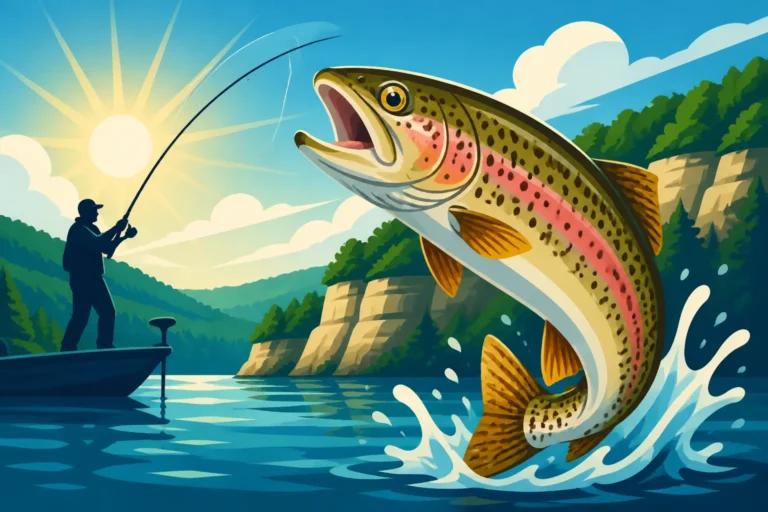
Rainbow trout are the most commonly stocked trout species in Kentucky. These beautiful fish are recognizable by their vibrant pink or red stripe along their sides and small black spots on their fins and body. They are stocked in various tailwaters, urban lakes, and coldwater streams across the state, providing year-round fishing opportunities, particularly at Lake Cumberland's tailwater below Wolf Creek Dam and in select smaller streams. Kentucky Trout Permit Guide
Fishing for rainbow trout often involves light tackle and delicate presentations. Popular baits include corn, salmon eggs, powerbait, and small worms. Lures such as inline spinners, small spoons, and tiny crankbaits can also be very effective. For fly anglers, a variety of nymph, dry fly, and streamer patterns will entice rainbows. The key to success is often finding clear, cold, oxygenated water. While many stocked rainbows are smaller, they put up a spirited fight on light gear, making them a great target for anglers of all skill levels. Remember, if you plan to target trout in Kentucky, you'll need a Kentucky Trout Permit Cost and Requirements in addition to your regular fishing license.
Brown and Brook Trout: Wild Beauty in Hidden Waters
While less common than rainbows, brown trout and the native brook trout can also be found in Kentucky. Brown trout, with their larger, darker spots often encircled by a lighter halo, are known for being warier and growing to larger sizes. They are found in a few specific coldwater stream sections, particularly those with good cover and consistent cool temperatures. They're a favorite of fly anglers who enjoy the challenge of tempting these often-elusive fish.
Brook trout, our only native trout species, are truly special. They are smaller than browns and rainbows, identifiable by their worm-like markings (vermiculations) on their backs, red spots with blue halos on their sides, and white leading edges on their lower fins. They require extremely cold, clean, well-oxygenated water and are primarily found in small, high-elevation mountain streams in eastern Kentucky. Fishing for brook trout is often more about the experience of exploring pristine wilderness than catching a trophy. They are delicate fish, and catch-and-release is often practiced to preserve these precious native populations. Brown Trout and Brook Trout in Kentucky's Cold-Water Streams
Lake Trout: A Rare Deepwater Guest
While technically listed as one of the 265 species, lake trout are an extremely rare, if not non-existent, catch for Kentucky anglers. True lake trout require very deep, very cold, highly oxygenated water year-round, conditions that are generally not sustained in Kentucky's lakes, even our deepest reservoirs like Lake Cumberland. Any potential sightings would likely be isolated incidents or misidentifications. So, while you might find them on a comprehensive species list, actively targeting lake trout in Kentucky would be an exercise in futility. It's good to know what's out there on paper, but in reality, your trout fishing efforts in Kentucky should focus on rainbows, and if you're lucky, browns and brookies in their specific habitats.
Panfish Galore: Fun for the Whole Family
Beyond the headline-grabbing bass and catfish, Kentucky's waters teem with a delightful variety of panfish and sunfish species. These smaller, abundant fish are perfect for beginners, kids, or anyone looking for consistent action and a delicious meal. They might not be the biggest, but their willingness to bite and their vibrant colors make them incredibly fun to catch.
Bluegill and Redear Sunfish: The Backyard Pond Favorites
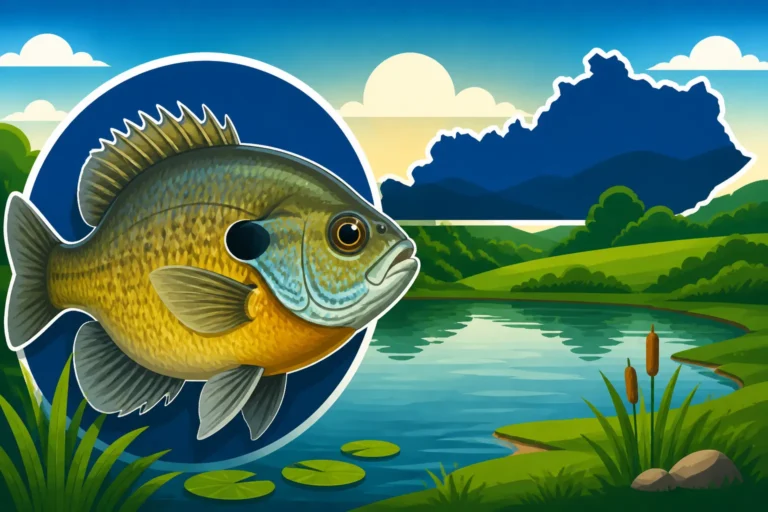
Bluegill are arguably the most recognizable and beloved panfish in Kentucky. With their deep, disk-like bodies, small mouths, and distinctive black "ear flap" (operculum) with no red or white trim, they are found in almost every pond, lake, and slow-moving river section. They are incredibly aggressive for their size, readily attacking small baits and lures, making them ideal for introducing children to fishing. They fight hard on ultralight tackle and are excellent table fare. Bluegill Fishing Tips for Beginners
Redear sunfish, often called "shellcrackers," are another fantastic panfish, growing larger than bluegill and known for their preference for snails and other mollusks, which they crush with pharyngeal teeth. They are easily identified by the red or orange margin on their operculum, though this is less pronounced in females. You'll find them in many of the same waters as bluegill, often preferring slightly deeper, cleaner areas with some vegetation. Simple baits like crickets, worms, or small pieces of bread fished under a bobber are deadly for both bluegill and redear. Small jigs and flies also work wonders, especially during the spring spawn when they congregate in shallow beds.
Longear, Green, Warmouth, and Rock Bass: Diverse Sunfish Relatives
Kentucky is home to an even wider array of sunfish species, each with its own charm. Longear sunfish are stunningly colorful, with long, ornate opercular flaps that extend beyond their gill covers, often adorned with orange and blue wavy lines. They prefer clear streams and small rivers. Green sunfish are tougher, more aggressive panfish, identifiable by their larger mouths and the greenish-gold flecks on their bodies. They tolerate a wider range of habitats, including muddy ponds and ditches.
Warmouth, sometimes confused with rock bass or even a small bass, has a more elongated body, a large mouth, and red eyes. They prefer weedy, murky waters and are often found in sluggish streams and ponds. Rock bass, on the other hand, are typically found in cooler, rocky streams and rivers, often alongside smallmouth bass. They have prominent red eyes and a more robust, chunky body. All these sunfish species will readily take small baits like worms, crickets, or tiny spinners, providing consistent action and adding a splash of color to your catch. Their diversity makes exploring different Kentucky waterways a truly rewarding experience. Panfish and Sunfish Species Found in Kentucky
Pike, Muskie, and Their Aggressive Kin
For anglers seeking a true predator, a fish that will challenge their gear and their patience, Kentucky offers a unique opportunity with its populations of muskie, Northern pike, and chain pickerel. These toothy giants are known for their ambush tactics, explosive strikes, and formidable fighting power.
Muskie: The Fish of 10,000 Casts
The muskie, or muskellunge, is truly the apex freshwater predator in Kentucky's specific muskie fisheries. Known as the "fish of 10,000 casts" for a reason, they are notoriously difficult to catch, but the reward of hooking into one of these massive, aggressive fish is unparalleled. Muskies are long, slender, olive-green to brown fish with dark spots or bars on a lighter background, and their entire mouth is covered in razor-sharp teeth. Cave Run Lake in Eastern Kentucky is arguably the state's most famous muskie fishery, consistently producing trophy-sized fish. Green River Lake and Buckhorn Lake also offer muskie opportunities. Kentucky's Best Lakes for Muskie Fishing
Muskie fishing requires specialized heavy-duty gear: stout rods, large baitcasting reels, heavy braided line, and wire leaders are essential. Large lures, often 8-15 inches long, such as bucktails, glide baits, crankbaits, and soft plastics, are commonly used. Muskie fishing is a commitment, demanding countless casts and hours of focused effort. It's often said that you don't just catch a muskie; you earn it. These fish are primarily targeted by dedicated trophy hunters who understand that patience and persistence are key. The sheer power and raw aggression of a muskie strike will leave an indelible mark on any angler lucky enough to experience it.
Northern Pike and Chain Pickerel: Tooth-Filled Opportunists
While muskie are the giants, Kentucky also has populations of their smaller, but equally aggressive, cousins: Northern pike and chain pickerel. Northern pike are identifiable by their elongated bodies, duckbill-shaped snouts, and bean-shaped spots or markings. They are typically found in cooler, weedy waters, and while not as widespread as muskie, they can be found in some Kentucky reservoirs.
Chain pickerel are smaller still, recognized by their distinctive chain-like pattern on their sides and a fully scaled cheek and operculum (gill cover). They are more tolerant of warmer waters than pike and are often found in sluggish rivers, backwater ponds, and weedy lake coves throughout Kentucky. Both pike and pickerel are ambush predators, lying in wait in heavy cover to dart out and snatch prey. They will readily strike artificial lures like spinnerbaits, spoons, and crankbaits, and are also susceptible to live minnows. While not reaching the size of muskie, they offer exciting, hard-hitting action and are a fantastic challenge on medium-light tackle. Just be very careful handling these fish; their mouths are full of sharp teeth!
Unique and Less Common Catches: Adding Spice to Your Tackle Box
Beyond the popular game fish, Kentucky's aquatic ecosystems are home to a fascinating array of unique and often ancient fish species. While some are targeted for sport or food, others are simply incredible creatures that add to the rich biodiversity of our waters, making every fishing trip a potential surprise.
Paddlefish: Prehistoric River Giants
Imagine hooking a fish with a long, paddle-shaped snout that can grow to over 100 pounds – that's the paddlefish. These truly prehistoric fish are filter feeders, swimming with their mouths open to strain plankton from the water. They are found primarily in the Ohio River and its major tributaries. Because they are filter feeders, they cannot be caught with traditional hook-and-line methods using bait. Instead, they are harvested by snagging, a specialized technique permitted only during specific seasons. Paddlefish Fishing on the Ohio River: A Complete Guide
Snagging involves using heavy gear, a large treble hook, and blindly casting and retrieving through areas where paddlefish are known to congregate. It's a physically demanding method, but the reward of landing one of these massive, silver-skinned giants is immense. Paddlefish roe is highly prized, and their flesh is also considered excellent table fare. It's important to be aware of the specific regulations and seasons for paddlefish snagging, as they are a highly managed species to ensure sustainable populations. Kentucky's Record Paddlefish Weighed 106 Pounds
Gar, Bowfin, and Drum: The Unconventional Fighters
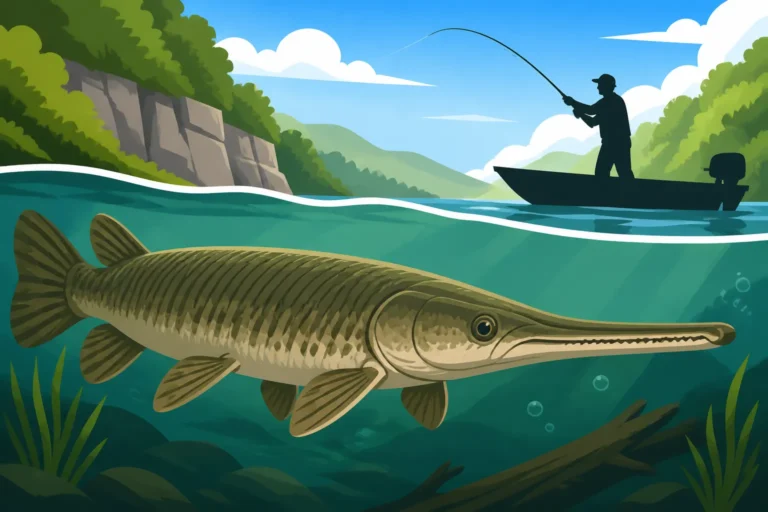
Kentucky is home to several other intriguing species that might not always be on an angler's target list but offer a unique fight. Longnose gar, with their elongated bodies and needle-sharp teeth, are often found in sluggish backwaters and slow-moving rivers. They are tough, bony fish that put up a strong fight. Many anglers target them with specialized methods like frayed nylon rope lures, which their teeth get tangled in.
Bowfin, often called "mudfish," are primitive, powerful fish with a long dorsal fin and an unmistakable eye-spot on their tail fin. They are incredibly hardy and aggressive, often found in heavily vegetated, low-oxygen waters. They'll readily strike spinnerbaits, jigs, and live bait, and when hooked, they put up a surprisingly strong, thrashing fight. While not typically eaten, they are fantastic sport fish.
Freshwater drum, also known as sheepshead, are abundant in the Ohio River and many large lakes. These deep-bodied, silvery fish have a characteristic humped back and a downward-pointing mouth. They are bottom feeders, often caught on worms or cut bait while targeting catfish. Drum are known for their distinctive "drumming" sound, produced by muscles vibrating against their swim bladder. They can grow to respectable sizes and put up a surprisingly good fight, often making long, powerful runs. Freshwater Drum Fishing on the Ohio River in Kentucky
White Bass, Yellow Bass, and Striped Bass: Schooling Action
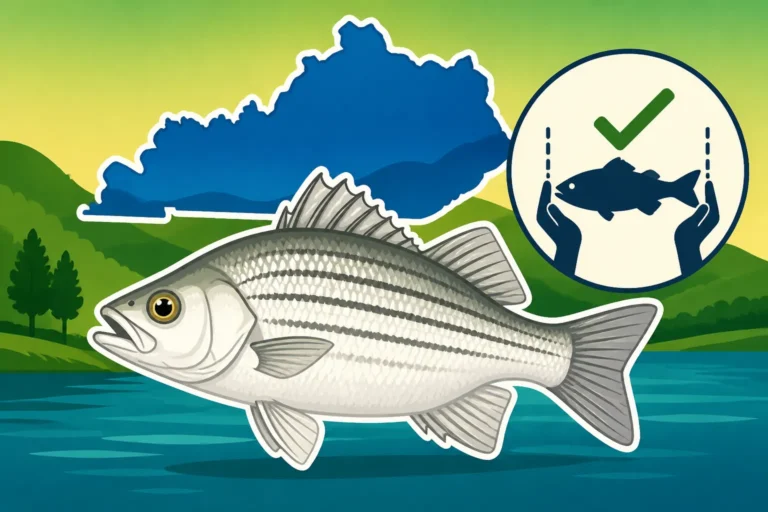
For fast and furious action, look no further than Kentucky's schooling bass species: white bass, yellow bass, and hybrid striped bass. White bass are silvery, slender fish with faint horizontal stripes, famous for their aggressive feeding frenzies during spring spawning runs in rivers like the Ohio and Cumberland, and throughout large reservoirs. When you find a school, the action can be non-stop, with fish hitting almost anything you throw at them. Small jigs, spinnerbaits, and minnows are highly effective. Best Time for White Bass Runs in Kentucky Rivers
Yellow bass are smaller cousins, with more distinct, broken horizontal stripes and a yellowish hue. They tend to school in deeper water and are often caught while targeting other species. While smaller, they are plentiful and provide consistent action.
Hybrid striped bass (wipers) are a cross between striped bass and white bass, intentionally stocked in several Kentucky lakes (like Taylorsville Lake and Rough River Lake) to create a fast-growing, hard-fighting game fish. They combine the fighting power of a true striped bass with the school-forming tendencies of white bass. They are powerful, often reaching impressive sizes, and are targeted with heavy spoons, large crankbaits, and live bait. These schooling predators provide fantastic sport fishing, especially when they push baitfish to the surface in a "boil," creating a visual spectacle and a thrilling fishing opportunity.
Kentucky's waters truly offer an incredible diversity of fish species, each with its own quirks, challenges, and rewards. From the explosive strike of a largemouth bass in a shallow cove to the powerful tug of a giant blue catfish in the Ohio River, or the delicate dance of a rainbow trout in a mountain stream, there's always something new to discover. Exploring these different species and their habitats is part of the joy of fishing in our great state. So, grab your gear, maybe even a new lure you found on Amazon, and get out there – adventure (and dinner!) awaits.
Disclaimer
This article is for general informational purposes only and does not constitute professional advice. Laws, prices and regulations vary by location and change over time. Consult a qualified professional for guidance on your specific situation.