How to Identify a Spotted Bass in Kentucky
It's incredibly frustrating when you're out on the water, reeling in a beautiful bass, and you just can't quite tell if it's a largemouth, a smallmouth, or one of those elusive spotted bass. Kentucky waters are home to all three, and knowing the difference isn't just about bragging rights; it's often crucial for following regulations. This guide will help you confidently identify a spotted bass in Kentucky, so you'll know exactly what you've caught.
The Confusion of Kentucky's Black Bass Species
Kentucky is a fantastic place to fish for black bass, but it can also be a bit of a head-scratcher when trying to distinguish between the different species. Largemouth, smallmouth, and spotted bass often share similar habitats and can even look quite alike at first glance, leading to a lot of confusion, especially for newer anglers.
Why Spotted Bass Get Mixed Up with Their Cousins
At an initial glance, a spotted bass can easily be mistaken for a largemouth or a smallmouth. They all share that classic torpedo-shaped body, deep green to brown coloration, and predatory appearance that screams "bass!" It's particularly tricky with juvenile fish, where their distinguishing features aren't as pronounced. You might catch a smaller bass in a river system, and without a clear understanding of the specific indicators, it's easy to just lump it into the "largemouth" or "smallmouth" category by habit, especially if those are the species you're more familiar with.
Adding to the confusion, their habitats can overlap significantly. While largemouth often prefer shallow, weedy areas, and smallmouth thrive in clear, rocky rivers, spotted bass often bridge the gap, inhabiting areas that both their cousins might frequent. This means you could be fishing the same stretch of water and pulling out all three species, making on-the-spot identification a real challenge. Many anglers have been there, pulling up a fish and scratching their heads, wondering if they just landed a largemouth with an unusual pattern or something entirely different.
The frustration is real. Imagine you're fishing a tournament, and there are different size or bag limits for each bass species. Mistaking a spotted bass for a largemouth could lead to penalties or, at the very least, missing out on accurately reporting your catch. We all want to know what we've hooked, not just for the sake of knowledge, but to truly understand the dynamics of our local fisheries.
The Importance of Correct Identification for Anglers
Knowing exactly what species of bass you've caught goes beyond simply satisfying your curiosity; it has practical implications, especially here in Kentucky. For instance, different species of bass often have varying size and daily possession limits. You might find that a certain lake has a protected slot limit for largemouth bass, but a more open limit for spotted bass. Being able to correctly identify your catch means you're complying with Kentucky Statewide Bass Size and Daily Limit Rules and avoiding potential fines or citations. It's a key part of being a responsible angler.
Beyond the legal aspect, accurate identification helps you become a more skilled and knowledgeable angler. Each bass species has its own preferences when it comes to habitat, forage, and behavior. If you consistently catch spotted bass in a certain type of cover or structure, you start to build a mental map of where to find them and what techniques might work best. This knowledge can transform your fishing success, helping you target specific species more effectively rather than just hoping for a bite.
Furthermore, correct identification plays a role in conservation. Fisheries biologists rely on accurate catch data, often reported by anglers, to understand population health and trends for each species. When anglers consistently misidentify fish, it can skew these data sets, making it harder for wildlife agencies to make informed decisions about stocking, regulations, and habitat management. Your accurate reporting contributes to the overall health of Kentucky's fantastic fishing opportunities, ensuring future generations can enjoy the same great experiences.
Key Physical Characteristics of a Kentucky Spotted Bass
While spotted bass share some general similarities with largemouth and smallmouth, there are a few tell-tale physical characteristics that, once you know them, make identification much easier. It's all about paying attention to the details, almost like solving a puzzle with fins and scales!
The Distinctive Lateral Line and Spotting Pattern
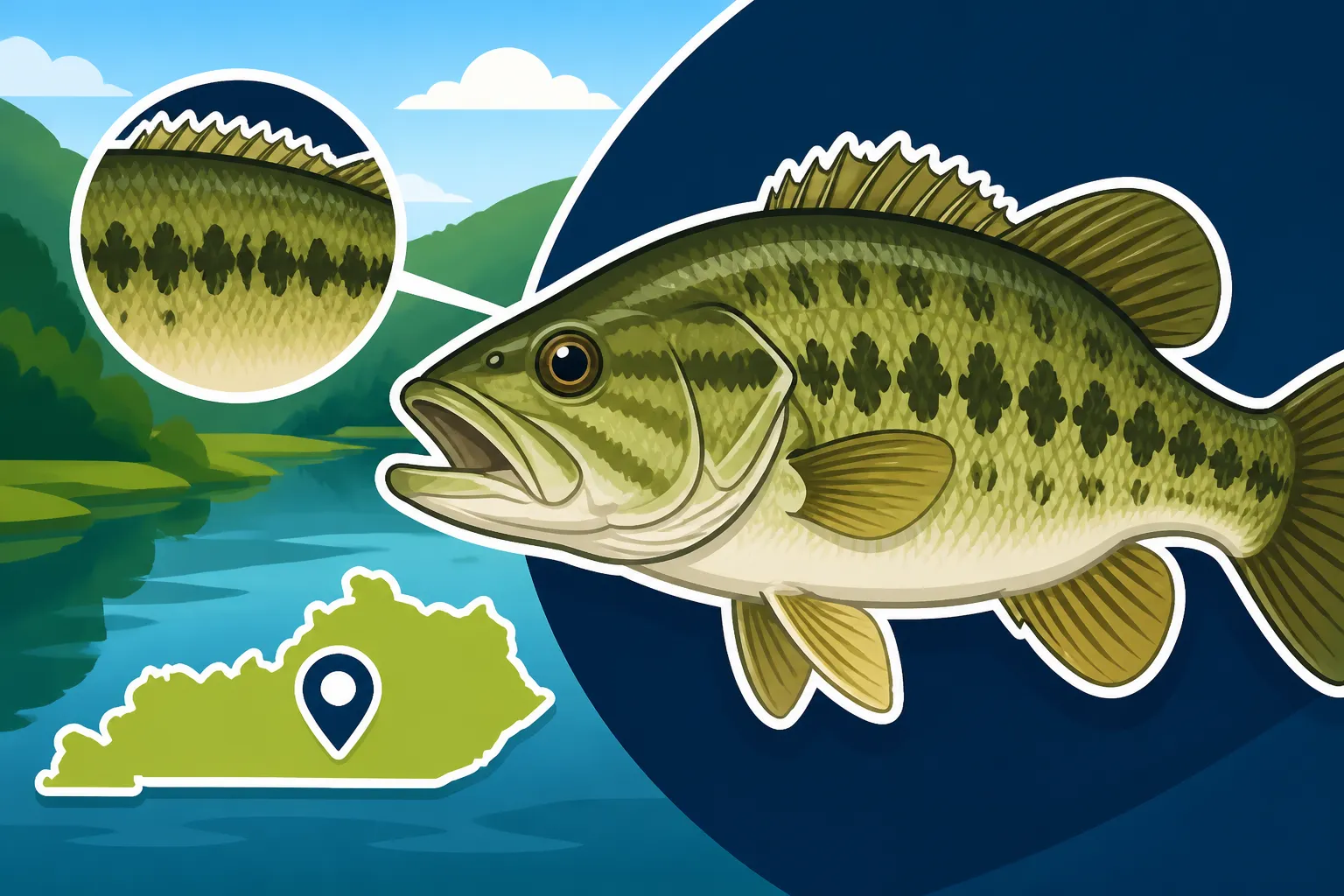
One of the most immediate and defining features of a spotted bass is its lateral line, combined with its unique spotting pattern. Unlike the largely solid, dark lateral line you often see on a largemouth, a spotted bass's lateral line is typically more broken, almost appearing as a series of dark blotches rather than a continuous stripe. This isn't always a dead giveaway on its own, as coloration can vary, but it's the first hint.
The real differentiator, and where the "spotted" name comes from, is the distinct pattern of dark spots you'll find on their lower flanks and belly. If you gently rub your hand from the tail forward on the underside of the fish, you'll feel rows of small, rough scales that correspond with these spots. These spots are usually arranged in several distinct rows below the lateral line, extending all the way to the base of the tail. Imagine tiny, almost embroidered dots running along their lighter belly – a feature that largemouth bass simply don't possess. Smallmouth bass, on the other hand, might have vertical bars or blotches but rarely these distinct horizontal rows of spots on the belly itself.
So, next time you land a bass that you suspect might be a spotted bass, turn it over and look closely at its underside. If you see those clear, dark spots arranged in neat rows below the lateral line, extending towards the tail, you're almost certainly holding a spotted bass. It's one of the most reliable visual cues and often the first thing experienced anglers look for.
Jaw Extension: The Mouth Test
Perhaps the most definitive and widely used method for distinguishing between Kentucky's black bass species is the "mouth test," which examines how far back the jaw extends relative to the eye. It's a simple yet incredibly accurate way to tell them apart, and it's much easier to do in person than it sounds.
To perform the mouth test, gently close the fish's mouth and observe where the corner of its upper jaw (the maxilla) aligns with its eye. For a spotted bass, the corner of the jaw will typically extend to about the middle of the eye, or sometimes just slightly past it, but never significantly beyond the back edge of the eye. It's a moderate jaw extension, not quite as long as a largemouth, but longer than a smallmouth. Picture yourself holding the fish, looking at it from the side – if the jaw line ends squarely under the eye or just a tiny bit past, you're on the right track for a spotted bass.
This is a critical point of distinction when compared to its relatives. A largemouth bass, true to its name, has a much larger mouth; its upper jaw will famously extend well past the back edge of the eye. A smallmouth bass, conversely, has the smallest mouth of the three, with its upper jaw typically stopping noticeably before the middle of the eye. So, if you're holding a bass and can easily slide a finger behind its eye and still feel the jaw, it's a largemouth. If the jaw barely reaches the eye, it's a smallmouth. The spotted bass sits right in the middle. For a more detailed look at these differences, you might want to check out How to Identify a Largemouth Bass Vs a Smallmouth Bass.
Fin and Scale Patterns to Look For
While the jaw and spotting pattern are often the first things anglers check, a closer look at the fins and even a subtle feel of the tongue can provide additional confirmation, helping you cement your identification of a Kentucky spotted bass. These finer details can sometimes be the deciding factor when a fish seems to have mixed characteristics.
Dorsal Fin Separation
Another key area to examine is the dorsal fin – that prominent fin along the fish's back. Black bass species all have two dorsal fins, but how connected they are varies. For a spotted bass, the spiny front dorsal fin and the softer-rayed rear dorsal fin are slightly connected, but with a noticeable dip or shallow notch between them. It’s not a complete separation like you might see on some other fish, but it’s also not a perfectly continuous, smoothly arched fin.
When you run your finger along the top of the fish's back, you'll feel a clear, though often shallow, indentation where the two fins meet. This connection provides a good point of comparison. A largemouth bass will have a very deep, almost complete notch, making it look like two distinctly separate fins. You can practically lay a finger flat in the gap. A smallmouth bass, on the other hand, typically has a more continuous dorsal fin, with only a very slight dip, making it feel almost like one long fin. The spotted bass's dorsal fin connection falls right in between these two extremes, offering a middle ground that helps pinpoint its identity.
This subtle difference, once you've felt it a few times, becomes a reliable indicator. It's easy to overlook when you're just looking at the fish from a distance, but up close, it's a valuable piece of the identification puzzle. Don't be afraid to gently touch the fish (with wet hands, of course, to protect its slime coat) to feel for that dorsal fin connection.
Tongue Patch and Other Subtle Indicators
For an even more conclusive identification, especially if you're still on the fence, check the tongue of the bass. This is a lesser-known but highly reliable characteristic: a spotted bass nearly always has a small, rough patch of teeth on its tongue. To check for this, gently open the fish's mouth and carefully feel its tongue with your fingertip. You'll feel a distinct, rough texture, almost like sandpaper. Neither largemouth nor smallmouth bass typically possess this rough patch on their tongues, making it an excellent tie-breaker.
Beyond the tongue, there are other subtle indicators. Spotted bass tend to have slightly smaller scales than largemouth, particularly around the head. While this is harder to judge without a comparison fish, it contributes to their generally sleeker appearance. Their overall coloration can also be a clue; they often have a greenish-brown back and sides, usually lighter than a largemouth, but not as bronze or golden as a smallmouth. They might also exhibit somewhat of a "tiger stripe" pattern on their upper sides, which can add to the confusion with smallmouth if you're not also looking at the spots below the lateral line. Remember, it's the combination of features that gives you the most confidence in your identification, so consider all these clues when trying to pinpoint your catch.
Habitat and Behavior Clues for Kentucky Spotted Bass
Understanding where and how a spotted bass typically lives and feeds in Kentucky can also provide strong clues for identification. While physical characteristics are definitive, knowing the common haunts and habits of these fish helps you anticipate what you might catch, further refining your on-the-water identification skills.
Preferred Waters and Structure in Kentucky
Kentucky's waterways offer a diverse range of habitats, and spotted bass have carved out their own niche within them. Unlike largemouth that often gravitate towards shallow, vegetated flats, or smallmouth that are kings of cold, clear, rocky rivers with strong current, spotted bass tend to prefer deeper, clearer, and often rocky reservoirs and larger river systems. They really thrive in places where there's a good mix of deep water access, rocky structure, and a consistent food supply.
You'll find spotted bass in abundance in iconic Kentucky lakes like Lake Cumberland, known for its deep, clear waters, and Herrington Lake, which is Kentucky's deepest lake, where they can be found cruising deep ledges and points. Herrington Lake Fishing Guide, Kentucky's Deep Water Bass Lake provides excellent insights into their habitat there. They also do exceptionally well in Barren River Lake, particularly around its rocky outcroppings and deeper structure, making it a prime spot to encounter them. Check out the Barren River Lake Fishing Guide for Kentucky Anglers for more information on fishing that particular body of water.
These fish love current, so they're often found around bluff walls, rocky points, humps, and submerged timber, especially if there's a good drop-off nearby. While they can move shallower to feed, especially during certain times of the year, their comfort zone often lies a bit deeper than that of a largemouth, seeking out cooler, more stable water temperatures and ambush points along deep structure. They're resilient fish and can adapt to a variety of conditions, which is why they're so successful across many of Kentucky's popular fishing destinations.
Diet and Feeding Habits
The diet and feeding habits of spotted bass further reflect their preferred habitats and differentiate them somewhat from their black bass cousins. While all bass are opportunistic predators, spotted bass tend to be more active and aggressive feeders, often schooling up to target baitfish in open water or along structural breaks. They aren't as much of a pure ambush predator from dense cover like a largemouth, nor are they exclusively focused on crayfish like a smallmouth.
Their diet is quite varied, consuming a mix of crawfish, shad, various minnow species, and aquatic insects. This diverse palate means they can be caught on a wide array of lures and baits, from jigs and soft plastics mimicking crawfish, to crankbaits and swimbaits designed to imitate shad. In many Kentucky lakes, shad populations are key to healthy spotted bass numbers, and you'll often find these bass tightly grouped around schools of baitfish, making them a fantastic target for anglers using finesse techniques or even casting into schooling activity.
Spotted bass are known for their strong fight, often making powerful runs and dives, even on lighter tackle. This aggressive feeding behavior, combined with their tendency to school, can lead to incredible fishing action when you find them. Understanding these habits not only helps in identification but also in selecting the right lures and presentations to entice a bite. They're a truly exciting fish to target once you get to know their ways!
Differentiating Spotted Bass from Largemouth and Smallmouth
Now that we've delved into the specific characteristics of the spotted bass, let's put it all together and clearly distinguish it from its two very common Kentucky cousins: the largemouth and the smallmouth. Often, it's not just one feature that gives it away, but a combination of several.
Side-by-Side Comparison: Head to Tail
When you're trying to confidently identify a black bass in Kentucky, it really boils down to three primary indicators. First, and perhaps most reliably, is the jaw extension. Remember, a spotted bass's upper jaw extends to about the middle of the eye, or just slightly past it, but never significantly beyond the back edge of the eye. Contrast this with the largemouth, whose jaw goes well past the eye, and the smallmouth, whose jaw stops noticeably before the eye. This is usually the first check I do.
Second, examine the body spotting. The spotted bass earns its name from the distinct horizontal rows of dark spots on its lower flanks and belly, below the lateral line. These spots are usually quite pronounced. A largemouth, conversely, has a more solid, often dark, lateral line and a clean, unspotted white belly. A smallmouth might have vertical bars or blotches on its sides, but generally lacks those distinct rows of spots on the belly. Finally, consider the dorsal fin connection. The spotted bass has a noticeable, but shallow, dip between its two dorsal fins, connecting them. The largemouth has a very deep, almost complete separation, while the smallmouth's dorsal fins are more continuously connected with only a very slight dip.
Imagine you've just caught three different bass that look similar. You hold them up. The first one has a jaw that extends far beyond the eye, a solid lateral line, and a white belly – that's your largemouth. The second fish has a jaw that barely reaches the eye, vertical bars on its side, and a smooth dorsal fin – a smallmouth. The third fish, our spotted bass, will have a jaw that ends right under the middle of its eye, clear rows of spots on its belly, and a dorsal fin with a distinct but shallow notch. By checking these three key areas, you'll gain immense confidence in your identification every time.
| Feature | Largemouth Bass | Spotted Bass | Smallmouth Bass |
|---|---|---|---|
| Upper Jaw Extension | Extends well past the back of the eye | Extends to the middle or slightly past the eye | Does not extend past the middle of the eye |
| Lateral Line | Usually a solid, dark horizontal stripe | Broken, blotchy appearance | Often more subtle, sometimes with vertical bars |
| Belly Spotting | Generally clean, unspotted white belly | Distinct horizontal rows of dark spots below lateral line | Lacks distinct belly spots, may have faint mottling |
| Dorsal Fins | Deep, almost complete separation/notch | Distinct but shallow notch, slightly connected | More continuous, less pronounced notch |
| Tongue Patch | Absent | Present (rough patch) | Absent |
| Body Shape | Slightly more elongated, deeper body | More streamlined, moderately deep body | More robust, cylindrical body |
Why the Distinction Matters for Your Fishing Trip
Knowing the specific bass species you're catching isn't just an academic exercise; it has real, tangible impacts on your actual fishing trip. First and foremost, as mentioned before, regulations often differ. A classic example is Lake Barkley Bass Size Limit Exception in Kentucky, where specific rules might apply to largemouth that differ from spotted bass or smallmouth. If you mistakenly keep a spotted bass thinking it's a largemouth, and it falls outside the largemouth slot limit, you could be in violation. This applies to many other bodies of water, and it's why understanding What Size Bass Can You Keep in Kentucky? for each species is so important.
Beyond regulations, identifying the species helps you refine your fishing techniques and tackle choices. Spotted bass, with their schooling habits and preference for deeper, rockier structure, often respond differently to lures and presentations than a largemouth hidden in lily pads. You might find that vertical jigging or dragging a football head jig along a deep point is more effective for spotted bass, while a frog or topwater bait might be ideal for largemouth in shallow cover. Knowing what you've hooked allows you to adjust your strategy for subsequent casts, making you a more versatile and successful angler. If you're looking for more specific tactics, checking out Spotted Bass Fishing Tips for Rivers and Lakes could be really helpful.
Ultimately, the distinction enriches your entire fishing experience. There's immense satisfaction in confidently identifying your catch, understanding its behaviors, and knowing you're fishing responsibly. It deepens your connection to the water and the incredible biodiversity of Kentucky's fisheries. This knowledge transforms a simple "bass" into a fascinating creature with its own story and challenges, making every catch more meaningful.
Resources and Tools for Confident Identification
Even with all the knowledge in your head, sometimes having a little backup on the water can make all the difference. Thankfully, there are plenty of resources and tools available to help you confidently identify your Kentucky spotted bass, even when you're still learning.
Field Guides and Apps
One of the best tools an angler can have, especially when learning to identify different species, is a good, old-fashioned field guide or a modern app. A compact, waterproof field guide specific to Kentucky fish species is invaluable. You can easily find a great selection of these on Amazon, often designed to be tucked into a tackle box or boat compartment. These guides typically feature detailed illustrations or photographs highlighting key identification points, making it easy to do a quick comparison right there on the boat or bank. They’re fantastic for a visual reference when you’re unsure about that jawline or belly spotting.
In today's digital age, fishing apps have also become incredibly sophisticated. Many of these apps include comprehensive fish identification sections, often with multiple images, detailed descriptions, and even maps of where certain species are commonly found. Some even allow you to upload a photo of your catch for community identification, though it's always best to learn the basics yourself first. Having one of these downloaded on your phone means you've got a portable reference library right in your pocket. Just make sure your phone is charged and protected from the elements!
If you're still in doubt after checking your field guide or app, a clear photograph of your catch is your best friend. Get a good, side-profile shot that shows the jaw, lateral line, and belly area. You can then review it later at home, or even share it with experienced anglers in online forums or local fishing groups for their input. This practice helps solidify your learning and ensures you're correctly identifying species like the spotted bass, even if you couldn't make a definitive call on the spot.
Learning from Experienced Anglers and Local Communities
While books and apps are fantastic, there's no substitute for the wisdom that comes from experienced anglers and local fishing communities. Kentucky has a rich fishing culture, and many seasoned fishermen are more than happy to share their knowledge and tips. Consider joining a local bass club or an online fishing forum dedicated to Kentucky fishing. These are excellent places to ask questions, post pictures of your catches for identification, and learn from those who have spent countless hours on the water. Many passionate anglers are happy to clarify the subtle differences between species, providing insights that you might not find in a generic guide.
Another fantastic resource is your local bait and tackle shop. The folks who run these shops are often lifelong anglers themselves and are intimately familiar with the fish in nearby waters. Don't be shy about striking up a conversation and asking them to show you how to identify a spotted bass, perhaps with a picture you've taken or even using a mounted fish if they have one. They can provide hyper-local context that's incredibly valuable. They might even have recommendations for Best Bass Fishing Spots in Kentucky where you're more likely to encounter spotted bass.
Finally, just keep fishing! Every time you catch a fish, take a moment to observe its features. Practice applying the identification tips you've learned. The more fish you handle, the more confident you'll become. Don't be afraid to ask questions or admit you're unsure – every angler, no matter how experienced, started somewhere. The Kentucky fishing community is generally very welcoming, and learning from others is part of the joy of the sport.
Disclaimer
This article is for general informational purposes only and does not constitute professional advice. Laws, prices and regulations vary by location and change over time. Consult a qualified professional for guidance on your specific situation.