Bank Fishing Techniques for Catfish
There’s nothing quite like the thrill of a big catfish pulling on your line, especially when you’re standing firm on the bank, feeling every head shake and surge directly through your rod. Many anglers assume you need a fancy boat and high-tech electronics to consistently catch quality catfish in Kentucky, but that’s simply not true. Bank fishing for catfish offers a unique charm and can be incredibly productive if you know the right techniques and spots. This guide is here to demystify bank fishing for catfish, giving you the practical strategies to fill your cooler or land that trophy from shore.
Understanding Kentucky Catfish and Their Habits from Shore
Before you even think about casting a line, it helps to understand the fish you're after. Catfish aren't all the same, and knowing their preferences and typical behaviors will drastically improve your chances, especially when you're limited to bank access. It's not just about luck; it's about making educated guesses based on how these fish live and feed.
Species You'll Encounter from the Bank
Kentucky waters are home to several species of catfish, and each has its own quirks that can influence your bank fishing strategy. Recognizing which species are likely to be in the areas you can access from shore is your first step to success.
Channel catfish are probably the most common and widely distributed catfish species you'll find across Kentucky. They’re incredibly adaptable and can thrive in a variety of habitats, from small ponds and creeks to large rivers and reservoirs. From the bank, you’ll find them in areas with moderate current, around submerged cover like fallen trees, or along weed lines. They rely heavily on their sense of smell, making them prime targets for scented baits. They don't typically grow as large as their blue or flathead cousins, but they offer consistent action and are excellent eating.
Blue catfish, on the other hand, are the true giants of Kentucky's catfishing scene. These big boys prefer larger rivers and deep impoundments, often congregating in deep channels, bends, and scour holes. While they are often associated with boat anglers who can reach these deeper waters, don't write them off entirely for bank fishing. Along the Ohio River or the lower stretches of Kentucky Lake and Lake Barkley, you can access areas with significant depth right from the bank. Look for spots near current breaks, deep drops, or close to main river channels if you're targeting these beasts from shore. They too are highly scent-driven, but often prefer fresh cut bait.
Flathead catfish are the most distinct of the three major species, not just in appearance but also in their diet and habits. Flatheads are ambush predators and prefer live bait, primarily feeding on other fish. They are territorial and almost always found near heavy cover like logjams, rock piles, or undercut banks. While Channel and Blue cats will scour the bottom for food, a Flathead often waits for prey to swim by. If you’re targeting Flatheads from the bank, you’ll need to focus your efforts on areas with significant woody debris or rocky structure, and you'll definitely want to be using live bait.
Prime Bank Fishing Locations for Catfish
You can't just throw a line in anywhere and expect to catch catfish. Bank fishing requires a keen eye for what makes a spot appealing to these bottom dwellers. It's about thinking like a fish and finding where they would feel safe, find food, and conserve energy.
River bends and deep holes are classic catfish haunts. As water flows around a bend, it often scours out a deeper hole on the outside edge. This deeper water provides refuge for catfish, especially during the day, and current eddies can concentrate food. Fallen trees and brush piles, whether on rivers or lakes, are catfish magnets. These structures offer cover from predators, shade from the sun, and a place for baitfish to hide, which in turn attracts catfish. If you can cast close to or into these submerged timber graveyards from the bank, you're in a prime position.
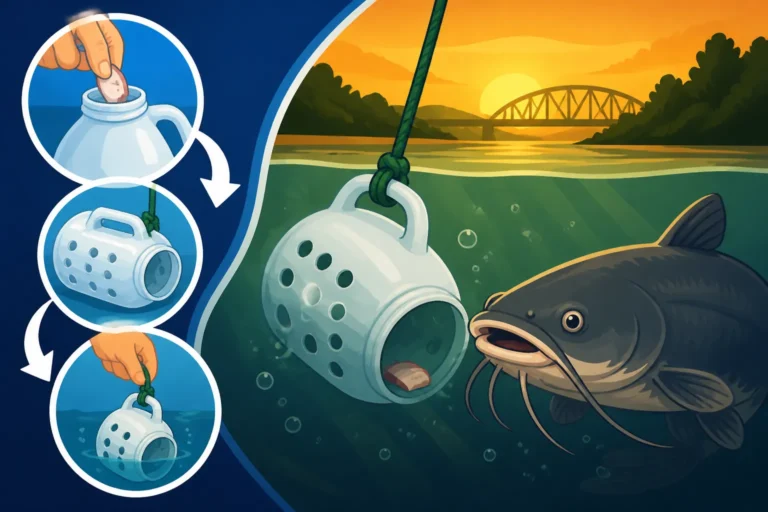
Bridge pilings and the downstream side of dams are also incredible spots, especially on larger rivers like the Ohio River in Kentucky. The current around bridge pilings creates scour holes and eddies that catfish love, and the concrete structures themselves offer excellent ambush points. Below dams, the aerated water and disrupted currents often disorient baitfish, creating an easy buffet for hungry catfish. Just be sure to respect all safety zones and warning signs around dam structures. Riprap banks – those rocky areas designed to prevent erosion – are another fantastic spot. The rocks provide cover and hold warmth, attracting baitfish and in turn, catfish, especially during cooler months or at night. Many public access points on larger lakes offer riprap banks that are perfect for bank fishing. Check out some of the Best Catfish Fishing Holes on the Ohio River in Kentucky for more localized insights.
Seasonal Catfish Movements from Shore
Catfish don't stay in one spot all year; their movements are heavily influenced by water temperature and spawning cycles. Understanding these seasonal shifts will help you know where to focus your bank fishing efforts throughout the year.
In spring, as water temperatures begin to rise, catfish become very active. This is a pre-spawn period, and they're looking to bulk up. You'll often find them moving into shallower waters that warm up first, especially in coves, creek mouths, and flats near deeper channels. Look for these areas where you can comfortably cast from the bank. This can be one of the best times to catch larger numbers of fish from shore, as they are actively feeding and less spooky than during other seasons.
Summer presents a bit more of a challenge for bank anglers, especially during the day. As water temperatures soar, catfish will often retreat to deeper, cooler water during daylight hours. However, summer nights are prime time for bank catfishing. These fish are primarily nocturnal feeders, and as the sun sets, they move into shallower feeding grounds, often along those same flats, points, and structural elements you found them on in spring. This is when a good headlamp and some bug spray become your best friends. Check out Night Fishing Tips for Beginners for more specific advice on after-dark angling.
As fall approaches and water temperatures start to drop, catfish experience a strong feeding frenzy to prepare for winter. They will move back into shallower areas, especially those sun-drenched banks and flats, gorging themselves on baitfish. This can be another fantastic time for bank fishing, offering consistent action during both day and night. During winter, catfish become much less active, retreating to the deepest holes and slowest currents they can find. Catching them from the bank during this time requires patience and a slower presentation, often right in those main river channels or deep reservoir basins that are accessible from a handful of bank spots.
Essential Gear for Bank Catfishing Success
One of the beautiful things about bank fishing for catfish is that you don't need a boatload of expensive equipment. However, having the right rods, reels, and tackle tailored to the task will make your experience much more enjoyable and productive. It’s about being prepared for the fight a big Kentucky cat can put up.
Rods, Reels, and Line Choices
When you’re fishing from the bank, you often need to cast a good distance and have enough backbone to wrestle a fish out of snags or current. That means your rod and reel setup needs to be up to the challenge.
For rods, you'll want something in the medium-heavy to heavy action range, typically 7 to 10 feet long. The extra length helps with casting heavier baits further and gives you better leverage when fighting a strong fish or guiding it around obstacles. A rod with a stout backbone and a sensitive tip is ideal – the backbone for power, and the sensitive tip to detect subtle bites. Many anglers prefer fiberglass or composite rods for their durability and parabolic bend, which helps absorb the shock of a hard-fighting catfish. Brands like Ugly Stik offer excellent, affordable options that are practically indestructible, perfect for the rough and tumble of bank fishing.
When it comes to reels, you have a couple of solid choices. Baitcasting reels, especially conventional round reels, are often preferred by serious catfishermen for their power, line capacity, and ability to handle heavy lines and weights. They offer incredible cranking power and a smooth drag system, which is crucial when a big blue cat decides to make a run. However, spinning reels can also be very effective, especially for lighter presentations or if you're newer to casting. Look for spinning reels with a large spool capacity, a robust build, and a smooth, reliable drag. Ensure your reel size matches your rod's power; a 4000 to 6000 series spinning reel or a 5000 to 6500 series baitcaster (like a Penn Squall or Abu Garcia Ambassadeur) would be good starting points. You can find a wide range of suitable gear on Amazon that ships right to your door.
Your fishing line is the direct connection between you and the fish, so choose wisely. Monofilament line in the 15-30 lb test range is a popular choice for its shock absorption, knot strength, and abrasion resistance – vital when fishing around rocks and timber. However, braided line, typically 30-65 lb test, has gained immense popularity for catfishing due to its incredible strength-to-diameter ratio and zero stretch. The lack of stretch provides superior sensitivity, allowing you to feel even the slightest tap, and its strength is a huge advantage when fishing heavy cover. Many anglers opt for a braid main line with a monofilament or fluorocarbon leader to get the best of both worlds.
The Ultimate Bank Catfishing Tackle Box
A well-organized tackle box is crucial for bank fishing. You need to be mobile, but also prepared for anything. This isn't about having everything, but having the right things.
Your hook selection is paramount. Circle hooks, ranging from 1/0 to 8/0, are the gold standard for catfishing, especially when using cut or live bait. The design of a circle hook virtually guarantees a hook-up in the corner of the fish's mouth, making them incredibly effective and promoting healthy catch-and-release by minimizing gut hooking. You might also want some heavy-duty treble hooks (size 2 or 4) if you plan on using prepared dough baits. Always carry plenty, as snags are an inevitable part of bank fishing.
Weights are another critical component, especially when dealing with current. Pyramid sinkers (1 oz to 4 oz+) are excellent for holding bottom in strong currents. Egg sinkers or flat 'no-roll' sinkers are great for calmer waters or when you want your bait to drift a bit. Sinker slides are essential if you're using a Carolina rig, allowing the line to slide freely through the weight, so the fish doesn't feel resistance immediately. Don't forget swivels (barrel or snap swivels, heavy-duty size 5 to 7) to prevent line twist, and beads, which protect your knots from rubbing against weights. Some anglers also like a slip bobber setup for specific situations, so a few bobbers of various sizes can be handy.
Beyond the essentials, don't overlook practical tools. A good pair of long-nose pliers or a hook remover is invaluable for safely extracting hooks, especially from toothy catfish or those deeply embedded. Line cutters or a sharp knife are a must. A sturdy rag or towel helps you get a grip on slimy fish. A measuring tape is good for checking size limits, and a small scale for bragging rights. A headlamp or flashlight is non-negotiable for night fishing. All these items can be easily gathered from outdoor retailers or found on Amazon.
Comfort and Safety Gear for Bank Anglers
Bank fishing, while accessible, still requires consideration for your comfort and safety, especially if you plan on spending extended periods outdoors. Being comfortable means you can focus on fishing, not discomfort.
A comfortable folding chair is a game-changer. Whether you're waiting out a slow bite or enjoying the peaceful Kentucky scenery, a lightweight, portable chair will make a huge difference. Paired with a decent cooler, you can keep your drinks cold, your lunch fresh, and most importantly, any kept catfish on ice. Speaking of coolers, consider one with wheels if you have a bit of a trek to your favorite spot.
Night fishing for catfish is incredibly popular and productive, but it introduces safety considerations. A reliable headlamp or a powerful flashlight is absolutely essential for navigating uneven terrain, tying knots, and handling fish in the dark. Always let someone know where you're going and when you expect to be back. Bug spray is almost always necessary in Kentucky, especially during warmer months, and sunscreen is a must for daytime excursions. A good rain jacket and pants can save a trip if the weather turns.
Finally, don't skimp on a basic first-aid kit. Minor cuts and scrapes are common, and having bandages, antiseptic wipes, and pain relievers can prevent small issues from becoming big problems. Catfish have sharp spines, so a pair of fish grippers or heavy-duty gloves can protect your hands while handling them. A proper landing net with rubberized mesh is also highly recommended, especially for bigger fish, as it helps land them safely without damaging their protective slime coat or injuring yourself.
Mastering Baits and Rigs for Kentucky Catfish from the Bank
Once you have your gear sorted, the next crucial step is choosing the right bait and rigging it effectively. Catfish are scent-driven omnivores, but their preferences can vary by species, location, and even time of year. Knowing your options and how to present them will greatly increase your chances of success from the bank.
Top Catfish Baits for Bank Fishing
There's a saying among catfish anglers: "If it stinks, it links!" While that's often true, different baits excel for different species and situations.
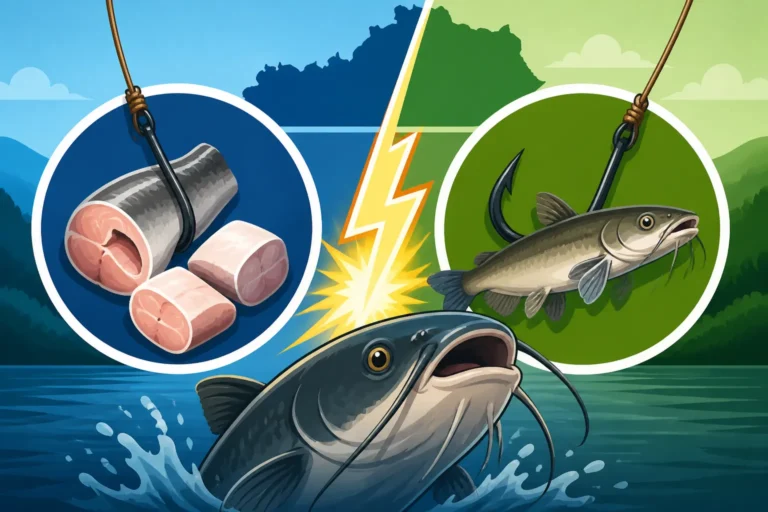
Cut bait is arguably the most popular and effective bait for channel and blue catfish, especially the bigger ones. Fresh is always best, so if you can catch or buy local baitfish like shad, skipjack herring, or even small bluegill, you’re golden. Cut them into chunks or strips; the blood and oils released into the water create an irresistible scent trail that catfish can detect from a long distance. For flatheads, live bait is king. A lively bluegill, sunfish, or even a smaller creek chub is your best bet. Flatheads are predators and prefer to ambush live, struggling prey rather than scavenge. Secure your live bait with a hook through the back, careful not to hit the spine, to allow it to swim naturally.
Prepared baits, often called "stink baits" or "dough baits," are highly effective for channel catfish and are incredibly convenient for bank anglers. Brands like Danny King's, Sonny's, and Catfish Charlie offer a variety of concoctions designed to emit powerful odors. These baits are usually fished on treble hooks or specialized bait holders. While less effective for larger blue or flathead catfish, they can provide consistent action with smaller channels. Just be prepared for the smell!
Classic baits like nightcrawlers (worms), chicken liver, and even hot dogs have their place too. Nightcrawlers are excellent for catching a variety of smaller catfish, especially in ponds or slower-moving waters, and they’re easy to find at any bait shop or even on Amazon. Chicken liver is another stinky, effective bait, though it can be soft and challenging to keep on the hook; try wrapping it with a piece of pantyhose or fine mesh to help it stay put. Even plain hot dogs, especially those soaked in garlic or Kool-Aid, can sometimes surprise you with their effectiveness for channel cats. The key is to experiment and see what the fish are biting on that particular day and in that specific body of water. For a deeper dive, check out Best Bait for Channel Catfish Fishing.
Effective Bank Fishing Rigs
Choosing the right rig is crucial for presenting your bait effectively from the bank, especially when dealing with varying bottom types and currents. The goal is to get your bait to where the catfish are and keep it there naturally.
The Carolina Rig, or a variation called the Santee Cooper Rig, is a staple for catfishing from the bank. It's incredibly versatile and allows the catfish to pick up the bait without feeling immediate resistance from the weight. To tie it, slide an egg sinker (or a no-roll sinker) onto your main line, followed by a plastic bead (to protect your knot), then tie on a heavy-duty swivel. To the other end of the swivel, tie a leader line (12-36 inches of monofilament or fluorocarbon) and finally, your circle hook. The Santee Cooper rig simply adds a small float to the leader to keep your bait slightly off the bottom, making it more visible and preventing snags in soft mud or thick vegetation. This rig is fantastic for bottom fishing in varying currents and depths, and is a great go-to for many bank anglers. You can find all the components you need for this rig easily on Amazon.
For fishing in strong currents, particularly on larger rivers like the Ohio, the Three-Way Swivel Rig is highly effective. As its name suggests, it uses a three-way swivel. Tie your main line to one eye of the swivel. To a second eye, tie a short leader (6-12 inches) with a heavy sinker (like a pyramid sinker) on the end. To the third eye, tie a longer leader (12-36 inches) with your hook and bait. This rig keeps your bait suspended just off the bottom, dancing in the current, making it highly attractive to catfish without constantly snagging. It’s perfect for those deep, fast-moving sections of river where catfish often hold.
A simple Slip Sinker Rig is another incredibly effective and easy-to-tie setup for bank fishing, especially in calmer waters or when you want a more natural presentation. This rig is essentially the Carolina rig without the bead and swivel, although some anglers still add the bead for knot protection. You slide an egg sinker directly onto your main line, then tie your hook to the end of the main line. The line slides freely through the sinker, allowing the fish to swim off with the bait without feeling the weight, often leading to more solid hookups. It's fantastic for detecting subtle bites and allows for a very natural bait drift.
A Float Rig, specifically a slip bobber rig, can be surprisingly effective for bank catfishing in certain scenarios. While catfish are bottom feeders, they will often suspend in the water column, especially at night or over submerged structure. A slip bobber allows you to fish your bait at a precise depth, whether it’s just above a weed bed, over a logjam, or suspended in deeper water. This is particularly useful when you know there's structure you want to avoid on the bottom or when fishing a specific depth where you've seen activity. It’s also a fun way to fish, as watching that bobber disappear is always a thrill.
Understanding Current and Bottom Structure
Being a successful bank catfisherman isn’t just about the bait and the rig; it’s about understanding the water you're fishing. Current and bottom structure dictate where catfish will be and how they feed.
The flow of water, or current, plays a massive role in catfish behavior. In rivers, current brings food, oxygen, and determines where fish will hold to conserve energy. Catfish will often position themselves just out of the main current, in eddies, behind obstructions, or in scour holes, waiting for food to drift by. When bank fishing, look for these "current breaks" – areas where the water is noticeably slower. This might be behind a large rock, a bridge piling, or in the calmer water on the inside bend of a river. Your bait presentation needs to account for the current; use heavier weights in stronger currents to keep your bait on the bottom, or lighter weights to allow a natural drift into holding areas.
Bottom structure is equally important. From the bank, you can often "read" the water to infer what's beneath the surface. Look for changes in water color, ripples, or areas where the bank itself changes (e.g., from a muddy slope to a rocky outcropping). Submerged timber, rock piles, sudden drop-offs, and even old tires or debris provide cover and attract baitfish, making them prime catfish locations. While you don't have a boat's fancy electronics, a castable sonar device (like a Deeper or a Garmin Striker Cast) can be a phenomenal tool for bank anglers. You simply cast it out, reel it back, and it transmits sonar data to your smartphone, revealing depth, bottom contours, and even fish. This technology, widely available on sites like Amazon, truly levels the playing field for bank anglers by giving you eyes beneath the surface.
Understanding how fish relate to both current and structure is key. Flatheads, for instance, are almost always tight to heavy cover, ambushing prey. Blue and channel cats will patrol channels and scour holes, especially where currents bring them food. By observing the water and using any tools at your disposal, you can form a mental map of the underwater landscape, dramatically improving your ability to place your bait precisely where catfish are likely to be.
Strategic Approach: Techniques for Consistent Catfish Catches
Having the right gear and bait is a solid start, but knowing how to put it all together into an effective strategy is what truly separates consistent catchers from occasional lucky ones. Bank fishing for catfish isn't just about waiting; it's about active decision-making.
Casting and Presentation from Shore
When you're confined to the bank, your casting ability and how you present your bait become critical. You need to maximize your reach and ensure your bait looks as natural as possible.
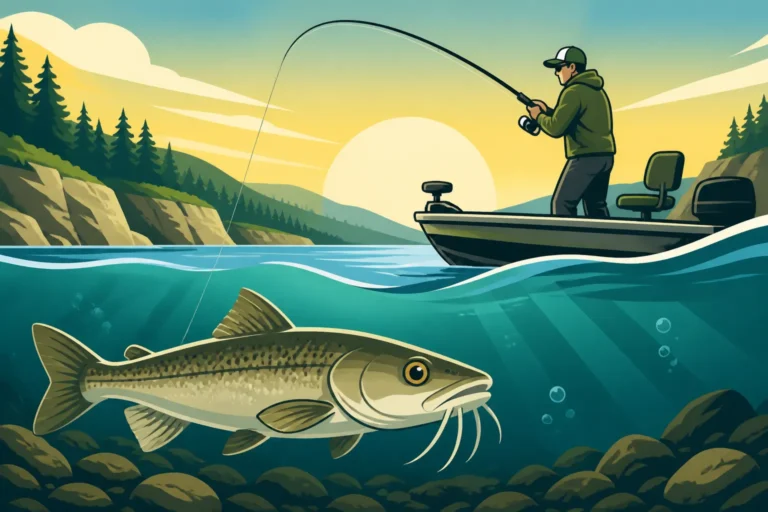
Don't be afraid to make long casts. Often, the deeper channels or prime structural elements that hold larger catfish might be a good distance from the bank. Practice your casting technique to get maximum distance and accuracy. A good overhead cast with your medium-heavy to heavy rod will launch those heavy sinkers and baits a long way. Once your bait is out there, don't just plop it down. Think about your presentation. If you're using cut bait, let it sink naturally. If you're using live bait, make sure it has room to swim.
Fan casting is a powerful technique for bank anglers. Instead of casting to the same spot repeatedly, cast your lines in a fan pattern, covering a broad section of water. For instance, if you're allowed to use multiple rods (check Kentucky's regulations!), cast one straight out, one to your left, and one to your right. This helps you locate active fish and identify "hot zones" where bites are more frequent. Once you've cast, allow your bait to settle on the bottom. Catfish are often patient, and so should you be. Keep a close eye on your rod tip for any sign of a bite. Sometimes the bite will be a subtle tap, other times a violent jerk that nearly pulls your rod into the water. Patience is truly a virtue when catfishing from the bank. For tips on casting, you may want to review a guide like How to Fish for Catfish From the Bank.
Night Fishing for Catfish from the Bank
We've touched on it before, but it bears repeating: night fishing for catfish from the bank is incredibly effective and often the most productive time, especially during the warmer months. Catfish are naturally nocturnal feeders, and the cover of darkness makes them bolder.
When the sun dips below the horizon, catfish become more active and move into shallower feeding areas they might shy away from during daylight. The lack of boat traffic and human activity also contributes to their comfort. The same spots you scouted during the day – creek mouths, points, flats adjacent to deep water, and riprap banks – can become catfish buffets at night. Your sense of smell and hearing become more important in the dark; listen for splashing baitfish or telltale "pops" on the surface.
Safety during night fishing cannot be overstated. Always fish with a buddy if possible. Choose familiar locations that you've scouted during the day, so you know the terrain and potential hazards. A powerful headlamp is non-negotiable for tying knots, rebaiting, and landing fish. Bring extra batteries. Be mindful of snakes and other nocturnal wildlife. Visibility is reduced, so move slowly and deliberately. While it adds a layer of planning, the rewards of a screaming drag under a starry Kentucky sky are absolutely worth it.
Reading the Bite and Hook Setting
One of the most exciting parts of catfishing is feeling that bite, but knowing how to react is key to turning a bite into a landed fish. This is where the choice of hook becomes particularly important.
Catfish bites can range from an incredibly subtle tap, feeling almost like weeds, to a full-on rod-bending smash. For channel catfish, especially, the bite can sometimes be very gentle at first, as they mouth the bait before committing. Larger blue and flathead catfish often hit with more conviction, but even they can be surprisingly delicate. Watch your rod tip closely; any twitch, bend, or sudden movement should get your attention. If you're using multiple rods, spread them out so you can easily identify which one is getting action.
If you’re using circle hooks, the hook setting is almost automatic. When a fish bites, simply reel down slowly until your rod loads up, and then apply steady pressure. Do not rear back and set the hook aggressively like you would with a J-hook. The design of the circle hook will cause it to slide into the corner of the fish’s mouth as tension is applied, leading to clean, secure hookups without gut-hooking the fish. If you’re using traditional J-hooks or treble hooks with prepared baits, a firm, sweeping hook set is usually required once the fish has taken the bait and you feel consistent pressure. Always make sure your hooks are sharp; a dull hook will lead to missed fish.
Navigating Regulations and Ethical Practices
Enjoying Kentucky's fantastic catfish resources comes with the responsibility of understanding and following the rules, as well as practicing good stewardship. Ignoring regulations can lead to fines, and neglecting ethical practices harms the environment and the fishing community.
Kentucky Catfish Limits and Rules
Before you even cast your first line, make sure you understand the current Kentucky fishing regulations. These rules are in place to protect fish populations and ensure healthy fisheries for everyone.
Kentucky has statewide daily creel limits and size limits for various fish species, including catfish. For instance, generally, the statewide daily limit for catfish (Channel, Blue, and Flathead combined) is 15 fish, but there’s a crucial caveat: only one of those can be a blue or channel catfish 25 inches or longer. Flathead catfish often have their own specific limits or minimum sizes depending on the body of water. These general rules can vary by specific lake or river, especially on border waters like the Ohio River or the Mississippi River. For detailed and up-to-date information, you absolutely must consult the official Kentucky Department of Fish and Wildlife Resources (KDFWR) fishing guide or website. Ignorance of the law is not an excuse, and game wardens do conduct checks. You can get a quick overview with the Kentucky Fishing Regulations Explained guide, or check the Statewide Bag and Size Limits by Fish Species to make sure you're compliant.
It’s also imperative to have a valid Kentucky fishing license. Whether you're a resident or a nonresident, you'll need one if you're 16 years or older. There are different types of licenses, including annual, 1-day, and even lifetime options, depending on your needs. For detailed information on costs and how to purchase, refer to our Kentucky Fishing License Guide. Fishing without a license carries penalties, and it’s simply not worth the risk. If you're caught, you could face fines and even lose your fishing privileges, as highlighted in "What Happens If You Fish Without a License in Kentucky?".
Proper Handling and Release
Whether you're planning to keep your catch or release it, proper fish handling is vital for the health of the fish and your safety.
For catfish you intend to keep, have a plan in place. A cooler with plenty of ice is essential to keep the fish fresh. Dispatch the fish quickly and humanely. Once on ice, the quality of the meat will be preserved. Remember to respect bag and size limits for all fish you decide to keep.
If you're practicing catch and release, especially for trophy-sized blue or flathead catfish, minimizing stress and injury to the fish is paramount. Handle the fish as little as possible. If you must remove it from the water for a photo, do so quickly and support its body weight, especially for larger fish. Avoid touching the gills. Catfish have sharp pectoral and dorsal fins, so use fish grippers or heavy gloves to avoid painful punctures. Circle hooks are excellent for catch and release because they typically hook the fish in the mouth, making removal easier and less traumatic. Get that quick picture, and then release the fish gently, allowing it to swim off on its own power. The goal is to ensure it has the best chance of survival.
Leave No Trace Principles
Responsible angling means respecting the environment and other outdoor enthusiasts. "Leave No Trace" is a simple but powerful philosophy that applies directly to bank fishing.
Always pack out everything you pack in. This includes all trash, such as bait containers, discarded fishing line, food wrappers, and drink cans. Even biodegradable items should be packed out, as they can take a long time to decompose and detract from the natural beauty of the area. Discarded fishing line, in particular, is a hazard to wildlife, so make sure every piece is collected and properly disposed of.
Respect private property. Always be aware of property boundaries and only fish where you have legal access. If you're unsure, find another spot or seek permission. Leave gates as you found them, and don't block access roads or boat ramps. When using public access points, be considerate of other anglers and users of the area. By adhering to these principles, you not only protect Kentucky's beautiful waterways and fish populations but also ensure that bank fishing remains accessible and enjoyable for future generations of anglers.
Catfish Bait Comparison Table
| Bait Type | Target Species | Pros | Cons | Best Use Scenario |
|---|---|---|---|---|
| Cut Bait | Channel, Blue Catfish | Strong scent trail, highly effective for larger fish, natural food source | Can be messy, requires preparation, may attract nuisance fish | Rivers & large lakes, active fish, targeting bigger cats |
| Live Bait | Flathead Catfish | Irresistible to Flatheads, natural presentation, selective for bigger fish | Requires catching/keeping live bait, more delicate to fish | Heavy cover, targeting Flatheads, patient angling |
| Prepared Bait | Channel Catfish | Easy to use, strong odor, good for consistent action | Less effective for large Blue/Flatheads, messy, limited appeal | Ponds, slow rivers, high-pressure areas, beginner-friendly |
| Chicken Liver | Channel Catfish | Inexpensive, strong scent, widely available | Very soft, hard to keep on hook, attracts smaller fish often | Ponds, slower currents, quick bite action |
| Nightcrawlers | Channel Catfish | Universally appealing, easy to find, catches various fish | Attracts smaller fish, less effective for trophy cats, fragile | Ponds, creeks, general multi-species fishing |
| Hot Dogs | Channel Catfish | Cheap, easy to use, readily available, can be customized with scents | Less natural, not as potent as other baits, can be inconsistent | Beginner-friendly, casual fishing, emergency bait |
Disclaimer
Fishing regulations, including license requirements, bag limits, and size restrictions, are subject to change. Always consult the most current Kentucky Department of Fish and Wildlife Resources (KDFWR) regulations before any fishing trip. This guide is for informational purposes only and does not constitute legal advice. Adherence to all local, state, and federal laws is the sole responsibility of the angler.