Seasonal Bait Choices for Bass Fishing
One of the most common frustrations anglers face, especially when you're just starting out or visiting new waters in Kentucky, is standing at the tackle box wondering which lure to tie on. It can feel like a guessing game, especially when the fish just aren't biting, and you suspect you're using the wrong thing. This comprehensive guide is here to demystify seasonal bait choices for bass fishing in Kentucky, helping you understand why certain lures shine during different times of the year.
Why Seasonal Bait Selection is Crucial for Kentucky Bass
Think of bass like people: their routines, energy levels, and even their appetites change dramatically with the seasons. What works like magic in the sweltering heat of August will likely get you skunked in the chilly depths of January. Ignoring these seasonal shifts in bass behavior is a surefire way to have a frustrating day on the water. Understanding these patterns and adapting your bait selection is the cornerstone of consistent success when targeting largemouth and smallmouth bass across Kentucky's diverse waters.
Understanding Bass Metabolism and Behavior Changes
Bass are cold-blooded creatures, which means their body temperature, and consequently their metabolism, is directly influenced by the water temperature. When the water is cold, their metabolism slows way down. They don't need to eat as much, and they certainly aren't going to chase a fast-moving meal. Their movements become sluggish, and they conserve energy. Conversely, when water temperatures rise, their metabolism speeds up. They become more active, they need to eat more frequently, and they're often willing to expend more energy to chase down prey. This fundamental biological truth dictates everything from where they hold in the water column to how aggressively they'll strike a lure.
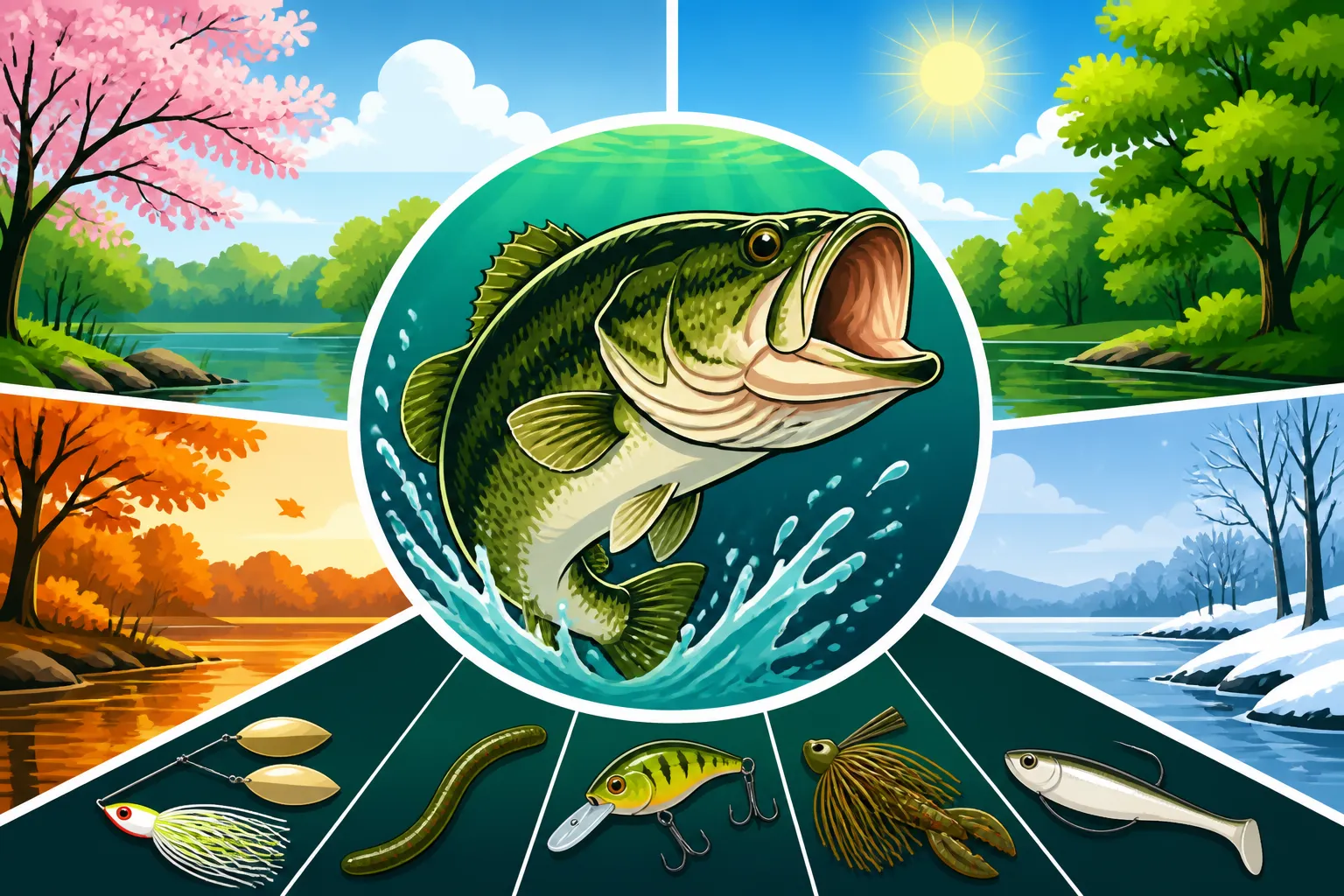
Beyond metabolism, seasonal changes trigger specific behaviors. In the spring, it's all about reproduction, leading to distinct pre-spawn, spawn, and post-spawn phases. Summer brings the heat, pushing fish to seek cooler, deeper water or dense cover. Fall is a feeding frenzy as bass pack on weight for winter, and winter itself sees them congregating in deep, stable areas. Each of these behavioral shifts demands a different approach, and most importantly, different bait choices. Using a heavy reaction bait when bass are lethargic or a tiny finesse bait when they're aggressively feeding against their natural instincts.
Matching Forage Patterns Through the Year
Another critical factor in seasonal bait selection is understanding the bass's natural diet throughout the year. What are they primarily eating? The forage base itself changes with the seasons. In spring, baitfish are spawning, young fry are hatching, and crawfish are becoming active. Later in summer, juvenile baitfish are abundant, and bass key in on larger meals. In the fall, larger shad and other baitfish schools are plentiful as they also prepare for winter. Mimicking these natural food sources with your artificial baits is incredibly effective.
If the bass in Kentucky Lake are gorging on shad, you want to throw something that looks and acts like a shad. If they're targeting crawfish around rocky banks in Herrington Lake, a crawfish-imitating jig or crankbait is your best bet. It's not just about the type of bait, but also its size, color, and action. A small, subtle bait might be perfect for newly hatched baitfish imitators in the spring, while a larger, more erratic lure could mimic an injured shad in the fall. Paying attention to what's active in the water around you, whether it's minnows darting or crawfish skittering, can give you a massive clue about what the bass are keying in on.
Spring Bass Baits: The Pre-Spawn to Post-Spawn Frenzy
Ah, spring in Kentucky! The air warms up, the trees bud, and every angler's heart beats a little faster knowing the bass are on the move. This season is a wild ride, transitioning from frigid winter waters to the bustling activity of the spawn and its aftermath. It’s a time of major changes for bass, which means you need to be ready to change your bait strategy frequently to match their evolving moods and locations.
Early Spring Cold Water Tactics Pre-Spawn
When the water temperatures are still on the colder side, generally below 50 degrees Fahrenheit, bass are in their pre-spawn phase but are still quite sluggish. They're starting to move out of their deep wintering holes but haven't fully committed to the shallow spawning grounds. This is a time for slow presentations and baits that don't require much effort from the fish. Think about baits that sit in their face, or move slowly enough for them to decide to strike without a strenuous chase.
Jigs are kings in early spring. A good football jig or a bladed jig like a ChatterBait, worked slowly along deeper points, creek channel bends, or even subtle changes in bottom composition, can be deadly. Choose darker colors like black and blue, or natural crawfish patterns if you know crawfish are active. Another fantastic option is a suspending jerkbait. These lures can be cast out, twitched a few times, and then paused for extended periods – sometimes 10, 15, even 20 seconds. That long pause is often when a cold, reluctant bass will inhale it. On Amazon, you can find a wide variety of these jigs and jerkbaits, and it’s always smart to have a few different sizes and colors on hand.
Mid-Spring Spawning Bed Strategies
As water temperatures creep into the mid-50s to low 60s, bass move shallow and begin their spawning ritual. This is arguably one of the most exciting times to fish, especially for sight fishing on clear lakes like some coves in Lake Cumberland or the clearer sections of Herrington Lake. Bass, particularly males, become very territorial and protective of their nests. They might not be feeding aggressively in the traditional sense, but they will strike anything they perceive as a threat to their bed or eggs.
For spawning bass, soft plastics that mimic bluegill, crawfish, or even other bass are incredibly effective. Creature baits, tubes, and Texas-rigged worms are excellent choices. You want to cast past the bed and slowly work your bait into the "strike zone." Once it's near the bed, gently twitch it, making it look like an intruder. Often, the bass won't inhale the bait but will pick it up and move it off the bed. This is your cue to set the hook! Colors often don't matter as much as presentation, but natural shades or bright white can sometimes trigger a reaction. For more on this peak season, check out our guide on Kentucky Bass Fishing: The April-May Peak Season.
Late Spring Post-Spawn Recovery Baits
Once the spawn is over and water temperatures rise into the mid-60s and 70s, bass enter the post-spawn phase. This can be a challenging time for anglers because bass are often exhausted from the spawning process. They might be recovering, moving to slightly deeper cover, or feeding opportunistically. They're still active, but perhaps not as predictable as they were during the pre-spawn. They're often hungry but not always willing to chase aggressively right away.
Topwater lures become highly effective during this period, especially during low light conditions or cloudy days. Poppers, walking baits, and buzzbaits can draw explosive strikes from recovering bass feeding on baitfish near the surface. Spinnerbaits and chatterbaits also remain strong choices, fished around points, grass lines, and submerged timber as bass transition back to more typical feeding patterns. For something a little more subtle, shaky head jigs or weightless Senkos fished around docks or brush piles can coax bites from finicky fish. These bass are often targeting juvenile baitfish, so matching the hatch with smaller, more natural presentations can be key.
Summer Bass Baits: Adapting to Heat and Deep Water
Summer in Kentucky brings long, hot days, and with it, significant changes in bass behavior. The scorching sun and rising water temperatures push bass into specific patterns, often making them harder to find and catch if you're not using the right approach. Gone are the days of easy shallow-water bites for most of the day; now it’s about adapting to their deep-water haunts or targeting low-light windows.
Early Summer Topwater and Shallow Water Options
As summer officially begins and water temperatures reach the low to mid-70s, you still have some fantastic shallow water opportunities, especially during the early mornings, late evenings, or on cloudy days. Bass are often still hanging around shallow cover, recovering from the spawn, and actively feeding on abundant baitfish. This is a prime time for exciting topwater action! Walking baits, poppers, and buzzbaits are incredibly effective in these conditions. Imagine a calm morning on Kentucky Lake, casting a walking bait over a submerged grass flat, and watching a bass absolutely detonate on it—that's early summer fishing at its finest.
Beyond topwater, fast-moving reaction baits can also excel. Squarebill crankbaits that deflect off shallow cover like stumps, rocks, and laydowns can trigger aggressive strikes. Spinnerbaits and bladed jigs, again, worked quickly along grass edges or around docks, can also be productive. Bass are still relatively shallow and active, but the window for this bite starts to shrink as the day wears on and the sun climbs higher. You'll often find these fish around the edges of deeper water, where they can quickly retreat when conditions get tough.
Mid-Summer Deep Water and Cover Techniques
When the dog days of summer hit, and water temperatures climb into the high 70s and 80s, bass seek refuge from the heat and bright sun. They'll migrate to deeper, cooler water, often relating to structure like ledges, humps, deep points, or dense offshore brush piles. They also love heavy, shaded cover in shallower water, such as thick matted grass, lily pads, or dense standing timber. This is where your electronics, like a good fish finder, become invaluable for finding those hidden hotspots in lakes like Lake Barkley or Lake Cumberland.
For deep water bass, heavy Carolina rigs, deep-diving crankbaits, football jigs, and drop shot rigs are go-to choices. You'll be targeting fish in 15 to 30 feet of water or even deeper, depending on the lake's thermocline. Pay close attention to subtle bites, as deep-water bass can be less aggressive. For shallow, heavy cover, punching jigs or Texas-rigged creature baits with heavy weights are essential. You're literally punching through the dense vegetation to get your bait into their living room. Don't forget that during this time, night fishing for catfish can be fantastic, and bass will also feed under the cover of darkness near the surface, so pack your headlamps!
Late Summer Transition Baits
As summer starts to wane and days begin to shorten, though temperatures often remain high, bass start to feel the subtle shift towards fall. This transition period can be tricky, as fish may still be deep but also start to roam more, following baitfish schools. Baitfish, particularly shad, begin to school up more tightly, and bass will follow these schools. The bass are often scattered, making them a challenge to locate.
During late summer, versatile search baits become important. Alabama rigs can be incredibly effective for targeting schooling bass, mimicking a small school of baitfish. Large swimbaits also get the nod, as bass are looking for substantial meals. Medium to deep-diving crankbaits that cover water quickly are excellent for finding scattered fish along humps and points. And don't shy away from throwing topwater again in the mornings and evenings, especially large walking baits or hollow-body frogs over matted vegetation, as bass will ambush anything that presents an easy meal before the cooler weather arrives.
Fall Bass Baits: The Feeding Spree Before Winter
Fall is a beloved season for many Kentucky bass anglers, and for good reason! As water temperatures cool down, often moving from the 70s into the 50s, bass embark on a major feeding spree. They're trying to pack on as much weight as possible in preparation for the lean winter months. This translates to aggressive, often predictable, fishing patterns. However, just like spring, fall is a season of transition, and your bait choices need to evolve with it. For specific lures that excel during this period, our Best Lures for Fall Bass Fishing guide offers even more insights.
Early Fall Transition and Schooling Bass Baits
When the first cool nights arrive and water temperatures drop into the low to mid-70s, bass begin to migrate from their deep summer haunts towards shallower, more comfortable water. Critically, baitfish like shad also move into creek arms and main lake flats, schooling up tightly. Bass will follow these schools, often congregating in large numbers. This means you can have incredible days catching multiple fish from a single area if you find the schools.
Fast-moving reaction baits are exceptionally productive during early fall. Crankbaits, both medium and deep-diving, are fantastic for covering water and bumping off structure where bass might be ambushing bait. Consider natural baitfish colors like chrome, shad patterns, or even chartreuse combinations. Spinnerbaits, especially those with willow leaf blades for a faster flash, are also excellent for working through schooling bait. Lipless crankbaits, fished with a stop-and-go retrieve, can also draw violent strikes as they mimic fleeing baitfish. Keep an eye on your fish finder for those telltale bait balls; where there's bait, there are bass.
Mid-Fall Aggressive Feeding Lures
As autumn progresses and water temperatures settle into the 60s, the feeding spree intensifies. Bass are at their most active and aggressive, chasing down prey with fervor. This is prime time for throwing a wide array of lures, as fish are less finicky and more willing to chase. The key is often finding them, and then presenting something that looks like an easy, hearty meal.
Jerkbaits become incredibly effective in mid-fall, especially suspending models that allow you to pause them near schooling bass. Colors like chrome/blue, clown, or translucent shad patterns are strong contenders. Topwater baits can still produce, particularly during warmer spells or around sunny banks that hold heat. Consider a walking bait or a prop bait for maximum surface disturbance. And don't forget jigs! A football jig or a casting jig with a bulky crawfish trailer, worked along rocky points or transition areas, can entice those bigger, more lethargic bass that are still feeding but not chasing as actively. Make sure to check Amazon for deals on bulk packs of soft plastic trailers to match your jigs.
Late Fall Slowing Down Tactics
Towards the end of fall, as water temperatures drop into the low 50s and even into the 40s, bass begin to slow down their frantic feeding. They're still active, but their metabolism is winding down. They'll start to transition back towards deeper water, often holding tight to vertical cover or bottom structure. This is when patience and precision become more important than speed and flash.
Finesse techniques truly shine in late fall. Drop shot rigs, particularly with smaller worms or minnow imitations, can be deadly for targeting bass holding tightly to structure on deep ledges or points in lakes like Lake Cumberland. Ned rigs, with their mushroom-shaped heads and small, buoyant worms, are also fantastic for coaxing bites from sluggish fish on the bottom. Blade baits, like silver buddy style lures, vertically jigged over deep humps or channel swings, can also trigger a reaction strike from a cold-water bass. The key here is to slow down your retrieve significantly, often barely moving the bait, and paying close attention to any subtle taps or changes in line tension.
Winter Bass Baits: Finesse and Patience in Cold Water
Winter bass fishing in Kentucky isn't for the faint of heart. The cold, often brutal conditions can deter many anglers, but those who brave the elements can be rewarded with some truly memorable catches, often of bigger, healthier fish. Bass in winter are at their most lethargic, their metabolism significantly slowed by the frigid water temperatures, typically below 45-50 degrees Fahrenheit. This means your approach needs to be entirely different from the rest of the year. Patience isn't just a virtue here; it's a necessity. If you're looking for more detailed strategies for this challenging period, our guide on Winter Fishing Techniques for Bass is an invaluable resource.
Targeting Deep Structure with Finesse
In winter, bass will typically move to their deepest, most stable haunts. This means focusing on deep ledges, channel swings, main lake points that drop off into deep water, and deep brush piles or standing timber. They often suspend in schools or hug tightly to the bottom, conserving energy. These fish won't chase a fast-moving bait, so presenting something that stays in their strike zone for a long time, or that triggers a subtle reaction, is paramount.
Jigs are perennial winter favorites. A football jig or a casting jig, dressed with a small, subtle plastic trailer, can be worked excruciatingly slowly along the bottom of deep structure. Think about barely moving the bait, allowing it to sit motionless for several seconds before another subtle hop. Blade baits, like a Silver Buddy or a Heddon Sonar, are excellent for vertical jigging over deep fish you've marked on your electronics. The vibration and flash can trigger a reaction strike even from the most inactive bass. Don't forget the popular Ned rig, which offers an incredibly subtle presentation that can tempt even the most finicky cold-water bass.
Slow-Moving Baits for Sluggish Bass
Beyond jigs and blade baits, there are other slow-moving options that can tempt sluggish winter bass. Suspending jerkbaits, as mentioned for early spring, are fantastic. The ability to twitch them and then let them hang suspended in the water column for 15, 20, or even 30 seconds can be the trigger for a lethargic bass to strike. Remember, they're not going to chase, so bringing the bait directly to them and leaving it there for a while is key.
Another effective winter bait is a jigging spoon. These heavy metal lures imitate a dying or stunned baitfish falling through the water column. Dropped vertically over schooling bass or structure, a jigging spoon can be lifted and dropped, creating a flash and flutter that often draws a strike on the fall. Smaller grub tails or swimbaits on a lead head, fished painstakingly slowly with a slow roll retrieve, can also be effective when bass are slightly more active but still prefer a slow, easy meal. Experiment with sizes and colors, but generally, natural baitfish patterns tend to work best in clear winter waters.
Key Considerations for Year-Round Kentucky Bass Fishing
Choosing the right bait for the season is a massive step, but it's not the only factor that dictates success on Kentucky's diverse waters. To truly elevate your bass fishing game, you need to think beyond just the calendar and consider the immediate conditions you're facing. Kentucky is a state of varied waters, from the deep, clear impoundments to muddy river systems, and each body of water, and even different parts of the same lake, can present unique challenges.
Water Clarity, Temperature, and Forage Base
These three factors are arguably the most critical considerations after the general season.
- Water Clarity: How clear or muddy is the water? In very clear water, bass rely heavily on sight, so natural colors, subtle presentations, and smaller baits often excel. Fluorocarbon line is also a must. In stained or muddy water, bass rely more on their lateral line (vibration) and scent, so darker, bulkier baits with more thumping action (like spinnerbaits with Colorado blades or crankbaits with rattles) and brighter, contrasting colors (like chartreuse or black/blue) are often more effective.
- Water Temperature: We've discussed this extensively, but it's worth reiterating. Even within a season, a sudden cold front or a string of unusually warm days can dramatically change the water temperature and, consequently, bass behavior. Always check the current water temperature on your fish finder or a thermometer. Our article on How Weather Fronts Affect Fishing Times details how crucial these shifts can be.
- Forage Base: What are the bass primarily eating right now? Are there schools of shad flickering on your fish finder? Are you seeing crawfish along the banks? Are bluegill spawning in the shallows? Matching your bait's size, shape, and color to the prevalent forage is a tried-and-true method. Sometimes, a subtle difference in the retrieve or the size of a trailer on a jig can make all the difference.
The Importance of Presentation and Patience
Even with the perfect bait chosen for the season and conditions, success often boils down to how you present it and your willingness to be patient.
- Presentation: This encompasses everything from your casting accuracy to your retrieve speed, pauses, and twitches. A jig that's fished too fast in cold water is useless. A topwater bait that's not "walked" properly might not entice a strike. Learning how to impart the correct action to each lure is an art form that comes with practice. Consider line choice; for example, a stiffer fluorocarbon might be best for deep cranking, while a supple monofilament excels with topwater. Our guide on Best Fishing Line for Big Lake Bass dives deeper into this.
- Patience: This might be the hardest lesson for many anglers. When bass are sluggish, you need to slow down your retrieve, make longer pauses, and give the fish time to decide to strike. When conditions are tough, it's easy to get frustrated and speed up, but often, the exact opposite is what's needed. Patiently working an area thoroughly, making multiple casts from different angles, and waiting for that subtle tap can be the difference between a skunk and a successful day. Remember, you're trying to outsmart a wild animal, and they don't always cooperate on your timeline.
By combining seasonal knowledge with real-time observation of clarity, temperature, and forage, and then executing with precise presentation and unwavering patience, you'll be well on your way to consistent bass fishing success across Kentucky, no matter the time of year.
Seasonal Bass Bait Guide
Here's a quick reference table summarizing popular seasonal bait choices for bass fishing in Kentucky. Remember, these are general guidelines, and local conditions, water clarity, and specific forage can always dictate variations.
| Season | Typical Water Temp Range | Bass Behavior | Recommended Bait Types | Key Considerations |
|---|---|---|---|---|
| Early Spring | 40-50°F | Slowing metabolism, moving from deep to shallower | Suspending Jerkbaits, Football Jigs, Blade Baits, A-Rigs | Slow presentations, subtle colors. |
| Mid-Spring | 50-65°F | Pre-spawn, spawning, territorial, aggressive | Jigs (Bladed & Casting), Spinnerbaits, Squarebill Crankbaits, Soft Plastics (Tubes, Creature Baits) | Matching crawfish/bluegill, targeting beds, reaction strikes. |
| Late Spring | 65-70°F | Post-spawn recovery, moving to shallow/mid-depth | Topwater (Poppers, Walking Baits), Spinnerbaits, Shaky Heads, Weightless Senkos | Targeting baitfish, low-light topwater, finesse for wary fish. |
| Early Summer | 70-75°F | Active, shallow early/late, moving deeper mid-day | Topwater (Walking Baits, Buzzbaits), Squarebill Crankbaits, Swim Jigs, Texas-rigged Worms | Low-light topwater, reaction baits around shallow cover. |
| Mid-Summer | 75-85°F | Deep structure, heavy cover, often inactive mid-day | Deep Diving Crankbaits, Carolina Rigs, Football Jigs, Drop Shots, Punching Jigs | Finding deep schools, heavy cover tactics, vertical presentations. |
| Late Summer | 75-80°F | Transitioning, scattered, following baitfish schools | Alabama Rigs, Large Swimbaits, Medium/Deep Crankbaits, Hollow Body Frogs | Covering water, mimicking schooling baitfish, topwater over grass. |
| Early Fall | 65-70°F | Aggressive feeding, schooling up, chasing baitfish | Crankbaits (Medium/Deep), Spinnerbaits, Lipless Crankbaits, Jerkbaits | Fast retrieves, matching shad patterns, targeting bait balls. |
| Mid-Fall | 55-65°F | Peak feeding, very active, moving shallower | Jerkbaits, Spinnerbaits, Jigs, Topwater (during warmer periods), Swimbaits | Variety of presentations, targeting structure and bait. |
| Late Fall | 45-55°F | Metabolism slowing, moving to deeper haunts | Finesse Jigs, Drop Shots, Ned Rigs, Blade Baits, Suspending Jerkbaits | Slowing down, subtle presentations, vertical jigging. |
| Winter | <45°F | Very sluggish, deep structure, conserving energy | Finesse Jigs, Ned Rigs, Blade Baits, Suspending Jerkbaits, Jigging Spoons, Small Grub Tails | Extreme patience, precise vertical presentations, smallest movements. |
Disclaimer
The information provided in this guide is for general informational purposes only and is based on common angling practices and expert insights. Fishing conditions, regulations, and fish behavior can vary significantly. Always consult the latest Kentucky Department of Fish and Wildlife Resources regulations before fishing and prioritize your safety on the water.