Brown Trout Size and Growth in Stocked Rivers
If you're like me, you've probably heard tales of those monster brown trout lurking in the deeper, colder stretches of Kentucky's rivers, and you can't help but wonder just how big these beauties truly get. It's a common question, especially when you're accustomed to catching freshly stocked fish. This guide is all about diving deep into the realistic sizes and growth potential of brown trout in our wonderful Kentucky stocked rivers, giving you the inside scoop on what to expect and how to target those bigger specimens.
Understanding Brown Trout in Kentucky's Stocked Waters
When we talk about brown trout in Kentucky, we're almost always referring to fish that have been introduced into our waterways. Unlike some other states where brown trout have established wild, self-sustaining populations in many streams, here in the Bluegrass State, our trout fisheries rely heavily on the dedicated work of the Kentucky Department of Fish and Wildlife Resources (KDFWR) stocking programs. This isn't a bad thing at all; it simply means that the life and growth cycle of these fish are a little different than a completely wild trout.
The Role of Stocking Programs
The primary reason brown trout are in many of our rivers and streams is thanks to regular stocking efforts. These programs aim to provide exciting angling opportunities, bringing a cold-water species to areas that might not naturally support them year-round. Rivers like the Cumberland are prime examples, with its cold tailwater discharge from Lake Cumberland creating an ideal environment for trout. Other smaller, colder streams across the state also receive regular stockings, creating diverse fishing experiences.
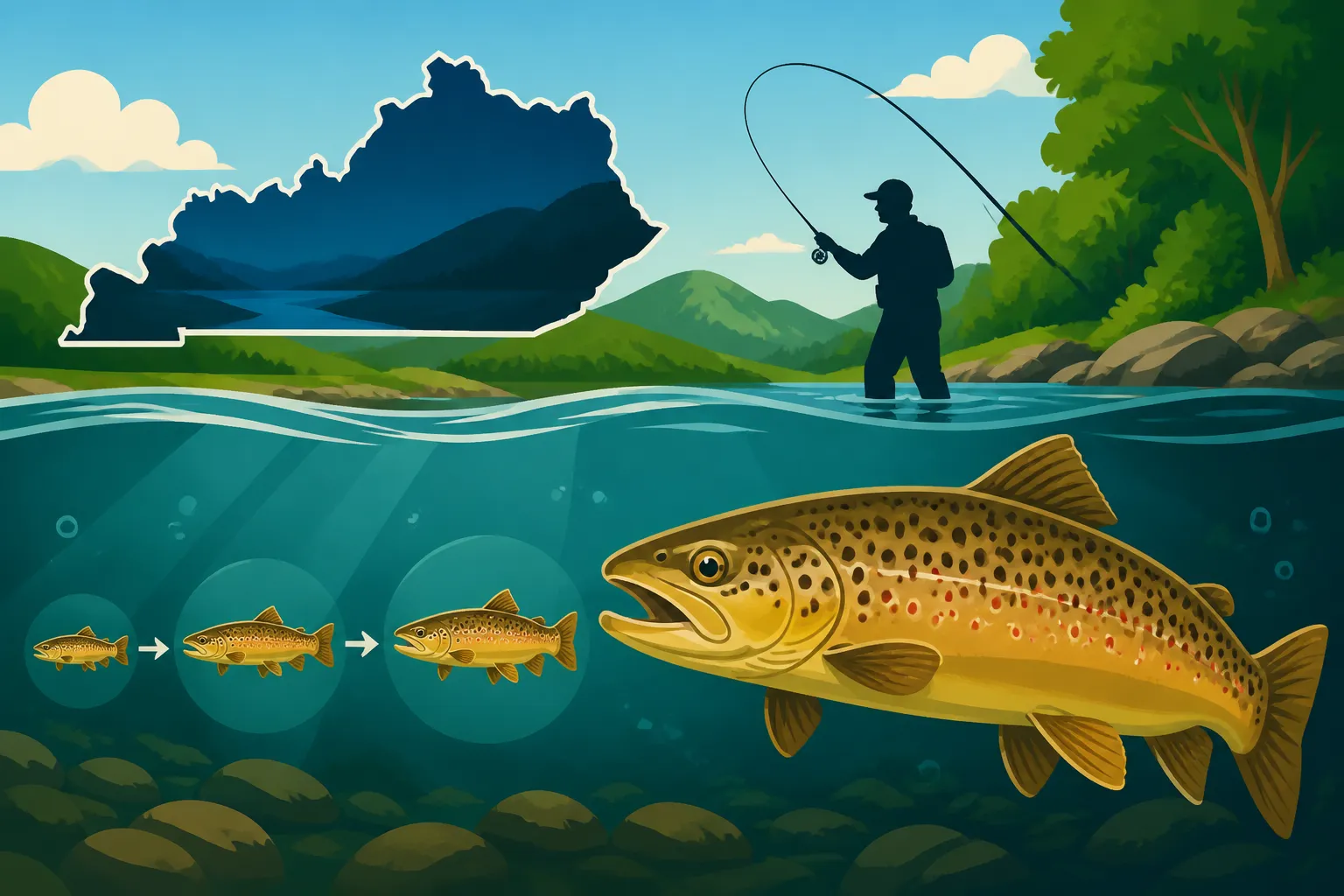
When trout are first stocked, they're typically what we call "catchable size," meaning they're already big enough to put a bend in your rod. Often, these fish range anywhere from 8 to 12 inches. It's perfectly normal to catch several trout in this size range right after a stocking event. There's a real thrill in that fresh bite! But for those of us dreaming of a true wall-hanger, the real magic happens when these stocked fish survive, adapt, and start growing in their new river homes. These fish, often called "holdovers," are the ones that begin to pack on some serious size, becoming stronger and smarter. You can learn more about where these fish thrive by checking out Brown Trout and Brook Trout in Kentucky's Cold-Water Streams.
Habitat and Environmental Factors
For a brown trout to truly thrive and grow large, its environment is absolutely crucial. These fish are pretty particular about their living conditions. They demand cold, highly oxygenated water, which is why tailwater fisheries like the Cumberland River below Wolf Creek Dam are so productive. The consistent cold flow from the bottom of the dam provides the perfect thermal refuge, allowing trout to stay active and feed even during our warmer Kentucky summers.
Beyond temperature, a river's structure and food availability play massive roles. Brown trout are ambush predators, and they love cover. Think deep pools with undercut banks, fallen trees, large boulders, and riffles that create oxygenated holding lies. These spots offer both protection from predators and prime locations to ambush unsuspecting prey. A rich aquatic insect population, along with a healthy supply of smaller baitfish and crustaceans, fuels their growth. In a nutrient-rich river system with plenty of food and ample cover, a brown trout can grow much faster and larger than in a sparse, open stream. We're talking about a significant difference in growth rate between a small mountain stream and a large, productive river. The cleaner the water, the healthier the ecosystem, and ultimately, the bigger and more vibrant the trout.
Typical Brown Trout Size and Growth Rates
It’s exciting to think about the potential for big brown trout in Kentucky, but what's a realistic expectation when you hit the water? Let's break down the common sizes you'll encounter and what truly influences how large these fish become.
Average Catch Sizes for Anglers
Most anglers fishing Kentucky's stocked rivers will predominantly encounter brown trout in the 10-to-16-inch range. These are robust, healthy fish that provide excellent sport. When the KDFWR stocks fish, they are typically around 8-12 inches, so it doesn't take long for them to put on an extra few inches, especially if they find a good food source and a comfortable hiding spot. This initial growth happens fairly quickly.
However, the real gems are the "holdover" trout—those fish that survive a full season or more after being stocked. These are the ones that graduate from being a fresh stocker to a wily, river-savvy brown. A holdover brown trout can easily push into the 16-to-20-inch range, and believe me, these fish are a completely different animal on the end of your line. They are stronger, smarter, and incredibly challenging to catch. Landing a trout over 18 inches in Kentucky's rivers is a proud moment for any angler, a testament to the fish's survival and the quality of its habitat.
Factors Influencing Growth: Food, Genetics, and Pressure
Several key elements come into play when we talk about how quickly and how large a brown trout can grow.
First and foremost is food availability. Brown trout are opportunistic feeders. In rivers with abundant aquatic insect hatches, crayfish, and especially a healthy population of smaller baitfish (like sculpins or even juvenile trout of other species), they have an unlimited buffet. A brown trout that learns to exploit these larger food sources will grow much faster and become significantly bigger than one that relies solely on smaller insects. This is why when you're looking for Best Bait for Trout on Cold-Water Mountain Streams, sometimes thinking bigger can pay off for bigger fish.
Genetics also play a subtle but important role. Different strains of brown trout have varying genetic predispositions for growth and ultimate size. While we typically stock a common, fast-growing strain, the individual genetic lottery can mean some fish simply have the potential to grow larger than others, given the same conditions.
Finally, fishing pressure is a huge factor in whether a trout gets to achieve its full growth potential. Rivers with heavy fishing pressure tend to have fewer older, larger fish simply because they are caught more frequently. Areas that are harder to access, or stretches with more complex cover, often hold a higher proportion of larger, older trout because they haven't been subjected to the same level of angling pressure. Smart anglers understand this and will put in the effort to find those less-pressured honey holes.
The Potential for Trophy Brown Trout
Ah, the trophy brown trout! This is the dream for many of us who chase these beautiful fish. While a 16-inch brown trout is a fantastic catch, a true trophy is often considered to be 20 inches or more, with some exceptional specimens pushing well into the mid-20s or even larger in prime fisheries like the Cumberland River. Imagine the fight from a fish that has been surviving and growing in a strong river current for several years!
For a brown trout to reach these truly impressive sizes, a confluence of factors must align perfectly. It needs to find a persistent, rich food source, live in consistently cold, oxygenated water, and, critically, avoid being caught or predated upon for many years. These are typically older fish, perhaps 4 to 6 years old or even more, that have become incredibly adept at survival and feeding. They are often found in very specific, protective lies—the deepest pools, the most complex log jams, or the most severe undercut banks that offer both security and easy access to passing food. Targeting these giants requires patience, persistence, and often, larger baits or lures that appeal to their predatory nature. While rare, the possibility of hooking into a 25-inch brown trout in Kentucky is very real, especially in the Cumberland, making every cast exciting.
Here’s a quick overview of what you might expect regarding brown trout sizes:
| Category | Typical Size Range (Inches) | Age (Approx.) | Where You'll Find Them Often |
|---|---|---|---|
| Freshly Stocked | 8-12 | < 1 year | Soon after stocking, easily accessible areas |
| Young Holdover | 12-16 | 1-2 years | More varied spots, starting to get warier |
| Mature Holdover | 16-20 | 2-4 years | Deeper pools, significant cover, less pressured areas |
| Trophy Potential | 20+ | 4+ years | Heavily structured, remote, and food-rich zones |
Locating and Targeting Larger Brown Trout
Chasing larger brown trout is a different game than simply catching stockers. It requires a more strategic approach, understanding where these wary fish hide, and using the right tools and techniques to entice them.
Identifying Prime Holding Water
Big brown trout are not often found cruising in open water or shallow riffles unless they are actively feeding during low-light conditions. These fish are smart, and they instinctively seek out areas that provide both security and a strategic advantage for feeding. Your best bet for finding them is to focus on significant structure and depth changes in the river.
Look for:
- Deep Pools: The deeper the better, especially those with dark bottoms or significant cover. These provide thermal refuge and a sense of security.
- Undercut Banks: These are absolute magnets for large browns. The bank literally overhangs the water, creating a dark, protective cave where a trout can hide from predators and current, while darting out to grab prey.
- Large Boulders and Log Jams: Any substantial structure that breaks the current and offers a hiding spot is prime real estate. A log jam, while challenging to fish, can hold multiple large fish.
- Current Seams and Eddies: The boundary where fast water meets slow water is a perfect ambush point. Trout can sit in the slower water, expending minimal energy, while waiting for food to drift by in the faster current.
- Confluence Areas: Where two streams or a feeder creek meet the main river, you often find a concentration of food and varied current, making them excellent spots.
Paying close attention to these types of features will significantly increase your odds. Remember, the colder the water, the more active these fish tend to be. Knowing where to find Brown Trout and Brook Trout in Kentucky's Cold-Water Streams is the first step to success.
Gear and Techniques for Bigger Browns
When you're after those bigger brown trout, you'll want to beef up your gear just a bit compared to what you might use for smaller stockers. A medium-light to medium power spinning rod, perhaps 6'6" to 7' in length, paired with a reliable reel spooled with 6-8 pound fluorocarbon or monofilament line, is a good starting point. Fluorocarbon is often preferred due to its lower visibility and excellent abrasion resistance against rocks and logs. You can find a fantastic selection of suitable gear, from rods to line, on retailers like Amazon, making it easy to get what you need delivered right to your door.
As for techniques, versatility is key:
- Lure Fishing: Larger browns often respond well to minnow-imitating crankbaits, spoons, and spinners. Try working these lures in and around the cover, making sure to vary your retrieve speed. Some anglers even use larger jigs tipped with soft plastics.
- Bait Fishing: Natural baits can be incredibly effective. Live minnows, particularly larger ones, fished under a bobber or on a bottom rig, are hard for a big brown to resist. Nightcrawlers or chunks of cut bait can also entice a strike. Just be mindful of local regulations on bait use.
- Fly Fishing: For the fly angler, larger streamers that imitate baitfish or crayfish are highly effective. Don't be afraid to throw patterns that are 3-4 inches long, especially in deeper water. Nymphing with larger stoneflies or caddis larvae patterns can also be productive. Getting a good headlamp from Amazon can be a lifesaver if you're out there at dawn or dusk! Fly Fishing Techniques for Trout and Spin Fishing for Trout: Gear and Technique can help you refine your approach.
Regardless of your chosen method, present your offering naturally and efficiently. Big trout are often lazy; they want an easy meal. Focus your casts on those prime holding lies, and be prepared for a strong fight!
Patience and Persistence
Catching a trophy brown trout isn't usually a quick affair. It's often the result of hours of diligent fishing, exploring different spots, and being patient. You might spend an entire day catching smaller fish or nothing at all, only to have that one incredible strike at dusk that makes it all worthwhile.
Don't be afraid to move around. If a spot isn't producing, try another one. Vary your lures, your retrieve, and your depth until you find what the fish are keying in on that particular day. Pay attention to changes in weather, water level, and clarity, as these can all influence where and how fish are feeding.
Before you even wet a line, always double-check the latest Kentucky Fishing Regulations Explained and site-specific rules. Some stretches of rivers might have special restrictions, like catch-and-release only or specific size limits for trout, which can vary even within the same body of water. Knowing the Kentucky Fishing Rules by Lake and Water is not just good practice, it's essential for responsible angling.
Conservation and Sustainable Practices
As much as we all love the thrill of catching a big brown trout, it's equally important to practice responsible angling to ensure these incredible fisheries remain vibrant for years to come. Our actions on the water directly impact the health and sustainability of the brown trout population.
Catch and Release for Larger Fish
When you hook into that magnificent 20-inch brown trout, the temptation to take it home as a trophy is immense. However, for the long-term health of the fishery, especially in rivers where natural reproduction is limited, practicing catch and release for larger fish is highly encouraged. These older, larger fish are crucial for the genetic diversity and stability of the population, and their survival ensures future generations of anglers have the same opportunity to chase big browns.
If you do decide to release a large trout, here are some tips for proper handling:
- Minimize Fight Time: Try to land the fish as quickly as possible to reduce stress.
- Keep it Wet: Avoid taking the fish out of the water completely. If you must, do it quickly for a photo, and support its body horizontally with both hands. Never hold a fish vertically by its jaw or tail, as this can damage internal organs.
- Use Barbless Hooks: Crushing the barbs on your hooks makes removal much easier and less damaging to the fish's mouth.
- Gentle Hook Removal: Use needle-nose pliers or a dehooking tool to remove the hook carefully. If the fish is deeply hooked, cut the line as close to the hook as possible; the hook will often rust out. You can find affordable dehooking tools and other necessary items on Amazon to ensure safe release.
- Revive Carefully: Hold the fish gently in the current, allowing water to flow over its gills until it regains strength and swims away on its own.
By being mindful of these practices, you're contributing directly to the health of our trout fisheries.
Understanding Regulations and Limits
Kentucky has specific regulations in place to protect its trout populations. These regulations, which often include size limits, creel limits (how many fish you can keep), and sometimes even tackle restrictions, are designed to manage the fishery sustainably. It's not just about getting your Kentucky Fishing License Guide; it's about understanding the nuances of the rules.
For example, while there might be a statewide daily creel limit for trout, some specific trout waters, particularly those known for larger fish, may have more restrictive special regulations. This is where researching Kentucky Fishing Rules by Lake and Water for the exact river or stream you plan to fish becomes absolutely critical. These rules are usually posted at access points, but it's always best to consult the KDFWR website or their annual fishing guide before you head out.
Also, remember that a standard fishing license often requires an additional permit, known as a Kentucky Trout Permit Guide, to fish for trout. Do You Need a Trout Stamp to Fish in Kentucky? The answer is typically yes, and it's a small price to pay for the incredible opportunity to fish for these cold-water beauties. These regulations are designed to ensure that healthy populations of brown trout (and rainbow trout, which you can read more about in Rainbow Trout Fishing on Kentucky's Lake Cumberland and Best Time of Year to Catch Rainbow Trout on Kentucky's Lake Cumberland) continue to thrive in Kentucky's waters, providing enjoyment for all anglers for years to come. Responsible angling is truly the cornerstone of good conservation.
Disclaimer
This article is for general informational purposes only and does not constitute professional advice. Laws, prices and regulations vary by location and change over time. Consult a qualified professional for guidance on your specific situation.