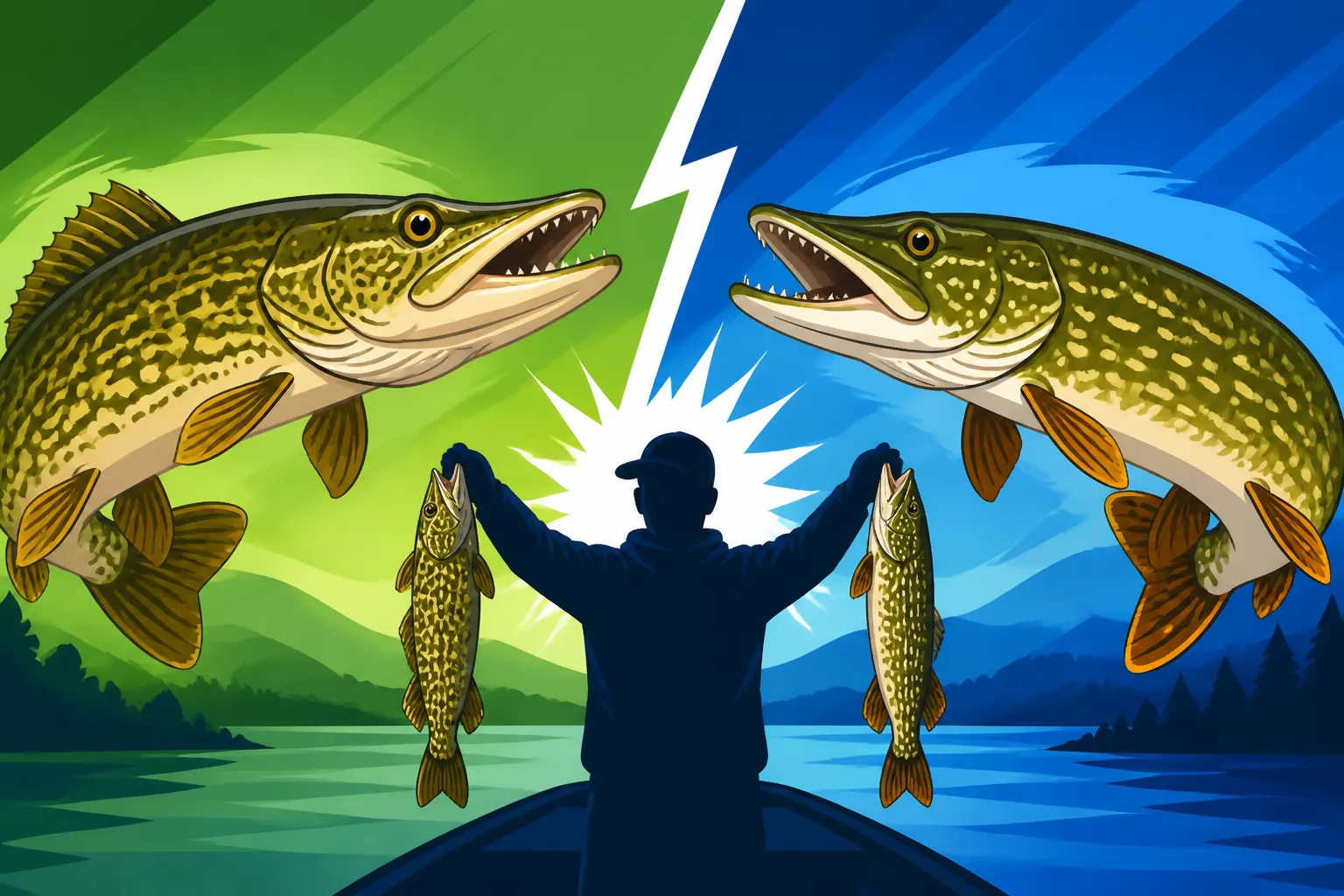
Chain Pickerel Vs Northern Pike: How to Tell Them Apart
There’s nothing quite like the thrill of feeling a strong tug on your line, reeling in a feisty fish, and then… a moment of head-scratching confusion. Is this a northern pike, or is it a chain pickerel? Many Kentucky anglers, myself included, have stood lakeside, holding a toothy predator, trying to remember the subtle differences. This guide will walk you through the tell-tale signs to confidently identify whether you've landed a chain pickerel or a northern pike in Kentucky's waters.
The Pike Family Tree: Understanding the Esocids
Before we dive into the nitty-gritty of identification, it helps to understand that both chain pickerel and northern pike belong to the Esocidae family, often simply called the "pike family." This family is known for its members' long, torpedo-shaped bodies, dorsal and anal fins set far back on the body, and most notably, their sharp, needle-like teeth. These are ambush predators through and through, designed for explosive speed to catch unsuspecting prey.
What Makes a "Pike" a Pike?
Within this family, the term "pike" generally refers to the larger species, like the northern pike (scientific name: Esox lucius) and the muskellunge (Esox masquinongy). These fish are highly prized for their size and fierce fighting ability. In Kentucky, northern pike are present, though perhaps not as widespread as some other game fish, often found in specific cool-water reservoirs or larger river systems where they've been stocked or have established populations. They're apex predators in their ecosystems, growing quite large and preying on a variety of smaller fish and even small mammals or birds.
What Makes a "Pickerel" a Pickerel?
Pickerel, on the other hand, are typically the smaller members of the Esocidae family. The chain pickerel (Esox niger) is the most common pickerel species found in Kentucky. While they share the same general predatory characteristics and body shape as their larger cousins, they rarely reach the imposing sizes of northern pike. Chain pickerel are often found in warmer, shallower, and more vegetated waters, making them a common catch for anglers fishing ponds, small lakes, and slower-moving streams across the state. They might be smaller, but don't let that fool you; they can still put up a fantastic fight on light tackle.
Spotting the Differences: Head, Scales, and Markings
Now, let's get down to the practical stuff – what do you look for when you've got one of these fish in hand? The most reliable ways to distinguish between a northern pike and a chain pickerel involve examining their head, specifically the scale patterns on their gill plates and cheeks, as well as their distinctive body markings.
Gill Plate and Cheek Scale Patterns
This is often the absolute best indicator and the first place veteran anglers look. Both fish have scales on their cheeks and gill covers, but the pattern of those scales is a dead giveaway.
- Northern Pike: Imagine drawing a line across the center of a northern pike's cheek. The upper half of the cheek will be fully scaled, but the lower half, closer to the jaw, will typically be scale-less. Similarly, their gill cover (the operculum) will only have scales on the upper portion, with the lower half being bare. It's like they're wearing little scaled hats, but their chin and neck are exposed.
- Chain Pickerel: In contrast, a chain pickerel has fully scaled cheeks and gill covers. Every inch of their cheek and gill plate, all the way down to the bottom, will be covered in scales. This is a crucial difference that’s easy to spot once you know what you’re looking for. It's like they're wearing full scaled helmets and armor, leaving no skin exposed.
This difference is consistent regardless of the fish's size, making it a reliable identification method. If you're ever in doubt, gently feel the area; the scales are usually quite apparent.
Body Markings and Coloration
While scale patterns on the head are definitive, the body markings also offer strong clues, though these can sometimes vary slightly with water clarity and specific environment.
- Northern Pike: The northern pike is famous for its distinctive light-colored, bean-shaped or oval spots against a darker background. Think of a dark green or olive body covered in yellowish or cream-colored spots. These spots are usually quite irregular and distributed along the flanks. They also tend to have vertical bars on their tail fin. The overall impression is often a darker fish with lighter markings.
- Chain Pickerel: True to its name, the chain pickerel displays a striking pattern of dark, interconnected, chain-like markings (or sometimes worm-like) on a lighter, often yellowish-green or brassy background. It looks almost like a mesh or net pattern across their sides. Their fins are typically clear or slightly dusky, lacking the distinct bars seen on a northern pike's tail. The overall impression here is a lighter fish with darker, distinct chain-like markings. Chain Pickerel Fishing in Kentucky: A Beginner's Guide delves into more specifics about finding these fish.
When you're out on the water, having a fish identification guide handy can be a real game-changer. You can find some excellent laminated field guides on platforms like Amazon that are waterproof and designed to be taken on fishing trips. They often highlight these key features with clear illustrations, helping you make a quick and accurate ID.
Size, Shape, and Fin Placement: More Visual Cues
Beyond the head and body markings, there are a few other characteristics that, when considered together, can help confirm your identification. While not as definitive as the scale patterns, they contribute to the overall picture.
General Size and Build
The most noticeable difference for many anglers, especially when comparing average catches, is the size these two species typically attain.
- Northern Pike: These are the heavyweights of the family in Kentucky, capable of growing much larger and having a more robust, "stocky" build when mature. While juvenile northern pike can be confused with pickerel, a full-grown pike will be significantly larger and heavier, often reaching lengths well over 20 inches and substantial weights. They have a powerful, muscular appearance. To learn more about pike, check out Northern Pike Fishing in Kentucky.
- Chain Pickerel: Chain pickerel are generally smaller and more slender in comparison. A "big" chain pickerel in Kentucky might be 20-24 inches, but they rarely exceed that, and most catches are smaller. They have a more elongated, almost delicate profile compared to a beefy pike. It’s important to remember that a small northern pike can still resemble a large pickerel, which is why relying on scale patterns is so critical.
If you’re landing a fish that feels like it’s challenging the state record books, chances are it's more likely a pike or a muskellunge, rather than a pickerel. Muskie, Pike and Pickerel Fishing in Kentucky provides a good overview of these fascinating fish.
Fin Placement and Dorsal Fin Shape
The placement of the dorsal and anal fins, while similar in both species (set far back for explosive propulsion), can offer some subtle differences. However, the exact shape can be more telling.
- Northern Pike: The dorsal fin of a northern pike tends to be more rounded at the top. The overall shape might appear a bit more stout, blending into the powerful tail section. Their anal fin mirrors this rounded, somewhat blunt appearance.
- Chain Pickerel: The dorsal fin of a chain pickerel often has a slightly more pointed or angular tip. While still located far back, its profile might seem a touch more refined or triangular compared to the pike's. This is a more subtle clue, but when combined with other indicators, it can help solidify an identification.
These fin characteristics, combined with overall body shape, contribute to the fish's distinct hydrodynamic profile, optimized for their respective ambush hunting styles in different environments. You might notice these subtleties more after catching several of each species.
The Infamous "Slime Coat"
One less scientific, but often talked about, characteristic is the slime coat. Both fish are quite slimy, but some anglers swear one is slimier than the other.
- Northern Pike: Northern pike are notorious for their thick, protective slime coat. It's incredibly slick, and when you handle one, you'll definitely notice it. This thick layer helps protect them from parasites and injuries as they ambush prey in dense vegetation or murky waters.
- Chain Pickerel: While also slimy, many anglers report chain pickerel to be slightly less "gooey" than pike. This is anecdotal, of course, and depends heavily on the individual fish and how long it's been out of the water. However, if you're handling a fish that feels exceptionally slippery, it might lean towards being a pike. Always handle these fish carefully, especially given their sharp teeth, and consider using a landing net and jaw spreader for safety and to minimize harm to the fish.
Habitat, Habits, and How Anglers Encounter Them
Knowing where these fish typically live and how they behave can also offer clues, even before you land one. Their preferred environments often dictate where you’ll encounter them in Kentucky.
Preferred Habitats in Kentucky
While there can be some overlap, northern pike and chain pickerel generally prefer different types of water bodies, especially in a state like Kentucky.
- Northern Pike: In Kentucky, northern pike are less common than pickerel but can be found in larger, cooler waters, often associated with deeper lakes, reservoirs, or major river systems. They appreciate submerged vegetation, but also readily inhabit open water and areas with structure like drop-offs and rock piles. You might find them in specific large impoundments where they have been introduced or where conditions are favorable for their cold-water needs. Where to Find Northern Pike in Kentucky Lakes can give you specific locations. They are often less tolerant of warm water than pickerel, which limits their distribution in Kentucky during hot summer months.
- Chain Pickerel: Chain pickerel are far more widespread and adaptable to warmer, shallower, and more vegetated waters across Kentucky. Think ponds, smaller lakes, slow-moving creeks, and marshy backwaters. They absolutely love dense aquatic vegetation like lily pads, submerged grass beds, and weed lines, using these areas for ambush points. If you're fishing a relatively small, weedy pond in Kentucky, your chances of catching a chain pickerel are much higher than a northern pike. Their ability to tolerate warmer water allows them to thrive in a wider range of Kentucky's aquatic environments.
Understanding these habitat preferences can sometimes give you a good preliminary guess as to which species you're likely targeting. For instance, if you're fly fishing a small, clear creek with lots of weeds, you're almost certainly after pickerel.
Fishing Techniques and Common Baits
Their habitat preferences also translate into slightly different fishing techniques, though both are aggressive predators that will strike a wide variety of lures.
- Northern Pike: Anglers targeting northern pike often use larger baits and lures, matching the size of their potential prey. Big spoons, spinnerbaits, crankbaits, and large soft plastics are all effective. Live bait, such as large shiners or suckers, fished under a bobber or on a quick-strike rig, can also be deadly. Pike fishing usually involves covering water, casting to different structures or trolling deeper sections. Best Lures for Northern Pike in Big Reservoirs offers some great options. Because they can grow so large, stronger tackle is often recommended.
- Chain Pickerel: For chain pickerel, smaller versions of similar lures work wonderfully. Inline spinners, smaller spoons, chatterbaits, and soft plastic jerkbaits are all great choices. They are particularly fond of lures that mimic small baitfish darting through weeds. Light to medium-light spinning gear is often perfect for pickerel, providing an exciting fight. Small live minnows or shiners are also very effective. When fishing for pickerel, concentrate your efforts around the edges of weed beds, submerged timber, and other cover where they can lie in wait. Check out Best Bait for Chain Pickerel for more suggestions. You can find a good selection of these lures and baits on Amazon if you're stocking up for your next trip.
Table: Key Differences Between Chain Pickerel and Northern Pike
Here’s a quick summary to help you remember the crucial identification points:
| Feature | Chain Pickerel | Northern Pike |
|---|---|---|
| Cheek Scales | Fully scaled from top to bottom | Upper half scaled, lower half bare |
| Gill Cover Scales | Fully scaled from top to bottom | Upper half scaled, lower half bare |
| Body Markings | Dark, distinct chain-like or worm-like pattern on a lighter background | Light, irregular bean-shaped or oval spots on a darker background |
| Average Size in KY | Smaller; rarely exceeds 24 inches | Larger; often exceeds 20 inches, can be much bigger |
| Dorsal Fin Tip | Tends to be more pointed/angular | Tends to be more rounded |
| Preferred Habitat | Shallow, heavily vegetated, warmer waters | Larger, cooler lakes/reservoirs, deeper sections, less tolerant of warm water |
Remembering these key differences, especially the scale patterns on the cheek and gill plates, will make you a much more confident angler in Kentucky's diverse fishing waters. Every species is unique, and learning to identify them accurately adds another layer of enjoyment to the sport. Kentucky Fish Species Guide: 265 Types You Can Catch provides a broader look at all the amazing fish you might encounter.
Disclaimer
This article is for general informational purposes only and does not constitute professional advice. Laws, prices and regulations vary by location and change over time. Consult a qualified professional for guidance on your specific situation.