Do Tournament Anglers Need a Special Kentucky Permit?
It's a common question that pops up in conversations among dedicated anglers, especially those bitten by the competitive bug: "Do I need some kind of special permit just to fish in a tournament here in Kentucky?" You spend good money on gear, meticulously plan your strategies, and dedicate countless hours to honing your skills, so the last thing you want is a surprise fine or disqualification because you missed a crucial piece of paperwork. The good news is, for the individual angler, the answer is generally simpler than you might expect. This guide is going to clear up any confusion and walk you through exactly what you, as a tournament participant, need to have in order to stay on the right side of the Kentucky Department of Fish and Wildlife Resources (KDFWR) regulations.
Understanding the Kentucky Fishing License Basics for Tournament Anglers
Let's get straight to the point. As an individual participating in a fishing tournament in Kentucky, you generally do not need a "special tournament permit" issued directly to you by the state. What you absolutely do need, without exception, is a valid Kentucky fishing license. Think of it as your passport to fish any public waters in the Commonwealth, tournament or not. Without it, you're not legally fishing, regardless of any tournament affiliation.
The type of license you need will depend on a few factors: whether you're a Kentucky resident, how long you plan to fish, and your age. For instance, most resident anglers opt for the annual license, which covers them from March 1st through the last day of February each year. If you're just dropping in for a weekend event from out of state, a nonresident annual or a short-term nonresident license (like a 1-day or 7-day option) would be appropriate. It’s always best to check the current requirements, but generally, anyone aged 16 and over must possess a valid license. Kids under 16 usually don't need one, which is a great way to get the younger generation hooked on the sport without extra hurdles. We have a comprehensive guide that breaks down the specifics in our Kentucky Fishing License Guide.
Why a Regular License is Sufficient
The KDFWR's approach is designed to be straightforward for individual anglers. They regulate the act of fishing itself, not the specific reason you're fishing. So, whether you're out for a peaceful day of Bank Fishing Techniques for Beginners with your family, chasing a trophy fish on your own, or competing fiercely in a high-stakes bass tournament, the basic requirement remains the same: a valid fishing license. This simplifies things immensely, as you don't have to navigate a separate bureaucracy for every competitive event you enter.
However, this doesn't mean you can ignore all other rules. While the license requirement is simple, the regulations that apply to all fishing in Kentucky still very much apply to tournaments. This includes things like bag limits, size restrictions, and approved fishing methods. If you're caught on the water without a valid license, even in the middle of a tournament, the consequences can be significant. It's not just a slap on the wrist; you could face Penalties for Fishing Without a License in Kentucky, which nobody wants.
How Tournament Organizers Handle Permits
Here's where some of the confusion might stem from. While you, the individual angler, don't need a special permit, the tournament organizers or hosts often do. If a tournament involves prize money, a large number of participants, or if it's being held on specific public waters that require special consideration, the KDFWR might require the event organizers to obtain a permit. This is to ensure the event adheres to conservation practices, doesn't unduly impact fish populations or other users of the waterway, and complies with all state regulations.
For example, a major bass circuit holding an event on Kentucky Lake or Lake Barkley might need to secure a permit from the KDFWR. This permit would cover aspects like:
- Reporting: How many anglers participated, the total catch, and other data important for fisheries management.
- Livewell Inspections: Ensuring proper fish care and release.
- Weigh-in Procedures: Often requiring specific methods to minimize stress on the fish.
- Site-Specific Rules: Adherence to any special regulations for the body of water where the tournament is held.
These permits are the responsibility of the tournament director or organization, not the individual angler. As a participant, your primary responsibility is to ensure your personal fishing license is valid and that you abide by all state and tournament-specific rules.
Navigating Tournament-Specific Rules and State Regulations
Even though you won't need a special state permit for yourself, participating in a tournament means you're agreeing to abide by a two-tiered set of rules: the statewide KDFWR regulations and the specific rules set forth by the tournament itself. Ignoring either can lead to disqualification or legal trouble. It's crucial to understand both.
Statewide Fishing Regulations
Kentucky has a comprehensive set of regulations designed to manage fish populations and ensure sustainable fishing for everyone. These rules cover:
- Bag Limits: The maximum number of fish of a certain species you can keep in a single day. For instance, there's a specific Kentucky Crappie Daily Limit Rules that applies to all anglers.
- Size Limits: Minimum or sometimes maximum lengths for certain species to ensure fish have a chance to reproduce before being harvested. You can find these general guidelines in our Statewide Bag and Size Limits by Fish Species article.
- Gear Restrictions: Rules about the types of lures, baits, and tackle you can use.
- Protected Species: Certain fish might be entirely off-limits or require immediate release.
Tournament anglers are not exempt from these statewide rules. In fact, many tournaments integrate these rules directly into their own guidelines. For example, if the state mandates a 12-inch minimum size for largemouth bass, a tournament will uphold that, and likely even add a stricter rule like a 15-inch minimum to promote conservation and bigger fish. Always double-check the Kentucky Fishing Regulations Explained before heading out. Sometimes, specific lakes also have their own unique regulations that supersede the statewide rules, so it's always worth a quick look at the KDFWR site or the tournament's specific lake rules.
Tournament Rules Set by Organizers
Beyond the state's baseline, tournament organizers will establish their own set of rules. These rules are designed to create a fair playing field, promote fish welfare, and manage the event logistics. These often include:
- Livewell Requirements: Most bass tournaments require functioning livewells with adequate aeration to keep caught fish alive until weigh-in. Investing in a good livewell system, perhaps even looking at options on Amazon for aerators or additives, is critical.
- Weigh-in Procedures: Specific protocols for bringing fish to the scales, ensuring they are handled gently, and quickly released.
- Off-Limits Areas: Certain coves, marinas, or protected zones might be declared off-limits by the tournament director.
- Restricted Fishing Times: Tournaments usually have designated start and end times for fishing.
- Polygraph Testing: Some high-stakes tournaments reserve the right to administer polygraph tests to ensure fair play.
- Fish Handling Guidelines: Emphasizing careful handling, especially for catch-and-release tournaments, to minimize stress and mortality.
It’s your responsibility as a tournament angler to obtain and thoroughly read the specific rules for each tournament you enter. Don't assume they're all the same! A common mistake is assuming rules from one tournament apply to another. If you have questions, always contact the tournament director well in advance.
The Role of Game Wardens and License Checks
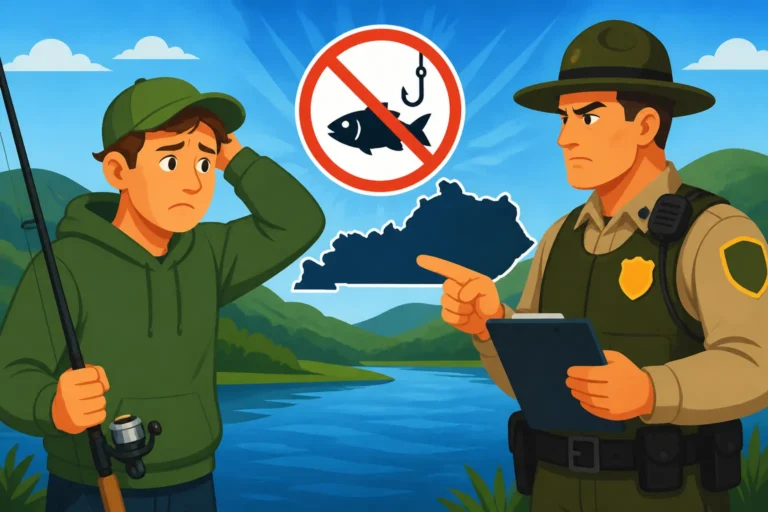
The presence of Kentucky Fish and Wildlife game wardens is a standard part of the fishing landscape, and tournaments are no exception. In fact, you might even see a higher warden presence at major competitive events. They are there to ensure everyone is adhering to the law, protecting both the anglers and the fishery itself.
What Wardens Check
When a game warden encounters you on the water, whether in a tournament or not, they typically check a few key things:
- Valid Fishing License: This is always the first and most fundamental check. Having your physical license or a digital copy accessible on your phone is crucial. If you need to quickly get your license, many anglers rely on the convenience of an online purchase. You can learn how in our How to Buy a Kentucky Fishing License Online guide.
- Trout Permit (if applicable): If you're fishing in designated trout waters or targeting trout, you'll need this endorsement in addition to your general fishing license.
- Compliance with Bag and Size Limits: Wardens will verify that you haven't exceeded daily limits or kept undersized/oversized fish, depending on the species and location. This is especially pertinent during tournament weigh-ins where large numbers of fish are present.
- Legal Gear and Methods: They'll check that your fishing methods and gear (e.g., number of rods in use, live bait rules) are compliant with state regulations.
- Boat Safety Equipment: If you're fishing from a boat, wardens will check for required safety gear like life jackets, fire extinguishers, and proper boat registration. Our article on Life Jacket Rules for Boats in Kentucky can provide more detail on these requirements.
Why You Should Be Prepared
Being prepared for a game warden check isn't about hiding anything; it's about being responsible and respecting the law. Having all your documentation in order and understanding the regulations makes for a smooth interaction. It’s important to remember that game wardens are there to enforce conservation laws and protect Kentucky's natural resources. Their presence at tournaments helps ensure that competitive fishing remains a responsible and sustainable activity.
Tournament anglers, in particular, often represent the sport to a wider audience. Showing respect for regulations and cooperation with law enforcement sets a good example for everyone. If you’re ever unsure about a specific rule or regulation, a quick search on the KDFWR website or a good fishing regulations handbook (often available from tackle shops or online at places like Amazon) can clarify things.
Specific Considerations for Tournament Types
While the basic license requirement remains constant, different types of tournaments might have nuances you'll want to be aware of.
Bass Tournaments
These are arguably the most popular and numerous tournaments in Kentucky. Bass fishing has a dedicated season, with a peak often falling in April and May, which our guide on Kentucky Bass Fishing: The April-May Peak Season details. In bass tournaments, livewells are paramount. The health and survival of the fish are often factored into scoring, with penalties for dead fish. Many organizers will conduct livewell checks before launch and at weigh-in. Boats used in these tournaments are often highly specialized, and understanding the best equipment can be key, as discussed in our Best Boats for Kentucky Lake and Lake Barkley Fishing guide.
Crappie and Other Panfish Tournaments
While less common than bass tournaments, crappie tournaments do happen, especially on lakes renowned for their crappie populations. Like bass tournaments, these events will have strict bag and size limits that align with or exceed state regulations. Ensuring your livewell is adequate for smaller, more delicate fish is important. The emphasis on fish handling is critical here too, as crappie can be quite fragile.
Catfish Tournaments
Catfish tournaments, particularly on rivers like the Ohio, can be a different beast. Some events might focus on catch-and-release, while others might be "big fish" competitions where legal limits for trophy fish (e.g., one blue catfish over 35 inches per day) are strictly enforced. The equipment used, such as heavy-duty rods, reels, and specialized bait, will also differ greatly from bass or crappie fishing.
Youth Tournaments
These events are fantastic for fostering the next generation of anglers. While adults accompanying youth anglers will need their own licenses, younger participants often do not. However, all other regulations, particularly those regarding safety and fair play, are still rigorously enforced. These tournaments are generally more focused on participation and learning than on intense competition.
Regardless of the species or format, the underlying principle holds: as an individual angler, your valid Kentucky fishing license is your entry ticket. All other rules and permits are either statewide regulations that apply to everyone or specific event guidelines set by the organizers.
Key Takeaways for Kentucky Tournament Anglers
To summarize the requirements for tournament anglers in Kentucky, let's break it down into an easy-to-understand table:
| Requirement Category | Specific Item | Angler's Responsibility | Tournament Organizer's Responsibility | Notes |
|---|---|---|---|---|
| Fishing License | Kentucky Fishing License (Annual/Short-term) | Mandatory for all anglers 16+ years old. | Ensure all participants have valid licenses. | Required for all public waters, regardless of tournament. Check your license year and renewal dates. |
| Special Permits | State-issued Tournament Permit for Angler | Not Required | Obtain state permits if needed (e.g., for large events, specific waters, prize money). | The event may require a permit, but not the individual angler. |
| Regulations | Statewide Bag & Size Limits | Mandatory Adherence | Integrate into tournament rules; ensure compliance. | Applies to all public waters. Check Statewide Bag and Size Limits by Fish Species and site-specific rules. |
| Tournament-Specific Rules | Mandatory Adherence | Create, communicate, and enforce. | Covers livewell requirements, off-limit areas, weigh-in procedures, etc. | |
| Safety Equipment | Boat Safety Gear (Life Jackets, Fire Extinguisher) | Mandatory if fishing from a boat. | N/A | Check Life Jacket Rules for Boats in Kentucky for full details. |
| Enforcement | Game Warden Checks | Cooperate Fully | Inform participants of potential checks. | Wardens ensure compliance with all state laws. See Game Warden Enforcement and License Checks While Fishing. |
The bottom line is simple: focus on having your valid Kentucky fishing license, understand and follow both the state's fishing regulations and the specific rules of the tournament you're entering. Do that, and you'll be well-prepared to compete fairly and enjoy your time on Kentucky's fantastic fishing waters. Happy casting, and good luck out there!
Disclaimer
The information provided in this guide is for general informational purposes only and does not constitute legal advice. Fishing regulations in Kentucky are subject to change, and it is the angler's sole responsibility to consult the official Kentucky Department of Fish and Wildlife Resources (KDFWR) website or publications for the most current and accurate regulations before engaging in any fishing activities, including tournaments. Failure to do so may result in penalties.