How to Flip and Pitch for Bass in Heavy Cover
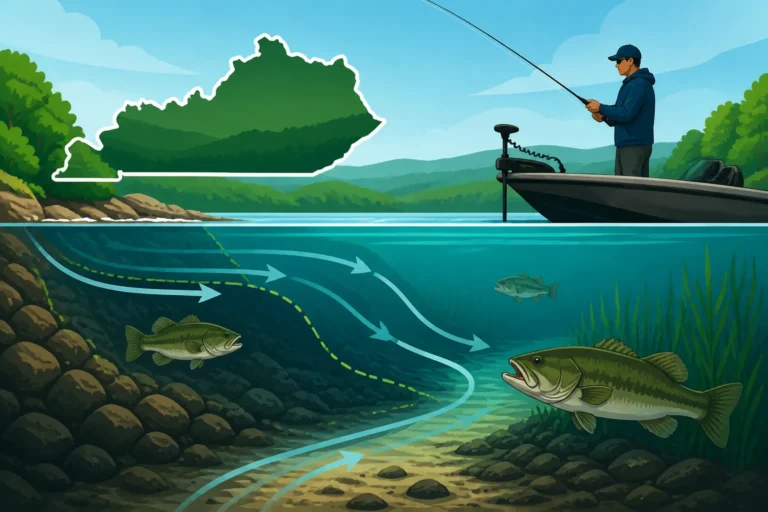
Have you ever been out on a beautiful Kentucky lake, seeing all that juicy, thick cover – the fallen trees, the dense lily pads, the gnarly brush piles – and just known there were big bass hiding in there, but felt completely intimidated about how to get your bait to them without getting instantly snagged? You're not alone! It's incredibly frustrating to know the fish are there but lack the technique to reach them. This guide is all about equipping you with the know-how to master flipping and pitching, two essential tactics for coaxing those wary bass out of the heavy stuff.
Understanding the Allure of Heavy Cover for Bass
When you look at a tangled mess of submerged logs or a thick mat of vegetation, you might see a headache waiting to happen. But for a bass, that's home sweet home. They absolutely thrive in these environments, and understanding why is the first step to successfully fishing them.
Why Bass Love Dense Vegetation and Structures
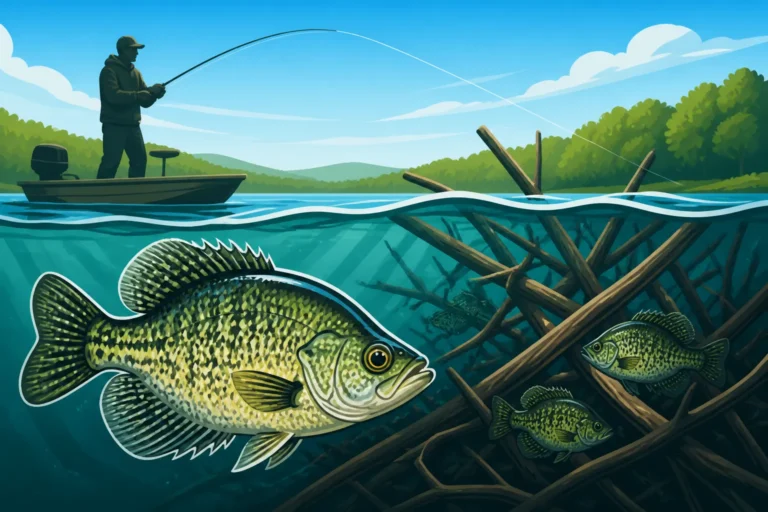
Bass, especially the bigger, more experienced ones, are ambush predators. They love to lie in wait, hidden from their prey, and dart out with a sudden strike. Heavy cover provides the perfect camouflage. Think about it: a dense patch of hydrilla or a labyrinth of old timber offers countless nooks and crannies where a bass can conceal itself. It's like their personal fortress, a place where they feel safe from larger predators (like us, sometimes!) and where their food – baitfish, crawfish, frogs – naturally seeks shelter. These areas also offer shade on bright, sunny days, which helps bass regulate their body temperature, especially during the hot Kentucky summers. Furthermore, healthy vegetation creates oxygen, attracting baitfish and in turn, the bass that feed on them. It’s a complete ecosystem within itself.
The Frustration of Losing Fish in the Thicket
Oh, the agony! We've all been there. You get a solid strike, you feel that powerful head shake, and then bam – your line goes slack as the bass dives straight back into the very cover you worked so hard to penetrate. Or worse, you hook into a giant, only for it to immediately wrap your line around a submerged log, leaving you with a broken line and a story about "the one that got away." It’s disheartening, and it makes many anglers shy away from these prime bass locations. The fear of getting snagged, losing expensive lures, or breaking off a trophy fish is real. This frustration is precisely why mastering flipping and pitching is so crucial; these techniques are designed to minimize snags on the entry and give you the leverage to extract a bass once it's hooked.
The Fundamentals of Flipping and Pitching
While often grouped together, flipping and pitching are distinct techniques, each with its own advantages. They both excel at stealthy, accurate presentations in tight quarters, but understanding their nuances is key to choosing the right approach for the situation at hand.
What is Flipping?
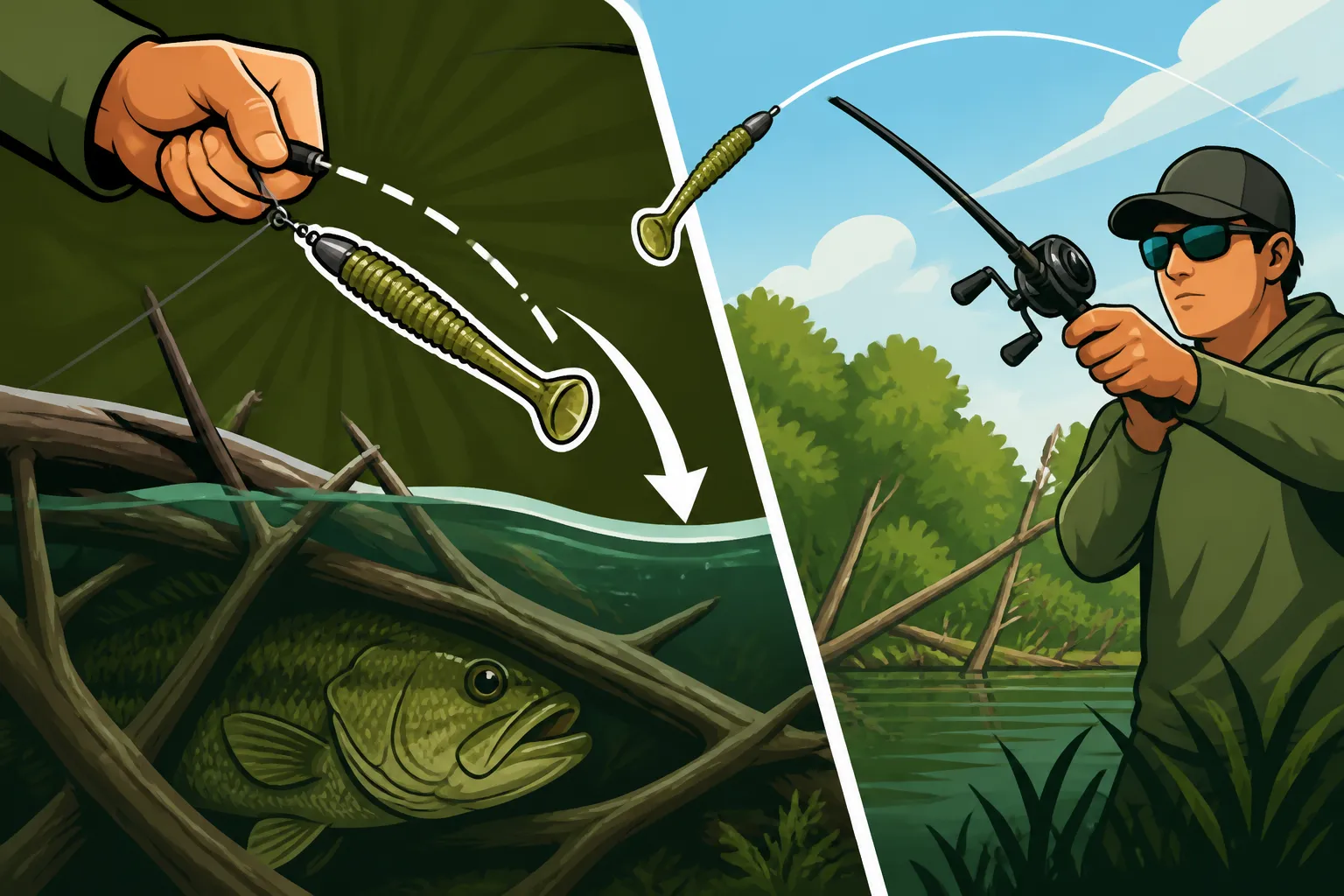
Flipping is a short-range, highly controlled technique that’s all about stealth and precision. Imagine you're standing near a boat dock, a fallen tree, or a lily pad patch. Instead of making a traditional cast, you essentially use your rod to swing or "flip" your bait into the target zone. You'll typically strip out a few feet of line, hold the line between your reel and the first guide with your non-dominant hand, and then use your dominant hand to swing the bait like a pendulum, releasing the line as it swings forward. The key is to keep the bait low to the water, minimizing splash and noise, which can spook wary bass. It's a very quiet, almost surgical presentation, perfect for dropping a bait directly into a small opening in dense cover without disturbing the surrounding area. Many anglers find it's the fastest way to work a stretch of heavy cover from their boat, allowing for rapid, repeated presentations to specific targets.
What is Pitching?
Pitching is the slightly longer-range cousin of flipping. It's used when your target is a bit too far for a comfortable flip, but you still need that controlled, low-trajectory entry. With pitching, you'll open your reel bail, hold the line and lure with your non-dominant hand, and then "pitch" or lob the bait forward with a gentle underhand motion, releasing the line from your non-dominant hand as the rod tip moves. The goal is the same as flipping: a soft, quiet entry into the water, but with the added benefit of reaching targets that are 10-25 feet away. It's a versatile technique that allows you to present your bait accurately to cover without making a big splash that might alarm the fish. Think of it as a controlled, lobbed cast rather than a full overhead swing. This technique really shines when you're working isolated pieces of cover or when you need to cover a slightly larger area from a stationary boat position.
When to Use Each Technique in Kentucky Waters
Choosing between flipping and pitching often comes down to the distance to your target and the density of the cover. If you’re fishing right up against a dock piling or a thick clump of reeds, within 5-10 feet, flipping is your best bet. Its unmatched precision and quiet entry make it ideal for delivering a bait exactly where you want it without overshooting or creating a disturbance. This is especially true when working around private docks on lakes like Kentucky Lake or Lake Barkley, where bass might be holding tight to the structure.
On the other hand, pitching comes into play when your target is a bit further out, say 10 to 25 feet. Maybe there's a submerged brush pile a short distance from your boat, or a mat of lily pads just out of flipping range. Pitching allows you to maintain that low trajectory and soft entry while covering more water efficiently. It's also fantastic for working shorelines with scattered cover, letting you hit multiple targets without constantly repositioning your boat. Consider pitching when you're exploring the edges of weed lines or fallen trees on lakes such as Lake Cumberland or Herrington Lake. Understanding the terrain and the distance to the bass's likely hiding spot will naturally guide your choice between these two powerful techniques.
Essential Gear for Dominating Heavy Cover
You can't go to war without the right armor, and heavy cover bass fishing is definitely a battle! Trying to pull a strong Kentucky bass out of a submerged tree with inadequate gear is a recipe for heartbreak and broken equipment. This is where investing in the right tools really pays off.
Rods and Reels Built for Battle
For flipping and pitching, you need a rod with serious backbone and a fast tip. We're talking about a heavy or extra-heavy power baitcasting rod, typically 7' to 8' long. This length gives you the leverage to steer fish away from cover and the power to really lean into a heavy hookset. Look for a rod with a fast or extra-fast action, meaning the tip bends easily but the rest of the rod is stiff. This combination allows for pinpoint accuracy in your presentations and quickly transmits bites, while the robust butt section provides the brute strength needed to haul big bass out of the nastiest cover.
When it comes to reels, a high-speed baitcaster with a gear ratio of 7.1:1 or higher is crucial. You need to pick up slack line incredibly fast to get a solid hookset and then rapidly gain line on a hard-fighting bass trying to bury itself in cover. A reel with a strong drag system is also non-negotiable. Manufacturers like Lew's, Shimano, and Daiwa offer excellent options that can withstand the abuse of heavy cover fishing. You can often find a wide selection of these reels and rods on Amazon, making it convenient to gear up from home. Remember, a cheap reel with a weak drag will buckle under the pressure of a big fish in heavy cover, turning a potential trophy into a lost opportunity.
Line Selection: Braided Is Your Best Friend
Forget monofilament or fluorocarbon for the main line when flipping and pitching heavy cover. Braided line is king, and for good reason. Its incredible strength-to-diameter ratio means you can use a high test strength line (like 50-80 lb test) that's still relatively thin, allowing for easier casting and less drag in the water. More importantly, braid has virtually no stretch. This lack of stretch is absolutely critical for two reasons:
- Superior Sensitivity: You'll feel even the lightest "thump" of a bass sucking in your bait, which is often the only bite you'll get in heavy cover.
- Powerful Hooksets: With no stretch, your hookset is immediate and direct, driving the hook deep into the bass's mouth before it can react and tangle you in the cover.
Braid also has excellent abrasion resistance compared to mono, though it can still fray on sharp edges. For clear water or especially wary fish, some anglers will use a short fluorocarbon leader (20-30 lb test) tied to their braid with a strong knot like an FG knot or an Albright knot. This provides a nearly invisible presentation while retaining most of the braid's benefits. For most heavy cover applications in Kentucky, however, many anglers go straight braid, opting for maximum strength and control. Learning How to Tie a Fishing Knot for Beginners is a great place to start before hitting the water.
Terminal Tackle: Weights, Hooks, and Baits
Your terminal tackle needs to be as robust as the rest of your setup.
- Weights: Tungsten weights are preferred over lead for flipping and pitching. Tungsten is much denser, meaning a heavier weight is smaller in size, which helps it penetrate thick cover more easily. It also transmits vibrations better, increasing your sensitivity to bites and bottom composition. Common sizes range from 3/8 oz to 1.5 oz, depending on the thickness of the cover you're trying to punch through. Always peg your weight with a bobber stop or a toothpick to keep it from sliding up the line, ensuring your bait stays tightly behind it for better cover penetration and a more compact presentation.
- Hooks: Heavy cover demands heavy-duty hooks. Wide gap or extra-wide gap (EWG) hooks are popular for soft plastics, ranging from 3/0 to 5/0, depending on your bait size. For punching mats, straight shank hooks with a heavy wire are often preferred for their superior strength and hook-up ratio. Gamakatsu and Trokar are trusted brands. Make sure your hook points are always needle-sharp!
- Baits: The most common baits for flipping and pitching are soft plastics designed to be weedless. Creature baits, like the Berkley PowerBait Chigger Craw, plastic worms, and compact beaver-style baits are excellent choices. Their streamlined profiles help them slip through cover with minimal snagging. Darker colors like black, blue, or junebug are fantastic in stained or murky water, while green pumpkin or brown are great for clear water. You can often find a wide variety of these baits and weights on Amazon to experiment with what works best in your local Kentucky waters. Don't forget to check out Best Lures for Largemouth Bass on Big Water for more specific bait ideas.
Mastering the Technique: Step-by-Step Guide
Flipping and pitching might seem intimidating at first, but with a little practice, you'll develop the muscle memory to make accurate and quiet presentations consistently. It’s all about smooth motions and deliberate control.
The Flipping Motion: A Quiet Entry
Let’s break down the flip. First, stand relatively close to your target, within 5-10 feet. Strip out about 5-8 feet of line from your reel with your non-dominant hand, letting your bait dangle at knee height or slightly higher. Now, hold the line between your reel and the first guide firmly with that non-dominant hand. With your dominant hand on the rod handle, use a gentle, pendulum-like swing to propel the bait forward. As the bait swings towards your target, release the line from your non-dominant hand. The key is to keep the bait low to the water throughout the swing, allowing it to arc gently and land softly.
Immediately after your bait hits the water, follow it down with your rod tip. This is called "feeding line" and it's crucial for two reasons: it allows your bait to fall naturally, and it helps you detect subtle bites on the fall. Keep your eyes peeled and your rod tip slightly elevated, watching for any twitch in the line or feeling for a "tick" as the bass inhales your offering. It's a precise, rhythmic motion that becomes second nature with practice. Many seasoned anglers can flip with such accuracy, they can drop a bait into a teacup-sized opening in dense cover!
The Pitching Cast: Precision and Control
Pitching starts similarly but involves a slightly different motion to achieve more distance. Again, open your reel bail and hold the line (and your bait) with your non-dominant hand. Now, instead of just a pendulum swing, you'll perform a gentle underhand lob. Bring your rod tip back slightly, then sweep it forward in a smooth motion. As your rod tip comes forward and the bait leaves your non-dominant hand, simultaneously release your thumb from the spool and allow the line to peel off. The goal is to keep the trajectory low and the bait traveling in a controlled arc, landing softly on your target.
Just like with flipping, as soon as your bait touches the water, follow its fall with your rod tip, feeding line as needed. This allows the bait to descend naturally and maximizes your chances of detecting a strike on the fall. Precision is paramount here; you want to land your bait exactly where you intend, whether it's the edge of a log, a pocket in a weed mat, or right next to a submerged stump. Practice this in your yard first, targeting a small object, until you can consistently hit your mark.
Reading the Cover and Presenting Your Bait
Successfully flipping and pitching isn't just about the mechanics; it's about understanding where to put your bait. Bass will often position themselves on the "ambush points" within the cover. This could be the shaded side of a fallen tree, the deep end of a brush pile, or a small opening in a dense weed mat. Look for changes in the cover's texture or depth, or areas that offer a clear vantage point for a bass to dart out.
When you present your bait, think about vertical presentations. Let your pegged weight and soft plastic bait slide silently into the cover. Don't just cast over it; try to get into it. Once your bait hits bottom, a slow retrieve with subtle jiggles and short hops is often all it takes. Let the bait sit for a few seconds, then lift and drop it, mimicking a crawfish or creature foraging on the bottom. If you don't get a bite after a few lifts, reel in and move to the next promising spot. When targeting dense mats, sometimes you'll literally "punch" your way through the vegetation. This technique requires heavier weights and a more aggressive entry, but it can be incredibly effective when bass are hiding under a thick canopy. Always remember to maintain a tight line to the bait, even as it falls, to quickly detect those subtle strikes.
Setting the Hook and Extracting the Bass
This is the moment of truth, and it's where your heavy gear truly earns its keep. When you feel that distinct thump, tick, or even just a heavy feeling, don't hesitate. You need a powerful, authoritative hookset. Instead of a sweeping set, think of it as a vertical lift. Reel down until you feel direct pressure, then set the hook straight up over your head with both hands, using your entire body weight. This powerful, upward motion is essential for driving that heavy-wire hook deep into the bony mouth of a bass.
Once the hook is set, the fight isn't over – it's just begun. The bass's first instinct will be to dive back into the cover it came from. This is where the long, heavy rod and strong braided line come into play. Immediately after the hookset, reel as hard as you can, keeping the rod tip high and maintaining constant pressure. Do not give the fish any slack. You need to muscle that fish out of the cover as quickly as possible. If it starts to run towards a snag, try to turn its head and steer it away. It’s a violent, high-stakes tug-of-war, and your ability to be aggressive and assertive will determine if that bass makes it to your boat. This is where good technique for How to Set the Hook Properly When Fishing is crucial.
Advanced Tips and Common Mistakes to Avoid
Once you've got the basics down, there are always ways to refine your flipping and pitching game. Small adjustments can make a big difference, especially when bass are pressured or finicky.
The Importance of Stealth and Observation
Bass in heavy cover are often easily spooked. They're seeking refuge, and a loud boat approaching, a heavy splash, or even your shadow over the water can send them deeper into the cover or make them completely shut down. Always approach your targets quietly. Use your trolling motor sparingly and gently, or better yet, drift or use an anchor to hold your position.
Pay close attention to your surroundings. Are there baitfish flickering at the edge of the cover? Are there any subtle changes in water color or current? Look for anything that might indicate bass activity. Observing how your bait falls and reacts to the cover can also provide valuable clues. Sometimes, a tiny branch you didn't see can be the difference between a clean presentation and a frustrating snag. Taking the time to observe before you cast can drastically improve your success rate.
Lure Presentation and Fall Rate
How your bait falls through the water column is often as important as where it lands. A fast, uncontrolled fall might bypass hesitant bass, while a slow, tantalizing flutter might trigger a strike. Experiment with different weight sizes to adjust your fall rate. Lighter weights (3/8 oz to 1/2 oz) will provide a slower, more natural fall, ideal for suspended fish or when the bite is tough. Heavier weights (3/4 oz to 1.5 oz) are necessary for punching through dense mats or when you need to get your bait down quickly in strong current.
Consider how the bait itself moves. Soft plastics with appendages will have more action on the fall, mimicking a creature swimming or struggling. Sometimes, a simple straight stick bait will slide through cover more easily but have less action. Don't be afraid to experiment with different baits and weights until you find the perfect combination for the conditions you're facing. Understanding How Falling Water Temperature Changes Fish Behavior can help you adjust your fall rate and lure choices accordingly.
Dealing with Snags and Break-offs
Snags are an inevitable part of heavy cover fishing, but there are ways to minimize them and recover your lure.
- Preventing Snags: Always use weedless rigging for your soft plastics (Texas rigging is standard). Pegging your weight is crucial. And maintain focus during your cast to ensure a clean entry.
- Clearing Snags: If you do get snagged, don't just pull as hard as you can. First, try to "bowstring" the rod by letting out a bit of slack, then rapidly snapping the line. This can sometimes free a snagged hook. If that doesn't work, try letting your line go completely slack for a moment, then giving it a sharp twitch. Sometimes the lure will float free. If you're in a boat, carefully motor around to the opposite side of the snag and try to pull the lure from a different angle. A specialized lure retriever, which you can purchase on Amazon, can also be a valuable tool for saving expensive baits.
- Minimizing Break-offs: The most common cause of break-offs is frayed line. Inspect your braid frequently, especially after pulling through heavy cover or fighting a fish. If you see any frays, cut off a few feet and retie. A powerful hookset on a frayed line is an instant ticket to a lost fish. Using heavy braided line (50-80 lb) as your main line dramatically reduces break-offs compared to lighter lines. For a deeper dive, check out our guide on Why Kentucky Fishing Limits Vary From Lake to Lake which often correlates to specific types of cover.
| Technique | Range | Entry | Ideal Cover | Rod Length | Line Weight | Key Benefit |
|---|---|---|---|---|---|---|
| Flipping | Short (5-10 ft) | Stealthy, quiet | Docks, logs, dense reeds, small pockets | 7'-8' | 50-80 lb braid | Pinpoint accuracy, minimal disturbance |
| Pitching | Medium (10-25 ft) | Controlled, soft | Brush piles, weed lines, scattered stumps | 7'-8' | 50-80 lb braid | Increased range with stealth |
Disclaimer
Fishing regulations and conditions can change. Always check the latest Kentucky Department of Fish and Wildlife Resources (KDFWR) regulations before heading out. Safety should always be your top priority on the water.