Flathead Catfish Size and Growth in River Systems
If you've ever spent a night on the banks of a Kentucky river, rod propped, waiting for that tell-tale thud of a truly big fish, you've likely dreamt of a flathead catfish. These magnificent, solitary predators are known for their impressive size and formidable fight, but it's easy to wonder just how big they really get and what makes them grow so massive in our river systems. This guide will dive deep into the fascinating world of flathead catfish, exploring their typical size and growth patterns, the environmental factors that influence their development, and what it truly means to pursue these powerful river giants.
The Impressive Dimensions of a River Flathead
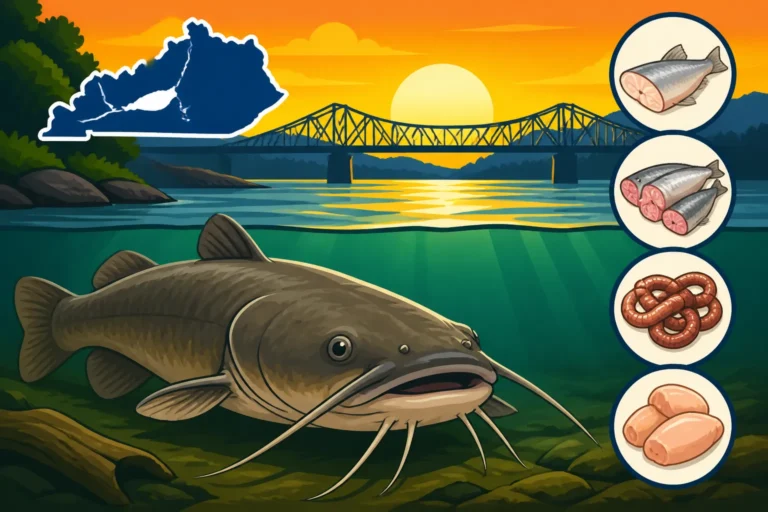
Flathead catfish are truly in a league of their own when it comes to size among Kentucky's freshwater species. Unlike their schooling cousins, the channel and blue catfish, flatheads are ambush predators that live a more solitary life, often holding tight to structure and waiting for unsuspecting prey to pass by. This unique lifestyle, combined with a diet primarily consisting of live fish, allows them to grow to truly colossal proportions in the right conditions.
Average Size Versus Trophy Potential
When you're out fishing for flatheads, it's easy to get caught up in the tales of record-breaking fish, but it’s important to have a realistic understanding of what constitutes an average catch versus a true trophy. Most flathead catfish you'll encounter in Kentucky's rivers and larger lakes will likely fall into the 5 to 20-pound range. These are still incredibly fun fish to catch, offering a strong pull and a satisfying fight, especially on lighter tackle. They are robust, muscular fish, and even at this "average" size, they demand respect.
However, the allure of the flathead lies in their potential to grow much, much larger. A flathead in the 30 to 40-pound class is generally considered a very respectable trophy by most anglers. These are powerful fish that can test your gear and your resolve. Beyond that, you start entering the realm of truly monstrous specimens, fish that can exceed 50, 60, or even 70 pounds. In Kentucky, our river systems, particularly the Ohio River, are known for producing some absolute giants that can even push the 100-pound mark. Catching one of these titans often represents a lifetime angling achievement, a testament to the fish's longevity and the rich environment it calls home. When targeting these larger fish, the right gear is crucial, and many anglers find heavy-duty rods and reels specifically designed for big catfish on platforms like Amazon.
Weight and Length Milestones
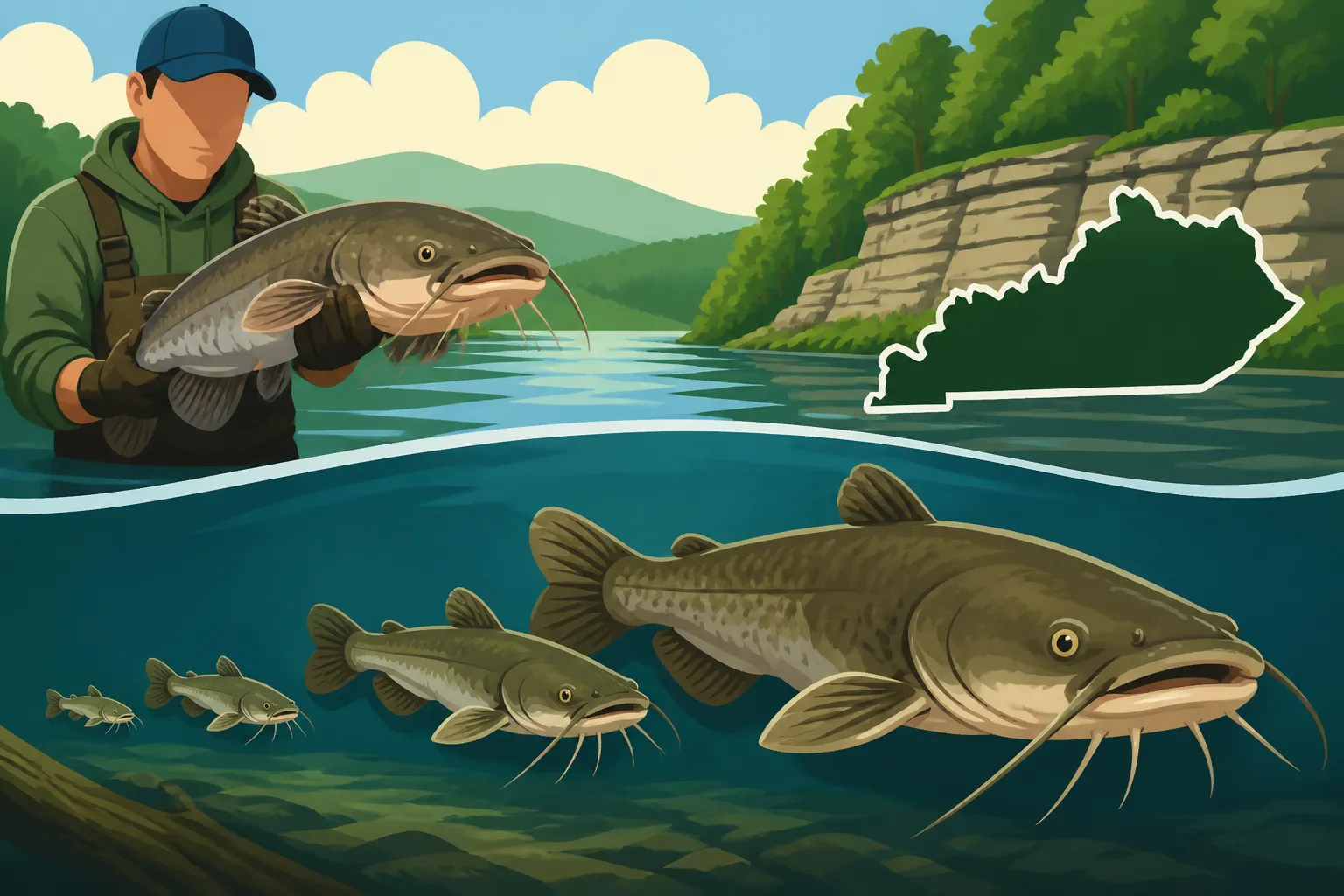
The growth of a flathead catfish is a journey spanning many years, with both length and weight steadily increasing over time. A young flathead might only be a few pounds, but as it matures and successfully ambushes more prey, it adds both length and girth. For instance, a flathead around 20 inches might weigh a mere 3-5 pounds, still quite slender. But as that same fish reaches 30 inches, its weight could easily be pushing 10-15 pounds. The real gains in weight often come when the fish starts to thicken up in its prime, beyond 35-40 inches. A 40-inch flathead could easily be 25-35 pounds, depending on its condition and the richness of its diet.
The truly massive fish, those in the 50-pound plus category, often measure well over 45 inches, sometimes even breaking the 50-inch barrier. Imagine pulling a fish out of the water that is nearly as long as you are tall! These fish are not just long; they are incredibly deep-bodied and thick, carrying immense power. It's a different kind of fight entirely. Understanding these milestones helps anglers appreciate the growth journey of these fish and sets realistic expectations for what they might encounter on the water. For more information on different catfish species, check out Flathead Catfish Vs Channel Catfish: How to Tell Them Apart.
Factors Shaping Flathead Growth in River Systems
Several critical environmental factors play a huge role in determining how large a flathead catfish will grow in any given river system. It's not just about time; it's about the quality of their habitat, the availability of food, and the overall conditions of their watery home.
Abundance of Prey: The Fuel for Growth
Flatheads are obligate piscivores, meaning their diet consists almost exclusively of live fish. Unlike channel catfish who are more opportunistic scavengers, or blue catfish who will readily eat dead bait, flatheads prefer to ambush live prey. This predatory lifestyle means that an abundant and diverse forage base is absolutely crucial for them to reach trophy sizes. Rivers teeming with shad, various species of carp, smaller sunfish, and even other smaller catfish provide a consistent and high-energy food source.
Think about a river like the Ohio. It's a massive, nutrient-rich system that supports huge populations of forage fish. A flathead in a prime ambush spot within such a river—say, tucked behind a log jam or in a deep scour hole—has a constant buffet swimming by. The more effectively it can feed and the less energy it has to expend searching for food, the more energy it can dedicate to growth. A flathead in a river with a sparse food supply will simply not grow as quickly or as large as one in a thriving, food-rich environment. This is why certain river stretches and lakes are consistently known for producing bigger flatheads; they're simply better hunting grounds.
Water Temperature and Seasonality
Like all cold-blooded fish, a flathead's metabolism is directly tied to the water temperature. During the warmer months, roughly from late spring through early fall, their metabolism is high, and they are actively feeding and growing. This is often when you see the most significant gains in size for younger, actively growing fish. They become more aggressive, chase down prey with vigor, and generally pack on the pounds. This is also often when anglers experience the best flathead bite. You can learn more about seasonal fishing in Best Time of Year to Catch Catfish on the Ohio River.
However, when water temperatures drop in late fall and winter, a flathead's metabolism slows dramatically. They become less active, feeding becomes infrequent, and their growth essentially halts. They might still strike a bait if it presents an easy meal, but they aren't actively burning calories and growing at the same rate. This seasonal fluctuation means that a flathead's growth is not linear but rather cyclical, with bursts of rapid growth during warm periods and periods of stasis during cold periods. A fish that experiences more extended warm seasons with ample food will naturally outgrow a counterpart in a colder climate or a less productive river.
Habitat and River Dynamics
The physical characteristics of a river system also play a pivotal role in flathead growth. Flatheads are structure-oriented fish, and they thrive in areas that offer them both protection and prime ambush points. This includes deep holes, undercut banks, dense log jams, rock piles, and bridge pilings. These structures provide cover from strong currents, offer shade, and create perfect places for a flathead to lie in wait. The presence of such diverse and extensive habitat allows flatheads to find ideal homes where they can conserve energy and efficiently hunt.
Strong river currents, while challenging for some fish, can actually benefit flatheads by delivering a constant stream of prey right to their doorstep. They'll often position themselves just out of the main current, in an eddy or behind a large obstruction, where they can dart out and snatch passing fish without fighting the full force of the flow. A river system with a variety of deep channels, current breaks, and abundant woody debris, like parts of the Ohio River or the lower Cumberland River, offers optimal conditions for flathead growth and supports populations of very large fish. These dynamic environments ensure that these fish have everything they need to not just survive, but to truly thrive and grow into genuine river monsters. Anglers targeting these fish should consult resources like Where to Catch Trophy Catfish on the Ohio River to identify prime locations.
Age, Longevity, and the Quest for Big Flatheads
Catching a truly massive flathead isn't just about finding the right spot or using the perfect bait; it's also about understanding the incredible lifespan these fish can have. Those 50, 60, or even 80-pound flatheads aren't just big; they're old, wise, and have survived countless challenges in the river.
Estimating Age from Size
While you can't tell a fish's exact age just by looking at its length, there's a strong correlation, and studies on flathead catfish have provided some fascinating insights into their longevity. Flatheads are slow-growing initially but can live for a very long time. It's not uncommon for a large flathead to be 15 to 20 years old, and the truly massive, record-breaking specimens can easily be 30 years old or even more. Their growth rate slows significantly once they reach maturity, meaning an older fish might only add a few pounds or an inch or two each year, unlike a younger fish that might pack on weight more rapidly.
This table provides a general idea of the relationship between size and age, but remember, actual growth rates vary widely based on food availability, water temperature, genetics, and overall river health.
| Length (inches) | Approximate Weight (pounds) | Estimated Age (years) | Notes |
|---|---|---|---|
| 12-18 | 1-3 | 1-3 | Young, actively growing fish |
| 18-24 | 3-8 | 3-6 | Good fighting fish, common catch |
| 24-30 | 8-15 | 6-10 | Solid keepers, showing good growth |
| 30-36 | 15-25 | 10-15 | Respectable trophy size, strong fighters |
| 36-45 | 25-50 | 15-25 | True trophy territory, long-lived fish |
| 45+ | 50+ | 25-40+ | River monsters, rare and highly prized |
This slow, consistent growth over many years is what allows them to reach such incredible sizes. When you hook into a truly big one, you're not just fighting a fish; you're battling a living relic of the river, a survivor that has navigated floods, droughts, and countless angling attempts.
Patience and Persistence in the Hunt
Chasing after a trophy flathead is not for the faint of heart or the impatient angler. It requires a deep understanding of their behavior, their preferred habitats, and an immense amount of persistence. Flatheads are often caught during low light conditions, either at dawn, dusk, or throughout the night, as this is when they are most active in hunting. This means many hours spent in the dark, often in solitude, waiting for that one special bite. You need to be prepared for long stretches of no action, followed by a sudden, violent strike that can snap rods or spool reels if you're not ready.
Learning the subtle cues of your rod, understanding how your bait is presenting in the current, and having the discipline to stick with a spot even when it's quiet are all part of the game. It's a meditative, often challenging, but ultimately incredibly rewarding pursuit. Many dedicated flathead anglers will tell you that the anticipation and the process itself are almost as fulfilling as the catch. Consider reading Flathead Catfish Fishing Tips for Kentucky Anglers for more detailed advice.
The Role of Anglers in Conservation
With flatheads having such long lifespans and slow growth rates, particularly for the biggest fish, responsible angling practices are vital for their continued health in our river systems. Many dedicated flathead anglers practice catch-and-release, especially for the largest specimens. Releasing these older, larger fish ensures they can continue to spawn and contribute to the gene pool, passing on their traits for longevity and size to future generations. A big female flathead can lay an incredible number of eggs, making her a crucial component of the ecosystem.
Proper handling techniques are also paramount when releasing large fish. Minimizing their time out of water, supporting their body weight correctly, and using tools like large landing nets or specialized handling gloves can reduce stress and increase their chances of survival. While it's exhilarating to weigh and photograph a giant flathead, ensuring its safe return to the river helps sustain the fishery for everyone. Understanding the Kentucky Catfish Limit: 15 Fish, Only 1 Over 25 Inches is important for knowing which fish to keep and which to release, though many choose to release trophy flatheads regardless of limits.
Gear and Tactics for Targeting River Giants
To successfully target and land these impressive flathead catfish, you need to be equipped with the right tools and strategies. This isn't panfish fishing; it demands robust gear and a specific approach.
Heavy-Duty Rods and Reels
When you're going after a fish that could potentially weigh more than a small child and fight with the power of a tractor, your equipment needs to be up to the task. Standard bass rods just won't cut it. You'll want a heavy-action catfish rod, typically in the 7 to 9-foot range, with a strong backbone and a sensitive tip. This allows you to cast heavy weights and baits, absorb the shock of a powerful strike, and put serious leverage on a fighting fish.
Pair that rod with a high-quality baitcasting reel designed for heavy line. Look for reels with a strong drag system, a large line capacity (to hold at least 50-80 pound test braided line), and durable internal components. Brands known for their catfish-specific gear offer excellent options, and you can find a wide selection of robust reels and rods on Amazon by searching for "heavy catfish tackle" or checking out reviews for specific brands. A good reel will not only help you land the fish but will also stand up to the abuse of repeated battles with powerful river dwellers. For more guidance on choosing the right equipment, consider Best Reels for Catfish Fishing.
Live Bait and Presentation
As mentioned, flatheads are live bait specialists. Forget the stink baits and cut baits that work wonders for channel and blue catfish. While a flathead might occasionally hit a large piece of cut bait, your chances increase exponentially with lively, struggling live bait. Popular choices include bluegill, sunfish, shad, carp, and suckers. The size of your bait often corresponds to the size of the flathead you're targeting; bigger baits entice bigger fish.
Your presentation needs to be natural but secure. A standard Carolina rig, or a variation designed to keep your bait pinned near the bottom in current, is a common choice. You'll typically use a large, strong circle hook (e.g., 8/0 to 10/0) to hook your bait through the back or lips, allowing it to swim freely while remaining securely attached. A heavy lead weight (often 3-8 ounces, depending on current) keeps your bait in the strike zone, preventing it from washing downstream. The goal is to present a juicy, live meal right in front of a flathead's ambush point, making it an irresistible target. Detailed rigging options can be found in resources like How to Rig a Trotline for Catfish (though this focuses on passive fishing, the bait and hook principles are similar for active fishing).
Locating Prime Flathead Lies
Finding flatheads is all about understanding their preferred habitat. They are masters of using current breaks and heavy cover to their advantage. Look for deep holes, especially those on the outside bends of rivers where the current has scoured out the bottom. Log jams, fallen trees, and brush piles are prime real estate, providing excellent ambush cover. Bridge pilings, rock ledges, and deep scour areas below dams are also hot spots.
Using your boat's electronics (if you have them) to identify these submerged structures and depth changes can be incredibly helpful. If bank fishing, look for areas with deep water close to shore, undercut banks, or visible woody debris. The key is to present your live bait as close as possible to these structures without getting immediately snagged. Flatheads won't chase a bait very far, so precision casting or strategic boat positioning is vital. Patience is a virtue here; sometimes you have to wait for the fish to move to your bait, but more often, it's about putting your bait directly in their living room. Kentucky Catfish Fishing: Ohio River and Kentucky Lake Guide offers great insights into specific locations known for producing big catfish.
Disclaimer
This article is for general informational purposes only and does not constitute professional advice. Laws, prices and regulations vary by location and change over time. Consult a qualified professional for guidance on your specific situation.