Crappie Fishing in Kentucky: Black and White Crappie Guide
There's nothing quite like the feeling of a crappie thumping your line, especially when you've been working hard to find those elusive slabs. Many anglers, new and experienced alike, often feel overwhelmed by the sheer size of Kentucky's lakes and the nuances of targeting these delicious panfish. This comprehensive guide will peel back the layers on crappie fishing in Kentucky, helping you understand the different species, where to find them, what gear you need, and the techniques to master for a successful outing.
Understanding Kentucky's Crappie Species
Kentucky is blessed with two main species of crappie: the black crappie and the white crappie. While they share many similarities and are often found in the same waters, understanding their subtle differences can be a game-changer for your fishing strategy. Knowing what triggers their bite and where they prefer to hang out can dramatically increase your chances of filling a cooler.
Black Crappie: The Cooler Water Fighter
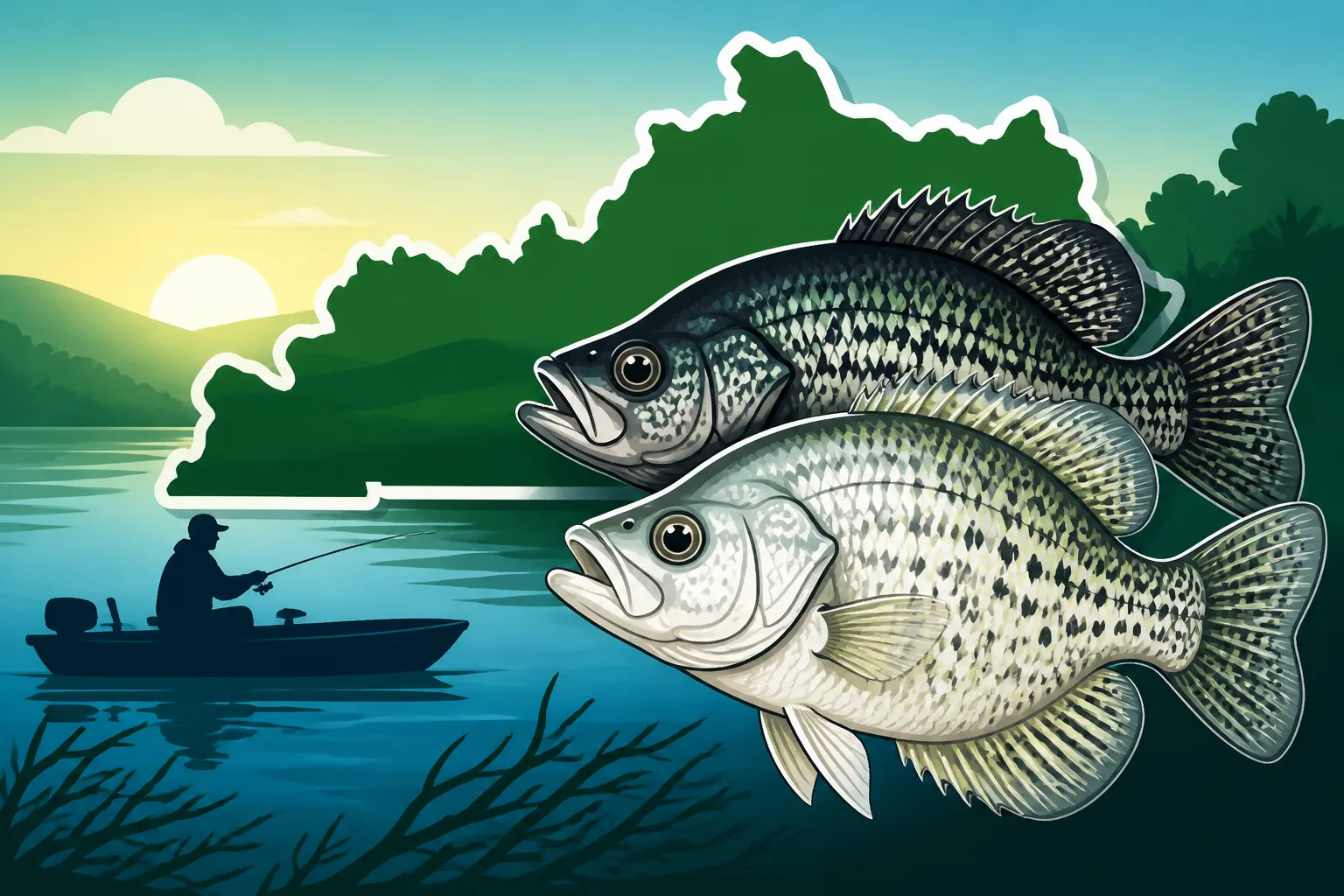
Black crappie, often admired for their darker, more mottled appearance, are truly a joy to catch. Their bodies are typically deeper and more compressed than white crappie, giving them a rounder look. What really sets them apart visually are the irregular, scattered black spots all over their sides. If you look closely at their dorsal fin, you'll notice they usually have seven or eight dorsal spines, a key identifier.
These beautiful fish tend to prefer clearer, cooler waters with plenty of vegetation or submerged timber. Think about those hidden coves with lily pads or areas where fallen trees have created intricate underwater brush piles. They're often found in slightly deeper water than white crappie, especially during the warmer months, and are generally a bit more tolerant of cooler temperatures. This preference for structure means they can be a bit more challenging to locate, but once you find a school, the action can be non-stop. Their diet primarily consists of insects, small crustaceans, and smaller fish, making them susceptible to a variety of small jigs and live minnows.
White Crappie: The Abundant Reservoir Dweller
White crappie are often the more common catch in many of Kentucky's large, turbid reservoirs. They tend to have a lighter, more silvery appearance than their black crappie cousins, with distinct vertical bars or stripes along their sides, rather than irregular spots. Count the dorsal spines on a white crappie, and you'll typically find five or six, which is another reliable way to differentiate them from black crappie.
These fish are incredibly adaptable and thrive in a wider range of water conditions, including slightly muddier or more turbid waters, which is why they are so prevalent in many of our bigger lakes. White crappie are often found in open water near channel bends, submerged roadbeds, or around large, isolated structures. They're known for schooling up in massive numbers, which can lead to incredible fishing days once you dial into their location. Because they are so widespread and often less finicky than black crappie, they make an excellent target for anglers of all skill levels, offering consistent action and delicious fillets for the dinner table.
Key Differences Between Black and White Crappie
While both species provide fantastic fishing opportunities, understanding their distinct characteristics can really help you fine-tune your approach. It's not just about their looks; their behavior and preferred hangouts differ, too.
For instance, black crappie tend to be less tolerant of murky water and are more often associated with standing timber, weed lines, and clearer tributaries. They often feed more aggressively on insects and smaller organisms in these clearer environments. White crappie, on the other hand, are often more pelagic, meaning they roam more in open water, frequently following schools of baitfish in main lake basins and creek channels. Their tolerance for turbidity means they can thrive in conditions where black crappie might struggle.
When it comes to spawning, both species move shallow in the spring, but their preferred spawning habitats can vary slightly. Black crappie often seek out hard bottom areas with aquatic vegetation or submerged brush, while white crappie might gravitate more towards gravel banks or stump fields in creek arms. Knowing these preferences helps you narrow down your search when the fish move up to reproduce.
Here's a quick comparison to help you distinguish between the two:
| Feature | Black Crappie | White Crappie |
|---|---|---|
| Appearance | Darker, mottled with irregular spots | Lighter, silvery with distinct vertical bars |
| Dorsal Spines | 7 to 8 | 5 to 6 |
| Body Shape | Deeper, more compressed, rounder | More elongated and streamlined |
| Preferred Water | Clearer, cooler, more vegetated | More tolerant of turbid water, open water |
| Habitat | Dense cover, vegetation, submerged wood | Open water, creek channels, large isolated structure |
| Size | Can grow very large | Can grow very large, often more abundant |
Recognizing these distinctions will not only make you a more knowledgeable angler but also a more successful one, allowing you to adapt your techniques based on the crappie species you're encountering.
Top Crappie Fishing Lakes and Rivers in Kentucky
Kentucky is a crappie angler's paradise, boasting an incredible array of lakes and rivers that consistently produce slab-sized fish. Knowing where to go is half the battle, and luckily, our state has some legendary waters that are practically synonymous with phenomenal crappie fishing. From expansive reservoirs to tucked-away gems, there’s a crappie hot spot for every kind of angler.
Kentucky Lake and Lake Barkley: Twin Lakes Paradise
When you talk about crappie fishing in Kentucky, Kentucky Lake and Lake Barkley almost always come up first. These twin lakes, separated by the Land Between the Lakes National Recreation Area, offer an astounding amount of crappie habitat and an incredible fishery. Both lakes are massive, sprawling bodies of water with thousands of acres of creeks, coves, and main lake areas that hold abundant populations of both black and white crappie. You'll find extensive areas of standing timber, especially in the upper reaches and creek arms, which are absolutely crucial for crappie. Additionally, countless brush piles, channel swings, and old roadbeds offer prime ambush points.
Anglers often find success by targeting creek channels and submerged timber, especially during the cooler months when crappie school up. In spring, the crappie move into shallower coves and bays to spawn, offering excellent opportunities for shore anglers or those in smaller boats. During the peak of the spawn, usually when water temperatures hit the mid-50s to low 60s, crappie can be found in water as shallow as two to five feet deep. For a deeper dive into seasonal patterns, check out our guide on Kentucky Lake Crappie Fishing: Best Time of Year. These lakes consistently produce some of the biggest crappie in the state, making them a must-visit for any serious crappie enthusiast.
Barren River Lake: A Consistent Producer
Nestled in south-central Kentucky, Barren River Lake is another crappie hotspot that often flies under the radar compared to its western counterparts. This 10,000-acre lake is known for its clear to moderately clear water and a healthy population of both black and white crappie. What makes Barren River Lake stand out is its consistent production, often kicking out good numbers of quality fish year after year. The lake features a mix of standing timber, rocky points, and numerous man-made brush piles that attract crappie.
During the spring, look for crappie to move into the shallower creek arms and coves, particularly around submerged brush and fallen trees. As the water warms in summer, crappie often retreat to deeper brush piles and channel edges, making vertical jigging or slow trolling effective. The Kentucky Department of Fish and Wildlife Resources actively manages the crappie fishery here, often placing additional brush piles to enhance habitat, which can be found using detailed lake maps or a good fish finder. If you're looking for specific honey holes, our guide on Barren River Lake's Best Crappie Spots in Kentucky can provide some excellent starting points. Barren River Lake also has a unique crappie size limit, so be sure to check the specific regulations before you go.
Taylorsville Lake and Green River Lake: Central Kentucky Gems
For anglers in Central Kentucky, Taylorsville Lake and Green River Lake offer fantastic crappie fishing without the long drive to the western part of the state. Taylorsville Lake, located southeast of Louisville, is a popular destination known for its abundant standing timber and relatively clear water. It holds a robust population of both crappie species, with white crappie often dominating the catch. The Salt River arm and its tributaries are excellent areas to target, especially when the crappie are moving shallow to spawn. You'll find plenty of submerged trees and brush piles, which are prime crappie real estate. Our article on Taylorsville Lake's Best Crappie Spots has more detailed information for planning your trip.
Further south, Green River Lake near Campbellsville is another exceptional crappie fishery, particularly for those who enjoy a mix of timber and open water. This lake is known for its scenic beauty and productive fishing, offering good numbers of crappie throughout the year. The numerous creek channels and standing timber areas are key features that hold crappie. In spring, look to the shallower flats and coves, while in summer and winter, focus on deeper creek bends and brush piles. For more localized advice, our guide on Where to Catch Crappie on Green River Lake can steer you in the right direction. Both of these central Kentucky lakes are well-stocked and offer consistent action, making them excellent choices for a crappie fishing adventure.
Essential Crappie Fishing Gear and Tackle
Having the right tools for the job can make all the difference in crappie fishing. These fish, while abundant, can sometimes be finicky, requiring a delicate touch and presentation. From the rod in your hand to the jig on your line, selecting appropriate gear will improve your feel for subtle bites and increase your hook-up ratio. It doesn't mean you need to break the bank, but investing in a few key items tailored for crappie will pay dividends.
Rods, Reels, and Line: Precision Matters
When it comes to crappie fishing, sensitivity is paramount. Those bites can be incredibly light, feeling like little more than extra weight on your line or a slight twitch. That's why an ultralight or light action spinning rod, typically in the 6 to 7.5-foot range, is ideal. These rods have a flexible tip that allows you to detect even the most subtle taps, while still providing enough backbone to handle a decent-sized slab. Many anglers even opt for specialized crappie rods that are 8 to 12 feet long, often called "jigging poles" or "spider rigging" rods, which help in reaching out to cover or fishing multiple lines. You can find excellent ultralight rod and reel combos on Amazon, perfect for sensing those subtle crappie bites, making it easy to get started without a huge investment.
Pairing your rod with a small, lightweight spinning reel (usually a 1000 or 2000 series) is the way to go. These reels offer smooth drag systems and are perfectly balanced for ultralight rods, preventing fatigue during long days on the water. For line, many crappie anglers prefer monofilament in the 4 to 6-pound test range for its stretch and knot strength. However, braided line (6 to 10-pound test with a fluorocarbon leader) has gained popularity for its zero stretch and incredible sensitivity, allowing you to feel everything your jig is doing underwater. Fluorocarbon leaders, usually 4 to 6-pound test, are nearly invisible to fish and offer excellent abrasion resistance around brush. To explore more options, consult our guide on Best Rods and Reels for Kentucky Crappie Fishing.
Baits and Lures: What Crappie Can't Resist
Crappie are opportunists, and their diet can vary, so having a selection of baits and lures is crucial. Live minnows are, without a doubt, the undisputed king of crappie bait. Fished under a bobber or on a tight line, a lively minnow is often irresistible to crappie, especially when they're less aggressive. The natural movement and scent often trigger bites when artificials fail.
However, artificial lures, particularly small jigs, are incredibly effective and offer the advantage of not needing live bait. Soft plastic jigs, ranging from 1/32 to 1/8 ounce, are fantastic. Popular choices include tube jigs, curly tail grubs, and various shad-imitating plastics. Companies like Bobby Garland Crappie Baits and Panfish Assassin offer a huge range of colors and styles. When it comes to outfitting yourself, a quick search on Amazon for 'crappie fishing jigs' will reveal a massive array of options, ensuring you have the right bait for any condition. Color selection can be critical: bright colors like chartreuse, pink, and orange often work well in murky water or on cloudy days, while more natural colors like white, clear, or black are effective in clear water or sunny conditions. Small crankbaits and tiny spinnerbaits can also be surprisingly effective, especially when crappie are actively chasing baitfish. For more specific recommendations, our article on Best Crappie Jigs for Kentucky Waters can help you fill your tackle box.
Electronics and Accessories: Finding the Fish
In today's crappie fishing world, electronics have become an indispensable tool. A good fish finder, especially one with side-imaging or forward-facing sonar capabilities, can literally show you schools of crappie around submerged timber or brush piles before you even drop a line. Brands like Humminbird and Garmin offer excellent units that can help you locate those hidden honey holes and identify the depth at which fish are holding. This technology takes a lot of the guesswork out of finding fish in vast lakes like Kentucky Lake or Lake Barkley.
Beyond the high-tech gadgets, several accessories can significantly improve your crappie fishing experience. A durable tackle box or tackle bag is essential for organizing your myriad jigs, weights, hooks, and leaders. A long-handled net is invaluable for scooping up those bigger slabs without losing them at the boat. A pair of sharp fishing pliers for hook removal, a good stringer or livewell to keep your catch fresh, and a comfortable seat are all small details that add up to a much more enjoyable and successful day on the water. Don't forget polarized sunglasses to cut through the glare and spot submerged structure, which can often be found readily available on Amazon alongside your other gear.
Mastering Crappie Fishing Techniques
Once you've got your gear sorted, it's time to talk tactics. Crappie fishing is an art form, a delicate dance between understanding fish behavior, reading the water, and presenting your bait just right. There's no single magic bullet, but a range of techniques that, when applied correctly, can turn a slow day into a memorable one. Being adaptable and knowing when to switch up your approach is key to consistently catching crappie in Kentucky's diverse waters.
Jigging and Trolling: Active Approaches
Active fishing techniques like jigging and trolling are incredibly effective for covering water and locating crappie, especially when they are scattered or holding to specific structures. Vertical jigging involves dropping a small jig or minnow straight down to the depth where crappie are holding, then gently lifting and dropping your rod tip to impart action. This is particularly effective when you've identified a brush pile or a school of crappie on your fish finder. You can sit directly over the structure and systematically pick off fish. Check out our detailed guide on How to Jig for Crappie in Shallow Water for more tips on this versatile technique.
Spider rigging is a multi-rod trolling technique popular on large reservoirs. Anglers use several long rods (often 8 to 16 feet) fanned out from the front of the boat, each with a jig or minnow rig set at a specific depth. The boat moves very slowly, often with an electric trolling motor, allowing you to cover wide areas of creek channels, flats, or contour lines. This method is incredibly efficient for locating schools of fish and presenting multiple bait options simultaneously. Our article on Spider Rig Technique for Crappie Fishing offers a comprehensive breakdown of how to set up and execute this effective strategy. The slow, methodical movement of the boat and baits often triggers crappie that might be reluctant to strike a stationary presentation.
Slip Bobber and Still Fishing: Classic and Effective
Sometimes, the simplest methods are the best, and that's certainly true for crappie fishing with slip bobbers or by still fishing. A slip bobber setup allows you to present your bait (usually a live minnow or a small jig) at a precise depth, no matter how deep you need to go, simply by adjusting the bobber stop on your line. When a crappie bites, the bobber dips, giving you a clear visual indicator. This method is fantastic for targeting crappie suspended at specific depths around cover, like submerged timber or brush piles, where a fixed bobber might not reach. It's also incredibly effective when crappie are finicky and just lightly mouthing the bait.
Still fishing, often done from an anchored boat or from the bank, is another classic method. This involves casting out a weighted bait (minnow or jig) and letting it sit in a promising area, such as a drop-off, a stump field, or around dock pilings. You can use a tight line to feel for bites or set your rod in a holder and watch the tip for movement. This patient approach can be deadly when crappie are concentrated in a small area and are not actively chasing. It's particularly popular when fishing specific structures or during colder water periods when crappie are less active. For a full tutorial, be sure to read our guide on Slip Bobber Technique for Crappie Fishing. Both techniques offer a relaxed yet productive way to catch crappie, perfect for a peaceful day on the water.
Fishing Around Structure: Where Crappie Hide
Crappie are masters of camouflage and ambush, and they absolutely love structure. Whether it's natural or man-made, any kind of submerged cover offers them protection from predators and a prime location to ambush unsuspecting baitfish. Understanding what kind of structure crappie prefer and how to fish it is fundamental to consistent success.
Brush piles are perhaps the most famous crappie magnets. These can be naturally occurring (fallen trees, log jams) or intentionally created by anglers and wildlife agencies. Crappie will stack up in and around these brush piles, seeking refuge and food. The key is to present your bait right on the edge or just within the brush without getting hung up. Vertical jigging a small jig or a minnow is often the most effective method, allowing you to drop straight down into the cover. Submerged timber, especially old standing trees in flooded lakebeds, also holds crappie year-round. These trees often create complex underwater forests that crappie adore. Our article on Crappie Fishing Around Brush Piles provides excellent strategies for tackling these fish havens.
Docks and boat houses are another excellent form of structure, especially in high-pressure areas. The shade and cover they provide, along with any submerged growth or debris that accumulates around their pilings, attract crappie. Skipping small jigs under docks or pitching a minnow into shaded pockets can produce some impressive catches. Additionally, submerged roadbeds, old foundations, and channel edges act as highways and holding areas for crappie, particularly during transition periods or in deeper water. Using your fish finder to locate these subtle contours and features is critical. Remember, crappie are almost always associated with some form of cover, so learning to "read" the water and identify potential holding spots, both visible and submerged, is a skill that will serve you well.
Understanding Crappie Seasons and Patterns
Crappie, like most fish, are highly influenced by water temperature, light conditions, and their natural urge to spawn. This means their location and behavior can change dramatically throughout the year. Knowing these seasonal patterns is crucial for predicting where they'll be and what techniques will be most effective. A crappie hotspot in spring might be completely barren in summer, so being able to adapt is key to consistent success.
Spring Spawn: The Crappie Gold Rush
Without a doubt, spring is prime time for crappie fishing in Kentucky. As water temperatures begin to climb into the mid-50s and low 60s Fahrenheit, crappie start their annual migration from deeper wintering grounds to shallow spawning areas. This is often referred to as the "crappie gold rush" because the fish are concentrated and actively feeding before, during, and immediately after the spawn. Look for them in shallow bays, coves, and creek arms, particularly around brush piles, submerged logs, lily pads, and other forms of cover. They'll be looking for hard bottom areas, often gravel or sand, to lay their eggs.
The timing of the spawn can vary by a few weeks depending on the specific lake and the weather patterns of that year, but generally, it occurs from late March through May in most parts of Kentucky. Pay close attention to water temperature – it's the most reliable indicator. For detailed information on when to expect this exciting period, our guides on Kentucky Crappie Spawn Timing by Water Temperature and When Does Crappie Spawning Start in Kentucky offer excellent insights. Small jigs (1/32 to 1/16 ounce) in bright colors like chartreuse, pink, or orange, or live minnows fished under a bobber, are deadly during this time. The fish are often aggressive and can be caught in large numbers, making it an ideal time for both seasoned anglers and beginners.
Summer: Deep Water and Shade
Once the spring spawn concludes and water temperatures continue to rise, crappie typically move away from the shallow spawning grounds. During the heat of summer, they seek out deeper, cooler water and abundant shade. This often means they'll relocate to main lake creek channels, deep brush piles, submerged timber lines, and the cooler depths around bridges or docks. They might suspend over open water following baitfish schools, or hug tight to the bottom in 15 to 30 feet of water or more.
Finding crappie in summer often requires good electronics to locate these deep-water schools or structures. Vertical jigging directly over identified schools or slow trolling with multiple rods (spider rigging) become highly effective techniques. Another fantastic opportunity in summer is night fishing. Crappie are often attracted to lights over the water, which in turn draw in plankton and baitfish. Fishing under submersible lights from a boat or dock can be incredibly productive during the overnight hours, especially for large white crappie. To learn more about this exciting technique, check out our guide on How to Fish for Crappie at Night. For strategies on locating these elusive summer slabs, our article How to Find Crappie in Deep Water in Summer provides valuable tips.
Fall and Winter: Transition and Cooler Bites
As summer gives way to fall, falling water temperatures trigger a transition period for crappie. They often become more active again, feeding heavily to build up reserves for winter. In early fall, crappie might still be found in deeper areas but will often move shallower, mimicking their spring patterns, as baitfish also migrate to shallower water. Look for them around channel edges, main lake points, and larger brush piles. As fall progresses and water cools further, crappie begin to school up tightly in deeper areas, often congregating in creek channels or main lake basins.
Winter crappie fishing can be challenging but incredibly rewarding. Crappie are still catchable, but they become much less active, often suspending tightly in dense schools near deep structures like submerged humps, roadbeds, or river channel bends. They'll often be found in 20 to 40 feet of water, sometimes even deeper. The key to winter success is a very slow presentation and light tackle. Small jigs (1/32 oz or even smaller) tipped with a minnow, fished very slowly or vertically jigged with minimal movement, can entice these cold-water crappie. While the bites can be extremely subtle, finding a winter school can lead to a quick limit of impressive fish. Don't let the cold deter you; winter offers some of the best opportunities for catching truly large slabs.
Kentucky Crappie Regulations and Conservation
Understanding and adhering to fishing regulations isn't just about avoiding a fine; it's about being a responsible angler and ensuring healthy fish populations for generations to come. Kentucky has specific rules for crappie, and these can vary not only statewide but also by individual lake, so staying informed is crucial for a successful and legal fishing trip.
Statewide and Lake-Specific Limits
Kentucky's Department of Fish and Wildlife Resources (KDFWR) sets regulations to manage crappie populations effectively. Generally, there is a statewide daily creel limit for crappie, which dictates the maximum number of fish you can keep in a single day. This limit is designed to prevent overfishing and maintain a sustainable population. It's always wise to check the most current KDFWR fishing guide, available online or at most license vendors, before heading out, as regulations can change. Our general guide on Kentucky Crappie Daily Limit Rules can give you a starting point.
Beyond the statewide regulations, many individual lakes in Kentucky have special site-specific regulations. These might include different daily creel limits or, more commonly, specific size limits for crappie. For example, some lakes might have a 10-inch minimum size limit, meaning any crappie shorter than that must be immediately released. These specific rules are put in place to manage particular fisheries, often to allow fish to reach a certain size before they can be harvested, promoting larger average fish sizes. Barren River Lake is a prime example, with a special crappie size limit that anglers need to be aware of. Our article on Barren River Lake Crappie Size Limit in Kentucky elaborates on this specific regulation. Always double-check the rules for the specific body of water you plan to fish, as ignoring them can lead to citations and penalties.
License Requirements and Best Practices
To legally fish for crappie (or any fish) in Kentucky's public waters, you absolutely need a valid Kentucky fishing license. This applies to both residents and non-residents, with different fees for each. Children below a certain age are usually exempt, but it's important to verify the exact age requirement. Licenses can be purchased easily online through the KDFWR website, or in person at various vendors like bait shops, sporting goods stores, and county clerks' offices. Having your license readily available, either in physical form or digitally on your phone, is essential, as a game warden may ask to see it at any time. For a comprehensive overview, our Kentucky Fishing License Guide and How to Get a Fishing License in Kentucky will walk you through the process.
Beyond the regulations, practicing responsible angling is vital for the future of crappie fishing. If you plan to release fish, handle them gently with wet hands to protect their slime coat, and quickly return them to the water. Consider using barbless hooks, which make release easier and reduce injury. Only keep what you plan to eat, and respect catch limits, even if you feel you could catch more. Properly dispose of all trash, fishing line, and old bait; never leave it behind. These simple best practices ensure that Kentucky's crappie fisheries remain healthy and vibrant for everyone to enjoy for years to come.
Disclaimer
This article is for general informational purposes only and does not constitute professional advice. Laws, prices and regulations vary by location and change over time. Consult a qualified professional for guidance on your specific situation.