Channel Catfish Vs Blue Catfish: How to Tell Them Apart
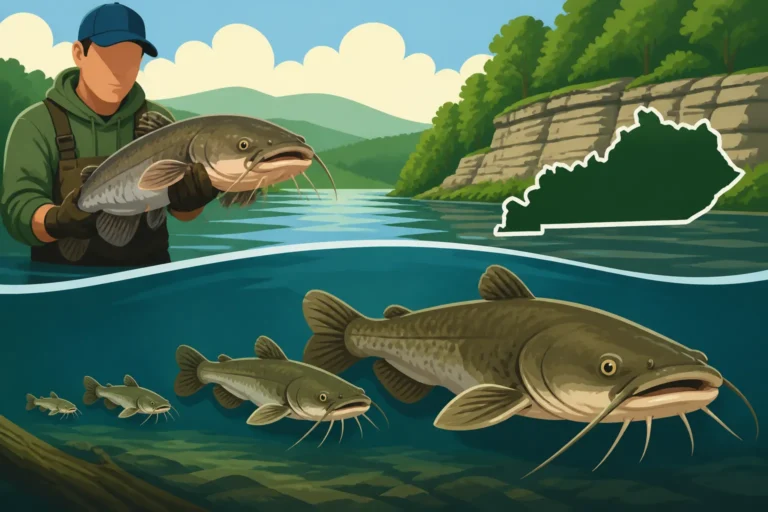
Oh, the age-old question that has stumped countless anglers on Kentucky's waterways! You're out there on the Ohio River, or perhaps down on Kentucky Lake, and you pull up a big, whiskered beauty. Is it a channel cat or a blue cat? The excitement is real, but so is the confusion, especially when some fish just don't seem to fit the textbook description. This guide is going to clear up that mystery for you, helping you confidently identify the channel catfish from the mighty blue catfish so you can fish smarter and follow regulations without a second guess.
The Tale of Two Whiskers: Why Catfish ID Matters in Kentucky
When you're out chasing those whiskered wonders in Kentucky, knowing exactly what you've reeled in is more than just bragging rights. It actually impacts your fishing strategy and, just as importantly, ensures you're playing by the rules. The subtle differences between a channel catfish and a blue catfish can mean the difference between a legal catch and a hefty fine, or between using the right bait for a trophy versus just waiting around.
More Than Just a Name: Why Identification Is Crucial
Think about it: Kentucky has specific regulations for different species, and catfish are no exception. While some limits might be pretty straightforward across the board, there can be nuances, especially for trophy fish or in certain waters. If you mistakenly identify a blue cat as a channel cat, or vice-versa, you might accidentally keep a fish that's over a specific length limit for one species, or miss out on keeping a prized specimen that's legal for another.
For instance, understanding the general Kentucky Catfish Daily Limit and Trophy Fish Rule is important, but imagine you're on a lake known for huge blue cats, and you catch a monster that's just shy of a personal best. If you don't know the specific identifier, you might release it thinking it's a channel cat that's too small, when it might have been a legal blue cat for the area! Beyond regulations, knowing the species helps you understand their behavior. Are you fishing in the right spot? Using the most effective bait? These details matter for a successful day on the water.
General Catfish Characteristics: What They Share
Before we dive into the nitty-gritty differences, let's acknowledge what all true catfish species in Kentucky have in common. They are, after all, "cats" for a reason! They all possess those distinctive barbels around their mouths, which act like super-sensitive feelers, helping them navigate and find food in murky waters or at night. They also share that smooth, scaleless skin – a defining trait that sets them apart from scaled fish like bass or crappie.
Generally, they have elongated bodies, a single dorsal fin, and a prominent adipose fin (that fleshy little fin on their back, just before the tail). While their sizes and colors vary wildly, from the smallest bullhead to the absolute behemoth blue cats, these foundational characteristics are what make a catfish a catfish. But, as you'll see, the devil is in the details when you're trying to distinguish between specific species like the channel and the blue.
Dissecting the Channel Catfish: A Closer Look
The channel catfish is probably the most widely recognized catfish species in Kentucky. It's often the first "big" fish many young anglers catch in a local pond, and it’s a favorite target for families enjoying a weekend campout. They're resilient, found in a wide variety of habitats, and put up a respectable fight on the line. But how do you know, for sure, that it's a channel cat you've just landed?
Distinctive Physical Traits of the Channel Catfish
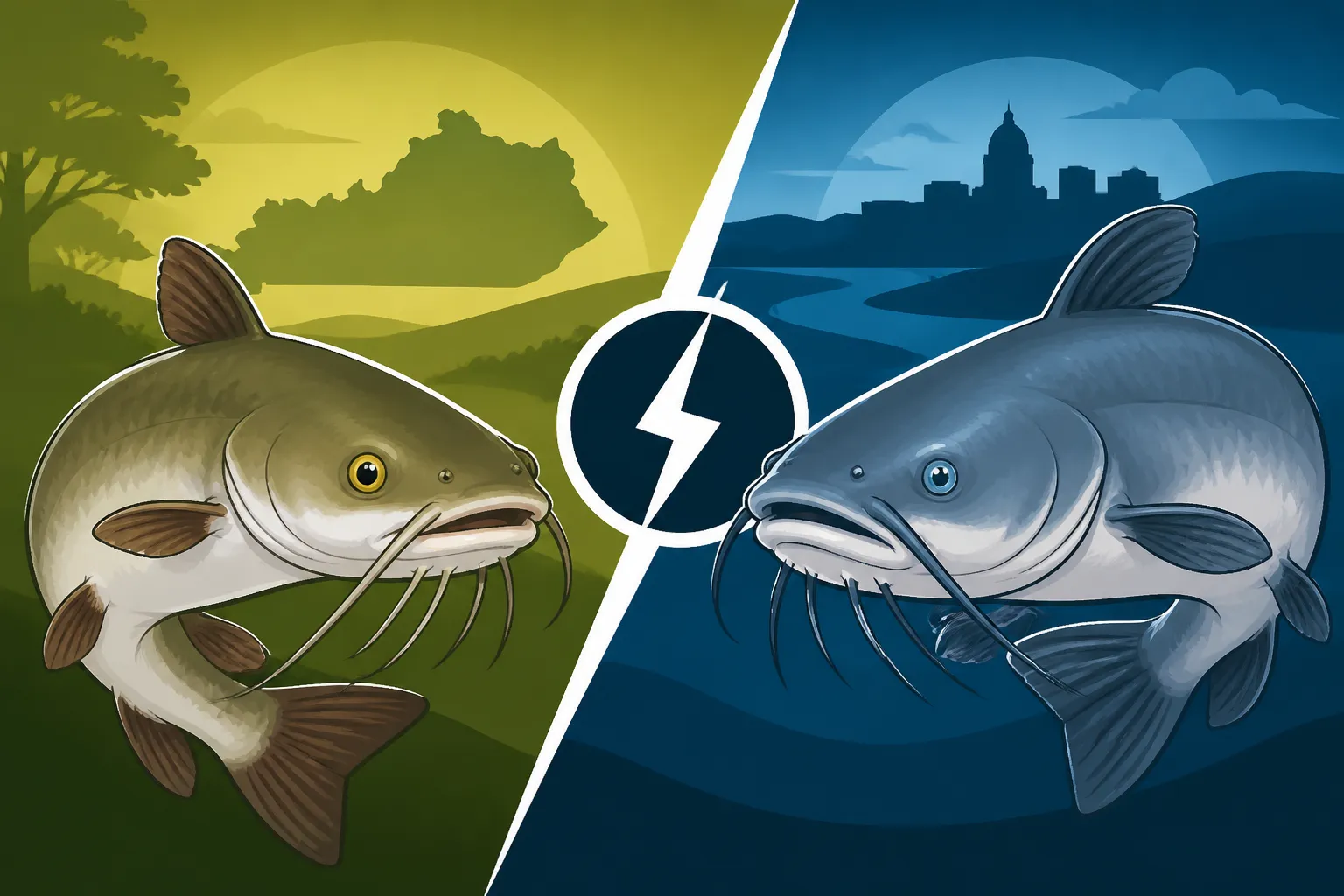
When you hold a channel catfish, there are a few tell-tale signs that scream "Channel!" The most obvious one, especially in younger fish, is the presence of dark, irregular spots scattered across their sides. These spots can range from prominent speckles to more subtle mottling. However, and this is where the confusion often begins, older and larger channel cats tend to lose these spots, sometimes becoming completely spotless, which can lead to them being mistaken for blue catfish.
Another key identifier is their tail fin. Channel catfish almost always have a deeply forked tail, much like a swallow's tail, with sharp, pointed lobes. This is a very consistent characteristic across all sizes.
Finally, if you're really keen on identification, take a close look at the anal fin – the fin on the underside of the fish, behind the anus. A channel catfish will typically have an anal fin with a rounded edge, containing between 24 and 29 rays. Counting these rays can be a bit fiddly in the field, but it’s a definitive method if you're ever in doubt. Their body shape tends to be more slender and streamlined compared to the bulkier blue catfish, giving them a more athletic appearance.
Habitat and Behavior Nuances
Channel catfish are incredibly adaptable, making them prevalent throughout Kentucky's waterways. You'll find them in large rivers like the Ohio and the Kentucky River, sprawling reservoirs like Kentucky Lake and Lake Barkley, as well as smaller streams, ponds, and even farm lakes. They're opportunistic feeders, meaning they'll eat just about anything they can find, which contributes to their widespread success. Their diet includes insects, small fish, crawfish, mollusks, and even plant matter. This omnivorous nature makes them a prime target for a wide variety of baits, from chicken livers to nightcrawlers to prepared stink baits. You can find many of these versatile baits at outdoor retailers, or even on Amazon if you like shopping from home.
They are particularly active feeders during low light conditions, meaning dawn, dusk, and even throughout the night can be prime times for channel cat fishing. They're known to put up a decent fight, with strong runs and head shakes, making them a fun catch for anglers of all skill levels. While they don't typically reach the gargantuan sizes of blue catfish, channel cats can still grow quite large, with many anglers landing fish in the 10-20 pound range, and even larger ones making occasional appearances.
Understanding the Blue Catfish: A True River Monster
Now, let's talk about the blue catfish. These are the heavyweights of Kentucky's catfishing scene, capable of reaching truly immense sizes that can give your fishing arm a serious workout. If you're targeting trophy catfish on Kentucky's major rivers and reservoirs, the blue cat is likely your primary quarry. Anglers often dream of breaking state records, and blue catfish are usually the species making those headlines, like the one mentioned in Kentucky's Record Blue Catfish Weighed 106 Pounds 14 Ounces.
Key Identifying Features of the Blue Catfish
When you pull a blue catfish out of the water, one of the first things you'll notice is their color – a distinctive blue-gray or slate-gray hue across their back and sides, fading to a white belly. Unlike many channel catfish, blue cats typically do not have any spots on their body, regardless of their age. Even juveniles tend to be spotless, which is a significant distinguishing factor.
Their tail fin is also deeply forked, similar to a channel cat, but here's where the anal fin comes in as a critical identifier. The blue catfish has a much longer, straight-edged (or only slightly concave) anal fin, containing a higher number of rays – usually between 30 and 35, and sometimes even more. This long, straight anal fin is perhaps the most reliable characteristic to differentiate it from a channel catfish, even when spots are absent on an older channel.
In terms of overall body shape, blue catfish are generally much more robust and powerfully built than channel cats, especially as they get larger. They often develop a noticeable "humped" back just behind the head, particularly in larger specimens, giving them a very formidable profile. Their head also tends to be broader and more massive in proportion to their body compared to a channel cat.
Where You'll Find Them and What They Eat
Blue catfish are primarily creatures of big, flowing rivers and vast reservoirs. In Kentucky, they thrive in places like the mighty Ohio River, the lower reaches of the Kentucky River, and the open waters of Kentucky Lake and Lake Barkley. They prefer deeper, more open channels with strong currents, often congregating around ledges, drop-offs, and submerged structures. They are less common in smaller streams or ponds, which tend to be the domain of channel cats. For serious blue cat anglers, finding the right spots on these big bodies of water is key to success, as detailed in guides like Best Catfish Fishing Spots on Kentucky's Ohio River.
Their diet reflects their predatory nature and large size. Blue catfish are largely piscivorous, meaning they primarily eat other fish. Shad, skipjack herring, drum, and smaller panfish are all on the menu. This makes fresh cut bait, particularly oily fish like shad, an incredibly effective offering for blue cats. Many anglers swear by fresh cut bait, setting up trotlines or Jug Fishing for Catfish: A Beginner's Guide with pieces of baitfish to entice these giants. Their immense power translates into an incredible fight once hooked. A large blue cat can peel line off your reel like it's nothing, making heavy-duty gear a necessity if you're planning on tangling with these true river monsters.
Side-by-Side Comparison: Spotting the Differences in the Field
So, you've got a catfish on the bank or in your net. How do you quickly and accurately tell if it's a channel or a blue? It all comes down to focusing on a few key features. Don't let one characteristic trick you; instead, look at the combination of traits. This holistic approach will give you the most accurate identification in the moment.
The "Spot Check" and Tail Tale
The first thing many anglers look for are spots. If the fish has clear, distinct dark spots on its sides, especially if it's not a truly massive specimen, chances are very high you've got a channel catfish. However, remember the caveat: larger, older channel cats can lose their spots entirely. So, while spots are a good positive indicator for a channel, a lack of spots doesn't automatically mean it's a blue.
Next, glance at the tail. Both species have deeply forked tails, which can be a bit confusing. However, some experienced anglers observe that while both are forked, the channel cat's fork often appears more pointed at the tips, giving it a somewhat sharper V-shape. The blue cat's fork, while deep, might appear a bit broader or slightly less acutely pointed. This is a subtle difference, though, and shouldn't be your primary identifier if other characteristics are present.
Counting Rays and Noticing Overall Body Proportions
This is where the anal fin becomes your best friend. This is arguably the most reliable and consistent way to differentiate between the two, especially when dealing with older, spotless channel cats. Gently spread the anal fin (the one on the underside, behind the anus) and carefully count the rays.
- Channel Catfish: Typically 24-29 rays, with a distinctly rounded edge to the fin.
- Blue Catfish: Typically 30-35+ rays, with a long, straight, or only slightly concave edge to the fin.
This ray count is a biological characteristic that rarely varies. You can practice counting on pictures online or by carefully observing fish you catch. Once you get the hang of it, you'll see how distinct the difference in fin shape and ray count truly is.
Beyond the fins, take a moment to look at the overall build of the fish. Is it relatively slender and streamlined? That leans towards a channel catfish. Or is it thick, bulky, with a broader head and perhaps a noticeable hump on its back? That's characteristic of a blue catfish. Remember, blue cats are built for power in strong currents, so their body shape reflects that.
Here’s a quick comparison table to help you in the field:
| Feature | Channel Catfish | Blue Catfish |
|---|---|---|
| Body Color | Olive-brown to gray, often with dark spots | Blue-gray to slate-gray, no spots |
| Spots | Present, especially in younger fish; fade with age | Usually absent at all ages |
| Tail Fin | Deeply forked, often pointed lobes | Deeply forked, sometimes broader lobes |
| Anal Fin Shape | Rounded edge | Long, straight, or slightly concave edge |
| Anal Fin Ray Count | 24-29 rays | 30-35+ rays |
| Head Shape | Relatively smaller, more pointed | Broader, more massive, sometimes with a 'hump' |
| Body Build | More slender, streamlined | More robust, powerful, often with a "humped" back |
| Typical Habitat | Rivers, lakes, ponds, smaller tributaries | Large rivers, main channels of big reservoirs |
Common Misconceptions and Tricky Situations
Even with all the identifying features laid out, anglers still run into scenarios that can make identification tricky. It's easy to second-guess yourself, especially when a fish doesn't look exactly like the pictures in a guide. Let's tackle some of those common confusions.
The "Spotless" Channel Catfish
This is probably the biggest source of confusion. Many anglers are taught that spots mean channel cat and no spots mean blue cat. While this is often true for juvenile fish, it becomes less reliable as channel catfish age and grow larger. A big, old channel catfish can indeed be completely devoid of spots, making it look remarkably similar to a blue catfish at first glance.
This is precisely why you can't rely solely on one characteristic. If you catch a large, spotless catfish, you absolutely must move on to checking the anal fin ray count and shape, as well as the overall body proportions. It’s a good rule of thumb to always check at least two or three different features to confirm your identification, especially if you're unsure or if the fish is a borderline size for regulations. Don't let the absence of spots fool you into misidentifying a channel cat that you might have to release due to Kentucky Statewide Bass Limit: 12 Inches, 6 Fish a Day or other species-specific rules.
Juvenile Catfish and Crossbreeds
Another challenge can come from very young catfish. Sometimes, the distinctive features aren't as pronounced in small juveniles. For example, the anal fin ray count might be harder to accurately determine on a tiny fish, or the body shape hasn't fully developed its mature characteristics. In these cases, it's often best to err on the side of caution, or simply release the fish if you're not confident in its identity.
While less common in wild populations, there's always the theoretical possibility of hybrids, though they aren't regularly encountered by most anglers in Kentucky's waters. However, understanding the pure species is crucial before you start trying to identify anything more exotic. For most practical fishing purposes in Kentucky, you'll be dealing with pure channel or blue catfish, or perhaps flathead catfish, which are visually distinct enough to not be confused with channels or blues. Just make sure you know How Many Catfish Over 25 Inches Can You Keep? for each species you're targeting.
Gear Up for Catfish: What You Need to Bring
Alright, now that you're a budding catfish identification expert, let's talk about getting geared up to catch these magnificent creatures. Whether you're chasing the widespread channel cat or the colossal blue cat, having the right tackle makes all the difference in your success and enjoyment. Good gear doesn't just help you catch fish; it helps you land them safely and efficiently, reducing stress on both you and the fish.
Rods, Reels, and Line for Both Species
When it comes to rods and reels, versatility is key if you plan to target both channel and blue catfish. For channel cats, a medium to medium-heavy action rod, around 7-8 feet long, paired with a reliable spinning or baitcasting reel spooled with 15-25 pound test monofilament or braided line, will generally suffice. This setup offers enough backbone to handle a feisty channel cat but is still sensitive enough to detect lighter bites.
However, if you're serious about targeting the truly massive blue catfish, especially on big waters like the Ohio River or Kentucky Lake, you'll want to beef up your tackle considerably. Think heavy to extra-heavy action rods, 7-10 feet in length, coupled with a sturdy baitcasting reel capable of holding a lot of heavy line. Spool up with 50-80 pound braided line, often with a monofilament or fluorocarbon leader. This kind of setup gives you the power to cast heavy weights and baits, and, more importantly, to turn the head of a blue cat that could easily weigh more than your tackle box. Many reputable brands offer excellent catfish-specific rods and reels that you can find at local tackle shops or even browse through on Amazon for competitive prices. For more specialized advice, check out Best Reels for Catfish Fishing.
Baits and Rigs That Attract Each Catfish
The beauty of catfish fishing is the simplicity of some of the rigs, yet the effectiveness of certain baits. For channel catfish, you have a plethora of options. They are omnivores, so things like chicken livers, nightcrawlers, shrimp, corn, and various prepared "stink baits" are all excellent choices. A simple bottom rig, like a Carolina rig (slip sinker above a swivel, with a leader and hook), or a three-way swivel rig, works perfectly.
For blue catfish, the preference shifts dramatically towards fresh cut bait. Blue cats are predators, and they key in on the scent and profile of other fish. Freshly cut pieces of shad, skipjack herring, carp, or even panfish are prime choices. The fresher the bait, the better! Use large, sharp circle hooks with your cut bait to ensure good hookups and protect the fish if you plan on releasing it. Again, bottom rigs are standard, but use heavier sinkers to hold your bait in place in strong currents. Experiment with different types of bait as you fish, as local conditions and what's available can sometimes influence what the fish are biting. For a deeper dive into bait, explore Best Bait for Blue Catfish Fishing or Best Bait for Flathead Catfish on the Ohio River if you're curious about other species.
Remember, the goal is to enjoy your time on Kentucky's amazing fishing waters. Knowing your fish species not only makes you a more knowledgeable angler but also ensures you're fishing responsibly. Tight lines!
Disclaimer
This article is for general informational purposes only and does not constitute professional advice. Laws, prices and regulations vary by location and change over time. Consult a qualified professional for guidance on your specific situation.