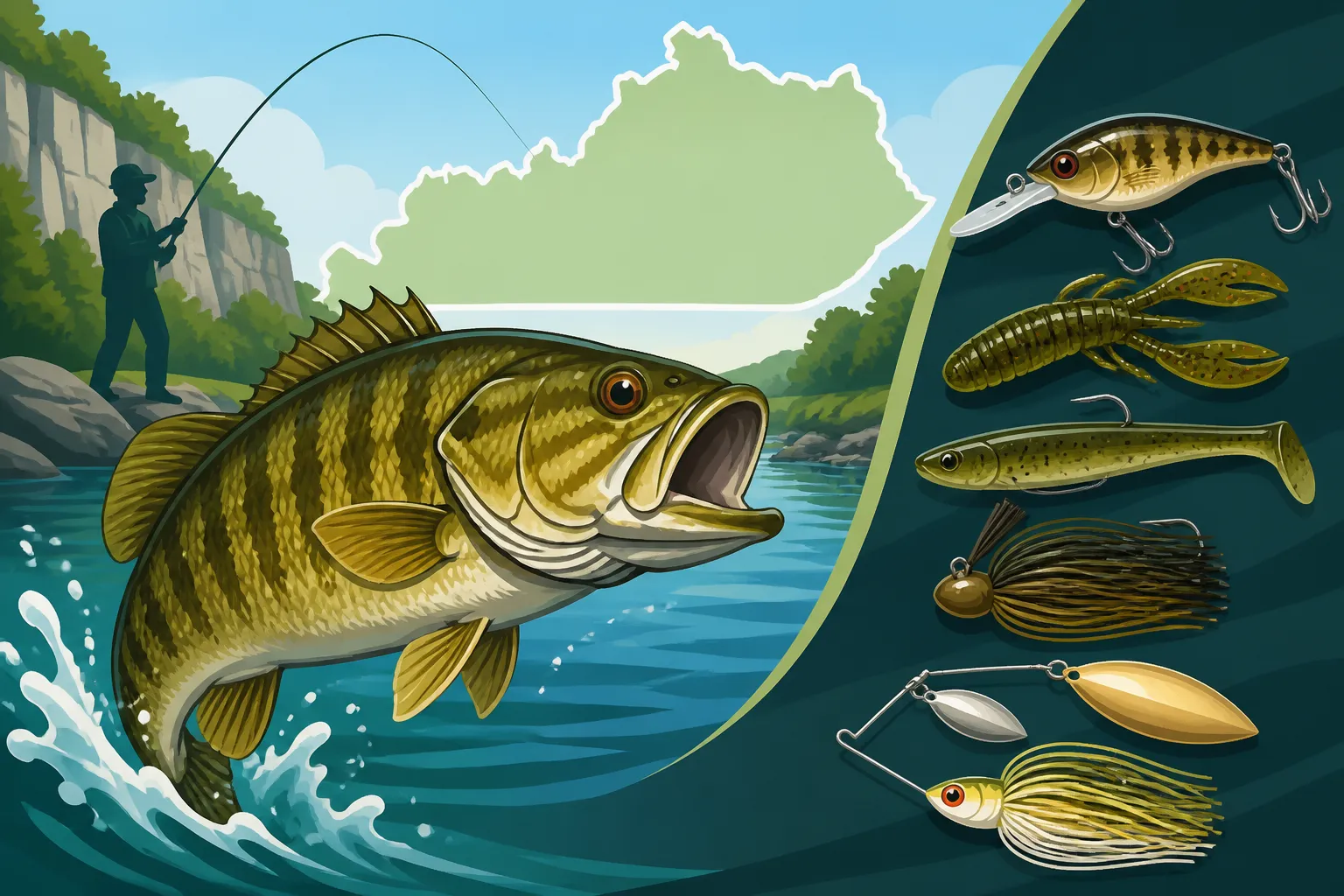
Best Lures for Smallmouth Bass in the Cumberland River
Fishing for smallmouth bass on the Cumberland River presents a unique blend of challenges and rewards. It's not like still-water lake fishing; the currents, diverse bottom structure, and ever-changing water levels demand a specific approach to lure selection. If you've ever felt frustrated throwing your favorite lake lures only to come up empty-handed in the river, this comprehensive guide will walk you through the very best lures specifically designed to entice those feisty Cumberland River smallies.
Understanding Cumberland River Smallmouth Behavior
Before we even dive into specific lures, it’s crucial to understand how smallmouth bass behave in a dynamic environment like the Cumberland River. These fish are incredible athletes, built for current, and their feeding and holding patterns are directly influenced by the flow and available cover. Knowing what makes them tick helps you present your lures effectively, turning a tough day into a successful one.
River Dynamics and Smallmouth Habits
The Cumberland River isn't a stagnant pool; it's a living, breathing waterway with varying current speeds, depths, and structures. Smallmouth bass thrive in these conditions, often positioning themselves just out of the main flow, in eddies, behind rocks, or along current breaks. They conserve energy while waiting for prey to be swept past them. This means your lure needs to either imitate an injured baitfish caught in the current or quickly get to the fish's strike zone without getting immediately swept away. Understanding the "seams" in the water where fast current meets slack water is key to finding smallmouth.
They are opportunistic feeders, preying on crawfish, minnows, small baitfish, and insects. What's available to them often dictates their preference for certain lures. When crawfish are abundant, a jig or soft plastic mimicking one will often outperform other baits. When schools of shad are present, a crankbait or jerkbait can be deadly. Pay attention to what's in the water around you – if you see crawfish scurrying under rocks or baitfish jumping, try to match the hatch. This foundational understanding will instantly elevate your fishing game, helping you decide not just what lure to throw, but where and when to throw it. For a broader look at this species, check out Smallmouth Bass Fishing in Kentucky: The Complete Guide.
Seasonal Movements on the Cumberland
Smallmouth bass in the Cumberland River follow distinct seasonal patterns that influence their location and aggression levels. In spring, as water temperatures rise, smallies move to shallower areas, often gravel beds or rocky points, to spawn. During this time, they can be highly protective and aggressive towards lures invading their territory. Post-spawn, they might move slightly deeper but remain active, feeding heavily to recover.
Summer sees them seeking cooler, more oxygenated water, often found in deeper pools, current breaks, or around submerged timber. Early mornings and late evenings can be prime times as they move to shallower feeding grounds. Fall brings a pre-winter feeding frenzy, with smallmouth aggressively chasing baitfish to put on weight. They can be found in various depths, from shallow flats to deeper channel swings. Winter fishing, while challenging, can be rewarding for those who brave the cold; smallmouth will often hold in deep, slow-moving pools, requiring slow, deliberate presentations. Knowing these patterns helps you anticipate where the fish will be and what kind of retrieve will provoke a strike. Don't forget to check Best Time of Day to Catch Bass for more insights into optimal fishing times.
Top Hard Baits for River Smallmouth
Hard baits are indispensable for Cumberland River smallmouth, offering durability and a wide range of actions that can trigger bites from even the most lethargic fish. Their ability to dive, suspend, or rattle makes them versatile tools for different depths and conditions.
Crankbaits for Current
Crankbaits are phenomenal for covering water and targeting smallmouth in the Cumberland River, especially when they're actively feeding. The key is choosing the right crankbait for the depth and current you're fishing. Shallow-diving crankbaits with a tight wobble are excellent for running over rocky shoals and gravel bars, deflecting off cover to trigger reaction strikes. Medium-to-deep diving models are perfect for bouncing off submerged timber, rock piles, or ledges in deeper pools. The bill of the crankbait helps it dive and creates vibration, which smallmouth can feel even in stained water.
When selecting a crankbait, consider its buoyancy. A lipless crankbait can be incredibly effective when retrieved over submerged grass or rocky bottoms, especially if you let it fall on slack line after a few cranks, mimicking a dying baitfish. For deeper water and stronger currents, a crankbait that can reach the bottom and "dig" through structure is ideal. Experiment with colors, but natural baitfish patterns like shad or crawfish imitations are almost always a safe bet. Sometimes, a bright chartreuse or fire tiger can be irresistible in murky conditions. You can often find a wide array of crankbaits from various brands on Amazon, allowing you to stock up on different dives and colors. To master fishing these, a helpful read is How to Fish a Crankbait Around Cover.
Jerkbaits for Suspended Fish
Jerkbaits are phenomenal for smallmouth bass, particularly when fish are suspended in the water column or when the water is clear and they're finicky. The Cumberland River can have sections of incredibly clear water, especially below certain dams, making jerkbaits shine. These lures are designed to be retrieved with a "jerking" or "twitching" motion, followed by a pause, mimicking a wounded baitfish struggling in the water. The pause is often when a smallmouth will strike, unable to resist the easy meal.
When fishing jerkbaits, pay attention to the retrieve cadence. Sometimes a long pause is necessary, other times shorter, more aggressive jerks work better. Different jerkbaits have different dive depths and suspension rates; some float, some suspend perfectly still, and some slowly sink. Choose a suspending model if smallmouth are holding at a specific depth and you want to keep the lure in their strike zone longer. Colors that mimic local baitfish, like silver-and-blue or clear-and-gold, are usually highly effective. Look for reputable brands and models on Amazon that offer a realistic profile and action.
Topwater Temptations
Few things in smallmouth fishing are as exciting as a blow-up on a topwater lure. While not always the most practical choice in heavy current, topwater baits can be absolutely deadly in calmer pockets, eddies, and shallower stretches of the Cumberland, especially during low light conditions like dawn or dusk. Smallmouth are aggressive hunters, and a properly worked topwater bait can drive them crazy. Poppers, walk-the-dog style baits, and prop baits are all excellent options.
Poppers create a "splash" and "gurgle" sound that mimics a struggling insect or a feeding baitfish on the surface. Walk-the-dog baits, like a Heddon Super Spook or a Zara Spook, are incredibly effective with their side-to-side gliding action, resembling a fleeing baitfish. Prop baits, with their spinning blades, churn water and create a commotion that can draw strikes from a distance. The key to topwater success is often patience and varying your retrieve. Let the bait sit for a moment after casting, then twitch, pause, and retrieve. Topwater fishing is often best during warmer months when smallmouth are more active near the surface. Consider browsing Amazon for a variety of topwater styles to add to your tackle box.
Effective Soft Plastic Lures
Soft plastic lures are incredibly versatile and often imitate the natural forage of smallmouth bass on the Cumberland River, such as crawfish, hellgrammites, and various baitfish. Their subtle action and lifelike feel can entice bites when hard baits might be too aggressive. They are also highly adaptable to different rigging methods and depths.
Tube Baits and Grubs
Tube baits are hands down one of the most productive lures for smallmouth bass in river systems like the Cumberland. Their hollow, cylindrical body with numerous tentacles at the tail perfectly mimics a crawfish or a sculpin, both primary food sources for smallies. They can be rigged in several ways: with an internal jig head, Texas-rigged, or on a stand-up jig head. An internal jig head allows the tube to spiral and glide enticingly on the fall, often drawing strikes as it sinks.
Grubs, particularly single-tail or double-tail varieties, are another smallmouth favorite. Rigged on a plain jig head, they offer a subtle, pulsating action that can be irresistible. They excel when fished with a steady retrieve or a lift-and-drop motion, imitating a swimming baitfish or a drifting insect larva. Light colors like white, chartreuse, or smoke are popular for grubs, while natural tones like green pumpkin or brown are excellent for tubes, especially in clear water. When fishing tubes or grubs, pay close attention to any subtle "tick" on your line, as smallmouth often inhale them gently. Stock up on these essentials by checking out options on Amazon.
Ned Rigs and Senkos
The Ned Rig has exploded in popularity for good reason – it catches fish, especially smallmouth, even on tough days. It consists of a small, mushroom-shaped jig head paired with a short, buoyant soft plastic worm. The buoyancy of the plastic, combined with the jig head's design, causes the lure to stand upright on the bottom, mimicking a foraging crawfish or a small baitfish feeding. This subtle, "finesse" presentation is often deadly when smallmouth are pressured or when temperatures make them less active. It's fantastic for slowly dragging or hopping along rocky bottoms.
Senkos, or stick baits, are another soft plastic staple that smallmouth can't resist. While often associated with largemouth bass, a smaller 4-inch Senko fished weightless or with a light wacky rig can be incredibly effective for river smallies. Their unique fall, characterized by a slow, enticing wobble, triggers strikes. They are particularly good around submerged logs, rock piles, or current seams where smallmouth might be ambushing prey. The beauty of a Senko lies in its simplicity; cast it out, let it sink on a semi-slack line, and watch for any line movement. You'll find a wide variety of these effective soft plastics at retailers, including Amazon, where you can easily compare sizes and colors. A deep dive into another soft plastic technique is How to Fish a Plastic Worm for Bass.
Spinnerbaits and Jigs: Versatile River Staples
When it comes to covering water quickly, cutting through current, and getting to the strike zone, spinnerbaits and jigs are absolute workhorses for Cumberland River smallmouth. These lures are often the first choice for experienced river anglers due to their versatility and effectiveness across a range of conditions.
Spinnerbait Strategies
Spinnerbaits are incredibly effective for smallmouth bass in the Cumberland River, especially when the water is stained or when you need to cover a lot of water quickly. The flash and vibration created by the spinning blades are highly attractive to aggressive smallmouth, mimicking a fleeing baitfish or a school of minnows. Choose spinnerbaits with tandem willow leaf blades for deeper, faster water, as they cut through the current more efficiently and create less drag. Colorado blades, which are rounder, offer more thump and vibration, making them ideal for murky water or slower retrieves.
When fishing spinnerbaits in the river, focus on casting them parallel to current breaks, through eddies, or along riprap banks. Let the current work the blades, and use a steady retrieve that keeps the blades turning. Don't be afraid to experiment with retrieve speed; sometimes a faster burn triggers a reaction strike, while other times a slower roll is what they're looking for. Colors like white, chartreuse, or a combination of both, often paired with a shiny silver or gold blade, are great starting points. A quick search on Amazon will show you many options, allowing you to choose different blade configurations and skirt colors.
Jigs for Bottom Contact
Jigs are arguably the most versatile and consistently productive lures for smallmouth bass in river systems like the Cumberland. They mimic crawfish, hellgrammites, and other bottom-dwelling prey, which are staples in a smallmouth's diet. The beauty of a jig lies in its ability to be fished effectively in various ways: hopped, dragged, swimmed, or even dead-sticked on the bottom. When fishing jigs, it’s all about maintaining bottom contact.
Football head jigs are excellent for rocky bottoms, as their shape helps them crawl over rocks without snagging. Round head jigs are more versatile for various bottom types. Pair your jig with a soft plastic trailer that adds bulk and action, such as a crawfish imitation, a chunk, or a grub. Natural colors like green pumpkin, brown, and black-and-blue are always good choices. The weight of the jig is crucial; you need enough weight to feel the bottom and maintain control in the current, but not so much that it's constantly snagging. Practice your feel, as smallmouth often pick up a jig very subtly. Exploring different jig head designs and trailer options on Amazon can enhance your arsenal. For colder conditions, consider How to Fish a Jig for Bass in Cold Water.
Matching Lures to River Conditions
The Cumberland River is a dynamic environment, and successful smallmouth fishing often boils down to adapting your lure choice and presentation to the prevailing conditions. Water clarity, depth, and current speed are your primary cues.
Adapting to Water Clarity
Water clarity is a massive factor in lure selection on the Cumberland. In clear water, smallmouth rely heavily on their eyesight, so natural colors and subtle presentations are often best. Think green pumpkin, watermelon, or smoke-colored soft plastics, natural shad-patterned crankbaits, or silver/blue jerkbaits. Finesse techniques like the Ned Rig or a light jig can be extremely effective. You want lures that mimic real forage and don't spook the fish with overly aggressive action or unnatural colors.
When the water is stained or muddy, smallmouth rely more on their lateral line to detect vibrations and scent. This is when brighter, more opaque colors like chartreuse, orange, or black-and-blue can shine. Lures with strong vibration, such as spinnerbaits with large Colorado blades, lipless crankbaits, or jigs with bulky craw trailers, become more effective. You want to create enough disturbance for the fish to find your lure in low visibility. Don't forget, you can compare a huge variety of colors and patterns across many lure types on Amazon. For specific advice on difficult conditions, refer to Best Lures for Muddy Water.
Fishing Different Depths and Currents
The Cumberland River can range from shallow shoals to deep pools, and the current can vary dramatically from slack water to raging rapids. Your lure choice must reflect these differences. For shallow, faster-moving water, you need lures that can be worked effectively without constantly snagging or getting swept away. Shallow-diving crankbaits, lighter spinnerbaits, or weightless soft plastics can work well in these areas. For slower, deeper pools, you might need heavier jigs, deep-diving crankbaits, or vertically jigged spoons to reach the fish.
When fishing current, remember that smallmouth will often hold in slack water just out of the main flow. Cast your lure upstream of these current breaks and let it drift naturally into the strike zone, or position your boat to make casts that allow your lure to swing through the desired area. For slower currents, you have more leeway with lure choice and retrieve speed. Always consider the current's impact on your lure's action and depth. Learning How to Read Water for Fish Location is a skill that will dramatically improve your success rate in river fishing.
Cumberland River Smallmouth Lure Comparison
Here's a quick overview of some of the best lures for smallmouth bass on the Cumberland River, highlighting their strengths in different situations:
| Lure Type | Best for Conditions | Ideal Depth Range | Key Advantage | Retrieve Style |
|---|---|---|---|---|
| Crankbaits | Active fish, covering water, stained to clear water | Shallow to deep | Deflects off structure, creates strong vibration | Steady retrieve, stop-and-go, bottom bouncing |
| Jerkbaits | Clear water, suspended fish, cooler temperatures | Mid-water column | Mimics wounded baitfish, enticing pause | Jerk-pause-retrieve, erratic twitches |
| Topwater Baits | Low light, calm water, aggressive surface strikes | Surface | Exciting visual strikes, draws fish from afar | Pop-pause, walk-the-dog, erratic splashing |
| Tube Baits | Mimics crawfish, clear to stained water, various depths | Bottom to mid-depth | Lifelike fall, subtle action | Hop-drag, jigging, slow retrieve |
| Ned Rigs | Finesse fishing, pressured fish, cold fronts, clear water | Bottom | Stands upright on bottom, subtle temptation | Slow drag, short hops, dead-sticking |
| Senkos | Around cover, finicky fish, clear to slightly stained | All depths (falling) | Unique slow wobble on the fall, natural feel | Cast and let fall, light twitches, wacky rig |
| Spinnerbaits | Stained water, covering water, active fish | Shallow to mid-depth | Flash and vibration, weedless | Steady retrieve, slow roll, burning |
Choosing the right lure for smallmouth bass on the Cumberland River isn't a one-size-fits-all solution; it's an art that comes with understanding the fish, the river, and the vast array of tools available to you. By understanding how smallmouth react to current, their seasonal movements, and how different lures mimic their natural prey, you can greatly increase your success. Don't be afraid to experiment, pay attention to the details, and remember that every cast is a learning opportunity. The Cumberland River is an incredible fishery, and with these insights, you'll be well on your way to catching some fantastic smallmouth bass. For a broader overview of fishing in the state, be sure to read Kentucky Fishing License Guide.
Disclaimer
This article is for general informational purposes only and does not constitute professional advice. Laws, prices and regulations vary by location and change over time. Consult a qualified professional for guidance on your specific situation.