Spotted Bass Fishing Tips for Rivers and Lakes
It's incredibly frustrating when you're out on the water, you feel a good tug, reel in a beautiful bass, and then you're left scratching your head, wondering "Is this a largemouth? A smallmouth? Or something else entirely?" Kentucky's waters are home to a fantastic sport fish, the spotted bass, which often gets mistaken for its more famous cousins. This guide will arm you with the knowledge and practical tips you need to confidently identify and successfully target spotted bass in both the flowing currents of Kentucky's rivers and the expansive depths of its lakes.
Understanding the Elusive Spotted Bass in Kentucky
Spotted bass are incredible fighters, often punching above their weight, and they thrive in many of Kentucky's diverse waterways. But they can be tricky to distinguish from largemouth and even smallmouth bass, leading to missed opportunities or even confusion about local regulations. Let's clear up that confusion and learn where these feisty fish like to hang out.
Identifying Spotted Bass: More Than Just a Largemouth Look-Alike
You’ve just landed a decent bass, and you’re proud of your catch, but then doubt creeps in. Is it a largemouth? It looks similar, but something feels different. This is a common scenario because spotted bass share many characteristics with largemouth bass, especially their coloration and overall body shape. However, there are a few key features that will help you tell them apart with confidence.
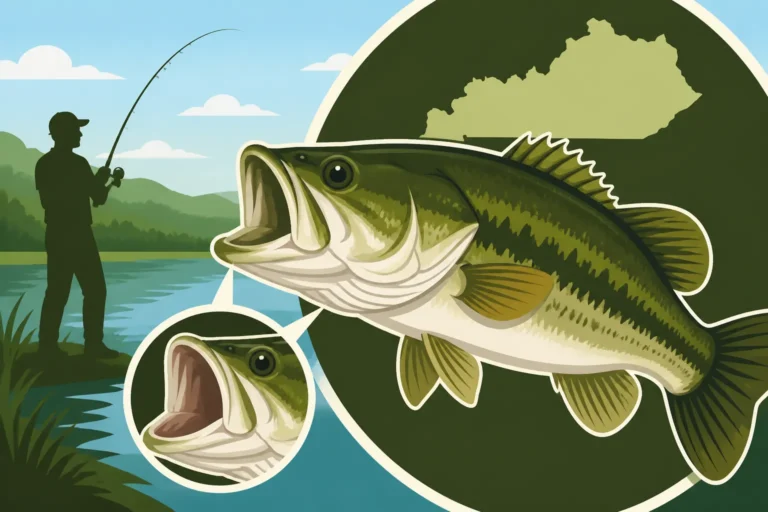
First, look at the jawline. For a spotted bass, the upper jaw, when the mouth is closed, typically does not extend beyond the back of the eye. A largemouth bass, on the other hand, will usually have an upper jaw that extends noticeably past the eye. This is one of the most reliable visual cues. Second, feel their tongue. This might sound a little odd, but spotted bass almost always have a small, rough patch of teeth right in the middle of their tongue. If you run your finger over it gently and feel that sandpaper-like texture, you’ve likely got a spotted bass. Largemouth bass generally have smooth tongues. Lastly, pay attention to their lateral line markings. While both have a dark lateral line, spotted bass often have distinct rows of spots or speckles below this line, particularly on their lower flanks, which give them their name. These spots are usually more pronounced than on a largemouth. Smallmouth bass, in contrast, typically have vertical bars or blotches instead of a solid lateral line or distinct spots. For a deeper dive into the distinctions, check out Spotted Bass Vs Largemouth Bass: How to Tell Them Apart. Knowing these differences isn't just for bragging rights; it's essential for adhering to specific bag and size limits which can sometimes differ by species in certain waters.
Where Kentucky's Spotted Bass Call Home
Spotted bass have a knack for certain types of habitat, and understanding their preferences will greatly improve your chances of finding them. Unlike largemouth bass, which often prefer warmer, weedier, and muddier waters, spotted bass lean towards clearer, cooler, and rockier environments.
In Kentucky's river systems, you'll often find spotted bass congregating in areas with moderate current. They love holding behind current breaks, like large boulders, submerged logs, or bridge pilings, where they can ambush prey without fighting the full force of the flow. Look for them in eddies, around gravel bars, and along rocky banks where the water runs a little swifter and clearer. Rivers like the Cumberland and Green River are classic spotted bass havens, offering the perfect blend of current, rocky structure, and cooler temperatures they prefer. They're also often found in the tailwaters below dams, where the oxygenated, turbulent water and rocky bottom create an ideal feeding ground.
When it comes to lakes, spotted bass tend to inhabit the deeper, clearer reservoirs. They're not as keen on shallow, heavy vegetation as largemouths. Instead, they prefer steep rocky banks, bluff walls, main lake points, and humps that drop off into deeper water. They often relate to hard bottom structures like rock piles, ledges, and submerged timber. Lakes with significant current flow or deep, clear water tend to hold strong populations of spotted bass. Think of the deeper sections of lakes that have strong temperature stratification, especially in the warmer months, where they can find cooler water at depth. Sometimes, they even share waters with smallmouth, particularly in these clear, deep, rocky environments.
Essential Techniques for River-Dwelling Spotted Bass
Fishing for spotted bass in rivers presents a unique set of challenges and opportunities. The current is your friend and your foe, and learning to work with it is key to success.
Navigating Current: Lures and Presentations for Rivers
River fishing for spotted bass often means dealing with varying degrees of current, which dictates your lure choice and presentation. You need baits that can get down quickly, handle the flow, and mimic the forage found in moving water.
Jigs, especially football jigs or finesse jigs with a compact plastic trailer, are absolute staples. They hug the bottom, maintaining contact with the rocky substrate where spotted bass often feed, and their compact profile makes them less susceptible to being swept away by strong currents. Cast them upstream and allow them to bounce and tumble naturally along the bottom as the current carries them downstream. This mimics crawfish or baitfish struggling against the flow. Small crankbaits with a tight wobble, designed to dive quickly, are also excellent choices, particularly those that deflect off rocks. Retrieve these with a stop-and-go action, allowing the current to impart some extra movement. Spinnerbaits, especially those with willow leaf blades, can also be effective in moderate current, providing flash and vibration that spotted bass can key into. When fishing in rivers, consider using a slightly heavier line, like a strong fluorocarbon, which has less stretch and helps you feel subtle bites in the current. You can find a good selection of durable river fishing lures on Amazon that are designed to handle these conditions.
Finding Spotted Bass in River Structure
Spotted bass in rivers are structure-oriented, meaning they relate directly to features that offer shelter, ambush points, or current breaks. Your job is to identify these spots and present your lure effectively.
Look for eddies—those calm pockets of water downstream from an obstruction—as prime holding areas. Spotted bass will sit in the slack water, waiting for baitfish to be swept past by the main current. Cast your lure into the faster current upstream of the eddy and let it drift into the calmer water, where the bass are lying in wait. Rock piles, submerged timber, and undercut banks are also high-percentage spots. Pay particular attention to the "seams" where fast water meets slow water; these are often highways for forage and prime ambush points for spotted bass. Bridge pilings and rip-rap shorelines (rocky banks designed to prevent erosion) are excellent, as they create current breaks and provide abundant hiding spots. When approaching these areas, maintain stealth. Use a trolling motor to quietly position your boat, or if bank fishing, approach carefully to avoid spooking fish in the clear river water. Precision casting is crucial here; you need to place your lure right on the edge of the structure or current break to entice a bite.
Conquering Lakes: Spotted Bass Strategies for Still Waters
Lakes, especially large reservoirs, present a different set of challenges than rivers. Spotted bass in lakes often prefer deeper water and relate to subtle contour changes and offshore structure.
Deep Water Tactics: When Spotted Bass Go Low
When spotted bass retreat to deeper waters, often during brighter days or warmer months, you need tactics to reach them. This is where modern electronics and precision presentations really shine.
Dropshot rigs are incredibly effective for targeting deep spotted bass. This finesse technique allows you to present a small, soft plastic bait at a precise depth above a weight, keeping it suspended right in the fish's strike zone. Use your fish finder to locate schools of baitfish, submerged humps, rock piles, or steep ledges, and then position your boat directly over or near them. Spotted bass often suspend or hug tight to these deep structures. Another excellent deep-water option is a shaky head jig. This rig allows a worm or creature bait to stand vertically off the bottom, presenting a subtle, natural profile that deep-holding spotted bass find hard to resist. Deep-diving crankbaits can also be productive, especially when fished along main lake points, bluff walls, and deep ledges. Focus on crankbaits that can reach the depth where you're marking fish or structure. Learning How to Read a Fish Finder for Bass Fishing will dramatically improve your success rate in these deep-water scenarios. Pay close attention to contour maps and look for areas where the depth changes rapidly, as these transitions are often key ambush points.
Exploiting Lake Structure: Coves, Points, and Humps
Spotted bass in lakes are structure junkies, much like their river counterparts, but the types of structure they relate to might be different. They utilize main lake points, secondary points, submerged humps, and steep drops more often than shallow, weed-choked coves.
During cooler periods or low light conditions, spotted bass might move shallower into coves, but they will still prefer those with rocky bottoms or quick access to deeper water. Points are particularly productive because they act as highways for baitfish and offer multiple depth zones for bass to utilize. Cast your lures across the point, working them from shallow to deep, covering different depths until you find where the fish are holding. Submerged humps, especially those with brush piles or rock formations, are offshore magnets for spotted bass. These can be trickier to find without good electronics, but they often hold large schools of fish. Look for steep bluff walls or rock slides along the main lake channel; these vertical structures provide shade and quick depth changes that spotted bass love. Always consider the time of year and water temperature, as this will influence whether the spotted bass are shallow or deep.
Gear and Lure Choices That Make a Difference
Having the right tackle in your hands can greatly enhance your ability to detect subtle bites and effectively fight these strong fish.
Rods, Reels, and Lines for the Fight
Spotted bass, especially bigger ones, are known for their powerful, sustained runs. Your gear needs to be up to the task of handling this fight while still providing the sensitivity to feel delicate strikes.
For river fishing with jigs and soft plastics, a medium-light to medium power spinning rod with a fast action is often ideal. This setup provides the sensitivity to feel bottom composition and subtle bites, while the fast action gives you good hook-setting power. Pair this with a 2500- or 3000-series spinning reel spooled with 8-12 lb fluorocarbon line, which is nearly invisible underwater and has excellent abrasion resistance—a must when fishing around rocks and timber. For lake fishing, especially with deep-water techniques like dropshotting or shaky heads, the same spinning setup works great. If you're throwing small crankbaits or spinnerbaits, a medium power casting rod with a moderate-fast action might be preferred, giving you a bit more backbone for casting and battling stronger fish. Match this with a baitcasting reel with a medium gear ratio (around 6.x:1) for versatility. Braided line (15-20 lb) with a fluorocarbon leader (8-12 lb) is a popular choice for sensitivity and strength, particularly when fishing around heavy cover. You can find excellent quality rods and reels for spotted bass fishing from brands like Shimano and Daiwa, readily available through retailers like Amazon. For a general overview of appropriate gear, see Best Rods and Reels for Kentucky Fishing.
Top Lures and Baits for Spotted Bass Success
Spotted bass are opportunistic feeders, and they're not typically shy about hitting a variety of baits. However, some lures consistently produce better results than others.
Here's a breakdown of must-have lures:
- Jigs: Football jigs (1/4 to 1/2 oz) with crawfish imitations are deadly on rocky bottoms in both rivers and lakes. Finesse jigs and shaky head jigs are fantastic for deeper, clearer water and when fish are pressured.
- Small Crankbaits: Look for baits that dive to the 6-12 foot range, with natural baitfish patterns (shad, crawfish) or vibrant colors like chartreuse when water is stained. Square bills work well in rivers for deflecting off cover.
- Soft Plastics: Senkos, tubes, grubs, and small worms rigged on a dropshot, shaky head, or Texas rig are incredibly versatile. Experiment with colors, but natural tones (green pumpkin, watermelon seed) are often best in clear water.
- Topwaters: Poppers, walking baits, and small prop baits can be exhilarating during low light conditions or when spotted bass are actively feeding on the surface, especially around points and rocky banks.
- Spinnerbaits: In rivers, a 3/8 oz spinnerbait with willow leaf blades can cut through current effectively, attracting aggressive spotted bass.
When choosing lure colors, always consider the water clarity. Natural colors (greens, browns, clear with flake) are usually best in clear water, while brighter colors (chartreuse, white) can be more effective in stained or muddy conditions. Don't be afraid to experiment with different sizes and actions until you find what the fish are keying in on that particular day. Remember, you can easily stock up on a wide array of these effective spotted bass lures and other Best Tackle for Big Lake Bass Fishing components from online stores like Amazon, ensuring you're ready for any situation on the water.
| Lure Type | Best for Rivers | Best for Lakes | Ideal Conditions |
|---|---|---|---|
| Jigs | Football, Finesse, Shaky Head | Dropshot, Shaky Head, Football | Rocky bottoms, deep structure, clear water |
| Crankbaits | Small square bills, diving crankbaits | Deep-diving crankbaits | Current breaks, ledges, points |
| Soft Plastics | Tubes, grubs, small worms | Dropshot worms, shaky head worms | Finesse situations, deep water, pressured fish |
| Topwaters | Poppers, walking baits | Poppers, walking baits | Low light, calm water, surface activity |
| Spinnerbaits | Willow leaf blades | Willow leaf blades (less common) | Moderate current, stained water, aggressive fish |
Disclaimer
This article is for general informational purposes only and does not constitute professional advice. Laws, prices and regulations vary by location and change over time. Consult a qualified professional for guidance on your specific situation.