What Size Bass Can You Keep in Kentucky?
It's incredibly frustrating to head out to your favorite fishing spot, hook a beautiful bass, and then suddenly second-guess yourself: "Can I even keep this fish? Is it too small? Or too big?" The rules around bass size and daily limits in Kentucky can feel like a moving target, varying not just statewide but sometimes even from lake to lake. This guide is here to untangle that confusion, breaking down the general regulations and highlighting where you need to pay extra close attention so you can fish with confidence and stay on the right side of the law.
Understanding Kentucky's Statewide Bass Size and Daily Limits
When you're out on most public waters across Kentucky, there's a baseline set of rules for keeping bass that most anglers need to be aware of. These are the general guidelines put in place to manage the overall health and population of our beloved black bass species, primarily largemouth, smallmouth, and spotted bass. It's easy to assume that one rule fits all, but even within the statewide framework, there's a careful balance at play.
The General Statewide Bass Regulation
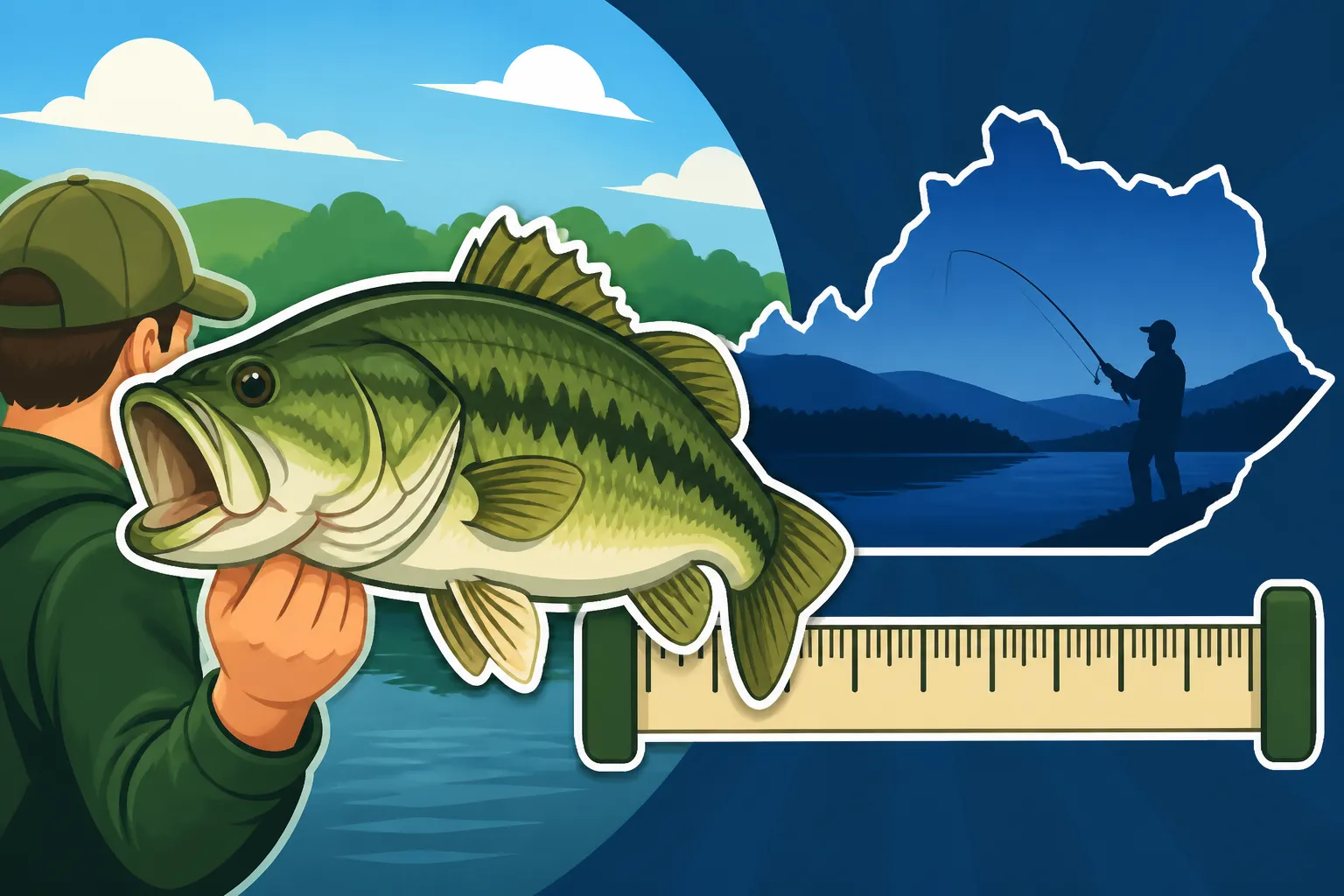
For the vast majority of lakes, rivers, and streams in Kentucky, the standard regulation for black bass—which includes largemouth bass, smallmouth bass, and spotted bass—is a minimum length limit of 12 inches and a daily creel limit of 6 fish. This means any bass you catch that measures less than 12 inches from the tip of its nose to the end of its tail, with the tail squeezed together, must be immediately released back into the water unharmed. And once you've kept six legal-sized bass for the day, your bass fishing for harvest is done, even if you continue to fish for other species.
This 12-inch minimum length limit isn't just a random number; it's a carefully considered management tool. It ensures that bass have a chance to grow to a mature size and, more importantly, to reproduce at least once, sometimes twice, before they're eligible for harvest. This contributes directly to a healthier, more sustainable bass population for everyone to enjoy for years to come. Think of it as investing in the future of Kentucky's bass fishing. Many anglers will carry a small measuring board or even a flexible measuring tape in their tackle box, easily found on Amazon, to make sure they're always in compliance. It's a small item that saves a lot of potential headaches!
The Importance of the Daily Creel Limit
Beyond the length, the daily limit of 6 bass is equally crucial. This regulation helps distribute the harvest among a larger number of anglers, preventing any single individual from putting excessive pressure on the bass population. Imagine if there were no daily limits; a few highly successful anglers could potentially remove a significant number of fish from a lake in a single day, impacting the fishing experience for others and potentially hurting the long-term health of the fishery.
The daily limit isn't just about conservation, it's also about fairness. It ensures that the resource is shared equitably among all anglers. So, whether you're targeting largemouth bass in a big reservoir or smallmouth bass in a rocky stream, that 6-fish daily limit is a constant you can generally count on. It’s a good practice to keep a mental tally, or even a small written note, of the fish you've decided to keep throughout your day. For more information on what other species have limits, check out our guide on Statewide Bag and Size Limits by Fish Species.
Lake-Specific Exceptions: When the Rules Change
While the 12-inch minimum and 6-fish daily limit are good starting points, Kentucky is home to a diverse array of lakes and rivers, each with its unique ecological characteristics and fishing pressure. Because of this, some bodies of water have special regulations that differ from the statewide rules to better manage their specific fish populations. Ignoring these local variations can lead to fines and, more importantly, undermine the efforts to maintain a thriving fishery.
Understanding Slot Limits and Minimum/Maximum Sizes
Some lakes might implement what's known as a "slot limit." This means that fish within a certain size range must be released, while fish both smaller and larger than the slot can be kept. This is often used to protect a specific class of breeding-size fish, allowing them to contribute more to the population before being harvested. Other lakes might have a higher minimum size limit than the statewide 12 inches, or even a maximum size limit, meaning you can't keep fish over a certain length, typically to protect trophy-sized breeding fish.
A prime example that many anglers discuss is Lake Barkley's 15-Inch Bass Size Limit Explained. While the statewide rule is 12 inches, Lake Barkley has a stricter 15-inch minimum for bass. This isn't arbitrary; it's a decision made by fisheries biologists based on studies of that particular lake's bass population, growth rates, and fishing pressure. The goal is often to produce a higher quality fishery with more robust, larger bass for anglers to pursue. It's a trade-off: you might keep fewer fish, but the ones you do catch (and release) have a greater chance of growing into lunkers. This also means you need to be extra diligent with your measuring tape when fishing on Lake Barkley.
Identifying Waters with Special Regulations
How do you know if your chosen fishing spot has special regulations? This is where a little homework goes a long way. The Kentucky Department of Fish and Wildlife Resources (KDFWR) publishes a yearly fishing guide that details all statewide and site-specific regulations. This guide is your best friend when planning a trip. You can often find a physical copy at bait shops, sporting goods stores, or even download a digital version online.
Always make it a habit to check the KDFWR website or the current fishing guide before heading to a new lake or even a familiar one, as regulations can sometimes change from year to year. Ignoring these specific rules, even unintentionally, is still considered a violation. It’s like navigating a new city – you wouldn't just assume all traffic laws are the same as your hometown, right? The same caution applies to fishing regulations. Don't forget, having the right license is also key! Our Kentucky Fishing License Guide can help you get started.
Here’s a simplified comparison of typical bass regulations:
| Regulation Type | Statewide Rule (General) | Example Exception (Lake Barkley) | Purpose |
|---|---|---|---|
| Minimum Length Limit | 12 inches | 15 inches | Ensures fish mature and reproduce, improves overall size structure. |
| Daily Creel Limit | 6 fish | 6 fish | Spreads harvest among anglers, prevents overfishing. |
| Common Bass Species | Largemouth, Smallmouth, Spotted | Largemouth, Smallmouth, Spotted | Target species for these regulations. |
It's important to remember that this table is a snapshot and not exhaustive. Always refer to the most current KDFWR regulations for specific lakes.
Why These Regulations Matter: Protecting Kentucky's Bass Fisheries
The rules and regulations around bass fishing in Kentucky aren't designed to make your life harder, but rather to ensure that the joy of catching these powerful fish continues for generations. Every angler has a role to play in conservation, and understanding and adhering to these limits is a fundamental part of that responsibility.
The Science Behind Fisheries Management
Behind every length limit and creel limit is a team of dedicated fisheries biologists working to understand the intricate ecosystems of Kentucky's waterways. They conduct surveys, collect data on fish populations, growth rates, spawning success, and angler harvest. Based on this scientific information, they recommend regulations that will best protect and enhance the fishery. For instance, a lake that is heavily fished might need a stricter minimum length limit to ensure enough bass survive to reproduce. Conversely, a lake with an overabundance of small, stunted bass might have a more liberal limit to encourage harvest and allow remaining fish to grow larger.
These regulations are dynamic, meaning they can change as conditions in the lake or river change. Factors like water quality, habitat availability, baitfish populations, and even the weather patterns over several years can all influence the health of a bass fishery. It's a complex puzzle, and the regulations are one of the most effective tools we have to manage it. You can learn more about general fish behavior in our How Fish Behavior Changes From Summer to Fall article, which touches on how environmental factors affect fish.
Ensuring Sustainable Fishing for Future Generations
Ultimately, these regulations are about sustainability. They ensure that your children and grandchildren will have the same opportunities, if not better, to experience the thrill of a hard-fighting Kentucky bass. Imagine a world where every angler kept every fish they caught, regardless of size or quantity. The fisheries would quickly collapse, and one of Kentucky's most cherished outdoor traditions would disappear.
By respecting size and creel limits, you're not just avoiding a potential penalty; you're contributing to a larger conservation effort. You're becoming a steward of the resource. This collective effort is what makes Kentucky such a fantastic place to fish. So, before you drop a line, take a moment to review the specific regulations for your chosen body of water. Tools like a fish gripper with an integrated scale from Amazon can help you measure and weigh fish quickly and accurately, minimizing stress on the fish before release. Having a good understanding of Kentucky Fishing Regulations Explained will always serve you well.
The Role of Angler Education and Responsibility
Part of being a responsible angler is taking the initiative to educate yourself. Don't just rely on what you think the rules are or what you heard from a buddy. Go directly to the source. The KDFWR website and annual fishing guide are always the most accurate and up-to-date resources. Many anglers even keep a digital copy of the regulations on their phone for quick reference while on the water.
Beyond knowing the rules, responsible angling also means practicing proper catch-and-release techniques for fish you don't intend to keep or that don't meet the legal requirements. Handle fish gently, minimize their time out of the water, and use appropriate tools like de-hookers to reduce harm. After all, the health of our fish populations directly impacts the quality of our fishing experiences. Knowing What Happens If You Fish Without a License in Kentucky is also important for staying compliant. Always double-check your Kentucky Fishing License Year and Renewal Dates so you're never caught off guard.
Practical Tips for Staying Compliant on the Water
Even with the best intentions, it's easy to get caught up in the excitement of fishing. Having a few practical habits in place can make all the difference in ensuring you always stay compliant with Kentucky's bass regulations.
Always Carry a Measuring Device
This might seem obvious, but you'd be surprised how many anglers try to eyeball a fish's length. Your hand is not a precise measuring tool, and guessing can lead to keeping an undersized fish. A simple, rigid measuring board or a flexible bump board is an inexpensive and essential piece of gear. Many tackle boxes, which you can easily find on Amazon, even come with built-in rulers or designated spots for a measuring tape. When you catch a bass, immediately place it on your measuring device. If it doesn't meet the minimum length, gently release it.
Remember to measure accurately: lay the fish flat on its side, mouth closed against the bump board, and pinch the tail fin together to get the maximum length. It’s also crucial to remember that some fish species, like catfish, have different measuring requirements, sometimes measured to the fork of the tail. For bass, it's always the total length. You can also find great resources on Kentucky's Best Lakes for Muskie Fishing or learn about Kentucky Crappie Daily Limit Rules for other species.
Double-Check Site-Specific Regulations
Before you launch your boat or set up your bank fishing spot, take five minutes to verify the current regulations for that specific body of water. This is especially true if you're fishing a new lake or haven't fished a particular area in a while. Marina offices, local bait shops, and the KDFWR website are your best resources for this. Some lakes might have signage at boat ramps detailing special regulations, but it's always best to consult the official guide.
It’s easy to get excited and just hit the water, but a quick check can prevent a costly mistake. For example, if you're fishing a lake that has a special slot limit for bass, you need to be acutely aware of that before you even make your first cast. Knowing the nuances of Kentucky Fishing Rules by Lake and Water is part of being a prepared angler.
Proper Handling for Release
For those bass that don't meet the legal size, or for fish you simply choose to release, proper handling is key. This means minimizing their time out of the water, supporting their body weight horizontally (especially larger fish), and avoiding touching their gills or eyes. A good pair of fish-friendly pliers or a de-hooker can help you remove hooks quickly and efficiently, further reducing stress on the fish.
Using a rubberized net instead of a knotted nylon net can also help protect a fish's slime coat and fins. The goal is for that released fish to swim away strong and healthy, ready to grow larger and provide another angler with a thrilling fight down the road. Every fish released properly is an investment in the future of Kentucky's incredible bass fishing. If you're new to fishing, our guide on Beginner Mistakes to Avoid When Fishing offers more helpful advice.
Disclaimer
This article is for general informational purposes only and does not constitute professional advice. Laws, prices and regulations vary by location and change over time. Consult a qualified professional for guidance on your specific situation.