Largemouth Bass Size and Growth Rates in Kentucky Lakes
It’s a common scenario: you’re out on a beautiful Kentucky lake, you feel that familiar thump on your line, and you reel in a gorgeous largemouth bass. Immediately, you start to wonder – how old is this fish? Is it a fast grower, or is it already a veteran of these waters? Understanding the size and growth rates of largemouth bass in Kentucky lakes can be a fascinating, albeit sometimes perplexing, aspect of our beloved sport, and this guide is here to shed some light on what influences these magnificent fish.
Understanding Largemouth Bass Growth Factors in Kentucky
The growth of a largemouth bass isn't just a matter of time; it's a complex dance between biology and environment. In Kentucky, we're blessed with diverse waterways, from sprawling reservoirs like Kentucky Lake to smaller, clearer impoundments, and each offers a unique set of conditions that can dramatically affect how quickly a bass reaches that "trophy" size. It's not always about sheer age; often, it's about how good life has been for that particular fish.
The Role of Forage and Water Quality
Think of it like us humans – if you have access to a constant supply of good, nutritious food and a healthy environment, you’re likely to thrive. For a largemouth bass, "good food" means an abundance of forage fish like gizzard shad, threadfin shad, and various sunfish species, particularly bluegill. Lakes with robust populations of these baitfish tend to produce faster-growing, fatter bass. When a lake offers an easy meal, bass expend less energy hunting and more energy growing.
Water quality is another huge piece of the puzzle. Clean, well-oxygenated water allows bass to metabolize food efficiently and remain active. Lakes with good water clarity can also impact feeding strategies, sometimes requiring bass to be more active hunters, which in turn means they need more energy. Fertile reservoirs, often characterized by slightly stained water and a rich food chain, can be prime largemouth nurseries, offering everything a bass needs to pack on the pounds. Compare that to a clearer, less nutrient-rich highland lake where the food chain might be leaner, and you'll often see bass that are still healthy but perhaps grow at a slower rate and aren't quite as heavy for their length. These environmental nuances create the varied fishing experiences we enjoy across the state.
Temperature and Seasonal Influence
Kentucky experiences four distinct seasons, and each plays a significant role in the life cycle and growth rate of a largemouth bass. Warm water is a bass's friend when it comes to growth. During the spring, summer, and early fall, when water temperatures are optimal, a bass's metabolism is high, meaning they digest food quickly and are almost constantly on the hunt for their next meal. This is when they experience their most significant growth spurts. They're actively feeding, building up fat reserves, and generally just living their best, most growth-oriented lives.
As the water cools in late fall and winter, their metabolism slows down dramatically. While they still need to feed, their activity levels decrease, and their growth becomes much slower. It's a period of maintenance rather than rapid expansion. However, even in colder months, a bass still needs to eat, and savvy anglers who understand this seasonal shift can find excellent fishing opportunities. Knowing Kentucky Fishing Seasons: What to Catch Each Month can really help you predict not only when the bite will be best but also when the fish are in their prime growth periods. It’s all interconnected!
Genetics and Population Density
Just like people, not all bass are created equal. Some bass simply have better genetics for growing large. These are the fish that, given optimal conditions, will grow faster and reach impressive sizes. While wild populations naturally have a mix of genetic potential, fisheries management sometimes considers stocking specific strains of bass that are known for their growth potential.
Beyond genetics, population density is a huge, often overlooked, factor. Imagine a buffet: if there are only a few people, everyone can eat their fill. If the room is packed, everyone gets less. The same goes for bass in a lake. If a lake has an overabundance of small bass, there's intense competition for the available forage. This can lead to a phenomenon known as "stunted growth," where many bass in the population remain relatively small because they simply can't get enough to eat to grow larger. Conversely, a lake with a balanced population, where there's enough food to go around, will produce a healthier size distribution, including more larger fish. Fisheries biologists work hard to manage these populations through regulations and stocking efforts to strike that perfect balance, ensuring a sustainable and enjoyable fishery for all of us.
Typical Largemouth Bass Size Ranges Across Kentucky Lakes
When you pull a largemouth bass out of the water, it's natural to wonder how big it should be. While there's no "one size fits all" answer, we can look at typical growth patterns and highlight some of Kentucky's fantastic waters known for producing real lunkers. It’s a bit like asking how tall a child should be at a certain age – there's an average, but individual variations are massive!
Average Length and Weight for Different Ages
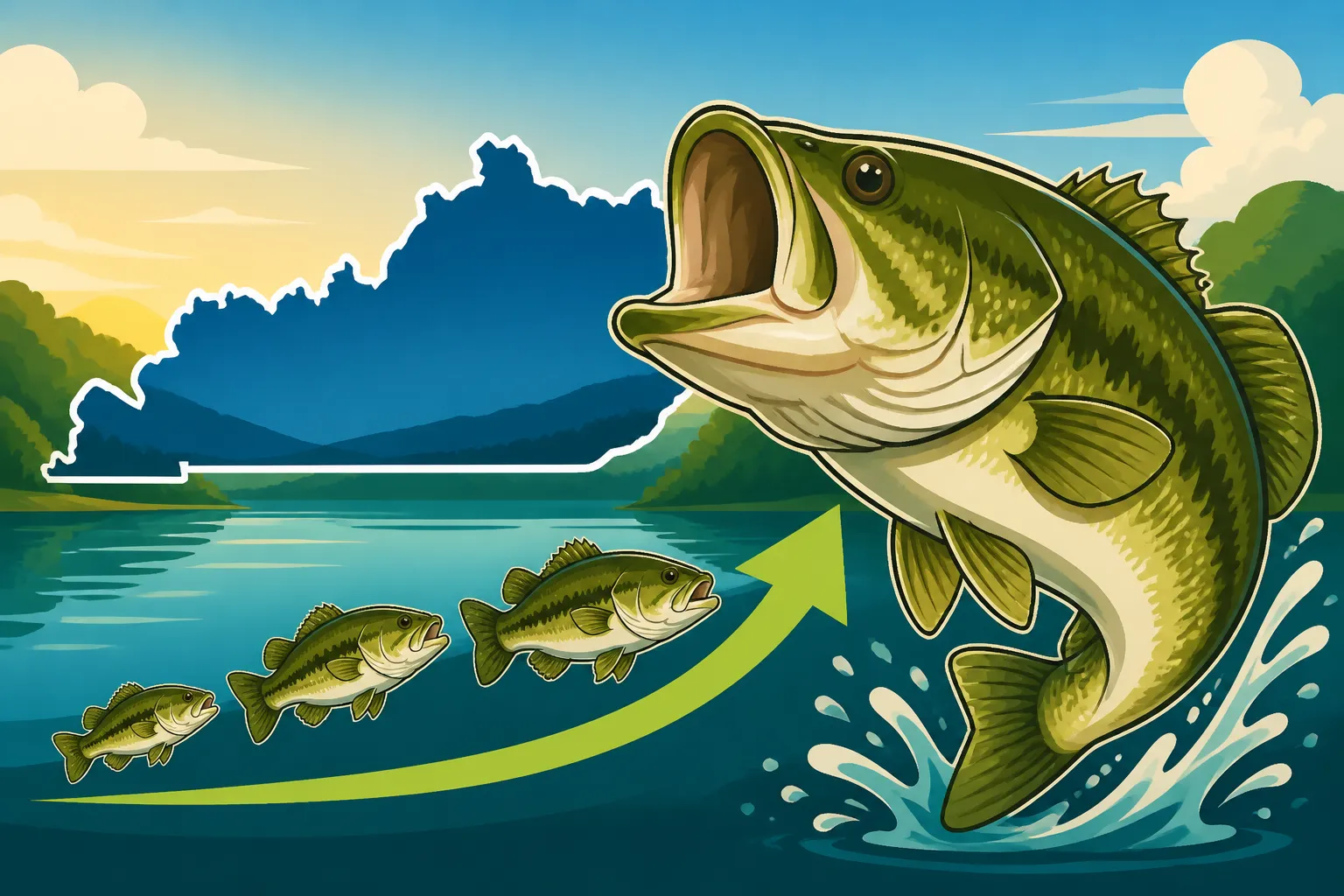
Generally speaking, a largemouth bass will grow rapidly in its first few years if conditions are good. In fertile Kentucky lakes, a bass can often reach 12 inches in length within 2-3 years. From there, growth might slow down a bit, but they continue to add length and, more importantly, girth. A bass that's 15 inches might be 3-4 years old, and a true trophy in the 20-inch range could be anywhere from 5 to 10+ years old, depending on all those factors we just discussed.
Here’s a rough idea of what you might expect, but remember, this is highly variable!
| Age (Years) | Typical Length (Inches) | Typical Weight (Pounds) | Notes |
|---|---|---|---|
| 1 | 6-10 | 0.5 – 1 | Rapid initial growth, focused on survival. |
| 2-3 | 10-14 | 1 – 2.5 | Reaching legal keeper size in many areas, if conditions are good. |
| 4-5 | 14-18 | 2.5 – 4 | Good keeper size, showing solid growth. |
| 6-8 | 18-22 | 4 – 7 | Approaching trophy size, significant girth. |
| 9+ | 22+ | 7 – 10+ | True lunkers, often older, with exceptional growth conditions. |
These numbers are just a guide, of course. A bass in an exceptionally fertile lake with abundant forage might grow faster, while one in a more challenging environment could take longer to reach the same size. That's part of the mystique of bass fishing!
Trophy Bass Potential in Premier Lakes
Kentucky is renowned for its fantastic bass fishing, and several lakes stand out for their ability to produce truly massive largemouths. When anglers talk about trophy bass in our state, names like Kentucky Lake, Lake Barkley, and Lake Cumberland often come up in conversation. These lakes offer a combination of ideal habitat, rich forage bases, and excellent management strategies that allow bass to reach impressive sizes.
Kentucky Lake: The State's Top Bass Fishing Destination is legendary for a reason. Its vast expanses of fertile water, coupled with an incredible shad population and diverse cover, create a perfect environment for largemouths to grow big and fat. Similarly, Lake Barkley Fishing Guide for Kentucky Anglers will tell you that it's another powerhouse, often mirroring Kentucky Lake's excellent conditions and producing equally impressive catches. Lake Cumberland, while perhaps better known for smallmouth, also holds its share of massive largemouth, particularly in its shallower, stump-filled coves. These premier lakes consistently yield bass that push the upper limits of the typical size ranges, offering anglers the chance to hook into the fish of a lifetime.
How Size Limits Influence Growth and Population
You might sometimes scratch your head about all the different rules and regulations for bass, but they're actually crucial for helping these fish reach their full potential. In Kentucky, for instance, a common regulation is a 12-inch minimum size limit for largemouth bass. This rule means that any bass shorter than 12 inches must be immediately released. The idea behind this is simple: it allows younger bass to grow, mature, and reproduce at least once before they can be harvested. This helps ensure future generations of bass and contributes to a healthier overall population.
On some specific lakes, you might encounter different rules, such as slot limits. A slot limit might say, for example, that you can keep bass under 12 inches and over 16 inches, but must release anything in between. This is often implemented to protect a certain size class of fish that are considered prime spawners or fast growers, ensuring they have the opportunity to contribute to the lake's genetics. A great example of this careful management is the Lake Barkley Bass Size Limit Exception in Kentucky, which demonstrates how specific regulations are tailored to the unique needs of each fishery. Understanding Kentucky Statewide Bass Size and Daily Limit Rules and checking for site-specific exceptions is key to being a responsible angler and helps ensure that Kentucky's bass continue to thrive and grow.
What to Expect When Catching Largemouth Bass in Kentucky
Every time you hook a largemouth bass in Kentucky, it’s a moment of excitement. But beyond the thrill of the fight, there are little details that can tell you a lot about the fish you’ve just caught. Learning to read these cues and handle your catch responsibly not only deepens your appreciation for the sport but also contributes to the health of our fisheries.
Visual Cues for Age and Health
When you bring a bass to the boat, take a moment to really look at it. You can often get a sense of its general age and health. A younger, fast-growing bass will typically have a sleeker, more torpedo-shaped body with a head that appears proportionate to its length. These fish often have vibrant colors and a healthy, tight appearance. Their fins might look almost too big for their body, indicative of recent growth.
On the other hand, an older, more mature bass, especially a true lunker, will often have a much thicker, deeper body – sometimes described as "football-shaped." Their heads might look relatively smaller compared to their overall mass, and their fins might show signs of wear and tear from years of fighting and spawning. A truly healthy bass, regardless of age, will have a good, plump belly, indicating it's feeding well. Their scales will be clean, and their colors will be sharp, reflecting the healthy environment they live in. These visual cues are part of the fun of connecting with nature and understanding the life in our waters.
How to Measure and Weigh Your Catch Accurately
So, you've caught a bass and you want to know if it's a keeper, or just how big it really is before you release it. Accurate measuring and weighing are important, especially if you're trying to compare your catch to state records or just your personal best! For length, lay the fish flat on a measuring board or tape. Close its mouth and gently squeeze the tail lobes together to get the maximum length. For weight, a quality digital scale is your best friend. Many anglers use a lip-gripper scale that allows you to weigh the fish without causing undue stress, especially if you plan to release it. You can find excellent options on Amazon for digital scales and measuring boards that are specifically designed for anglers.
When handling fish for measurement and release, always prioritize the fish's well-being. Wet your hands before touching the fish to protect its slime coat, and support its body horizontally, especially larger fish, to avoid jaw damage. Minimizing its time out of water increases its chances of survival. Being prepared with the right tools, readily available from retailers like Amazon, helps ensure you can quickly get your measurements and get the fish back into the water unharmed.
Record-Setting Largemouth Bass in the Bluegrass State
Kentucky has a proud history of producing incredible largemouth bass, and every once in a while, a fish comes along that truly makes headlines. The state record largemouth bass is an awe-inspiring catch, representing a confluence of perfect genetics, an ideal environment, and perhaps a bit of luck for the angler who landed it. These record-setting fish are typically many years old, having evaded countless predators and anglers, and thriving on the rich forage available in our best lakes.
While most of us will never catch a state record, the pursuit of these giants adds an exciting dimension to fishing. Every bass, whether it's a feisty 12-incher or a respectable 5-pounder, offers a unique challenge and a story. Understanding the growth potential of bass in Kentucky helps us appreciate the health of our waters and the fantastic opportunities they provide. Knowing What Size Bass Can You Keep in Kentucky? is a good starting point, but aiming for that personal best is always the real goal! The beauty of Kentucky fishing is that you never know what magnificent creature might be waiting just below the surface.
Conservation and Sustainable Practices for Healthy Bass Populations
As anglers, we're not just users of Kentucky's incredible fishing resources; we're also their stewards. Ensuring that future generations can enjoy the same thrilling largemouth bass fishing we do means embracing conservation and sustainable practices. It’s about more than just catching fish; it’s about protecting the entire ecosystem that allows them to thrive.
The Importance of Catch and Release
Catch and release has become a cornerstone of modern bass fishing, particularly when it comes to larger, trophy-sized fish. Releasing these bigger bass back into the water is crucial for several reasons. First, they are often the most prolific spawners, carrying the strong genetics that contribute to a healthy and robust bass population. By releasing them, we allow them to continue reproducing, passing on those desirable traits to future generations. Second, it helps maintain a good size structure in the lake, ensuring that there are always plenty of larger fish for anglers to target, enhancing the trophy potential of the fishery.
When practicing catch and release, proper handling is paramount. Keep the fish in the water as much as possible. If you must remove it, do so quickly, using wet hands to protect its protective slime coat. Support its entire body weight horizontally, avoiding hanging it by the jaw, which can cause internal damage. A quick photo, a gentle release, and watching that fish swim away strongly is one of the most rewarding parts of bass fishing.
Understanding and Following Regulations
Kentucky's fishing regulations aren't just arbitrary rules; they are carefully crafted by fisheries biologists to protect and enhance our fish populations. These regulations, which include size limits, daily creel limits, and season restrictions, are based on scientific data about fish growth, reproduction, and population dynamics. They ensure that enough fish survive to spawn and that the population remains healthy and balanced.
It's absolutely vital for every angler to understand and follow these rules. Kentucky Fishing Regulations Explained provides a comprehensive overview, but it’s always a good idea to check the most current regulations for the specific body of water you're fishing, as rules can vary from lake to lake. For example, while there might be a statewide bass limit, a particular lake might have a special slot limit or daily creel restriction. Make sure you have your Kentucky Fishing License Guide in order, too, as this is the first step to legally enjoying our waters. By adhering to these guidelines, we contribute directly to the long-term health and abundance of Kentucky's bass fishery.
Habitat Preservation and Its Impact
You can have all the right regulations and the best catch-and-release practices, but without healthy habitat, fish simply can't thrive. Bass rely on a variety of aquatic structures for survival, including submerged timber, rock piles, aquatic vegetation, and even man-made structures like docks and brush piles. These habitats provide cover from predators, ambush points for hunting prey, and critical spawning areas.
Protecting these habitats, and even enhancing them through conservation efforts, is essential. Anglers can play a role by participating in lake clean-up days, contributing to organizations that build and place artificial habitat, and simply being mindful of their impact on the environment. Avoiding littering and being careful not to damage aquatic vegetation are small but meaningful ways we can all contribute. Keeping your gear organized, perhaps with a sturdy tackle box from Amazon, can help prevent accidental spills or lost items in the water. Ultimately, a healthy bass population starts with a healthy lake, and that's something we all have a stake in.
Disclaimer
This article is for general informational purposes only and does not constitute professional advice. Laws, prices and regulations vary by location and change over time. Consult a qualified professional for guidance on your specific situation.