Longear Sunfish Identification Guide for Beginners
Have you ever been out on a beautiful Kentucky lake or stream, caught a brightly colored fish, and thought, "Is this a bluegill? A green sunfish? Or something else entirely?" It's a common moment of confusion for many anglers, especially when it comes to the dazzling world of panfish. This guide is dedicated to helping you confidently identify one of Kentucky's most striking and spirited little fighters: the Longear Sunfish, so you'll never wonder what you've hooked again.
Why Longear Sunfish Are Worth Knowing and Catching!
Before we dive into the nitty-gritty of identification, let's take a moment to appreciate the Longear Sunfish. These aren't just any "sunnies" you pull from a pond; they are truly miniature jewels of our waterways. Learning to spot them is part of the joy of understanding Kentucky's diverse fish populations.
More Than Just a "Panfish"
While they're often lumped into the generic "panfish" category alongside bluegill and crappie, Longear Sunfish stand out with their incredible beauty and surprisingly feisty attitude. They might not grow to be giants, but for their size, they put up a fantastic fight on light tackle, making them an absolute blast to catch. For families just getting into fishing, or even seasoned anglers looking for some consistent action, Longears offer a fantastic experience. Their vibrant colors alone are enough to make you smile, often rivaling some of the most exotic tropical fish you might see in an aquarium! They're proof that some of the greatest fishing thrills come in small packages.
Habitat: Where You'll Find Them Hiding
Knowing where to look is half the battle when trying to identify a fish in the wild. Longear Sunfish absolutely love clear, shallow water, especially where there's plenty of submerged vegetation, rocky cover, or woody debris. You'll often find them in the quiet coves of larger lakes, slow-moving streams, and smaller rivers throughout Kentucky. They aren't usually found in turbid (muddy) waters or incredibly fast currents. Think about those serene spots where sunlight penetrates to the bottom, allowing aquatic plants to flourish – that's prime Longear territory. If you're Bank Fishing Techniques for Beginners and targeting areas with lily pads, fallen logs, or a rocky shoreline, you're likely in a good spot to encounter these colorful fish. They thrive in environments where they can ambush small prey and quickly duck for cover from larger predators.
Key Physical Characteristics of the Longear Sunfish
Okay, let's get down to business. What exactly should you be looking for when you pull one of these beauties from the water? It's all about the details, and the Longear Sunfish has some truly distinguishing features.
The Elongated "Ear Flap" (Opercular Flap)
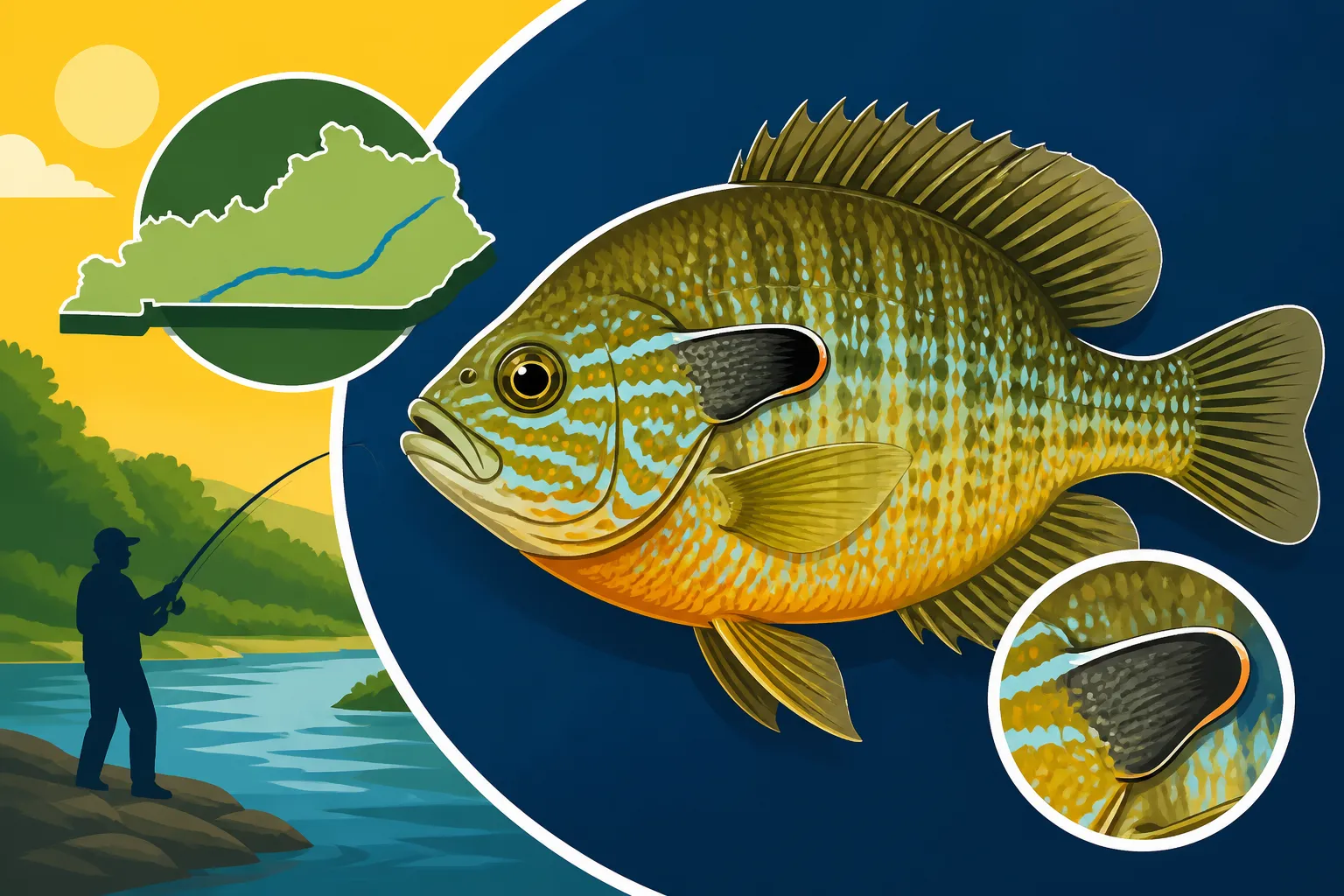
This is the absolute giveaway, the feature that gives the Longear its very name. Look at the gill cover, specifically the bony extension that projects backward from it. In a Longear Sunfish, this "ear flap" (technically called the opercular flap) is noticeably long and flexible, often extending well past the actual gill cover and sometimes even a bit beyond the pectoral fin base.
But it's not just the length; it's the color. The Longear's flap usually has a distinct, bright, and often wavy margin of reddish-orange, white, or pale yellow. It’s like a tiny, iridescent ribbon or fringe along the edge of the black or dark gray flap itself. This colorful rim is a critical identifier that sets it apart from many other sunfish species, which might have a short, solid black ear flap, or no distinct flap at all. This feature is particularly pronounced in mature males, which will often display the most vivid colors.
Vibrant Coloration: A Splash of the Rainbow
The Longear Sunfish is, without a doubt, one of Kentucky's most colorful freshwater fish. While the exact shades can vary depending on the fish's sex, age, and even the clarity and composition of the water it inhabits, you'll generally see a magnificent display of blues, oranges, reds, and greens.
The body often has a base color of olive-green to blue-green on the back, fading to vibrant orange, red, or yellow on the flanks and belly. The sides are frequently adorned with wavy, iridescent blue or turquoise streaks and spots, particularly on the head and gill covers. Mature males, especially during the spawning season, will be absolutely breathtaking, boasting the deepest blues and fiery oranges. Females and younger fish tend to be a bit more subdued, but still retain much of that signature Longear brilliance. These colors aren't just pretty; they serve as a unique fingerprint for this species.
Body Shape and Fin Structure
Beyond the colors and the ear flap, the overall body shape and fin details can help solidify your identification.
Longear Sunfish have a relatively deep, compressed body, meaning they are tall and thin when viewed from the front, much like a disc. Their profile is quite rounded. Their mouth is moderately sized, not as large as a largemouth bass, but certainly larger than a bluegill's, capable of taking in a variety of insects and small aquatic invertebrates. You'll also notice their pectoral fins (the pair of fins on their sides, just behind the gills) are typically pointed and somewhat long. Their dorsal fin (the fin on their back) is continuous, meaning it doesn't have a deep notch separating the spiny front portion from the soft-rayed back portion, a characteristic shared with many sunfish but still helpful to note.
Distinguishing Longear Sunfish from Lookalikes
Now, here's where things can get a little tricky, because Kentucky waters are home to several sunfish species that can resemble the Longear. But with a keen eye for those key details, you'll be able to tell them apart.
Longear vs. Green Sunfish: The Ear Flap and Mouth Size
This is perhaps the most common confusion. Green Sunfish can also have some beautiful iridescent markings and a dark ear flap. However, there are two primary differences.
First, the ear flap: While the Green Sunfish has a dark ear flap, it's typically much shorter and stiffer than the Longear's, usually extending just to the edge of the gill cover, or only slightly beyond. Crucially, the Green Sunfish's ear flap rarely, if ever, has that bright, colorful fringe that the Longear boasts. It's usually a solid black or dark margin.
Second, the mouth: Green Sunfish Vs Longear Sunfish: How to Tell Them Apart often highlights that the Green Sunfish has a noticeably larger mouth, extending back to or even beyond the middle of the eye. The Longear's mouth is smaller, typically stopping before the middle of the eye. If you catch a fish that has a huge "bucket mouth" for a sunfish, it's probably a Green Sunfish.
Longear vs. Bluegill: The Missing Spot
Bluegill are arguably the most common and recognizable sunfish, but they are frequently mistaken for Longears and vice-versa.
The most obvious difference is the ear flap. A Bluegill's opercular flap is typically short, rigid, and entirely black, with no colorful margin. It really looks like a solid black "ear." In contrast, remember the Longear's long, flexible flap with its vibrant, wavy edge.
Coloration also differs. While Bluegill can be quite pretty, especially spawning males with their dark blue heads and orange bellies, they lack the intricate blue streaks and fiery red/orange hues of the Longear. Bluegill often have distinct dark vertical bars on their sides, which Longears generally lack.
Finally, look for a prominent black spot at the base of the dorsal fin on a Bluegill – this spot is absent or very faint on a Longear. If you're looking for Bluegill Fishing Tips for Beginners, knowing this distinction will help you target the right species.
Other Sunfish: Redbreast, Redear, and Warmouth
Kentucky is a melting pot of sunfish species, each with its own charm.
The Redbreast Sunfish has an exceptionally long, narrow, and often entirely black ear flap, much longer than a Longear's but lacking the colorful margin. As its name suggests, it also has a prominent red or orange breast.
The Redear Sunfish, also known as a "Shellcracker," has a small, dark opercular flap with a distinct red or orange spot on its posterior edge. It's much less flamboyant in body color than the Longear. Knowing Redear Sunfish: Why Anglers Call It a Shellcracker helps you understand its diet and identification.
The Warmouth is chunkier, with a more mottled, brownish coloration, and often has distinct stripes radiating from its eye. Its ear flap is usually short and dark. These fish are more akin to small bass in appearance and behavior. For more on this, check out Rock Bass Vs Warmouth: Key Differences.
Here's a quick comparison table to help keep these common sunfish straight:
| Feature | Longear Sunfish | Green Sunfish | Bluegill Sunfish |
|---|---|---|---|
| Ear Flap | Long, flexible, with red/orange/white margin | Shorter, stiff, solid dark margin | Short, stiff, entirely solid black |
| Mouth Size | Moderate, usually not past eye | Large, often past middle of eye | Small, well before eye |
| Body Color | Very vibrant blues, oranges, reds, wavy streaks | Olive green, yellow belly, sometimes blue spots | Olive-blue to dark green, vertical bars |
| Dorsal Fin Spot | Absent or very faint | Absent | Often a prominent black spot |
| Body Shape | Deep, compressed, rounded | Robust, slightly more elongated | Deep, compressed, rounded |
| Pectoral Fins | Pointed, somewhat long | Rounded | Rounded |
Size, Diet, and Behavior
Beyond just looks, understanding how Longear Sunfish live can deepen your appreciation for them and even help you catch more!
How Big Do They Get in Kentucky?
While Longear Sunfish are generally considered a small panfish, typically ranging from 4 to 7 inches in length, don't let their average size fool you. A truly large Longear can approach 9 or 10 inches, especially in prime habitats with abundant food. While they won't compete with the Kentucky's Blue Catfish State Record Explained for sheer mass, a 9-inch Longear is a fantastic catch on light tackle and provides a delicious meal. They don't typically grow as large as their cousin, the Bluegill, which can push past a pound in ideal conditions, as discussed in How Big Do Bluegill Get in Kentucky?, but what they lack in size, they make up for in beauty and fight.
What Do Longears Eat? (And What This Means for Anglers)
Longear Sunfish are opportunistic feeders with a diet that primarily consists of aquatic insects (larvae and adults), small crustaceans like scuds and crayfish, tiny snails, and sometimes even small fish fry. They're active hunters in their shallow, vegetated domains.
This varied diet is great news for anglers, as it means they'll strike at a wide array of small baits and lures. Think tiny offerings that mimic their natural food sources. This knowledge helps you choose the right presentation, whether you're using live bait or artificials.
Behavior and Best Fishing Times
Longears are quite active and aggressive, especially for their size. They often school up in loose groups, particularly during the warmer months and when feeding. They are very territorial during the spawning season, with males fanning out nests in shallow areas and aggressively guarding them.
You'll find them most active during the day, particularly in the mornings and evenings when light levels are a bit lower, but they'll often bite throughout the day in shaded or deeper areas. Like many fish, their activity can be influenced by weather patterns, but generally, if you find them, they'll be willing to bite. While Why Dawn Is the Best Time to Fish for Bass is often true for larger game fish, the same principle of lower light and cooler temperatures applies to Longears, making early mornings and late afternoons prime times.
Essential Gear for Catching Longear Sunfish
You don't need a boatload of expensive gear to have a blast catching Longear Sunfish. In fact, simple is often best!
Simple Setups for Success
For Longear Sunfish, ultralight spinning gear is absolutely ideal. A light-action rod (around 5-6 feet) paired with a small spinning reel spooled with 2-4 pound test line offers the perfect combination for feeling those subtle bites and enjoying the fight. The sensitivity of ultralight gear makes even a small Longear feel like a trophy.
Of course, if you're going for pure nostalgic fun, a cane pole with a small bobber is a classic and highly effective way to catch them, especially for beginners or kids. If you're interested in traditional methods, check out How to Catch Bluegill With a Cane Pole for some great tips that apply equally well to Longears.
Baits and Lures They Can't Resist
Longear Sunfish aren't particularly picky, which is one of their most endearing qualities.
Live Bait: Small worms (redworms, mealworms, wax worms) are always a winner. Crickets are another fantastic choice, especially in late spring and summer. A tiny minnow can also be irresistible.
Artificial Lures: Tiny jigs (1/32 to 1/64 ounce) tipped with a small plastic grub or even just a bare feather are incredibly effective. Small inline spinners, especially those with a hint of red or orange, also work wonders. Fly fishing with small poppers or wet flies can be a real treat too. You can find a huge variety of small jigs, plastic grubs, and ultralight spinners on Amazon that are perfect for these fish. I often check Amazon for specific small tackle that might not be available at my local bait shop. Don't be afraid to experiment with different colors and retrieve speeds to see what they're hitting on that particular day!
Conservation and Responsible Angling
Enjoying the sport of fishing also means being a good steward of our natural resources. Catching Longear Sunfish is part of the experience, but doing so responsibly ensures these vibrant fish continue to thrive for years to come.
Protecting Kentucky's Vibrant Fisheries
While Longears are abundant, it's always good practice to know the general rules for panfish. Kentucky typically has generous limits for sunfish, but it's important to be aware of any specific regulations for the water body you're fishing. Always consult the current Kentucky Fishing Regulations Explained before heading out. If you're practicing catch and release, handle these beautiful fish gently, especially because their colors make them so appealing to photograph. Use wet hands to minimize harm to their protective slime coat, and get them back in the water quickly. It's a small effort that goes a long way in ensuring the health of the population. Understanding Statewide Bag and Size Limits by Fish Species will help you stay within legal bounds and contribute to healthy fish populations.
Keeping an Eye on Water Quality
The presence of healthy Longear Sunfish populations is often an indicator of good water quality and a thriving aquatic ecosystem. They prefer clear waters, and their brilliant colors are typically most vivid in clean environments. As anglers, we all have a role to play in keeping our waterways pristine. This means packing out all trash, avoiding litter, and being mindful of any potential pollutants. When we protect their habitat, we ensure that future generations can continue to enjoy the beauty and fight of the Longear Sunfish.
So, the next time you're out on a Kentucky lake or stream, keep an eye out for that distinctive, brightly colored ear flap and the brilliant hues of blue and orange. You'll not only be identifying a Longear Sunfish, but you'll also be connecting more deeply with the amazing diversity of Kentucky's aquatic life. These little fighters are truly a joy to behold and an absolute blast to catch.
Disclaimer
This article is for general informational purposes only and does not constitute professional advice. Laws, prices and regulations vary by location and change over time. Consult a qualified professional for guidance on your specific situation.