Nonresident Anglers Crossing Border Waters From Neighboring States
Oh, the joy and confusion of fishing border waters! It's a common headache for anglers, especially those of us who love to explore the rich fisheries around Kentucky but aren't residents. You're standing on the bank, or even in a boat, and you can practically cast a line into another state. The big question always pops up: "Do I need another license?" This guide is all about untangling the rules and frustrations that come with being a nonresident angler trying to enjoy Kentucky's fantastic border waters alongside its neighboring states. We'll dive deep into specific agreements, common pitfalls, and practical advice to ensure your next fishing trip is all about catching fish, not fines.
The Murky Waters of Border Fishing Licenses
It's one of those uniquely frustrating situations, isn't it? You've packed your gear, driven for hours, and you're finally at a beautiful lake or river that clearly separates two states. Your mind races – is this one of those magical places where one license covers both sides, or am I risking a hefty fine just by drifting a few feet too far? This isn't just about drawing an arbitrary line on a map; it's about the very real implications for your wallet and your peace of mind.
Defining "Border Water" in Kentucky's Eyes
When we talk about "border water," it's not simply any body of water that happens to be near a state line. Legally, it refers to specific lakes and rivers where Kentucky has an official agreement with a neighboring state regarding fishing licenses. These agreements, known as reciprocity agreements, are designed to make it easier for anglers to enjoy shared natural resources without the burden of purchasing multiple state licenses. However, these agreements aren't universal, and they often come with their own specific caveats and limitations. For instance, the main stem of the Ohio River might have different rules than a large reservoir like Dale Hollow Lake, even though both share a border with Kentucky. It's crucial to understand that merely sharing a border doesn't automatically mean license reciprocity. Each body of water and each state pairing needs to be looked at individually, because the rules can be surprisingly nuanced.
Why Reciprocity is a Big Deal for Nonresidents
Imagine this: you've spent weeks planning a fishing vacation to a prime spot like Lake Barkley, which straddles Kentucky and Tennessee. You've got your Kentucky Nonresident Annual Fishing License Costing $58.14, your tackle box is brimming, and you're ready to hit the water. But then you realize that the best bass structure or crappie bed is just across the state line in Tennessee. Without reciprocity, you'd need to buy a separate Tennessee fishing license, adding unexpected costs and administrative hassle to your trip.
Reciprocity agreements are put in place precisely to avoid this kind of double-dipping requirement, making it more convenient and cost-effective for anglers to access the entirety of a shared fishery. They foster interstate cooperation, promote tourism, and, frankly, reduce headaches for everyday folks who just want to fish. However, the catch (pun intended) is that these agreements are highly specific. They often dictate not just which waters are covered, but also who is covered (e.g., residents vs. nonresidents), and even how you can fish (e.g., if you launched your boat from one state, does that matter?). Ignoring these details can quickly turn a relaxing day on the water into a tense encounter with a game warden.
Navigating Reciprocity with Kentucky's Neighbors
Kentucky is truly blessed with fantastic fishing opportunities, many of which are found in waters shared with neighboring states. But each border comes with its own set of rules, and understanding them is key to a legal and enjoyable trip.
Fishing the Ohio River: Ohio, Indiana, and Illinois
The Ohio River is a massive waterway that forms a significant portion of Kentucky's northern border, touching Ohio, Indiana, and Illinois. This is where reciprocity agreements are perhaps most frequently encountered and also most often misunderstood.
Generally, if you hold a valid fishing license from Kentucky, Ohio, or Indiana, you are permitted to fish the main stem of the Ohio River that is shared by these states. This means a Kentucky license typically allows you to fish from the Kentucky bank out to the Ohio or Indiana bank, and vice versa. However, there's a critical distinction: this usually applies only to the main stem of the river. It does not extend to tributaries, embayments, or oxbow lakes that might be entirely within one state's boundary, even if they're directly adjacent to the Ohio River. For example, if you drift into a creek that's clearly marked as being entirely within Ohio, you'll need an Ohio license, regardless of your Kentucky permit. For specific details on these agreements, it's always smart to review the information for Ohio Anglers Fishing in Kentucky Waters or Indiana and Illinois Anglers Fishing Kentucky Waters.
When it comes to Illinois, Kentucky shares a section of the Ohio River with them near the western part of the state. The principle is generally similar: a valid license from either state should cover you for fishing the main stem of the Ohio River in those shared stretches. However, never assume. Always double-check the latest regulations from both Kentucky Department of Fish and Wildlife Resources (KDFWR) and the Illinois Department of Natural Resources to confirm the specifics. These rules can sometimes be updated, and what was true last year might have a slight modification this season.
The Kentucky-Tennessee Line: Dale Hollow and Kentucky Lake
The southern border of Kentucky shares some truly iconic fishing destinations with Tennessee, most notably Dale Hollow Lake and the massive Kentucky Lake. These lakes are legendary, but their shared status makes licensing a frequent point of confusion.
For Dale Hollow Lake, Kentucky and Tennessee actually have a fantastic reciprocal agreement. If you possess a valid resident or nonresident fishing license from either state, you are generally permitted to fish the entire lake, regardless of which side of the state line you're on. This is a huge convenience for anglers, allowing seamless movement across the lake's fantastic smallmouth bass and walleye waters. However, there are typically conditions, such as obeying the regulations (size limits, creel limits) of the state in whose waters you are physically fishing at that moment. So, if you're in Tennessee waters, Tennessee's specific limits apply, and vice versa for Kentucky waters. You can find more detailed rules on Tennessee-Kentucky Fishing License Reciprocity Rules and general advice for Fishing Border Lakes Shared With Tennessee.
Kentucky Lake is another jewel, but its reciprocal agreement is a bit different. While it also straddles both states, its sheer size and different management priorities have led to distinct regulations. Generally, a Kentucky fishing license is valid for the Kentucky portion of the lake, and a Tennessee license for the Tennessee portion. There isn't the same "fish the whole lake with one license" agreement as with Dale Hollow. This means if you launch your boat in Kentucky and then motor into Tennessee waters, you will need a valid Tennessee fishing license to avoid issues. This often means anglers targeting specific areas or moving frequently between the states will opt to purchase licenses for both states, just to be safe. It’s a common scenario where anglers might browse for a good waterproof map on Amazon to mark out the state line on their electronics, ensuring they stay compliant or know when to switch licenses.
Other Border States: Missouri, Virginia, West Virginia
While the Ohio River and the Kentucky-Tennessee border lakes get a lot of attention, Kentucky also shares borders with Missouri, Virginia, and West Virginia, each with its own specific situation.
Along the western edge, Kentucky shares a small stretch of the Mississippi River with Missouri. The main channel of the Mississippi River typically has a reciprocal agreement. This means a valid fishing license from either Kentucky or Missouri should allow you to fish the shared waters of the main river. Similar to the Ohio River, this typically doesn't extend into tributaries or oxbow lakes that are entirely within one state's jurisdiction. Anglers coming from Missouri, Virginia, and West Virginia need to be particularly mindful of these nuances.
For Virginia and West Virginia, Kentucky's eastern border is primarily defined by the Appalachian Mountains and smaller river systems. While there may be some localized agreements for specific small streams or reservoirs that cross state lines, comprehensive statewide reciprocity agreements for large, shared fishing waters are less common here compared to the Ohio River or Dale Hollow Lake. In most cases, if you intend to fish in a body of water that is entirely or predominantly within Virginia or West Virginia, even if easily accessible from Kentucky, you will likely need a separate license from that state. Always check the KDFWR site and the respective state's wildlife agency for the most current information. The best advice here is if you're ever in doubt, it's far better to err on the side of caution and secure the appropriate license for the state whose waters you plan to fish.
Avoiding Common Pitfalls and Ensuring Compliance
Nobody wants their peaceful day of fishing interrupted by a game warden because of a licensing misunderstanding. Border waters are notorious for creating these kinds of situations, so let's talk about how to keep your trip smooth and legal.
The "Launch State" vs. "Fishing State" Conundrum
This is perhaps the most common source of confusion and frustration on shared waters. Many anglers mistakenly believe that if they launched their boat from a ramp in Kentucky, their Kentucky fishing license automatically covers them no matter where they go on a shared lake or river. This is often not the case.
For many border water agreements, especially on large lakes like Kentucky Lake or even stretches of the Ohio River, your license is only valid for the waters within the state that issued it. So, if you launch your boat from a Kentucky ramp and then motor into Tennessee waters on Kentucky Lake, you absolutely need a Tennessee fishing license. The same applies if you launch in Tennessee and fish Kentucky waters – you'd need a Kentucky license. This distinction is vital and often catches anglers by surprise. It's not about where your boat is registered or where you started your day; it's about the geographical coordinates of where your line is in the water. Game wardens from both states have jurisdiction in their respective waters, and they will enforce their state's laws.
When in Doubt, Buy Both
Seriously, this is the golden rule for border water fishing. If you're planning a trip to a body of water that straddles two states, and you're unsure about the exact reciprocity rules, or you know you'll be crossing state lines frequently, the simplest and safest option is to purchase a valid fishing license for both states.
Think of it this way: a Kentucky Nonresident 1-Day Fishing License Costs $15.86, and a 7-day is $37. While it's an added expense, it's typically far less than the penalties for fishing without a license. Penalties for Fishing Without a License in Kentucky can include significant fines, court costs, and even the confiscation of your gear and catch. The peace of mind alone is worth the investment. You can often purchase these licenses easily online through the state's wildlife department website, or at local bait shops near the border. Some anglers even keep a spare license holder or lanyard, picked up from Amazon, with both licenses ready to go, just in case. It's a small precaution that saves a lot of potential grief and ensures you can focus on the fishing. For a comprehensive overview, checking a Kentucky Fishing License Guide is a great first step, followed by how to get a How to Get a Fishing License in Kentucky online or in person.
What Game Wardens Look For
When a game warden pulls up to your boat or approaches you on the bank in border waters, they're typically looking for a few key things to ensure compliance:
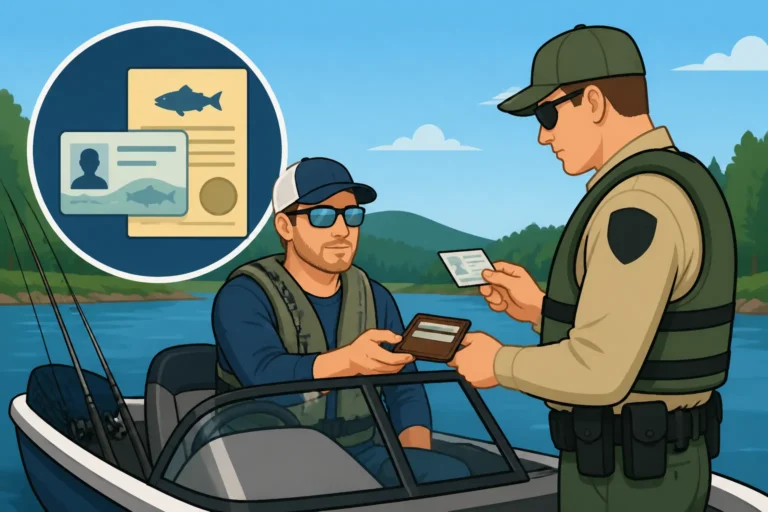
- Valid Fishing License: This is number one. They'll ask to see your license, and it needs to be current and applicable to the waters you're fishing. If you're on a border water, they'll want to see proof you're licensed for their state's portion of the water, or proof of a reciprocal agreement.
- Proof of Identity: They'll often ask for a driver's license or other photo ID to verify that the name on your fishing license matches you.
- Compliance with Regulations: Beyond just the license, they'll check for adherence to size limits, daily bag limits, and gear restrictions for the species you're targeting. These rules can sometimes vary slightly even within reciprocal agreements, depending on which state's waters you are in.
- Boat Registration and Safety Gear: If you're in a boat, they'll also check your boat's registration, and ensure you have all required safety equipment, such as life jackets for every occupant (especially kids, as per Kentucky Life Jacket Law for Kids Under 12) and a fire extinguisher.
The best way to handle a warden stop is to be polite, cooperative, and have all your documents readily accessible. You can often show a digital copy of your license on your phone, but it's always a good idea to have a printed backup, especially when considering Digital vs Printed Kentucky Fishing License on the Water and the possibility of poor cell service on the water. Wardens are there to protect the resource and ensure fair play, and respecting their role goes a long way. Understanding Game Warden Enforcement and License Checks While Fishing can help you feel more prepared.
Here's a quick summary table of common Kentucky border water reciprocity rules:
| Neighboring State | Shared Water Body | General Reciprocity Rule (Kentucky-issued license) | Important Notes |
|---|---|---|---|
| Tennessee | Dale Hollow Lake | Valid KY license usually permits fishing the entire lake. | Observe regulations (size/creel limits) of the state in whose waters you are physically fishing. This is a rare, comprehensive reciprocity agreement. |
| Tennessee | Kentucky Lake | Valid KY license generally only covers the Kentucky portion of the lake. | You will need a Tennessee license to fish in Tennessee waters of Kentucky Lake. No full lake reciprocity here. |
| Ohio | Ohio River (Main Stem) | Valid KY license generally permits fishing the main stem of the Ohio River (from bank to bank between KY and OH). | Does not extend to tributaries, embayments, or oxbow lakes entirely within Ohio. Ohio anglers can use their license on the main stem too. |
| Indiana | Ohio River (Main Stem) | Valid KY license generally permits fishing the main stem of the Ohio River (from bank to bank between KY and IN). | Does not extend to tributaries, embayments, or oxbow lakes entirely within Indiana. Indiana anglers can use their license on the main stem too. |
| Illinois | Ohio River (Main Stem) | Valid KY license generally permits fishing the main stem of the Ohio River (from bank to bank between KY and IL). | Does not extend to tributaries, embayments, or oxbow lakes entirely within Illinois. Illinois anglers can use their license on the main stem too. |
| Missouri | Mississippi River (Main Stem) | Valid KY license generally permits fishing the main stem of the Mississippi River (between KY and MO). | Does not extend to tributaries, embayments, or oxbow lakes entirely within Missouri. Missouri anglers can use their license on the main stem too. |
| Virginia | Most shared waters | Generally, a separate Virginia license is required for waters within Virginia, even if close to the border. | Comprehensive reciprocity for large shared waters is uncommon. Always verify for specific small streams or reservoirs that might have local agreements. |
| West Virginia | Most shared waters | Generally, a separate West Virginia license is required for waters within West Virginia, even if close to the border. | Comprehensive reciprocity for large shared waters is uncommon. Always verify for specific small streams or reservoirs that might have local agreements. The Ohio River main stem rules with WV are typically covered under the general Ohio River reciprocity framework if it's the section bordering WV. |
Disclaimer: This table provides general guidance. Regulations can change. Always consult the official Kentucky Department of Fish and Wildlife Resources (KDFWR) and the respective state's wildlife agency for the most current and specific rules before fishing.
Practical Tips for Stress-Free Border Water Angling
After years of fishing, I've learned that a little preparation goes a long way, especially when you're dealing with state lines. Here are some seasoned tips to make your border water fishing adventures as enjoyable and stress-free as possible.
Research Before You Go: Your Best Defense
Seriously, this cannot be stressed enough. Before you even pack your first lure, spend some quality time on the websites of the Kentucky Department of Fish and Wildlife Resources (KDFWR) and the wildlife agencies of any neighboring states whose waters you might touch. Look for sections on "reciprocity agreements," "border water regulations," or "fishing licenses." The information is usually there, though sometimes you have to dig a bit. Pay close attention to any specific maps or boundary descriptions they provide. Regulations are updated regularly, so always check for the current year. Sometimes what was true last season might have subtle changes this year, and you don't want to be caught unaware. You might even find forums or Facebook groups dedicated to fishing these specific border waters, where local anglers share up-to-date information and tips.
Digital vs. Physical Licenses: Always Have a Backup
Most states, including Kentucky, now allow you to carry your fishing license digitally on your smartphone. This is incredibly convenient! You can access your license through an app or a PDF saved to your phone. However, consider the practicalities on the water:
- Battery Life: Your phone battery can die, especially with heavy GPS usage or taking photos of your catches.
- Water Damage: Phones and water don't mix. Even in a waterproof case, accidents happen.
- Cell Service: Remote fishing spots often have spotty or non-existent cell service, making it impossible to pull up an online license.
For these reasons, I always recommend having a physical, printed copy of your license (or licenses!) with you. Print it out and keep it in a Ziploc bag, a waterproof wallet, or a dedicated document holder. That way, if your phone goes for a swim or runs out of juice, you still have proof of licensure. It's an easy step to ensure compliance, especially when reviewing articles like Digital vs Printed Kentucky Fishing License on the Water.
Essential Gear for Cross-State Trips
Beyond your rods, reels, and tackle, a few specific items can make a big difference when fishing border waters:
- Waterproof Maps and GPS: A good waterproof map that clearly marks state lines is invaluable. Even better, if your boat's fish finder or your phone's GPS app can display water boundaries, use it! Many popular fishing apps allow you to download offline maps, so you're not reliant on cell service. You can often find excellent detailed maps of popular lakes on Amazon, perfect for marking those boundaries.
- Dedicated License Holder: Whether it's a waterproof wallet, a small dry bag, or a lanyard you wear, have a specific, easily accessible place for your licenses. This speeds up any interaction with a game warden and prevents fumbling around.
- Knowledge of Local Regulations: Remember, even with reciprocity, you often adhere to the size and bag limits of the state you are currently fishing in. Keep a quick reference guide (often available from the state's wildlife agency, or written down from your research) handy for species you're targeting. This includes knowing Kentucky Statewide Bass Size and Daily Limit Rules versus any site-specific exceptions, like Lake Barkley Bass Size Limit Exception in Kentucky.
- Identification: Always carry a valid photo ID, like your driver's license. It helps verify your fishing license if needed.
By taking these proactive steps, you'll be well-prepared to enjoy the fantastic fishing opportunities that Kentucky's border waters offer, without the worry of running afoul of the law. Happy fishing, and tight lines!
Disclaimer
The information provided in this guide is for general informational purposes only and is not intended as legal advice. Fishing regulations, license requirements, and reciprocity agreements can change frequently. It is the responsibility of every angler to verify the most current regulations with the Kentucky Department of Fish and Wildlife Resources (KDFWR) and the respective wildlife agencies of any neighboring states before engaging in fishing activities. Failure to do so may result in penalties.