Why Should You Verify Local Rules Before Fishing a New Lake?
There’s nothing quite like the excitement of discovering a new fishing hole in Kentucky. You’ve heard the stories, seen the photos, and now you’re finally headed to a fresh body of water, tackle box packed, and hopes high. But hold on a minute, before you even think about casting that first line, there’s a crucial step that far too many anglers overlook: verifying the local fishing rules. Assuming that the statewide regulations you know like the back of your hand apply universally can lead to an expensive ticket, a ruined trip, and even unknowingly harming the very fisheries we love. This guide will dive deep into why checking site-specific regulations for every new lake or river you visit in Kentucky isn’t just a recommendation, it's an absolute necessity for a responsible and successful outing.
The Unseen Traps of Assuming Statewide Regulations Apply Everywhere
It’s easy to fall into the trap of thinking that once you’ve read the general Kentucky fishing regulations, you’re good to go anywhere in the Commonwealth. After all, isn’t a bass a bass, and a crappie a crappie? While a broad understanding of the rules is essential, it’s only the starting point. Many anglers, especially those new to exploring Kentucky’s diverse waters, learn this the hard way. They might know the general limit for a certain species, only to find out, often from a friendly but firm conservation officer, that the lake they’re fishing has a completely different set of rules. This isn't about arbitrary changes; it’s about careful management for healthy fish populations.
Statewide Rules as a Baseline, Not the End-All-Be-All
Yes, there is a comprehensive guide to Kentucky Fishing Regulations Explained that outlines the general rules for species, limits, and seasons across the state. This document is your foundational knowledge, the "Angling 101" that every Kentuckian angler should be familiar with. It covers the Statewide Bag and Size Limits by Fish Species for popular targets like largemouth bass, crappie, and catfish. For instance, you might know that generally, you can keep six largemouth bass per day with a 12-inch minimum size limit. This information is vital, but it’s not the complete picture.
Imagine planning a trip to a new lake you've never visited. You've memorized the statewide bass limits and feel confident. You catch a beautiful 14-inch largemouth and, based on your general knowledge, you decide to put it in the livewell. Later, a Kentucky Fish and Wildlife Resources (KDFWR) officer checks your catch and informs you that this particular lake has a 16-inch minimum size limit for bass, or perhaps a slot limit that prohibits keeping fish between 12 and 16 inches. Suddenly, your proud catch becomes a violation, and your well-intentioned fishing trip takes an unfortunate turn. This scenario plays out far too often, all because the angler didn't realize the statewide rules were just a baseline.
Why Specific Lakes Have Unique Rules
You might wonder why on earth there needs to be so much variation. Couldn't the state just have one simple rulebook for all waters? The answer lies in the complex and dynamic ecosystems of Kentucky’s lakes, rivers, and streams. Each body of water has its own unique characteristics: water temperature, depth, forage availability, fishing pressure, and fish genetics. These factors lead to different growth rates, spawning success, and overall population health for various species. To maintain healthy, sustainable fisheries and provide diverse angling opportunities, the KDFWR implements site-specific regulations. This is explicitly why you need to understand Why Kentucky Fishing Limits Vary From Lake to Lake.
For example, a lake that is experiencing an overpopulation of stunted bass might have a regulation encouraging anglers to keep more smaller fish, perhaps with no minimum size limit or a liberal slot. This helps thin the population, allowing the remaining fish to grow larger. Conversely, a lake known for producing trophy bass might have a much higher minimum size limit or a protected slot limit to ensure those larger fish have a chance to spawn and contribute to the gene pool. These aren’t arbitrary rules; they are carefully crafted management strategies designed by fisheries biologists to optimize the health and quality of each individual fishery. Ignoring these specific rules can inadvertently undermine years of careful conservation efforts.
Navigating the Maze of Site-Specific Bag and Size Limits
Once you understand why local rules exist, the next step is to get familiar with what kind of variations you might encounter. It's not just about bass; nearly every popular game fish can have specific regulations tied to certain waters. This means that your approach to fishing, and certainly what you decide to keep, needs to be tailored to the exact location you're visiting.
Bass Fishing: More Than Just a Statewide Minimum
When it comes to bass fishing in Kentucky, it’s definitely not a one-size-fits-all scenario. While the Kentucky Statewide Bass Size and Daily Limit Rules generally state a 12-inch minimum length and a daily creel limit of six fish, many of Kentucky's premier bass lakes have their own unique stipulations. Take Lake Barkley, for example, a fantastic fishery that often presents a Lake Barkley Bass Size Limit Exception in Kentucky. On Lake Barkley, you're looking at a 15-inch minimum size limit for largemouth bass, still with a six-fish daily limit. That’s a significant difference from the statewide 12-inch rule, and it's a detail that can easily lead to a violation if you're not paying attention.
Imagine you're fishing a tournament on Lake Barkley. You've been catching plenty of 13 and 14-inch bass – fish that would be perfectly legal to keep almost anywhere else in the state. However, because of Lake Barkley's specific rule, these fish must be immediately released. If you were to bring them to the weigh-in, not only would you be disqualified, but you'd also face a fine. The consequences for unknowingly breaking these rules can be severe, impacting your wallet and potentially your fishing license. It's crucial to always know if your target lake has a special slot limit or minimum length for bass, as these rules are designed to protect the very fish that make that lake special.
Crappie and Catfish: Subtle but Significant Differences
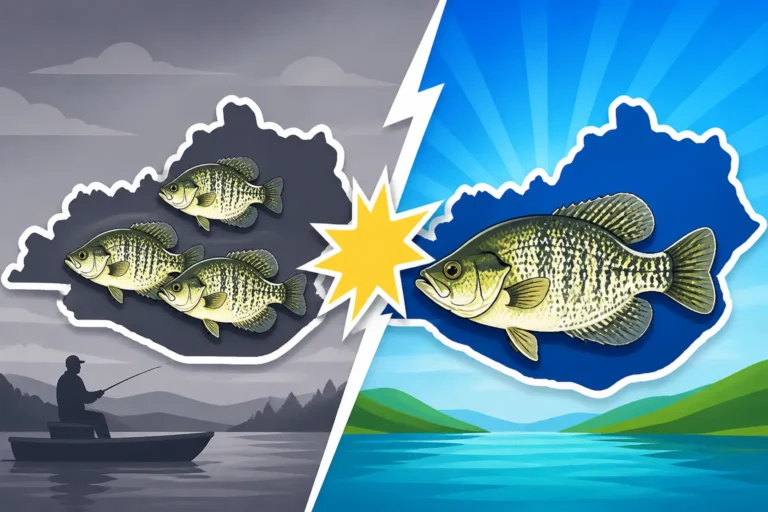
It’s not just bass that have these localized regulations. Crappie anglers also need to be vigilant. While the Kentucky Crappie Daily Limit Rules typically allow for a daily limit of 20 crappie with no statewide minimum size limit, there are exceptions. A prime example is Barren River Lake Crappie Size Limit in Kentucky, which mandates a 10-inch minimum size for crappie. If you’re used to keeping crappie of all sizes, showing up at Barren River Lake and throwing 8-inchers in your cooler would be a clear violation.
Similarly, catfish anglers need to be aware. The Kentucky Catfish Daily Limit and Trophy Fish Rule typically allows for a daily limit of 15 catfish (a combination of blue and channel catfish), with only one fish allowed over 25 inches. However, some specific waters or river stretches might have different nuances, especially concerning trophy fish programs or certain seasonal restrictions that aren't immediately obvious from the general rulebook. Always check for these subtle but significant differences, especially if you're targeting larger catfish or fishing in a river system where specific zones might have their own regulations.
Your Toolkit for Verifying Local Rules and Staying Legal
Okay, so you're convinced: checking local rules is a must. But how do you actually go about it without feeling like you need a law degree? Thankfully, the Kentucky Department of Fish and Wildlife Resources (KDFWR) has made it relatively easy to access the information you need. There are several reliable avenues you should always consult before heading out to a new spot. Being prepared and proactive is key to a stress-free and legal fishing experience.
The Kentucky Department of Fish and Wildlife Resources KDFWR Website and App
Your absolute first and most reliable stop should always be the official KDFWR website. This is the definitive source for Kentucky Fishing Rules by Lake and Water. The website is regularly updated, ensuring you have the most current information available, including any emergency closures or temporary regulation changes. You can usually navigate to a specific lake or river page, or look up regulations by fish species, and find a clear breakdown of the rules that apply.
Even better, the KDFWR offers a mobile app that you can download to your smartphone. This app is a game-changer for anglers, allowing you to quickly look up regulations on the go, right from your boat or the bank. Imagine you're on a new lake, you've caught a fish, and you're unsure if it meets the size limit. Instead of guessing, you can pull out your phone, open the app, and get an instant answer. This immediate access to information is invaluable and can prevent unintentional violations. It's your personal warden in your pocket, always there to ensure you're in compliance.
Consulting Local Bait Shops and Marinas
While the official KDFWR resources are paramount, never underestimate the power of local knowledge. When you visit a new lake, make it a point to stop at a local bait shop or marina. These establishments are often run by seasoned local anglers who live and breathe the water. They are usually keenly aware of the specific rules and, just as importantly, any nuances or recent changes that might not yet be widely publicized.
For instance, they can often confirm current water conditions, recommend hot spots, or even inform you about temporary regulations that might be in effect due to an ongoing study or a recent stocking event. They’ve often seen it all, and a quick conversation can provide insights that go beyond the printed word. Plus, it’s a great way to support local businesses and get a feel for the local angling community. Many bait shops even have printed copies of the current KDFWR fishing guide available for free, which is perfect for Checking Current Regulations Before a Fishing Trip.
Physical Guides and Online Resources (and where Amazon comes in)
Beyond the KDFWR website and local intel, having physical resources can be incredibly helpful. The KDFWR annually publishes a detailed fishing and boating guide, which is usually available at KDFWR offices, county clerks, and many bait and tackle shops. This guide is a compact, printed version of all the regulations and is fantastic to have in your tackle box, especially if you're in an area with poor cell service where the app might not function.
For a deeper dive, consider investing in detailed, waterproof fishing maps or specific lake guides. Many regional guides provide not just contours and access points but also snippets of lake-specific regulations. You can often find these types of specialized maps and guides on platforms like Amazon. Searching for "Kentucky lake fishing map [Lake Name]" or "Kentucky fishing guide book" on Amazon can yield a treasure trove of resources. A well-rated, waterproof map available on Amazon can be marked up with local regulations, boat ramp locations, and fishing hot spots, making it a personalized and invaluable tool for every trip. Always remember to cross-reference any information from third-party sources with the official KDFWR regulations to ensure accuracy, as Amazon product descriptions or old guides might not reflect the most current rules.
The Repercussions of Ignoring Local Regulations
It's tempting to think that a slight misstep in fishing regulations is just a minor offense, easily overlooked. However, ignoring local rules, even if done unintentionally, carries real and often unpleasant consequences. These aren’t just abstract concepts; they can directly impact your wallet, your legal standing, and even the future of the fisheries you enjoy. A little diligence upfront can save you a lot of headache and heartache down the line.
Financial Penalties and License Issues
The most immediate and tangible consequence of violating fishing regulations is usually a fine. Depending on the severity of the offense and the specific rule broken, these fines can range from a few dozen dollars to several hundred, or even more. What started as an exciting day on the water can quickly become a costly lesson. Imagine catching a few bass that are undersized for a particular lake, only to have a conservation officer check your livewell. That's a minimum fine that could easily wipe out your gas money and bait costs for the entire trip, leaving a sour taste in your mouth.
Beyond monetary penalties, repeated or serious violations can lead to more severe repercussions, including the suspension or even revocation of your fishing license. If you're caught fishing without a valid license, or with an expired one, the penalties are even steeper, as detailed in Penalties for Fishing Without a License in Kentucky. While the current discussion is about local rules, the underlying principle of enforcement by game wardens remains the same. The loss of your fishing privileges, even for a season, means missing out on the very activity you love. This can be especially frustrating if the violation was due to simple ignorance rather than malicious intent. Always remember, ignorance of the law is rarely an acceptable defense in the eyes of the law.
Conservation Impact and Ethical Angling
Beyond the personal legal and financial consequences, there's a broader, more significant impact when local fishing regulations are disregarded: the health of the fishery itself. These rules are put in place for a reason – to manage fish populations, protect spawning stock, and ensure the long-term sustainability of the resource. When anglers unknowingly (or knowingly) violate size or bag limits, they can undermine years of careful conservation work.
For example, keeping too many crappie, especially smaller ones, from a lake with a minimum size limit designed to protect juvenile fish, can deplete the future spawning population. Similarly, taking bass outside of a protected slot limit can hinder a lake's efforts to produce trophy-sized fish. Ethical angling goes beyond simply staying within the letter of the law; it involves understanding the spirit of conservation behind those laws. By taking the time to verify Site-Specific Regulations Every Angler Should Check First, you're not just protecting yourself from penalties, you're actively participating in responsible stewardship of Kentucky's precious aquatic resources. Every fish you release that doesn't meet the specific local rule is a contribution to a healthier, more vibrant fishery for everyone, now and in the future.
Here's a quick look at how some regulations can differ:
| Fish Species | Statewide Regulation (General) | Example Lake Exception (Lake Barkley Bass) | Example Lake Exception (Barren River Lake Crappie) |
|---|---|---|---|
| Largemouth Bass | 12-inch minimum, 6 fish daily | 15-inch minimum, 6 fish daily | 12-inch minimum, 6 fish daily (Standard) |
| Smallmouth Bass | 18-inch minimum, 1 fish daily | 18-inch minimum, 1 fish daily (Standard) | No minimum size, 6 fish daily (Some rivers) |
| Crappie | No size minimum, 20 fish daily | No size minimum, 20 fish daily (Standard) | 10-inch minimum, 20 fish daily |
| Catfish | 15 fish daily (combined blue/channel), only 1 over 25 inches | 15 fish daily, only 1 over 25 inches (Standard) | 15 fish daily, only 1 over 25 inches (Standard) |
| Walleye/Saugeye | 15-inch minimum, 6 fish daily | 15-inch minimum, 6 fish daily (Standard) | 15-inch minimum, 6 fish daily (Standard) |
This table illustrates that while many rules remain consistent statewide, some significant exceptions exist, particularly for popular game fish in specific, highly managed lakes. Always double-check!
Disclaimer
The information provided in this guide is for general informational purposes only and does not constitute legal advice. Fishing regulations can change frequently. Always consult the official Kentucky Department of Fish and Wildlife Resources (KDFWR) website or current printed guide for the most accurate and up-to-date regulations before engaging in any fishing activities. Compliance with all applicable laws and regulations is the sole responsibility of the angler.