Herrington Lake’s Deep Water Bass Spots Near the Dam
Finding those elusive deep-water bass in a lake like Herrington can feel like searching for a needle in a haystack, especially near the massive structure of the dam. The deep, clear waters present unique challenges, but also incredible rewards for anglers who know where to look and how to approach these hidden giants. This guide is dedicated to unraveling the mysteries of Herrington Lake's deep water bass fishing, specifically focusing on the productive, yet often intimidating, areas around the dam.
Understanding Herrington Lake's Unique Deep Water Environment
Herrington Lake, nestled in the heart of Kentucky, isn't your typical shallow-water bass haven. It’s a deep, clear impoundment on the Dix River, famous for its steep rock bluffs, sharp drop-offs, and impressive depths, particularly as you get closer to the dam. Many anglers find themselves frustrated trying to find fish here because the bass don't behave the same way they do in shallower, murkier reservoirs. The dam area, in particular, creates a unique environment with specific characteristics that attract and hold bass year-round.
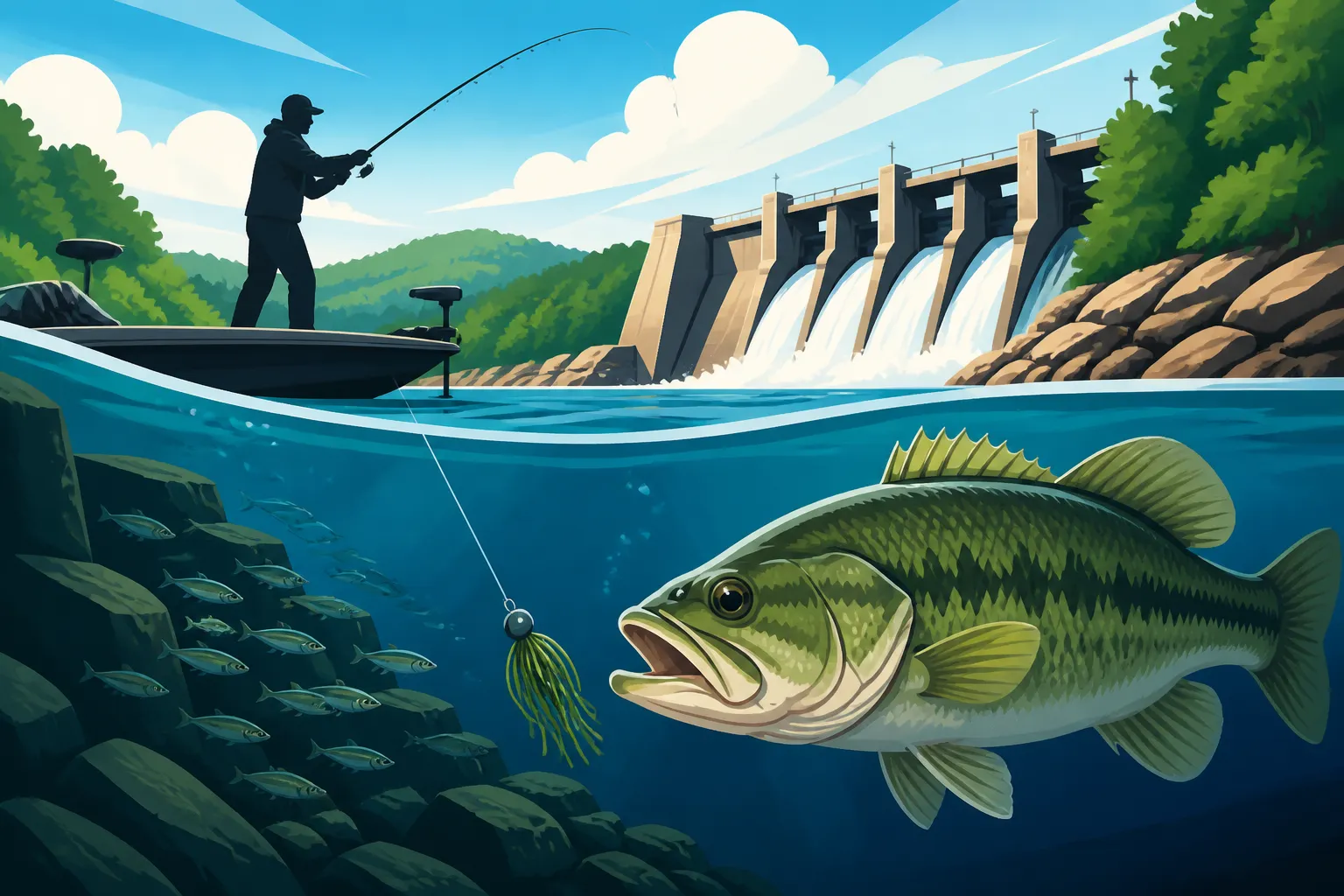
The extreme depths right at the dam can plunge over 200 feet, which sounds intimidating, but it also means there's always a stable, cool water sanctuary for bass, even during the scorching Kentucky summers. These deep waters offer consistent temperatures and oxygen levels below the thermocline, providing refuge when other parts of the lake become uncomfortable for fish. Furthermore, the dam itself provides massive artificial structure, creating current breaks, eddies, and subtle ledges that become prime ambush points. The key is to understand how these bass relate to these deep structures and adapt your approach accordingly. If you're new to the area, considering a guided trip can be a huge advantage; many local guides, often found through platforms like FishingBooker, specialize in uncovering these deep-water secrets. For a broader overview of the lake, check out our comprehensive Herrington Lake Fishing Guide, Kentucky's Deep Water Bass Lake.
Key Structures and Depths Where Bass Hold Near the Dam
When you're targeting deep-water bass around the Herrington Lake dam, you need to think vertically and pinpoint specific underwater features. It's not just about "deep water;" it's about the right deep water. These fish aren't just suspended in the middle of nowhere; they are almost always relating to some form of structure, no matter how subtle it may seem on your electronics.
The immediate area surrounding the dam is riddled with complex topography. Look for prominent features like the old river channel, which winds its way through the lake bed and often creates distinct ledges and drop-offs. Bass will use these channels as highways and depth transitions, moving up and down them depending on light levels, baitfish presence, and water temperature. Any irregularities on the channel edges, such as rock piles, stumps, or subtle humps, become high-percentage spots. Pay close attention to depths ranging from 20 to 60 feet, as this is often where the thermocline sets up in warmer months, concentrating baitfish and, consequently, hungry bass.
Another critical element is standing timber. While much of Herrington Lake was cleared before inundation, pockets of old timber still exist, especially along steeper banks and in deeper coves near the dam. These submerged trees provide vertical cover from the lake bed all the way up through the water column, offering bass shade, ambush points, and protection. Learning to interpret your sonar to differentiate between scattered timber and dense brush piles is crucial. A single, isolated tree on a deep ledge can often hold a trophy-sized bass. Even subtle rock transitions, where a flat rock bottom meets a chunkier rock pile, can create enough of a difference to hold fish. Exploring Herrington Lake's Best Bass Fishing Coves in Kentucky can also give you insights into how bass relate to various types of structure throughout the lake.
Here's a quick look at common deep-water structures near the dam and when they're most productive:
| Structure Type | Primary Depths (Feet) | Peak Seasons | Why Bass Hold Here |
|---|---|---|---|
| Old River Channel Edges | 25-50 | Summer, Fall, Winter | Travel routes, ambush points, stable temps |
| Submerged Humps/Points | 20-40 | Spring, Summer | Baitfish congregation, feeding stations |
| Standing Timber | 30-60+ | Year-round | Vertical cover, shade, ambush points |
| Bluff Wall Ledges | 15-70 | Spring, Summer, Fall | Shade, current breaks, deep access |
| Rock Piles/Boulders | 20-45 | Year-round | Crawfish habitat, thermal refuge, baitfish attractants |
Essential Techniques and Baits for Deep Water Bass at Herrington Dam
Successfully coaxing a bite from deep-water bass near the Herrington dam requires a patient, methodical approach and the right tools. It's not about burning a spinnerbait; it's about precision, feeling subtle bites, and understanding how to present your bait effectively in deep water.
First and foremost, quality electronics are your best friend here. A good fish finder with down imaging and side imaging capabilities is invaluable for locating submerged timber, identifying rock piles, and even spotting individual bass suspended on ledges. You'll want to spend time idling over promising areas, marking waypoints on your GPS, and really dissecting the underwater landscape. Don't just look for fish; look for the structure that holds the fish. Modern fish finders allow you to see the details of the bottom, from subtle contour changes to isolated stumps, helping you understand why bass choose certain spots. To get the most out of your setup, consider checking out our guide on Fish Finders and Electronics for Kentucky Lake Fishing, as many of those principles apply directly to Herrington.
When it comes to techniques, drop-shotting is arguably king for deep-water bass in clear lakes like Herrington. It allows you to present a soft plastic bait exactly at the fish's depth, with minimal weight to impede its natural action. Pair it with a sensitive spinning rod, like some of the Best Fishing Rods for Largemouth Bass, and light fluorocarbon line to detect those faint bites. Deep-diving crankbaits are also highly effective, especially when bass are actively feeding on baitfish. Choose colors that imitate local forage, such as shad or crawfish, and experiment with different diving depths to match the fish's location. For targeting suspended bass or those holding tight to timber, jigging spoons or blade baits can be deadly. Drop them directly down to the fish you see on your sonar, then work them with short, sharp snaps.
Other reliable options include shaky head jigs with small worms or creature baits, which are great for working subtle rock transitions, and Carolina rigs, which allow you to present a soft plastic across a wider area of the bottom. Remember, the clearer the water, the more natural your presentation needs to be. Opt for lighter lines, natural bait colors, and subtle movements. While most serious anglers carry a vast array of lures, sometimes the simplest options are the most effective. For more lure ideas, you might want to read up on the Best Lures for Largemouth Bass on Big Water.
Seasonal Considerations for Deep Water Bass Near Herrington Dam
The behavior of deep-water bass around the Herrington Lake dam isn't static; it shifts dramatically with the seasons. Understanding these seasonal patterns is crucial for consistent success. What works in spring won't necessarily work in fall, and vice-versa.
In spring, as water temperatures begin to rise, bass will start moving out of their deepest winter haunts. However, the dam area can still be productive for prespawn fish that are staging on deep ledges and humps before moving to shallower spawning grounds. Look for them on the edges of the river channel in 20-35 feet, where they might be feeding heavily. This is often an excellent time for deep-diving crankbaits and jigs. The full swing of Kentucky Bass Fishing: The April-May Peak Season often sees fish moving shallower, but there are always lingering deeper fish.
Summer is arguably the most consistent time for targeting deep-water bass at the dam. As surface temperatures soar, the oxygen-rich, cooler waters below the thermocline become a magnet for both baitfish and bass. The thermocline typically sets up somewhere between 20-40 feet, and bass will suspend just above it or hold tight to structure within this comfortable zone. This is prime time for drop-shotting, jigging spoons, and even slow-rolling large worms or swimbaits through schools of bait. The dam area also provides deep shade from the bluffs, which can hold fish throughout the day.
As fall arrives and water temperatures begin to cool, bass will become more active and start feeding aggressively in preparation for winter. They might still use the deep structure around the dam, but they’ll also be more prone to chasing baitfish in the mid-depth ranges, especially during periods of active feeding. Deep cranking continues to be effective, as do slower presentations with jigs or larger soft plastics. The fish can be scattered but are often more willing to bite. Understanding What Month Is Best for Bass Fishing in Kentucky can help you pinpoint these transition periods.
Winter fishing at Herrington Lake, particularly near the dam, can be incredibly rewarding but also very challenging. Bass will often congregate in massive schools in the deepest parts of the lake, sometimes as deep as 60-80 feet. They become lethargic and require a precise, slow presentation. Vertical jigging with spoons, blade baits, or small hair jigs is often the most effective method. Finding these schools with your electronics is the hard part; once you do, you can often pick off several fish. Remember, these fish don't move far or fast in cold water, so patience is key. A local guide, easily found on a site like FishingBooker, will often have a deep understanding of these seasonal nuances and can put you on fish when others are struggling.
Disclaimer
Fishing involves inherent risks, and conditions on the water can change rapidly. Always prioritize safety, wear a life jacket, and be aware of weather conditions and local regulations. This guide provides general information, but fish behavior can be unpredictable. Always consult the most current Kentucky Department of Fish and Wildlife Resources regulations before fishing.