Best Bass Lures for Spring Fishing
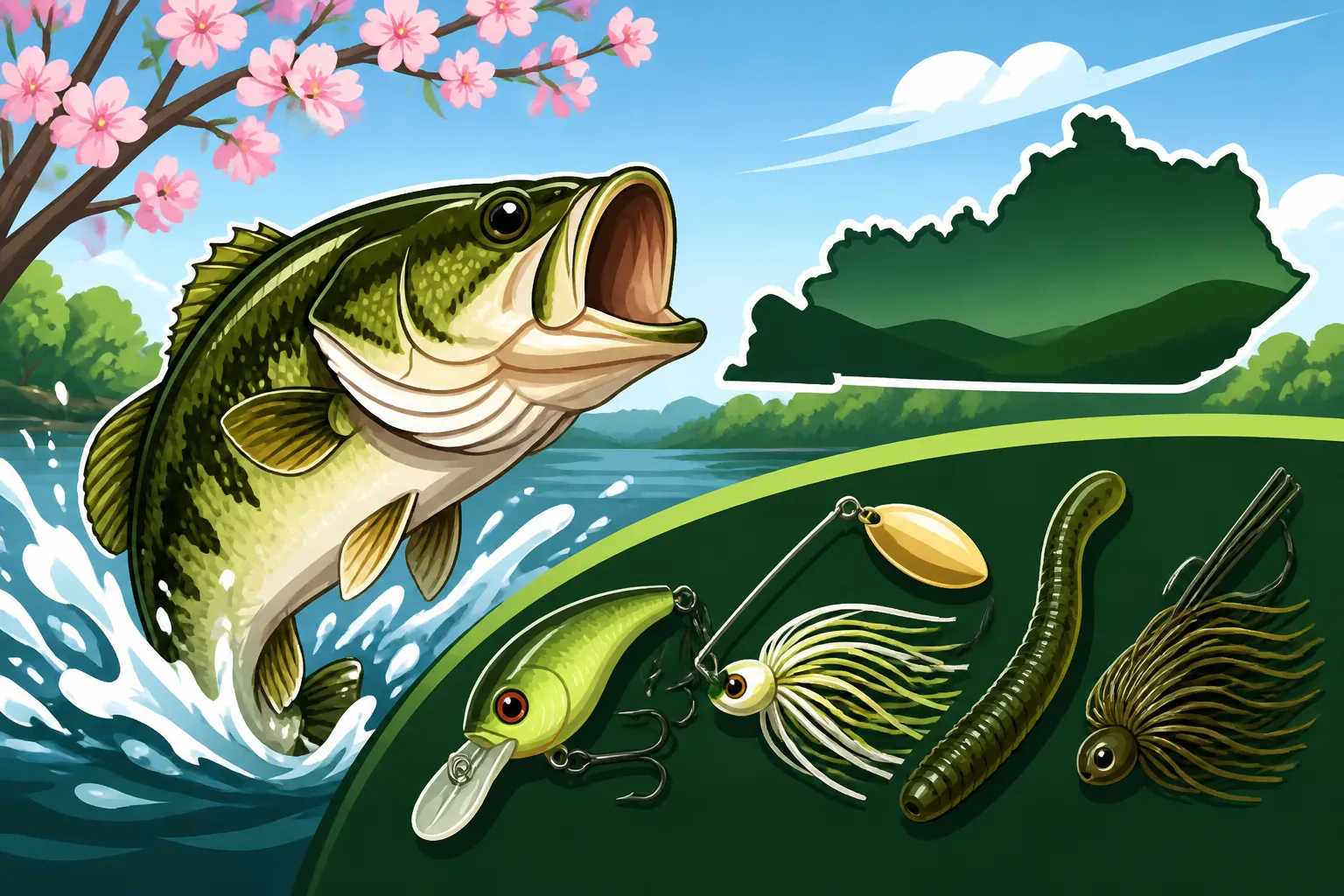
There’s nothing quite like the anticipation of spring fishing in Kentucky, is there? After the long, cold months of winter, when the bass seem to vanish into the deep, the warming trend of spring brings a renewed hope and a surge of activity. But let's be honest, figuring out exactly what lure to tie on when the water temperatures are fluctuating and the fish are transitioning through their pre-spawn, spawn, and post-spawn rituals can feel like a complete mystery. It’s frustrating to know the fish are there but not know how to entice them. This comprehensive guide is here to demystify spring bass fishing in Kentucky, helping you understand the best lures for each phase of the season so you can spend less time guessing and more time reeling in those lunkers.
Understanding Kentucky's Spring Bass Behavior
Spring isn't just one static season for bass; it’s a dynamic period marked by significant changes in water temperature, fish metabolism, and most importantly, their reproductive cycle. Knowing which stage the bass are in is crucial for selecting the right lure and presentation. If you're out on the water without a thermometer, you're pretty much flying blind, and that can lead to a lot of wasted casts and frustration.
The Early Pre-Spawn Chill (Water Temps 40s-50s)
When the ice has finally melted and the earliest signs of spring appear, usually around late February and through March, the water temperatures are still pretty chilly, often lingering in the low to mid-40s and slowly climbing into the low 50s. This is the early pre-spawn period. Bass are beginning to shake off their winter lethargy, but they’re not yet fully active. They'll often be staging in deeper water adjacent to spawning flats or points, looking for warmer pockets of water where they can conserve energy and ambush prey. Their metabolism is still relatively slow, meaning they prefer slower-moving baits that don't require much effort to chase down.
Think about those days when you're just starting to feel human again after a long winter, but you're not quite ready for a sprint. That's your bass. They might be concentrated in areas like main lake points, channel swings, and the mouths of creeks, particularly on lakes like Kentucky Lake or Lake Barkley where vast expanses of water offer diverse staging areas. Patience is key here; a slow, methodical approach will often outfish aggressive presentations. You're looking for those first few bites of the year, and they can be incredibly rewarding.
Mid-Spring Warm-Up and Transition (Water Temps 50s-60s)
As spring progresses into April and early May, the sun sits higher, the days get longer, and those water temperatures steadily climb into the mid-50s and low-60s. This is often when you experience the real magic of spring bass fishing in Kentucky – the peak of the pre-spawn. Bass are becoming much more active, aggressively feeding to build up energy for the upcoming spawn. They start moving shallower, following creek channels and contours into coves and protected bays. This is prime time for big fish, as females are at their heaviest.
The fish are now more willing to chase a bait, and you can cover water more efficiently. You'll find them cruising along gradual slopes, around submerged timber, and near any structure that offers cover and warmth. Lakes known for their excellent bass fisheries, like Taylorsville Lake and Green River Lake, really shine during this phase. This transition period is when you'll feel that incredible surge of excitement when a big bass absolutely hammers your lure. If you're curious about the general patterns, our guide on Kentucky Bass Fishing: The April-May Peak Season offers a fantastic overview of this prime window.
The Spawning Ritual (Water Temps 60s+)
When water temperatures finally hit the mid-60s and beyond, typically from late April through May, the bass shift into their primary focus: spawning. They move onto the shallow flats, into protected coves, and along calm shorelines to build their nests (beds). Males arrive first to clear the beds, and then females move in to lay eggs. During this time, bass can be incredibly territorial and protective of their nests, making them susceptible to certain presentations.
Fishing during the spawn often involves sight-fishing – looking for those tell-tale light spots on the bottom where bass have cleared a bed. It's an exciting challenge, trying to coax a protective bass into striking your lure. They might not be feeding actively in the traditional sense, but they will strike out of aggression or to defend their territory. This is a crucial time, and understanding Kentucky Fishing Seasons: What to Catch Each Month can give you a broader perspective on all species, but for bass, the spawn is a highlight. While specific sites might have different rules, generally, the bass are on beds in the shallower, warmer pockets of most major Kentucky reservoirs.
Pre-Spawn Power Fishing: Aggressive Bites in Cooler Water
During the early and mid-pre-spawn, when bass are looking to put on weight but aren't yet fully committed to the shallows, power fishing techniques are incredibly effective. These lures help you cover a lot of water quickly and trigger reaction strikes from fish that might be a bit lethargic or just starting to become active.
Lipless Crankbaits: Covering Water Fast
Lipless crankbaits, like the iconic Rat-L-Trap or the Strike King Redeye Shad, are absolute workhorses during the pre-spawn. They’re designed to be cast far, sink quickly, and emit a lot of vibration and sound, mimicking fleeing baitfish. These baits are fantastic for covering large areas, especially on vast impoundments like Kentucky Lake, where bass can be scattered across expansive flats or staging on long points.
You can fish them in a variety of ways: a steady retrieve, a stop-and-go retrieve, or by "yo-yoing" them – letting them sink to the bottom, then ripping them up, mimicking a struggling baitfish. The key is to experiment until you find what the fish want on a given day. In colder water, a slower retrieve with longer pauses is often more effective, while a faster retrieve can trigger reaction strikes as the water warms. Pay attention to ditches and subtle changes in depth; bass often use these as travel corridors to move between deeper staging areas and shallower feeding grounds. For color, crawfish patterns, chrome with blue or black backs, and firetiger are usually solid choices.
Jerkbaits: Suspending for Finicky Fish
Jerkbaits truly shine when the water is cold, but bass are still somewhat active, typically in the 48-58 degree range. Brands like the Lucky Craft Pointer or Megabass Vision 110 are legendary for a reason. These baits are designed to suspend in the water column when paused, staying in the strike zone for an extended period, which is exactly what a finicky pre-spawn bass needs. They perfectly imitate a wounded baitfish that’s struggling or dying, a meal too easy to pass up.
To fish a jerkbait effectively, you cast it out, reel it down to its running depth, and then employ a "twitch, twitch, pause" retrieve. The pauses are critical, especially in colder water; sometimes a 10-15 second pause can be what finally triggers a strike. Experiment with the length of your pauses and the aggressiveness of your twitches. In Kentucky, jerkbaits are killer around rocky banks, bluff walls, and over submerged brush piles in lakes like Herrington Lake, where bass often suspend. This is one of those techniques where having the right rod and line, typically a medium-light to medium power casting rod with fluorocarbon line, really makes a difference for imparting the right action and detecting subtle bites.
Jig and Trailer Combos: Bottom Bouncing for Big Bites
When you're really trying to target those larger, often deeper-holding bass during the pre-spawn, a jig and trailer combo is hard to beat. A football jig or a casting jig paired with a bulky soft plastic trailer (like a creature bait or a crawfish imitation) is excellent for slow-rolling or hopping along the bottom. This presentation mimics a crawfish or a large baitfish rooting around, offering a substantial meal that a big bass finds hard to resist.
These lures are perfect for probing structure like rocky points, ledges, and deep brush piles in lakes like Lake Cumberland, which is known for its deep-water bass. The slower fall and bottom contact allow you to keep the bait in the strike zone longer. Often, the bite isn't a violent strike but a subtle "thump" or simply a feeling of weight when you lift your rod. Colors like black and blue, green pumpkin, and brown are perennial favorites, especially when matched to the prevalent forage or water clarity. Getting a feel for how to work a jig can take some practice, but once you master it, it's a deadly technique for big pre-spawn bass.
Spawning Season Strategies: Targeting Beds and Defensive Bass
Once the water warms sufficiently and bass move to their beds, your lure selection shifts from triggering feeding responses to provoking defensive strikes. This phase requires a different set of tools and a keen eye.
Soft Plastics: Weightless Wonders and Texas Rigs
When bass are locked on beds, soft plastics are arguably the most effective lures. Weightless worms, stick baits (like a Senko), or soft plastic creature baits rigged Texas-style are go-to choices. The Texas rig is particularly useful around cover, as it's largely weedless, allowing you to pitch into brush or grass without snagging. The key here isn't necessarily a fast retrieve, but rather a subtle presentation that lands gently on or near the bed.
The goal is to annoy the bass into striking. Cast past the bed and slowly drag the bait onto it, letting it sit for a moment. Then, give it a tiny twitch. The bass might stare at it, nip at it, or even try to move it off the bed with its tail. Persistence pays off. Often, you'll need to make multiple casts to the same bed. For these situations, fishing from the bank on smaller ponds or specific areas of larger lakes, having a good selection of plastics is crucial. You can often find great deals on various brands of soft plastics on Amazon, giving you plenty of options to experiment with.
Wacky Rigs and Ned Rigs: Subtle Presentations
For those ultra-finicky bed fish or when bass are just cruising the shallower spawning areas, wacky rigs and Ned rigs offer super subtle presentations. A wacky rigged Senko, where the hook goes through the middle of the bait, creates a mesmerizing wobble on the fall that no bass can ignore. It's fantastic for open water around beds or along sparse grass lines.
The Ned rig, a short stick worm on a small mushroom-head jig, is another finesse powerhouse. It stands straight up on the bottom, looking like a small baitfish or crawfish feeding. This rig is particularly effective for post-frontal conditions or when bass are pressured. Both rigs require light line and a spinning rod for optimal presentation, allowing for stealthy casts to nervous fish. They’re less about brute force and more about surgical precision and finesse, often what’s needed when bass are shallow and easily spooked.
Spinnerbaits and Bladed Jigs: Reaction Strikes
While finesse is often key during the spawn, don’t underestimate the power of a reaction strike, especially from males aggressively defending a nest. A bladed jig (like a ChatterBait) or a spinnerbait can be excellent for this. They create a lot of flash, vibration, and disturbance, mimicking an intruder that a territorial bass simply has to remove.
These lures are particularly good when you’re not sight-fishing but suspect fish are spawning in an area, or for covering water quickly along spawning flats. Cast them past potential beds and retrieve them with a steady roll or a stop-and-go action. The sudden movement and visual aggression can trigger an instant, violent strike. Consider throwing these around sparse cover, lily pads that are just starting to emerge, or any shallow wood structure.
Post-Spawn and Beyond: Recovering Fish and Changing Patterns
After the intensity of the spawn, bass enter a recovery phase. They can be scattered, lethargic from the exertion, and often move off the shallowest beds into slightly deeper water. This is when they start feeding heavily again to regain their strength.
Topwater Lures: Explosive Post-Spawn Action
Once the water temperatures are consistently in the upper 60s and 70s, usually late May into June, topwater fishing becomes absolutely phenomenal. Post-spawn bass are often still near the spawning areas or have moved to nearby ambush points, and they are looking for easy meals. A topwater lure, like a walking bait (e.g., Heddon Super Spook), a popper, or a frog, can elicit some of the most exciting strikes in all of bass fishing.
These lures work best in low-light conditions – dawn, dusk, or on cloudy days – but can also produce in shady areas throughout the day. Fish them around shallow cover: lily pads, submerged grass, docks, or over submerged humps. The thrill of seeing a bass explode on a topwater bait is unmatched. Learning the precise action, such as the "walk-the-dog" retrieve for a walking bait, is a skill that takes practice but rewards you tenfold. For tips on when the bass move to deeper water in summer, check out When Do Kentucky Bass Move to Deeper Water in Summer?.
Swimbait Success: Imitating Baitfish
Swimbaits, both soft and hard, are fantastic for imitating the plentiful baitfish (shad, bluegill, herring) that bass will be gorging on post-spawn. Bass are recovering from the spawn and are looking for substantial, easy meals. A swimbait perfectly mimics the natural forage, making it an irresistible target.
Soft swimbaits rigged on a weighted swimbait hook or an underspin jig head are versatile and can be fished shallow or deep. Hard swimbaits offer realistic profiles and actions. Fish them along creek channel swings, points, and over submerged brush piles. This is also a great time to experiment with different retrieve speeds and depths. Match the size and color of your swimbait to the local baitfish, especially on lakes like Lake Barkley, which is teeming with diverse forage. Many anglers stock up on their favorite swimbait brands through online retailers like Amazon due to the wide selection.
Deeper Diving Crankbaits: Following Fish Offshore
As some bass finish spawning and move out to slightly deeper waters, they’ll often congregate on points, ledges, and humps. This is where deeper diving crankbaits come into their own. Lures like the Strike King 6XD or the Norman DD22 can reach depths of 15-20 feet or more, allowing you to target those transient fish.
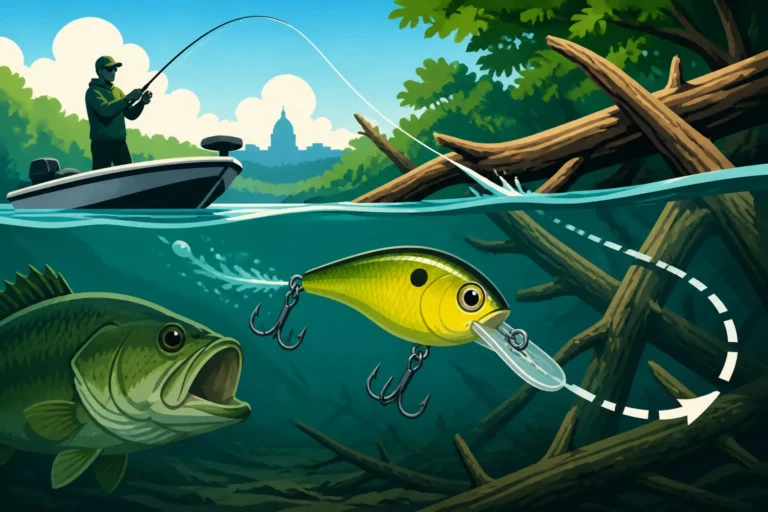
Crankbaits are designed to be retrieved with a steady pull, deflecting off cover and structure to trigger strikes. Look for subtle depth changes, submerged timber, and brush piles on your electronics. The vibrations and erratic action of a deep-diving crankbait can call fish in from a distance, making it a highly effective search bait. For more specific guidance on how to fish crankbaits, you might want to read How to Fish a Crankbait Around Cover. This technique becomes even more vital as the spring warmth transitions into summer, and fish establish their offshore patterns.
Essential Factors for Lure Selection in Kentucky Spring
Beyond the general phases of spring, several environmental factors play a huge role in dictating which lures will be most effective. Overlooking these details can severely limit your success on the water.
Water Clarity and Color Choices
Water clarity is a massive determinant for lure color. In murky or stained water, bass rely more on vibration and profile than sight. Here, darker colors like black and blue, junebug, or red work well because they create a strong silhouette and are easier for bass to detect. Lures with strong thumping actions, like bladed jigs or wide-wobbling crankbaits, also excel in stained water.
Conversely, in clear water, bass are more visual, and natural, subtle colors are often best. Green pumpkin, watermelon, ghost shad, or baits with translucent qualities tend to shine. Finesse techniques, like Ned rigs and wacky rigs, become more prominent in clear water, as their subtle action won't spook wary fish. When shopping for soft plastics or even hard baits, consider having a range of colors from natural to bright, especially if you plan to fish diverse bodies of water like the clear waters of Lake Cumberland versus the sometimes-murkier river sections of the Ohio.
Cover and Structure: Where Bass Hide
Bass are creatures of cover and structure. In spring, they use these features for ambush points, protection from predators, and for staging during the spawn. Your lure choice should always consider the type of cover you're fishing.
- Wood (laydowns, stumps, brush piles): Jigs, Texas-rigged plastics, and spinnerbaits are excellent for probing woody cover. Their weedless nature helps prevent snags.
- Rocks (rip-rap, bluff walls, rocky points): Crankbaits that deflect off rocks, football jigs, and jerkbaits are highly effective here. Rocks absorb heat, making these areas prime early spring spots.
- Grass (lily pads, hydrilla, milfoil): Soft plastic frogs, punching jigs, and weedless swimbaits are ideal for fishing in and around thick vegetation. These areas provide both cover and food for bass.
- Open Water (channel swings, humps, ledges): Lipless crankbaits, deep-diving crankbaits, and swimbaits are great for covering open water and finding bass that are suspended or holding on subtle changes in depth.
Always try to match your lure to the cover, not just the phase of the spawn. A jig designed to slip through wood will be frustrating to fish in open water, just as a topwater frog will be ignored if fish are holding 20 feet deep.
Matching the Hatch: Baitfish and Forage
Bass are opportunistic predators, but they primarily feed on what's available. "Matching the hatch" means selecting lures that mimic the size, shape, and color of the prevalent forage in the body of water you're fishing.
In Kentucky, shad are a primary food source in many large reservoirs. Lures that imitate shad, like chrome/blue crankbaits, white spinnerbaits, or silver swimbaits, will often produce. Crawfish are another crucial food source, especially in the pre-spawn. Jigs with crawfish-like trailers, red or brown crankbaits, and soft plastic creature baits excel when bass are keying in on crawfish. Bluegill and other panfish are also on the menu, particularly around spawning areas. Green pumpkin, chartreuse, or natural sunfish patterns can be very effective, especially when fished around shallow docks or brush.
Observe what’s around you. Are you seeing schools of baitfish? Are there crawfish scurrying on the bottom? Is there a bluegill bed nearby? Let these observations guide your lure choice. It might seem like a small detail, but choosing a lure that looks and acts like a local food source can significantly increase your bites.
Building Your Spring Bass Tackle Box and Where to Find Gear
Having the right selection of lures and gear for spring is essential for adapting to changing conditions and fish behavior. No single lure will work all the time, so diversity is your friend.
Must-Have Lure Colors and Sizes
When it comes to spring bass lures, a balanced tackle box offers versatility. For crankbaits, you'll want a mix of lipless (chrome/blue, red, crawfish), medium-diving (shad, crawfish), and deep-diving (shad, chartreuse/blue back) options. Jerkbaits should be in natural baitfish colors (silver, white, clear).
For soft plastics, stock up on Texas rigs (green pumpkin, black/blue, junebug), wacky rigs (green pumpkin, watermelon), and Ned rigs (green pumpkin, natural shad). Creature baits and crawfish imitations in green pumpkin, brown, and black/blue are critical. Don't forget spinnerbaits and bladed jigs in white, chartreuse, and perch colors. And for topwater, have a walking bait (bone, shad), a popper (chrome, natural frog), and a frog (green, black). Having a range of sizes, from smaller finesse baits to bulkier power fishing options, will prepare you for any situation.
Rods, Reels, and Line for Spring Techniques
The rod, reel, and line setup you choose can dramatically impact your success with specific lures. You'll want a few different setups to truly maximize your spring bass fishing.
- Medium-Heavy Casting Rod (6'10" – 7'4"): This is your primary workhorse for most power fishing techniques like lipless crankbaits, spinnerbaits, bladed jigs, and Texas-rigged plastics. Pair it with a high-speed baitcasting reel (7.1:1 or higher) and 15-20 lb fluorocarbon or monofilament.
- Medium-Light to Medium Action Casting Rod (6'6" – 7'0"): Ideal for jerkbaits and smaller crankbaits, where a softer tip helps impart action and prevent pulling hooks. A moderate retrieve ratio baitcaster (6.3:1) with 10-14 lb fluorocarbon is a great match.
- Medium-Light Spinning Rod (6'6" – 7'0"): Essential for finesse presentations like wacky rigs, Ned rigs, and shaky heads. Pair with a 2500 or 3000 size spinning reel and 6-10 lb fluorocarbon or braided line with a fluorocarbon leader.
Investing in quality gear that matches your intended techniques will make a huge difference in your ability to cast accurately, detect subtle bites, and effectively fight larger bass. For more detailed recommendations, you might want to look into Best Rods and Reels for Kentucky Fishing.
Gear Acquisition and Local Shops vs. Online (Amazon)
So, where do you get all this awesome gear? Both local tackle shops and online retailers have their advantages. Supporting your local tackle shop is fantastic because you get expert advice from folks who fish the very waters you're heading to. They can give you hyper-local tips on what’s biting and what colors are hot right now, specific to places like Lake Barkley or Herrington Lake. Plus, you get to see and feel the lures in person, which can be a big deal for some anglers.
However, online retailers like Amazon offer an incredible selection, often at competitive prices, and the convenience of having gear delivered right to your door. You can find virtually any brand, color, or size of lure you might need. It’s a great option for stocking up on staples or finding those specialty baits that might not be available locally. Just remember to do your research, read reviews, and perhaps even consult a few of our guides, like the one on Best Bass Lures for Kentucky's April-May Peak before making a big purchase. Whether you prefer the personal touch of a local shop or the vast inventory of Amazon, having your tackle box well-stocked will ensure you're ready for whatever Kentucky's spring bass fishing throws your way.
Disclaimer
Fishing regulations, license requirements, and local rules can change. Always check the latest Kentucky Department of Fish and Wildlife Resources (KDFWR) regulations before heading out on the water. This guide provides general information and recommendations and should not be considered legal advice.