Best Month to Catch Trout at Lake Cumberland Kentucky
There's nothing quite like the thrill of chasing trout, but if you've ever spent a day on Lake Cumberland with no bites, you know the frustration of not knowing when to go. Kentucky's magnificent Lake Cumberland is a world-class fishery, especially when it comes to trout, but success often hinges on timing. This guide is dedicated to helping you pinpoint the best months to catch trout at Lake Cumberland, ensuring your next fishing trip is not just a hopeful outing, but a truly rewarding experience.
Lake Cumberland's Trout Fishery: A Year-Round Gem (But with Peaks!)
Lake Cumberland isn't just a big reservoir; it's a cold-water anomaly in a largely warm-water state, making it a dream destination for trout anglers. This unique environment isn't accidental; it's a testament to both its natural features and strategic management, creating a haven for species that thrive in cooler temperatures. Understanding what makes this lake tick is the first step toward consistent trout success.
Why Lake Cumberland is a Trout Haven
The secret to Lake Cumberland's fantastic trout fishery lies beneath its surface, specifically in the deep, cold waters that are continuously released from the Wolf Creek Dam. This dam, operated by the U.S. Army Corps of Engineers, draws water from the lake's lower depths, creating a tailwater section below the dam and influencing the main lake itself. The constant influx of this cold, oxygen-rich water mimics the natural conditions found in prime trout streams, allowing trout to not just survive, but flourish.
Unlike many other reservoirs in Kentucky, where fish like bass and crappie dominate due to warmer surface temperatures, Lake Cumberland offers a distinct advantage for trout. Its sheer depth means there are always cooler layers of water, even during the dog days of summer. This stratification provides essential thermal refuge for trout, ensuring they can remain active and healthy. It's a truly special situation that earns Lake Cumberland its reputation as a premier trout destination. You might even hear some folks argue that it's one of the best trout fisheries in the region, a claim explored further in discussions like Is Lake Cumberland the Region's Best Trout Fishery?.
Understanding Kentucky's Trout Stocking Program
While Lake Cumberland provides the perfect habitat, the trout population doesn't primarily rely on natural reproduction within the main lake itself. Instead, the Kentucky Department of Fish and Wildlife Resources (KDFWR) runs an incredibly robust and consistent stocking program that keeps the trout numbers high and healthy for anglers. The vast majority of trout you'll encounter are hatchery-reared fish, primarily Rainbow Trout, which are regularly introduced into the lake.
These stocking efforts are the true lifeblood of the Lake Cumberland trout fishery. KDFWR biologists carefully monitor water conditions and fish health to determine optimal stocking times and locations, ensuring that the newly introduced trout have the best chance of thriving. While Rainbow Trout are the most common, occasionally Brown Trout are also stocked, adding another exciting dimension for anglers. Details about these stockings, including the specific types of fish, are often shared, giving anglers insights into What Trout Are Stocked at Lake Cumberland Each Season. Staying informed about these programs can significantly boost your chances of finding active fish.
Pinpointing the Prime Months for Lake Cumberland Trout
Knowing that Lake Cumberland holds trout year-round is great, but let's be honest, you want to know when your chances of hooking up are highest. While you can catch trout any month, there are definitely periods when conditions align perfectly for more consistent and enjoyable fishing. It really comes down to understanding how water temperature impacts trout behavior.
The Cooler Seasons: Fall, Winter, and Early Spring Reign Supreme
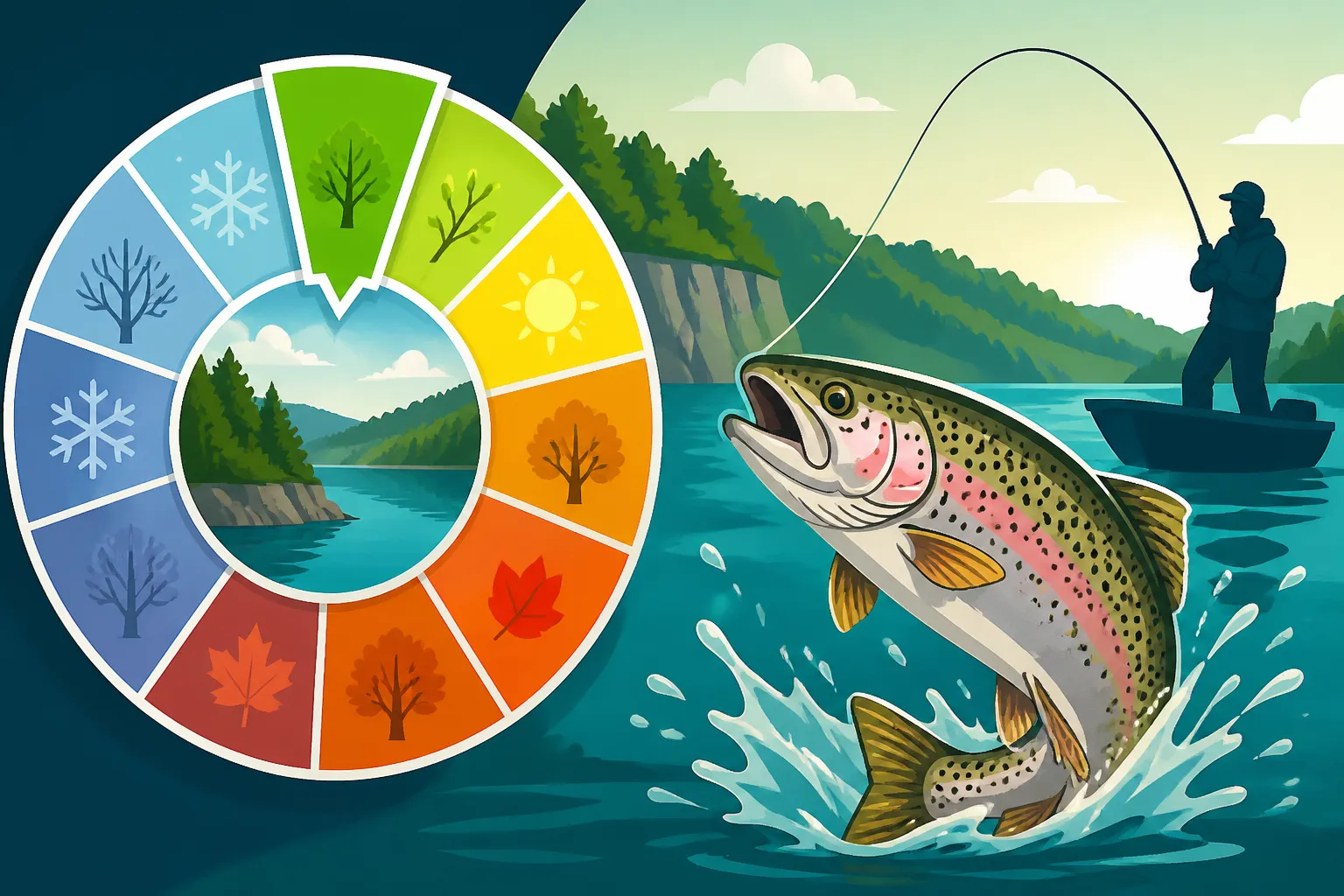
Without a doubt, the cooler seasons are the absolute sweet spot for trout fishing on Lake Cumberland. This period, encompassing late fall, winter, and early spring, offers optimal water temperatures that keep trout active, feeding, and often closer to more accessible depths. If you're planning a trip specifically for trout, these months should be at the top of your list.
-
Fall (September – November): As summer's heat recedes and water temperatures begin to drop, trout become incredibly active. They're still feeding heavily, preparing for the colder months, and often move into shallower areas, especially around creek mouths and points where baitfish congregate. The comfortable air temperatures for anglers, combined with aggressive fish, make fall an incredibly popular and productive time.
-
Winter (December – February): Don't let the cold deter you! Winter fishing on Lake Cumberland can be spectacular for trout. While the surface might be chilly, the deeper water remains consistently cold, and trout are perfectly at home. They tend to school up, making them easier to locate with electronics, and when you find a school, the action can be non-stop. This season, explored in more detail in guides like Winter Trout Fishing at Kentucky's Lake Cumberland, often yields some of the biggest and healthiest fish.
-
Early Spring (March – April): This is another peak period before the lake fully warms up. Trout are emerging from winter, often in a post-winter feeding frenzy, and can be found throughout the water column. The warming trend in the air makes for pleasant fishing, and the trout are still very active, cruising for food. This period is consistently highlighted as the Best Time of Year to Catch Rainbow Trout on Kentucky's Lake Cumberland.
Trout are cold-water species, meaning their metabolism and activity levels are directly tied to water temperature. When the water is cool, they're more comfortable, more energetic, and more willing to chase down a meal. This often means they're not just biting, but actively seeking out food, making for more aggressive strikes and a more exciting fight.
Summer Challenges and Deep-Water Tactics
Once late spring gives way to the full heat of summer (think June through August), trout fishing on Lake Cumberland definitely becomes more challenging. The surface waters warm considerably, pushing trout into deeper, cooler refuges. This phenomenon is known as the thermocline, a distinct layer where water temperature changes rapidly with depth. Trout will seek out the cold water below this layer, often in the deepest parts of the main lake channel or near the dam.
Fishing during these summer months requires a different approach and often more specialized gear. You'll need to target fish that are holding anywhere from 25 to 50 feet deep, or even deeper, depending on the day and conditions. Techniques like using downriggers, lead core lines, or even heavy jigging spoons become essential to get your baits down to where the fish are hiding. While not impossible, summer success typically requires more effort, advanced equipment, and a good understanding of thermal stratification. It's not a time for casual casting from the bank, but for dedicated boat anglers willing to put in the work. Focusing on early mornings or late evenings can also sometimes yield better results as fish might briefly move shallower during cooler periods.
Strategies for Seasonal Trout Success
Once you've zeroed in on the best months, the next step is to adapt your fishing strategies to the specific conditions you'll face. Lake Cumberland trout can be caught using a variety of methods, but tweaking your approach based on the season will significantly increase your odds of success.
Fall and Early Spring: Active Bites and Surface Action
During the cooler, yet comfortable, periods of fall and early spring, trout are often eager to feed and can be found in a wider range of depths, sometimes even near the surface. This makes for some of the most exciting and versatile fishing experiences.
When the water is cooling down in fall or just starting to warm up in early spring, trolling is a highly effective method. You can cover a lot of water and present your lure to numerous fish. Small spoons, like a classic Kastmaster or a Doctor Spoon, are excellent choices, as are slender crankbaits that imitate baitfish. Vary your trolling speed until you find what the fish prefer, and don't be afraid to experiment with different depths using planer boards or simply letting out more line.
Casting is another fantastic option, especially near points, submerged humps, and creek mouths. Trout will often ambush baitfish in these areas. Spinners, such as a Rooster Tail or a Mepps Aglia, are perennial favorites. Small jigs, particularly those with a soft plastic grub body in white, chartreuse, or even a subtle olive, can also be deadly when retrieved with a slow, erratic motion. The key here is to keep moving and cover water until you find where the active fish are holding. This is also a great time to hone your Spin Fishing for Trout: Gear and Technique skills.
Winter Wonders: Targeting Suspended Fish
Winter fishing for trout on Lake Cumberland can be incredibly rewarding, but it often requires a more precise approach. The fish tend to school up and suspend in specific depth ranges, making them less prone to chasing fast-moving lures across wide areas.
One of the most effective winter tactics is vertical jigging. Once you've located a school of trout on your fish finder, drop a spoon or blade bait directly down to their depth. Small, heavy spoons like a Kastmaster or a Cicada worked with a sharp lift and fall can trigger aggressive strikes. The flash and vibration can mimic a dying baitfish, an irresistible target for cold-water trout.
Live bait is another phenomenal option in winter. Small minnows, especially when fished under a slip bobber or on a simple bottom rig, can be irresistible. Many anglers also find success with commercially prepared baits like PowerBait dough or salmon eggs, fished on a small hook with a minimal weight to allow for a natural drift. The trick is to present the bait right at the level of the fish. This is where a good Fish Finders and Electronics for Kentucky Lake Fishing system becomes invaluable. While that article focuses on Kentucky Lake, the principles of using electronics to find suspended fish are universally applicable on Lake Cumberland. Modern electronics can show you exactly where the fish are holding in the water column, allowing you to present your bait precisely. You can find some fantastic, highly-rated fish finders on Amazon to help you pinpoint those elusive winter schools.
Summer's Deep Dive: Advanced Techniques
As mentioned, summer trout fishing on Lake Cumberland pushes trout into the deepest, coolest parts of the lake. To reach them, you'll need to employ some specialized, deep-water techniques. This isn't your average cast-and-retrieve fishing; it's about precision and depth control.
Downriggers are perhaps the most effective tool for summer trout. These devices use heavy weights to carry your lure down to a precise depth, far below the surface. You attach your fishing line to a release clip on the downrigger cable, then lower the weight to your desired depth. When a fish strikes, the line releases from the clip, allowing you to fight the fish directly without the weight. This allows you to troll spoons, crankbaits, or even live bait exactly where the trout are holding, often in the 30-60 foot range, but sometimes even deeper depending on the day.
Lead core line is another method for getting lures deep without the need for downriggers. This specialized fishing line has a lead core wrapped in a braided sheath, making it heavy and allowing it to sink naturally. Each color segment (usually 10 yards) typically sinks to about 5 feet at a given trolling speed. By knowing how many colors you have out, you can estimate your lure's depth. It takes some practice to master, but it's a lighter-weight alternative to downriggers for reaching those deep summer fish. Focus your efforts on the main lake channels and old river beds, which often hold the coldest water and concentrate baitfish.
Essential Gear and Regulatory Considerations
Having the right gear and understanding the rules are just as important as knowing when and where to fish. Proper tackle can make a huge difference in your success and enjoyment, while adhering to regulations ensures your fishing trip remains legal and responsible.
The Right Rods, Reels, and Lines for Trout
When it comes to trout fishing on Lake Cumberland, finesse often trumps brute force. You'll want a setup that offers sensitivity, allows for precise presentations, and can handle a spirited fight from a strong trout without overpowering it.
An ultralight to light action spinning rod, typically 6 to 7 feet in length, is ideal. Look for a rod with a fast or moderate-fast action, which means the tip is sensitive enough to detect subtle bites but the rod still has enough backbone to set the hook and fight a fish. Graphite rods are excellent for their sensitivity and light weight. Pair this with a small, high-quality spinning reel in the 1000 to 2500 size range. A smooth drag system is absolutely critical, especially when fighting a larger trout on light line.
For line, 4 to 6 lb test monofilament or fluorocarbon is generally sufficient. Monofilament offers good knot strength and some stretch, which can be forgiving. Fluorocarbon is nearly invisible underwater and has less stretch, providing more direct contact with your lure. Some anglers prefer to use a braided main line (e.g., 10 lb test) for its sensitivity and casting distance, coupled with a 4-6 lb fluorocarbon leader for stealth. When you're looking to upgrade or just starting out, checking out options for Best Rods and Reels for Kentucky Fishing on Amazon can give you a wide variety of choices and price points.
Must-Have Tackle for Lake Cumberland Trout
Beyond your rod and reel, a well-stocked tackle box (even a small, portable one) is essential for Lake Cumberland trout. You want a variety of options to adapt to changing conditions and fish preferences.
- Lures: As discussed, small spoons (Kastmaster, Little Cleo), inline spinners (Rooster Tail, Mepps Aglia), and small crankbaits (Rapala countdowns, flicker shads) are staple artificials. Don't forget small jigs (1/16 to 1/8 oz) with grub or tube bodies in various colors.
- Hooks: Bring an assortment of small, sharp hooks, typically sizes 8 to 12, both bait holder and treble styles. These are crucial for delicate presentations with live or prepared baits.
- Weights: Split shots and small egg sinkers (1/8 to 1/2 oz) will allow you to adjust your depth for both casting and bottom fishing.
- Swivels: Small barrel swivels or snap swivels (size 10-14) are useful for preventing line twist, especially when trolling or using spinners.
- Bait: Even if you prefer artificials, it's always wise to have some natural or prepared bait on hand. PowerBait (especially in bright colors like chartreuse or rainbow), salmon eggs, and a small container of corn are all excellent choices. For live bait, small shiners or minnows can be incredibly effective, especially in colder water.
- Tools: Don't forget essentials like needle-nose pliers for hook removal, line clippers, and a small net with rubber mesh (to protect the fish if you plan to release them).
Organizing your tackle in a compact, portable box or bag allows you to carry exactly what you need without being bogged down.
Understanding Kentucky Trout Regulations
This is probably the most critical non-fishing advice for any angler. Before you even cast a line, you absolutely must understand and comply with Kentucky's fishing regulations, especially when targeting trout. The rules are there to protect the fishery and ensure sustainable angling for everyone.
The most important regulation for trout fishing in Kentucky is the requirement for a trout permit. Even if you have a general Kentucky Fishing License Guide, you are not legally allowed to fish for or possess trout unless you also possess a valid Kentucky Trout Permit Guide. This small, affordable add-on is crucial and helps fund the stocking programs that make Lake Cumberland such a fantastic trout destination. It's really easy to get one, and you can even learn How to Add a Trout Permit to Your Kentucky Fishing License when you purchase or renew your main license.
Beyond the permit, you need to be aware of creel limits (how many fish you can keep) and size limits (minimum or maximum lengths) for trout. These limits can vary by specific body of water and can sometimes change from year to year, so always, always check the most current KDFWR fishing guide before your trip. You can find this information on the KDFWR website or by picking up a physical copy wherever licenses are sold. Ignoring these rules can lead to significant fines and penalties, so take the time to be informed!
| Season | Best Months | Water Temperature Trend | Typical Depth | Recommended Techniques | Activity Level |
|---|---|---|---|---|---|
| Early Spring | March – April | Warming, but still cool | Shallow to Mid-Depth | Trolling, Casting Spinners/Jigs, Live Bait | High |
| Late Spring | May | Moderately Warm | Mid-Depth | Trolling, Deeper Jigs, Downriggers starting | Medium |
| Summer | June – August | Warmest | Deep (Thermocline) | Downriggers, Lead Core, Vertical Jigging (deep) | Low to Medium |
| Fall | September – October | Cooling | Mid-Depth to Shallow | Trolling, Casting Spinners/Jigs, Live Bait | High |
| Late Fall | November | Cool | Mid-Depth | Trolling, Vertical Jigging, Live Bait | High |
| Winter | December – February | Coldest | Mid-Depth to Deep | Vertical Jigging, Live Bait, Trolling | High |
Disclaimer
The information provided in this guide is for general informational purposes only and is subject to change. Always consult the official Kentucky Department of Fish and Wildlife Resources (KDFWR) regulations for the most current and accurate information on fishing licenses, permits, seasons, and creel limits before planning your fishing trip. Fishing conditions can vary, and past success does not guarantee future results.