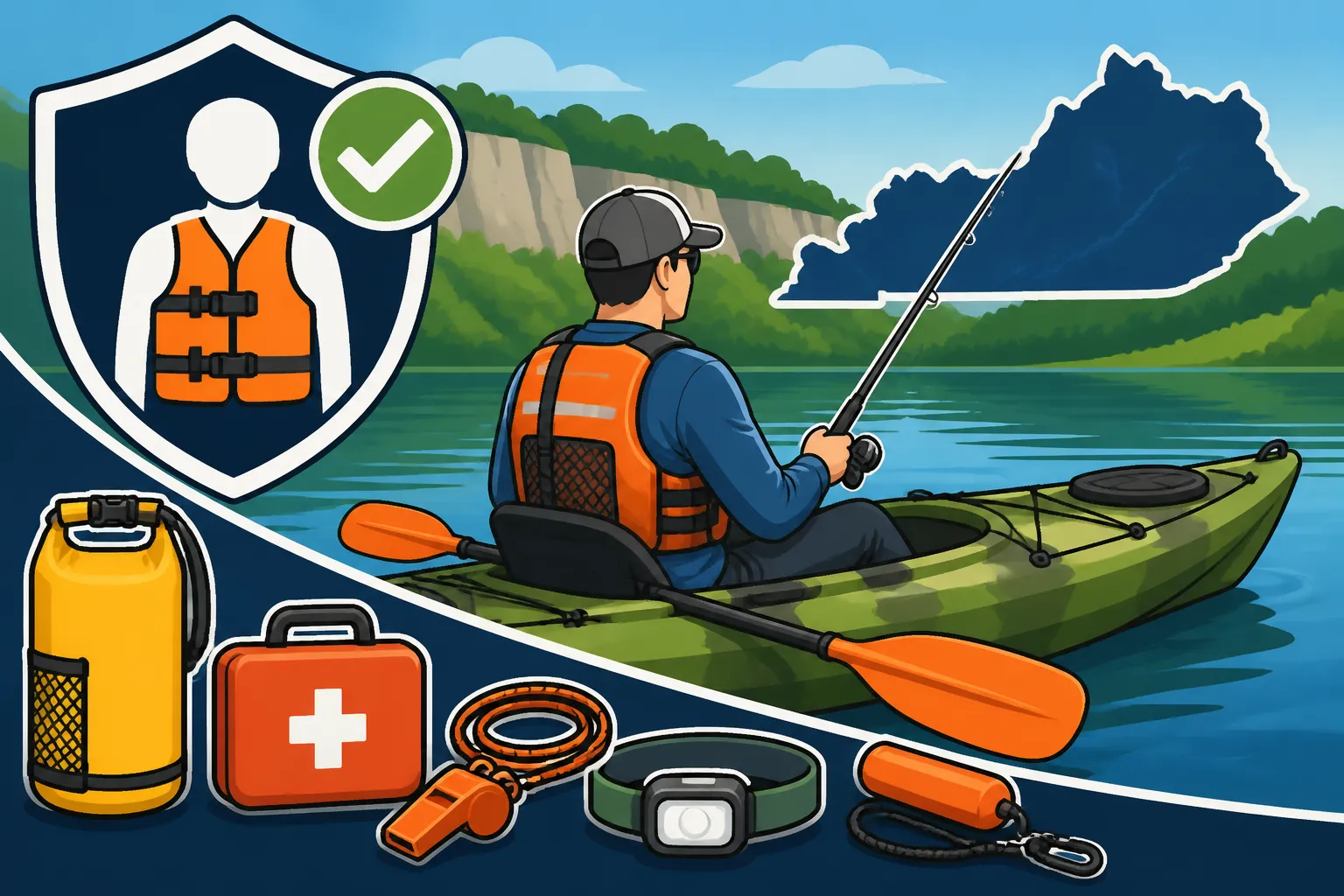
Kayak Fishing Safety Gear for Kentucky Waters
Many kayak anglers underestimate the inherent risks on Kentucky's diverse waters, from calm lakes to swift rivers. While the freedom of a kayak offers unparalleled access to hidden fishing spots, it also demands a proactive approach to safety. This guide will walk you through the essential safety gear you need to carry, ensuring you're prepared for unexpected situations and can enjoy your kayak fishing adventures responsibly and confidently in Kentucky.
Mandatory Personal Flotation: Your Lifeline on Kentucky Waters
Kayaking in Kentucky, whether you're chasing bass on Kentucky Lake or seeking crappie on Lake Barkley, comes with an inherent risk of capsizing or falling overboard. Even if you're a strong swimmer, the cold water shock, strong currents, or unexpected obstacles can quickly turn a fun day into a dangerous situation. That's why your Personal Flotation Device (PFD), or life jacket, isn't just a recommendation; it's an absolute necessity and often a legal requirement. Don't think of it as an inconvenience; it's the single most important piece of safety gear you'll own.
The Non-Negotiable PFD and Kentucky's Rules
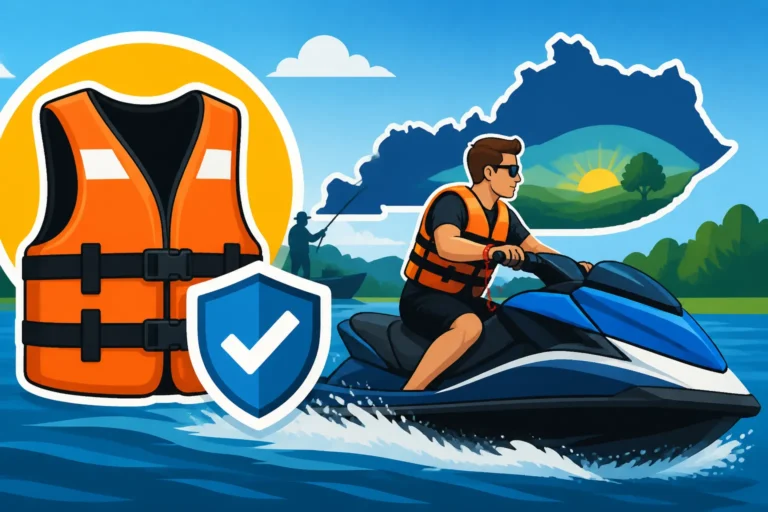
Wearing a U.S. Coast Guard-approved PFD at all times while kayak fishing isn't just smart, it's often the law, especially for younger anglers. While adults aren't always required to wear them continuously on larger vessels, the nature of kayak fishing means you're much closer to the water, and conditions can change in an instant. For anyone operating a personal watercraft (PWC) or for children under 12 on any vessel, wearing a PFD is mandatory in Kentucky. Always double-check the latest Kentucky Life Jacket Law for Kids Under 12 before heading out. The key here is wearing it, not just having it stowed away. In an unexpected capsize, there's rarely time to grab a stowed PFD.
An angler-specific PFD is a game-changer, featuring multiple pockets for small tackle, pliers, and even a built-in whistle, keeping essential items close at hand. These aren't your bulky, uncomfortable orange vests of old. Modern kayak fishing PFDs are designed for comfort and mobility, often with mesh backs to clear high-back kayak seats and ergonomic cuts that allow for unrestricted paddling and casting. You can find a great selection of these specialized PFDs at retailers like Bass Pro Shops, where you can also try them on to ensure a proper fit. A well-fitting PFD should be snug but not restrictive, and it shouldn't ride up when you lift your arms.
Sound and Visual Signals: Getting Attention When You Need It
A PFD does an incredible job of keeping you afloat, but sometimes you need to get the attention of others, whether it's a fellow angler, a passing boater, or emergency services. A simple, reliable whistle attached to your PFD is a must-have sound-producing device. It's inexpensive, easy to use, and can be heard over long distances, especially if your voice is hoarse from yelling or if the wind is carrying sound away. Kentucky regulations, like federal boating laws, generally require all vessels to have a sound-producing device, and a whistle satisfies this for kayaks. Consider a marine-grade whistle made of durable plastic that won't corrode.
Furthermore, carrying visual signaling devices, like a signal mirror or a brightly colored signal flag, can be crucial. Imagine a scenario where you've capsized and drifted a good distance from your launch point – a mirror reflecting sunlight or a waving flag can be seen from much farther away than a small, bobbing kayak. Signal flags are especially effective because they add vertical height to your profile, making you more noticeable above the water. Many kayak flags come with reflective tape, further enhancing visibility during low-light conditions. These simple tools significantly increase your chances of being spotted and rescued in an emergency.
Staying Connected and Orientated on the Water
Even familiar waters can become disorienting in bad weather or if you drift further than intended. Having reliable ways to communicate and navigate is paramount for kayak anglers in Kentucky, especially when exploring new areas or vast bodies of water like Lake Cumberland. Relying solely on your phone can be risky; batteries die, and cellular service can be spotty in remote coves or river stretches, turning a minor issue into a stranded situation.
Essential Communication Tools for Kayak Anglers
Your smartphone is a marvel, but it’s a fragile one when exposed to water and wilderness. Always keep your phone in a high-quality waterproof case or dry bag, especially if it’s your primary means of communication. Better yet, consider a dedicated waterproof two-way VHF radio if you're venturing onto large lakes with other boaters or near major river systems like the Ohio River. These radios allow direct communication with other vessels and often have a weather alert function, which is invaluable for quickly changing Kentucky weather patterns. Being able to hear real-time weather alerts can give you precious time to seek shelter before a storm hits.
For truly remote excursions where cell service is non-existent, a personal locator beacon (PLB) or a satellite messenger device can literally be a lifesaver, allowing you to send emergency signals or check-in messages even when miles from civilization. While a significant investment, for those who regularly paddle far off the beaten path, the peace of mind they offer is priceless. These devices operate independently of cellular networks, relying on satellite signals to transmit your location and distress calls. You can often find these specialized devices on Amazon, complete with reviews from other adventurers. Even a simple waterproof air horn can be a powerful communication tool in close-quarters emergencies.
Mastering Navigation: Knowing Where You Are and Where You're Going
Knowing your location and how to get back to shore or your launch point is critical. For many, a smartphone app with GPS capabilities suffices, but a dedicated handheld GPS unit offers superior battery life, ruggedness, and waterproof features that a phone might lack. These devices are purpose-built for outdoor navigation and can withstand accidental drops or prolonged exposure to moisture. They allow you to mark waypoints, track your path, and easily find your way back to your launch point, even in unfamiliar territory. Many models come preloaded with marine charts or topographic maps, which can be incredibly helpful for identifying potential hazards or fishing structures.
Understanding basic map reading and carrying a physical, waterproof map as a backup is always a good idea, especially in areas with complex shorelines or numerous islands. For example, navigating the countless coves on Lake Barkley's Best Sauger Fishing Spots in Kentucky can be tricky without good navigation. Even a simple, liquid-filled compass can be an invaluable backup if your electronics fail. Regularly checking the weather forecast before and during your trip is also a form of navigation, helping you steer clear of dangerous storms or high winds. Integrating a fish finder with GPS capabilities can kill two birds with one stone, providing both navigation and fish-finding data. Checking out Fish Finders and Electronics for Kentucky Lake Fishing can give you an idea of integrated systems that combine these essential functions. Don't forget to charge all your devices and carry spare batteries for non-rechargeable ones.
Boosting Your Visibility and Preparing for Unexpected Setbacks
Being seen by other boats is incredibly important, especially on busy lakes or rivers. A kayak is a small craft, and it's easy for larger boats to overlook you, particularly in low light conditions or when they're traveling at speed. Beyond visibility, being prepared for minor mishaps can prevent them from escalating into major emergencies. Investing in safety is a smart move, whether you're new to fishing and getting your Kentucky Fishing License Guide or a seasoned pro.
Maximizing Visibility on Kentucky's Waterways
Your kayak might blend in with the water or shoreline, so proactive steps to enhance your visibility are a must. Wearing bright, high-contrast clothing, like neon green, orange, or even white, makes you stand out significantly. Adding reflective tape to your paddle or the hull of your kayak further boosts visibility, especially in overcast conditions or at dusk. Remember, the goal is to be seen from a distance by other boaters, giving them ample time to react and avoid you.
Attaching a brightly colored safety flag to a pole on the stern of your kayak, especially one with reflective tape, drastically increases your profile for other boaters. These flags are designed to be highly visible and can often be collapsed for transport. For those dawn patrol launches or evening floats, a 360-degree white light, mandated for use between sunset and sunrise, is not optional – it's crucial. These lights, often battery-powered and designed for kayaks, ensure you're seen from all directions. Imagine navigating a busy channel near Paducah on the Ohio River; visibility aids are paramount for your safety and the safety of others. They are available at many marine supply stores or online through retailers like Amazon.
The Indispensable Emergency and Repair Kit
A well-stocked, waterproof emergency kit can turn a potential disaster into a minor inconvenience. This isn't just for serious injuries; even small cuts, scrapes, or hooks in a finger can become problematic on the water, especially if not treated promptly. Your kit should include basic first-aid supplies (bandages, antiseptic wipes, pain relievers, waterproof tape), sunscreen, bug repellent, and any personal medications you might need. Consider a compact, marine-specific Best First Aid Kits for Boaters that is designed to withstand moisture.
Beyond medical needs, a small repair kit for your kayak (duct tape, marine-grade epoxy, or a specific patch kit for your kayak material) can save a trip if you spring a leak. These items can patch small punctures or cracks, allowing you to safely return to shore. Always carry a sharp knife or line cutter, a multi-tool, and a spare paddle that's securely tethered to your kayak. Having enough water and a few high-energy snacks can also make a huge difference if you're stranded longer than expected, helping to maintain energy and focus. Remember, prevention and preparedness go hand-in-hand for Kayak Fishing Gear for Kentucky Lakes.
Smart Additions for Every Kentucky Kayak Angler
Beyond the absolute essentials, there are several other pieces of gear that can significantly enhance your safety and overall experience while kayak fishing in Kentucky. These items address common scenarios and provide an extra layer of preparedness for a variety of conditions. They are also useful for new anglers just learning about Kentucky Fishing Regulations Explained.
Safe Anchoring and Retrieval Systems
Anchoring a kayak safely is a skill and requires the right equipment. A small, folding grapnel anchor, often weighing 1.5 to 3 pounds, is usually sufficient to hold a kayak in light to moderate currents or winds. However, the most critical safety component isn't just the anchor itself, but how it's deployed and retrieved. An anchor trolley system is an absolute must-have. This simple rope and pulley system allows you to position your anchor line from the bow to the stern of your kayak without having to physically reach either end. This is crucial for safety, as it prevents your kayak from being pulled broadside by current or wind, which could easily cause capsizing. Always ensure your anchor has a quick-release mechanism in case you need to break free rapidly from a snagged anchor or rapidly changing conditions. Remember to research Best Anchors for Fishing on Kentucky Lake if you plan on fishing larger bodies of water, as anchor size and type can vary with conditions.
Preventing Loss: Tethers, Dry Bags, and Organization
Losing gear overboard is not only frustrating but can also be a safety hazard, especially if it's essential equipment. Tethers for paddles, rods, and other valuable items are cheap insurance. A paddle leash, for instance, means you won't lose your propulsion if you let go of your paddle for a moment to net a fish or adjust tackle. Consider what would happen if your paddle drifted away in a strong current – you'd be in a serious predicament. Tethers prevent these small mishaps from becoming big problems.
Dry bags are indispensable for keeping your spare clothes, snacks, first-aid kit, and other water-sensitive items completely dry. These range from small, roll-top bags for electronics to larger ones for a change of clothes. Many kayak anglers also use dry boxes or tackle boxes with watertight seals to protect fishing gear. Good organization within your kayak, ensuring everything has a place and is secured, also contributes to safety by preventing clutter that could trip you up or block access to critical items. Finding sturdy, waterproof storage solutions can make your trip much more enjoyable and safer, whether you're shopping at Bass Pro Shops or browsing online at Amazon. This also includes securing items like a landing net or stringer so they are readily accessible but not in the way.
Safety Check: A Quick Reference for Your Kentucky Kayak Fishing Trip
To help you keep track, here's a quick checklist of the essential safety gear we've discussed. Before every outing, especially on Kentucky's diverse and sometimes challenging waters, give your gear a once-over. This routine check can prevent many potential problems before they even start. For those bringing young ones, be mindful of Kentucky Fishing License Requirements for Kids as well as PFD requirements.
| Category | Essential Item | Why It's Crucial | Where to Check/Buy |
|---|---|---|---|
| Personal Safety | USCG-Approved PFD (worn) | Keeps you afloat, prevents drowning, often legally required. | Bass Pro Shops, Outdoor Retailers |
| Whistle | Attracts attention in emergencies, fulfills sound signal requirement. | Attached to PFD, any outdoor store | |
| Signal Mirror/Flag | Visual signaling for long-distance recognition, increases visibility. | Outdoor/Marine Supply Stores, Amazon | |
| Communication & Nav | Waterproof Phone/VHF Radio | Emergency calls, weather updates, contacting other boaters. | Electronics Stores, Amazon, Marine Shops |
| Handheld GPS/Physical Map & Compass | Ensures you know your location and can navigate back safely. | Outdoor Retailers, Sporting Goods Stores | |
| Visibility | Bright Clothing/Reflective Gear | Makes you visible to other boaters and rescuers. | Any Clothing Store (Look for high-vis colors) |
| 360-Degree White Light (for night) | Legal requirement and essential for night/low-light visibility. | Marine Supply Stores, Bass Pro Shops | |
| Emergency Prep | Waterproof First-Aid Kit | Addresses minor injuries and medical emergencies. | Pharmacies, Outdoor Retailers, Amazon |
| Kayak Repair Kit (e.g., duct tape, patch) | Fixes leaks/damage to prevent sinking, extends trip. | Kayak Shops, Hardware Stores | |
| Spare Paddle (tethered) | Backup propulsion if main paddle is lost or broken. | Kayak Shops, Sporting Goods Stores | |
| Knife/Line Cutter | Cutting tangled lines, emergency use, prepares fish. | Sporting Goods Stores, Hardware Stores | |
| Water & Snacks | Hydration and energy for unexpected delays. | Grocery Stores | |
| Kayak Control | Anchor with Quick-Release Trolley | Holds position, allows safe deployment/retrieval, prevents capsizing. | Kayak Shops, Marine Supply Stores, Amazon |
| Dry Bags/Boxes | Keeps essential gear dry and protected from elements. | Outdoor Retailers, Kayak Shops, Bass Pro Shops | |
| Tethers/Leashes (for paddle, rods) | Prevents loss of valuable equipment overboard. | Kayak Shops, Sporting Goods Stores |
Before You Launch: A Final Thought
Beyond the gear, responsible kayak fishing in Kentucky also means checking the weather forecast rigorously, telling someone your float plan (where you're going, your route, and when you expect to return), and understanding the specific conditions of the body of water you're heading to. Rivers have currents that can be deceptively strong, large lakes like Kentucky Lake or Lake Cumberland can get choppy very quickly, and even small ponds can hide hazards like submerged timber or sudden drop-offs. Always be aware of your surroundings and the capabilities of your kayak and yourself.
By taking these precautions and outfitting yourself with the right safety gear, you're not just adhering to regulations; you're investing in peace of mind and ensuring countless more enjoyable days on Kentucky's beautiful fishing waters. Safe kayaking is smart kayaking, and it allows you to truly focus on the thrill of the catch rather than worrying about what might go wrong. For more details on what to expect on the water, consider our guide on Life Jacket Requirements for Every Boat Occupant in Kentucky or tips for Best GPS Units for Boating on Big Lakes. Enjoy your time responsibly!
Disclaimer
This article is for general informational purposes only and does not constitute professional advice. Laws, prices and regulations vary by location and change over time. Consult a qualified professional for guidance on your specific situation.