Best Spots for Bowfishing at Night
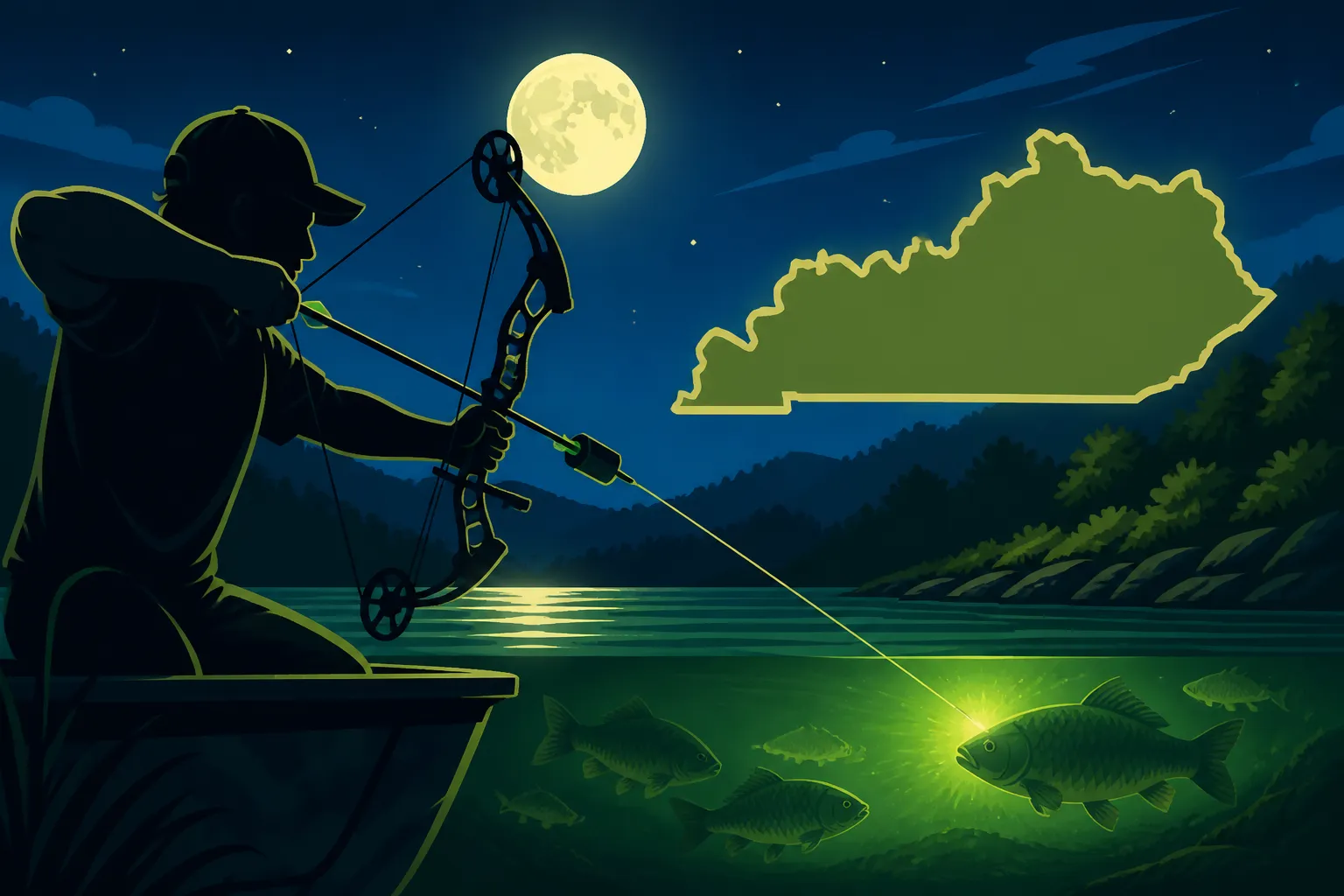
There's nothing quite like the thrill of being out on the water after dusk, especially when you're equipped with a bow and arrow instead of a traditional rod and reel. Many anglers feel a unique draw to bowfishing at night, but often wonder where the best spots are in Kentucky and how to even begin. It can be frustrating trying to figure out the right locations, the ideal setup, and what's even legal to shoot. This comprehensive guide will illuminate the prime locations, essential gear, and crucial regulations to make your Kentucky night bowfishing adventures successful and unforgettable.
Targeting Prime Waters for Night Bowfishing in Kentucky
Kentucky offers a fantastic array of waters for bowfishing, with the cover of darkness often being the most productive time for targeting rough fish. These fish tend to move into shallower waters to feed and are less skittish under the cloak of night, making them prime targets. The key is to look for areas with abundant vegetation, shallow flats, or slow-moving current where these species congregate.
Major Reservoirs and Their Backwaters
When you think about big water in Kentucky, names like Kentucky Lake, Lake Barkley, and Lake Cumberland immediately come to mind. While known for their game fish, these massive reservoirs also harbor incredible populations of rough fish that are perfect for night bowfishing. The real magic happens in their shallower backwater bays, coves, and tributary arms.
Imagine a calm summer night on a sprawling bay off of Kentucky Lake. You’ve got your lights beaming down, cutting through the dark water, revealing common carp or bigmouth buffalo cruising just inches below the surface. These fish often feed on submerged vegetation or invertebrates in the soft bottom of these areas. Look for vast flats, especially those with depths ranging from 2 to 6 feet, where weeds or lily pads are present. The edges of these weed beds can be particularly productive as fish move in and out. For those looking to explore different parts of these vast systems, checking out guides on Best Boats for Kentucky Lake and Lake Barkley Fishing can help you determine the right vessel to access these prime spots. You'll often find success near major feeder creeks or rivers that empty into these lakes, as they bring in nutrients and create ideal habitat for rough fish.
River Systems and Floodplain Lakes
Kentucky's extensive river systems, including the mighty Ohio River and its numerous tributaries, are phenomenal for night bowfishing. These waters often have vast floodplains that create oxbow lakes, shallow sloughs, and backwater ponds when water levels are high. As the water recedes, these areas can concentrate rough fish, making them hot spots.
The Ohio River, for instance, is a true powerhouse for various rough fish species. While many associate it with trophy catfish, its expansive shallow banks, rocky ledges, and slow-moving back channels are teeming with carp, gar, and even paddlefish (though paddlefish have specific snagging regulations and are generally not a bowfishing target in most areas, always double-check!). Targeting areas below dams can also be incredibly productive due to concentrated baitfish and current breaks, which attract feeding fish. However, extreme caution is advised in these high-current areas, especially at night. For anglers interested in the Ohio River, exploring articles like Best Catfish Fishing Spots on Kentucky's Ohio River might provide some additional context on the river's overall productivity, even if your target species differs. The key here is finding slower moving water off the main channel, where current doesn't push fish too hard but still provides enough oxygenated flow.
Smaller Lakes and Ponds with Public Access
Don't overlook the smaller, often overlooked lakes and public ponds scattered throughout Kentucky. While they might not boast the same vastness as the big reservoirs, many are well-stocked or naturally sustain healthy populations of common carp and buffalo. These smaller impoundments are often easier to navigate at night, and fish tend to be less pressured compared to larger, more popular fishing destinations.
Think about places like Taylorsville Lake or Green River Lake. While renowned for their bass and crappie, their shallow, vegetated coves and muddy flats are perfect for bowfishing rough fish after dark. Even smaller community lakes, often managed by the KDFWR, can offer surprisingly good opportunities. Always check the regulations for specific lakes, as some might have restrictions on bowfishing or night access. When planning a trip to a smaller body of water, it's worth noting that even public boat ramps can be tricky in the dark; checking out a guide on Boat Trailer and Ramp Guide for Kentucky Lakes can save you some headaches. Look for ponds or lakes that allow bank access, as this can simplify your setup if you're not using a boat. Often, you can shine a powerful light along the banks and see fish moving in the shallows.
Common Night Bowfishing Species in Kentucky
Unlike traditional rod-and-reel fishing where game fish like bass and crappie are the stars, night bowfishing in Kentucky primarily targets what are legally classified as "rough fish" or "non-game fish." This is a crucial distinction, as intentionally harvesting game fish with a bow and arrow is generally illegal and carries significant penalties. Always know your target before you shoot!
Carp Species
Carp are undeniably the bread and butter of night bowfishing in Kentucky. They are abundant, grow to impressive sizes, and are often found in the shallow, vegetated areas that bowfishermen frequent at night. You'll encounter a few different types:
-
Common Carp: These are the most widespread and recognizable. They have large scales, barbels around their mouths, and can grow quite large, offering a real challenge. Common carp are bottom feeders, often rooting around in soft mud or sand, and their presence can often be detected by muddy plumes in the water or subtle movements near the surface. They are incredibly tough fish, and a well-placed shot is necessary. Targeting them in shallow, vegetated flats, especially those with depths of 1-3 feet, can be very productive. They often cruise slowly, making them excellent targets for patient bowfishermen.
-
Grass Carp: These large, torpedo-shaped fish are often stocked for aquatic vegetation control. They can be incredibly wary, but at night, especially when feeding in dense weed beds, they become more accessible. Identifying them correctly is important, as they lack the barbels of common carp and have a more streamlined body. They typically eat vegetation, so focusing your efforts around heavy weed lines where they'd be grazing is key. They often spook easily, so a stealthy approach is vital.
-
Silver Carp and Bighead Carp (Asian Carp): These invasive species are particularly prevalent in the Ohio River and large reservoirs like Kentucky Lake and Lake Barkley. They are filter feeders, often found near the surface, and are known for jumping dramatically when startled by boat noise. While challenging to hit due to their erratic movements, their sheer numbers and large size make them a rewarding target. Hunting these fish helps to mitigate their impact on native ecosystems, so it's a win-win. Look for them in areas of moderate current or open water near shallow feeding flats, often identifiable by their surface activity. For those curious about how these populations might interact with other species, checking out topics like Kentucky Catfish Daily Limit and Trophy Fish Rule offers insights into the fishing dynamics of these major waterways.
Buffalo Species
Kentucky is home to several species of buffalo – Bigmouth, Smallmouth, and Black Buffalo. These fish resemble carp but lack the barbels and typically have a deeper, more robust body shape. They are also filter feeders or bottom feeders, and like carp, they can grow very large, providing excellent sport for bowfishermen.
Buffalo tend to inhabit similar areas to carp: shallow, nutrient-rich waters with soft bottoms and plenty of submerged vegetation. They are often less spooky than carp and can be found in large schools, especially when they move into shallow flats to feed at night. Their larger size means a more challenging retrieve once shot, adding to the excitement. Look for their distinct broad backs breaking the surface or subtle fin movements in calm water under your lights. They offer a substantial target, making them a favorite for many night bowfishermen.
Gar Species and Bowfin
Longnose, Shortnose, and Spotted Gar are another popular target for night bowfishing. With their elongated bodies and toothy snouts, gar are ancient predators that cruise shallow, often stagnant or slow-moving waters. They frequently lurk near the surface, especially around logjams, submerged timber, or weed lines, waiting for unsuspecting prey.
At night, gar often become more active and can be spotted lying perfectly still just under the surface, making them excellent targets. Their tough, bony scales require a powerful shot and a sharp, barbed arrow to penetrate effectively. Similarly, bowfin, also known as grinnel or mudfish, are extremely hardy, aggressive fish that thrive in vegetated, shallow backwaters. They are powerful fighters and can provide an exhilarating experience on the end of a bowfishing line. Both gar and bowfin are generally found in the same types of habitats as the carp and buffalo, often sharing the shallower, warmer waters of Kentucky's lakes and rivers.
Essential Gear and Safety for Dark Waters
Venturing out for night bowfishing requires more than just a bow and arrow; specific gear and a strong emphasis on safety are paramount to a successful and enjoyable experience in the dark.
Specialized Bowfishing Equipment
Your typical hunting bow might work in a pinch, but dedicated bowfishing gear makes a huge difference.
-
The Bow: While a compound or recurve hunting bow can be adapted, many anglers opt for specialized bowfishing bows. These are often simpler, single-cam compounds or traditional recurves designed for quick, instinctive shooting at close range, rather than precise long-distance accuracy. They typically have lower draw weights (30-50 lbs) than hunting bows, which is perfect for repetitive shooting. Brands like Muzzy and AMS Bowfishing offer excellent setups specifically designed for the sport.
-
Reels and Arrows: This is where bowfishing truly differs. You'll need a specialized bowfishing reel, which can be a spincast reel, a drum reel, or a retriever-style reel. Spincast reels (like those from Zebco) are popular for their ease of use, while drum reels are more manual but very robust. Retriever reels (like the AMS Retriever) are self-contained and super fast for line retrieval. Arrows are heavy, solid fiberglass, usually 5/16 or 3/8 inches in diameter, and feature a specialized barbed point designed to hold fish securely without passing through. The line is typically 150-200 lb test braided nylon or Dacron, directly attached to the arrow. For a detailed look at various setups, consider researching Best Rods and Reels for Kentucky Crappie Fishing for inspiration on general gear, although bowfishing tackle is a different beast entirely.
-
Lighting Systems: This is the absolute game-changer for night bowfishing. You'll need powerful lights to illuminate the water and spot fish. Many serious bowfishermen use generator-powered halogen or LED lights mounted on their boats. Submersible LED lights can also be highly effective, drawing fish closer to the surface and making them easier to see. A good lighting system will project light several feet into the water, allowing you to see fish well before they're right under your nose. Don't forget a headlamp for tasks on the boat and for navigating the banks if you're shore-based.
Boat Setup and Navigational Aids
Most night bowfishing is done from a boat, and a stable, shallow-draft vessel is ideal.
-
The Right Boat: Jon boats or flat-bottom boats are popular choices because they are stable, can navigate shallow waters, and provide a good platform for standing and shooting. Some dedicated bowfishing enthusiasts even modify their boats with elevated shooting platforms for a better vantage point. You'll need space for your lights, generator (if using one), and all your gear. Remember, if you're taking your boat out after dark, you must adhere to all Kentucky's boating safety regulations, including displaying proper navigation lights.
-
Motor Considerations: A quiet trolling motor is invaluable for silently cruising shallow flats and approaching fish without spooking them. An outboard motor is still necessary for covering longer distances, but once you're in your fishing grounds, switch to electric. Consider adding a prop guard if you're in extremely shallow or weedy areas.
-
Navigation and Safety Gear: Even if you know the water like the back of your hand in daylight, everything changes at night. A reliable GPS unit or chart plotter is highly recommended to mark productive spots, avoid hazards, and navigate back to the ramp safely. Always carry all required safety gear, including Life Jacket Rules for Boats in Kentucky for everyone on board, a sound-producing device (horn or whistle), throwable flotation device, and a first-aid kit. A powerful spotlight can also be critical for identifying channel markers, other boats, or potential hazards in the distance.
Personal Safety Practices
Safety should always be your top priority, especially when combining bows and arrows with darkness and water.
-
Buddy System: Never go night bowfishing alone. Always have at least one other person with you. They can help with navigation, spotting fish, and, most importantly, in case of an emergency.
-
Awareness of Surroundings: Be incredibly vigilant of your surroundings. With powerful lights, you might create blind spots or temporary blindness for other boaters. Keep an eye out for submerged obstacles, other vessels, and even people on shore. Never aim your bow or shine your lights towards other people or property.
-
Footing and Stability: Boats can be slippery, especially at night. Wear appropriate non-slip footwear. If you're using an elevated shooting platform, ensure it's incredibly stable. A fall in the dark, especially into cold water, can quickly become dangerous. Always confirm your footing before drawing your bow.
-
First Aid and Emergency Preparedness: Accidents happen. A well-stocked first-aid kit is non-negotiable. Know how to contact emergency services and have your location readily available. Consider taking a Kentucky Safe Boating Certificate Requirements course, even if not legally required for your age, as it covers crucial safety information applicable to all boating activities, day or night. And finally, if you're new to the area, or even new to bowfishing, consider using a service like FishingBooker to find experienced local guides who can ensure a safe and productive outing.
Navigating Kentucky's Night Bowfishing Regulations
Understanding the regulations governing night bowfishing in Kentucky is just as crucial as having the right gear. Violating these rules can lead to fines, equipment confiscation, and even loss of fishing privileges. The Kentucky Department of Fish and Wildlife Resources (KDFWR) sets these rules, and they can change, so always check the latest guide.
General Licensing and Species Rules
Before you even think about putting an arrow in the water, you need the right paperwork.
-
Fishing License: Every resident or nonresident angler 16 years of age or older needs a valid Kentucky fishing license. There are various options, including annual, short-term, and combination licenses. Make sure you understand the nuances of the Kentucky Fishing License Guide to ensure you're covered. This license is your fundamental ticket to fish in Kentucky waters. Even for something as specialized as bowfishing, the standard fishing license is your starting point. You can usually purchase these online through the KDFWR website, from county clerks, or authorized vendors. It's always a good idea to have a physical or digital copy on hand, as game wardens can and do conduct license checks.
-
Target Species: This is arguably the most critical rule for bowfishing in Kentucky. You are only permitted to take rough fish (also known as non-game fish) with a bow and arrow. This includes various carp species (common, grass, silver, bighead), buffalo species (bigmouth, smallmouth, black), gar (longnose, shortnose, spotted), drum (freshwater), and bowfin. Game fish, such as bass, crappie, catfish, and trout, are strictly off-limits for bowfishing. Accidentally shooting a game fish can result in significant penalties. Make sure you can positively identify your target before releasing an arrow. Researching Kentucky Fish Species Guide: 265 Types You Can Catch can help you distinguish between legal and illegal bowfishing targets.
Seasonality and Lake-Specific Rules
While many general rules apply statewide, certain specific regulations can vary depending on the body of water or time of year.
-
Year-Round Opportunity: Generally, bowfishing for rough fish in Kentucky is permitted year-round. This makes it a fantastic activity to pursue when other fishing seasons might be slower. The warmer months, particularly late spring through early fall, are often most popular due to comfortable temperatures and active fish, but opportunities exist throughout the year.
-
Site-Specific Restrictions: This is where you need to do your homework. Some lakes, state parks, or specific sections of rivers might have unique regulations that restrict bowfishing or night access. For instance, certain smaller, managed lakes might be closed to bowfishing to protect specific fish populations or for safety reasons related to other recreational uses. Always check the KDFWR website for the most current information and any site-specific rules before heading out. A quick search for "Kentucky Fishing Rules by Lake and Water" can often lead you to a comprehensive list of regulations for particular bodies of water. Don't assume that because it's legal in one lake, it's legal in all of them.
-
Possession Limits: While rough fish often have generous or no daily limits, it's still good practice to understand if any possession limits apply to the species you're targeting. For most common bowfishing species like carp and buffalo, there are generally no daily or size limits, but this can change, so stay informed.
Ethical Considerations and Disposal
Beyond the legal requirements, ethical conduct and responsible practices are key to ensuring the sport's future and maintaining healthy waterways.
-
Respectful Harvest: Only shoot what you intend to harvest and utilize. If you're not going to eat the fish (many species like common carp and buffalo are excellent table fare when properly prepared), consider if you have other uses for them, such as fertilizer for gardening or as bait for other species. Avoid leaving dead fish to rot on the banks or in shallow water, as this can create unsanitary conditions and negative public perception of the sport.
-
Proper Disposal: If you are not keeping the fish, ensure they are disposed of properly and legally. Burying them well away from the water's edge or taking them to an appropriate disposal facility are responsible options. Check local regulations on fish disposal.
-
Minimizing Disturbance: While night bowfishing involves bright lights, try to minimize unnecessary disturbance to wildlife and other anglers. Be mindful of your noise levels and keep your lights focused on the water where you're actively fishing, rather than broadly scanning shorelines or residential areas. Showing respect for the environment and other users of Kentucky's waterways is paramount. Utilizing platforms like FishingBooker can help you connect with guides who are well-versed in local ethics and regulations, providing a seamless and responsible experience.
| Species | Typical Size Range (Kentucky) | Common Night Habitat | Notes |
|---|---|---|---|
| Common Carp | 5-30+ lbs | Shallow flats, vegetated coves, muddy bottoms | Most abundant, bottom feeders, can be wary. |
| Grass Carp | 10-50+ lbs | Dense weed beds, areas with aquatic vegetation | Can be very spooky, excellent vegetation control. |
| Silver Carp | 5-30+ lbs | Upper water column, moderate current, open water | Invasive, known for jumping, target near surface. |
| Bighead Carp | 10-60+ lbs | Upper water column, moderate current, open water | Invasive, similar to silver carp, helps control populations. |
| Bigmouth Buffalo | 10-50+ lbs | Shallow flats, soft bottoms, vegetated areas | Large, less spooky than carp, filter feeders. |
| Gar (Longnose, Spotted, Shortnose) | 2-20 lbs (Longnose larger) | Surface near logjams, weed lines, stagnant backwaters | Predatory, tough scales, often motionless near surface. |
| Bowfin | 3-15 lbs | Vegetated, shallow backwaters, slow-moving water | Aggressive, powerful fighters, tolerate low oxygen. |
| Freshwater Drum | 1-15 lbs | Soft, muddy bottoms, deeper holes, moderate current | Bottom feeder, sometimes targeted incidentally, good eating. |
Disclaimer
The information provided in this guide is for general informational purposes only and is subject to change. Fishing regulations, license requirements, and access rules in Kentucky can vary and are updated periodically by the Kentucky Department of Fish and Wildlife Resources (KDFWR). It is the sole responsibility of the angler to verify all current regulations, obtain the necessary licenses, and ensure safe boating and fishing practices before engaging in any fishing activity. Always consult the latest official KDFWR publications or website for the most accurate and up-to-date information.