Vertical Jigging Technique for Sauger
You've heard the whispers around the bait shops and boat ramps: sauger are biting, but only if you know the secret handshake. The truth is, these elusive cousins of the walleye can be incredibly challenging to pinpoint and entice, especially when they're hunkered down in deep, current-swept waters. It's enough to make even a seasoned angler feel a bit defeated. But what if I told you there's a tried-and-true method that cuts through the mystery and consistently puts sauger in your cooler? This guide is going to break down the vertical jigging technique, a deadly approach that focuses on presenting your lure right in their strike zone, helping you turn those frustrating whispers into triumphant tales.
Understanding Sauger Behavior for Effective Vertical Jigging
Before we even talk about specific gear or techniques, it's crucial to get inside the head of a sauger. These aren't your surface-splashing bass; they have very distinct preferences that, once understood, make them far easier to target. When you're vertical jigging, you're essentially putting your lure right in front of their nose, so knowing where their nose will be is half the battle won.
Where Sauger Hold in Kentucky Waters
Sauger are true bottom-dwellers, and they have a strong affinity for current and structure. Think about it: moving water brings food, and structure provides ambush points and shelter from that current. In Kentucky, this means you'll often find them congregating in specific areas of our larger rivers and reservoirs.
Consider the mighty Ohio River, where sauger absolutely thrive. They'll stack up behind wing dams, seek refuge around bridge pilings, and hold in deep scour holes where the current has carved out pockets in the riverbed. The same goes for the lower reaches of major reservoirs, especially places like Lake Barkley. While Lake Barkley is renowned for its excellent Lake Barkley Sauger Fishing in Kentucky, you'll find these fish tucked into old creek channels, along steep bluff walls, and around any kind of submerged timber or rock piles that offer a break from the flow. They are not random wanderers; they choose these specific spots because it allows them to conserve energy while waiting for an easy meal to drift by. Knowing this preference helps you focus your efforts and keeps you from aimlessly drifting over unproductive water.
Seasonal Movements and Feeding Habits
Sauger are typically a cold-water species, which is fantastic news for anglers looking to extend their fishing season into the cooler months. While you can catch them year-round, vertical jigging truly shines in late fall, winter, and early spring when water temperatures drop, and sauger become more concentrated and aggressive feeders.
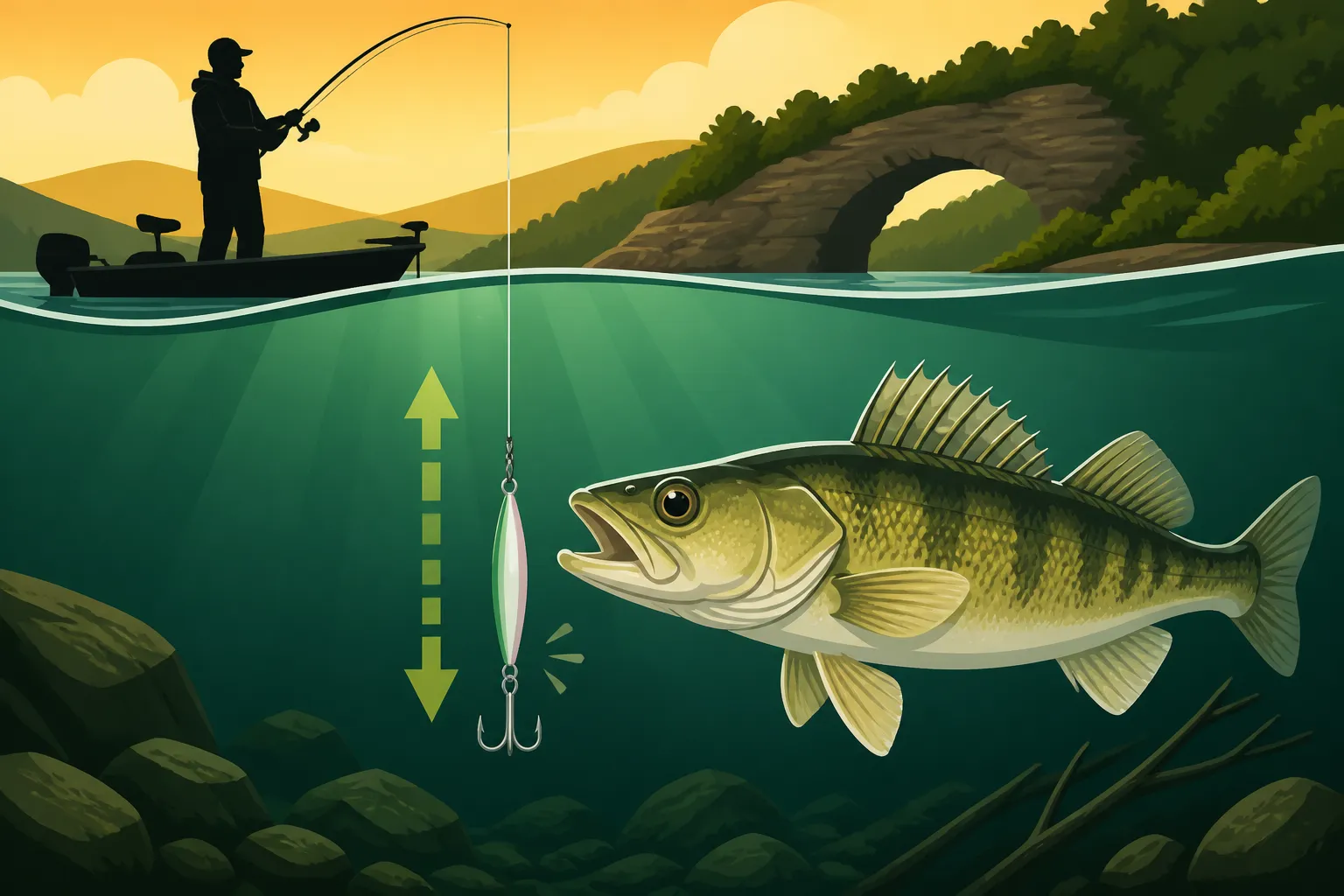
During these colder periods, their metabolism slows down, and they don't expend a lot of energy chasing prey. Instead, they become classic ambush predators. They'll often hug the bottom, or suspend just a few feet above a prominent piece of structure, waiting for an unfortunate baitfish or crayfish to pass by. This behavior is precisely why vertical jigging is so effective: it allows you to present a lure directly in their preferred strike zone without having to cover vast amounts of water. You're bringing the meal right to their doorstep. They're opportunistic, and a perfectly presented jig, mimicking a struggling baitfish, is often too tempting to resist, especially when they don't have to chase it far.
Essential Gear for Vertical Jigging Sauger
Getting your gear dialed in is paramount for vertical jigging success. You're not just casting and retrieving; you're feeling for subtle bites in deep water, often with current. This requires a setup that prioritizes sensitivity and control. Don't cheap out on the wrong equipment, or you'll be frustrated by missed bites and snagged lures.
Rod, Reel, and Line Selection
Choosing the right combination of rod, reel, and line can make all the difference when it comes to feeling those light sauger bites and successfully landing your fish. This isn't about brute force; it's about finesse and sensitivity.
- Rod: For vertical jigging, you'll want a rod that's sensitive enough to transmit the lightest tap, but with enough backbone to set the hook in deeper water. A medium-light to medium power spinning or baitcasting rod, typically between 6'6" and 7' in length, is ideal. The key characteristic is a fast or extra-fast action. This means the rod bends mostly in the tip section, giving you incredible feel for what your jig is doing on the bottom and detecting those subtle strikes. A rod that bends too much (moderate action) will cushion the bite, making it harder to detect. You can explore a variety of options when considering Best Rods and Reels for Kentucky Fishing to find one that fits your vertical jigging needs.
- Reel: A quality spinning reel in the 2000-3000 size range is a solid choice, offering good line capacity and a smooth drag system. If you prefer baitcasting, a low-profile baitcaster can work well, especially for dropping jigs precisely. The most important feature is a smooth, consistent drag. Sauger can make surprisingly strong runs, especially larger ones, and a sticky drag will lead to broken lines.
- Line: This is where many anglers miss the mark. Forget monofilament for vertical jigging. You absolutely need braided line. An 8-15 lb test braided line offers virtually no stretch, which translates to incredible sensitivity. You'll feel every bump, every rock, and most importantly, every subtle "tick" of a sauger bite. The braid's thin diameter also helps cut through the current, keeping your line more vertical. However, braid is visible in clear water, and sauger can be line-shy. This is why you should always tie on a fluorocarbon leader, typically 6-12 lb test, using a knot like the FG or a double uni. Fluorocarbon is nearly invisible underwater and has excellent abrasion resistance for fishing around rocks and timber. You can find quality braided line and fluorocarbon leaders on platforms like Amazon, ensuring you get a reliable product.
Best Jigs and Lures for Sauger
The beauty of vertical jigging lies in its simplicity, but there's a surprising array of effective lures. The goal is to imitate a baitfish or bottom-dwelling prey in a way that triggers a strike.
- Jigs: Jig heads are the bread and butter of vertical jigging. You'll want a variety of styles and weights. Ball head jigs are common, but stand-up jigs (like the VMC Moon Eye or Northland Tackle Mimic Minnow jigs) are excellent because they help your soft plastic bait stand upright off the bottom, presenting a more natural profile. Weights will vary significantly based on current and depth – ranging from 1/4 oz in calmer, shallower areas to 3/4 oz or even heavier in strong currents or very deep water. When it comes to color, experiment! Chartreuse, orange, and white are often popular choices, especially in stained water. In clearer water, more natural baitfish patterns or darker colors might be more effective.
- Soft Plastics: These are what you'll thread onto your jig heads. Grub tails (like a curly tail grub), paddle tails (mimicking a small baitfish), or straight-tail minnow imitations in 2-4 inch sizes are all excellent. Brands like Berkley Gulp! or Z-Man ElaZtech offer durable and scented options that can be irresistible to sauger. The action of the tail on the fall or during the lift-and-drop is what often seals the deal.
- Blade Baits/Spoons: While not traditional jigs, blade baits (like a Silver Buddy or Heddon Sonar) and jigging spoons (like a Hopkins Shorty) can be incredibly effective, especially when sauger are aggressive or you need to cover a bit more water on the fall. They offer a lot of flash and vibration, triggering reaction strikes.
- Live Bait Options: When the bite is tough, or you're fishing in very cold water, tipping your jig with live bait can be a game-changer. A small minnow or shiner hooked through the head onto your jig head often provides that extra scent and subtle action that can tempt even the most finicky sauger. You can readily stock up on these versatile jig heads and soft plastic combinations on Amazon, ensuring you have a diverse tackle box ready for any condition.
Mastering the Vertical Jigging Technique
So, you've got the right gear, and you know where sauger like to hang out. Now, let's talk about the how. Vertical jigging isn't just dropping a lure over the side; it's a dynamic dance between boat control and lure presentation that requires practice and attention to detail.
Boat Positioning and Drifting/Trolling
This is perhaps the most critical aspect of successful vertical jigging. The name "vertical jigging" implies keeping your line as straight up and down as possible, directly beneath your boat. This allows for optimal lure control, direct contact with the bottom, and the best feel for subtle bites.
- Stay Over the Fish: Whether you're targeting a specific rock pile, a submerged brush pile, or a drop-off, your goal is to keep your boat directly above that structure. This is where your electronics become your best friend. A quality fish finder or sonar unit, like those discussed in a guide about Fish Finders and Electronics for Kentucky Lake Fishing, will show you the bottom contours, identify structure, and even mark fish.
- Using Your Trolling Motor: An electric trolling motor is indispensable for vertical jigging. It allows you to precisely control your boat's position, whether you're slowly moving along a contour, holding against a current, or making micro-adjustments to stay on a hot spot. You might "spot lock" if your trolling motor has GPS capabilities, or gently nudge the boat forward or backward to maintain your vertical presentation.
- Controlled Drifting: Sometimes, a slow drift is your best bet, especially if sauger are spread out along a channel or flat. The trolling motor still plays a crucial role here, allowing you to slow down your drift, keep your line vertical, and ensure your jig stays in contact with the bottom. Pay close attention to current and wind, as they will dictate your drift speed and direction. Maintaining control, whether anchored or drifting, means more time with your lure in the strike zone and less time reeling in snagged lines.
The Jigging Motion and Strike Detection
Once you're in position, it's time to bring your lure to life. The basic vertical jigging motion for sauger is often described as a "lift, pause, drop," but there's a lot of nuance to it.
- The Basic Motion: Start by lowering your jig until it makes contact with the bottom. You'll feel a slight slackening of your line or see your rod tip straighten. Reel up any slack until your line is taut. Then, with a wrist snap, lift your rod tip 6-18 inches (or even more, depending on conditions). Immediately follow this lift by dropping your rod tip back down to the starting position, allowing the jig to fall freely on a semi-slack line. The fall is often when sauger strike, as it mimics a dying or injured baitfish.
- Bottom Contact is Key: Sauger are usually very close to the bottom. It's critical to constantly be aware of your jig's position relative to the bottom. Let it hit, lift, and let it fall again. If you lose contact, you might be too far off the bottom or using too light of a jig for the current.
- Vary Your Retrieve: Don't be afraid to experiment! Some days, a quick, aggressive snap is what they want. Other days, a subtle, slow lift and a longer pause before the drop will entice them. Vary the height of your lift, the speed of your lift, and the duration of your pause.
- Strike Detection: This is arguably the hardest part, especially for beginners. Sauger bites can be incredibly subtle – not always a jarring "thump." You might feel a slight tick, a spongy sensation, or even just a sudden slackening of your line as a fish inhales your jig on the fall. Because you're using braided line, you'll feel more. If anything feels "different," set the hook! It's better to set the hook on a snag or a false alarm than to miss a trophy sauger. This requires focus, especially in cold weather when your hands might be numb.
Tips for Maximizing Your Sauger Catch
While the basics of vertical jigging are straightforward, refining your approach can significantly increase your catch rates. Sauger can be finicky, and paying attention to small details often makes a big difference.
Varying Your Presentation
Remember how we talked about experimenting with the jigging motion? This applies to almost everything you do. What worked an hour ago might not work now, or what works for one fish might not work for the next.
- Speed and Height: If you're getting no bites, try lifting your jig higher or lower. Try a faster, more aggressive snap, or a slower, more methodical lift. Sometimes a slight quiver of the rod tip after the drop is enough to entice a reluctant fish. Think about how a dying baitfish might behave – sometimes frantic, sometimes barely moving.
- Color and Size: Don't be afraid to change jig colors or sizes throughout the day. Water clarity, light conditions, and even fish mood can influence color preference. Keep a variety of jig heads and soft plastics in your tackle box, readily available. What works in clear water might be different than what works in stained conditions after a rain. Having a good selection, easily organized in a tackle box (many excellent options available on Amazon), ensures you're ready for anything.
- Live Bait Tipping: As mentioned earlier, if the bite is extremely slow, tipping your jig with a small live minnow or a piece of nightcrawler can add that extra scent and natural action that finally convinces a sauger to strike. This is often the trick when fish are lethargic due to extreme cold or post-frontal conditions.
Understanding Current and Depth
Current and depth are the two primary environmental factors that will constantly challenge you when vertical jigging for sauger. Learning to read and adapt to them is a skill that comes with practice.
- Current Dictates Weight: The stronger the current, the heavier your jig needs to be to maintain vertical presentation and bottom contact. If your line is flowing out behind the boat at a severe angle, you're not vertical jigging; you're essentially drifting a lure. You might need to go from a 1/4 oz jig to a 1/2 oz or even 3/4 oz in strong river currents. Conversely, if you're in a slack-water area or a calm reservoir, you might be able to get away with a lighter jig, which offers a more subtle and natural fall.
- Reading Your Electronics: Your fish finder isn't just for locating fish; it's also for understanding the depth and bottom contours. Pay attention to how quickly the depth changes, where drop-offs are, and where submerged channels or structure exist. This information helps you anticipate where sauger might be holding and allows you to adjust your jigging depth accordingly. Remember, sauger are often hugging the bottom or suspended just above structure. Constantly checking your sonar (many top models found on Amazon) helps you keep your lure in that critical zone.
- Adapt and Overcome: Don't be rigid in your approach. If the current changes, adjust your jig weight. If the fish move deeper or shallower, adjust your line. Sauger fishing, particularly with vertical jigging, is a constant process of adaptation and refinement. The anglers who pay the most attention to these details are usually the ones who come home with the best stories (and the biggest fish!). Remember to always check current Kentucky Fishing Regulations Explained and ensure you have your Kentucky Fishing License Guide in hand before heading out.
| Component | Recommendation (Spinning Setup) | Why It Matters |
|---|---|---|
| Rod | 6'6" – 7' Medium-Light to Medium Power, Fast Action | Sensitivity for bites, backbone for hooksets, fast action for control |
| Reel | 2000-3000 Series Spinning | Good line capacity, smooth drag for fighting fish |
| Main Line | 8-15 lb Braided Line | No stretch for maximum sensitivity, thin diameter cuts current |
| Leader | 6-12 lb Fluorocarbon | Nearly invisible to line-shy fish, abrasion resistance around structure |
| Jig Heads | 1/4 oz – 3/4 oz (Ball or Stand-up) | Versatility for different depths/currents, presents bait naturally on bottom |
| Soft Plastics | 2-4 inch Grubs, Paddle Tails, Minnow Imps. | Mimics natural prey, creates enticing action on the fall |
Disclaimer
This article is for general informational purposes only and does not constitute professional advice. Laws, prices and regulations vary by location and change over time. Consult a qualified professional for guidance on your specific situation.