Kentucky’s Blue Catfish State Record Explained
The dream of landing a monster fish is one that many Kentucky anglers share, but few ever get close to a true state record. When it comes to the colossal blue catfish, our state has produced some incredible catches that leave us all in awe, showing just what our rich waters are capable of. This guide will take a deep dive into the fascinating story behind Kentucky's state record blue catfish, exploring the fish itself, the legendary waters it calls home, and how you might just land your own personal best.
Understanding Kentucky's Blue Catfish State Record
For many anglers in the Bluegrass State, the mere mention of the state record blue catfish conjures images of an almost mythical beast, a true leviathan of the deep. It’s a testament to the incredible fisheries we have here in Kentucky, particularly along our larger rivers and lakes. This isn't just about catching a big fish; it's about connecting with a moment of angling history and understanding the sheer potential of our waters. The pursuit of a record-breaking fish drives many of us to explore new techniques, new waters, and push our limits, and the blue catfish record stands as a beacon for that passion.
The Unforgettable Catch and Its Significance
The state record blue catfish is more than just a number; it represents a monumental achievement for the angler who landed it and highlights the incredible productivity of Kentucky's waterways. This particular fish, a truly gargantuan specimen, tipped the scales at an astounding Kentucky's Record Blue Catfish Weighed 106 Pounds 14 Ounces. Imagine the thrill, the struggle, the sheer disbelief of bringing a fish of that magnitude to the boat! It wasn't just a big fish; it was a testament to the robust health of the Ohio River system, where this record-breaker was eventually caught. This record has ignited the imaginations of countless catfish enthusiasts, inspiring them to seek out their own trophy blue cats. It proves that Kentucky truly harbors some of the largest freshwater fish in the country, and that with dedication and the right approach, anyone could potentially make a catch that becomes part of our angling lore.
The impact of such a catch extends far beyond bragging rights. It shines a spotlight on the importance of river ecosystems and the need for their preservation. When a fishery can produce a fish of this size, it signals a healthy environment with abundant food sources and favorable conditions for growth. This single catch also serves as a benchmark, a challenge for future generations of anglers, and a source of pride for the entire Kentucky fishing community. It reinforces the idea that true giants are swimming in our backyard, waiting to test the skills and resolve of those brave enough to pursue them.
How State Records Are Verified in Kentucky
Catching a potential state record blue catfish is one thing, but getting it officially recognized is a detailed process that ensures accuracy and fairness for all anglers. It's not enough to simply weigh it on your bathroom scale; there are specific protocols that must be followed down to the letter. This rigorous verification process is crucial because it maintains the integrity of the state's angling records and provides an undisputed history of our most impressive catches. The Kentucky Department of Fish and Wildlife Resources (KDFWR) takes this very seriously, understanding that these records are a source of immense pride for anglers and a valuable indicator of our fisheries' health.
First and foremost, any potential record fish must be weighed on certified scales. This usually means finding a commercial scale, like those at a local grocery store, bait shop, or even a processing plant, that has been inspected and calibrated for accuracy. It's not something you can do with a handheld digital scale from your tackle box. Furthermore, the weighing must be witnessed by at least two individuals who are not associated with the angler or their immediate party. These witnesses sign an affidavit to confirm the weight and details of the catch. Clear photographs of the fish, often with the angler and the scale visible, are also a critical part of the submission. The fish itself must be positively identified as a blue catfish, which sometimes requires examination by a KDFWR biologist, especially if there's any ambiguity in species identification, distinguishing it, for example, from a Channel Catfish Vs Blue Catfish: How to Tell Them Apart. All of this documentation is then submitted for official review, and only after thorough scrutiny is a new state record officially declared.
The Mighty Blue Catfish: A True Giant of Kentucky Waters
Blue catfish are truly magnificent creatures, renowned for their incredible size and fighting prowess. They are a cornerstone of Kentucky's freshwater fisheries, drawing anglers from all over who dream of battling one of these freshwater titans. Unlike some other species, blue catfish don't just get big; they get enormous, making them a prime target for those seeking a truly memorable angling experience. Understanding what makes them tick, how to identify them, and why they reach such impressive sizes is key to successfully pursuing them.
Identifying Blue Catfish: Key Characteristics
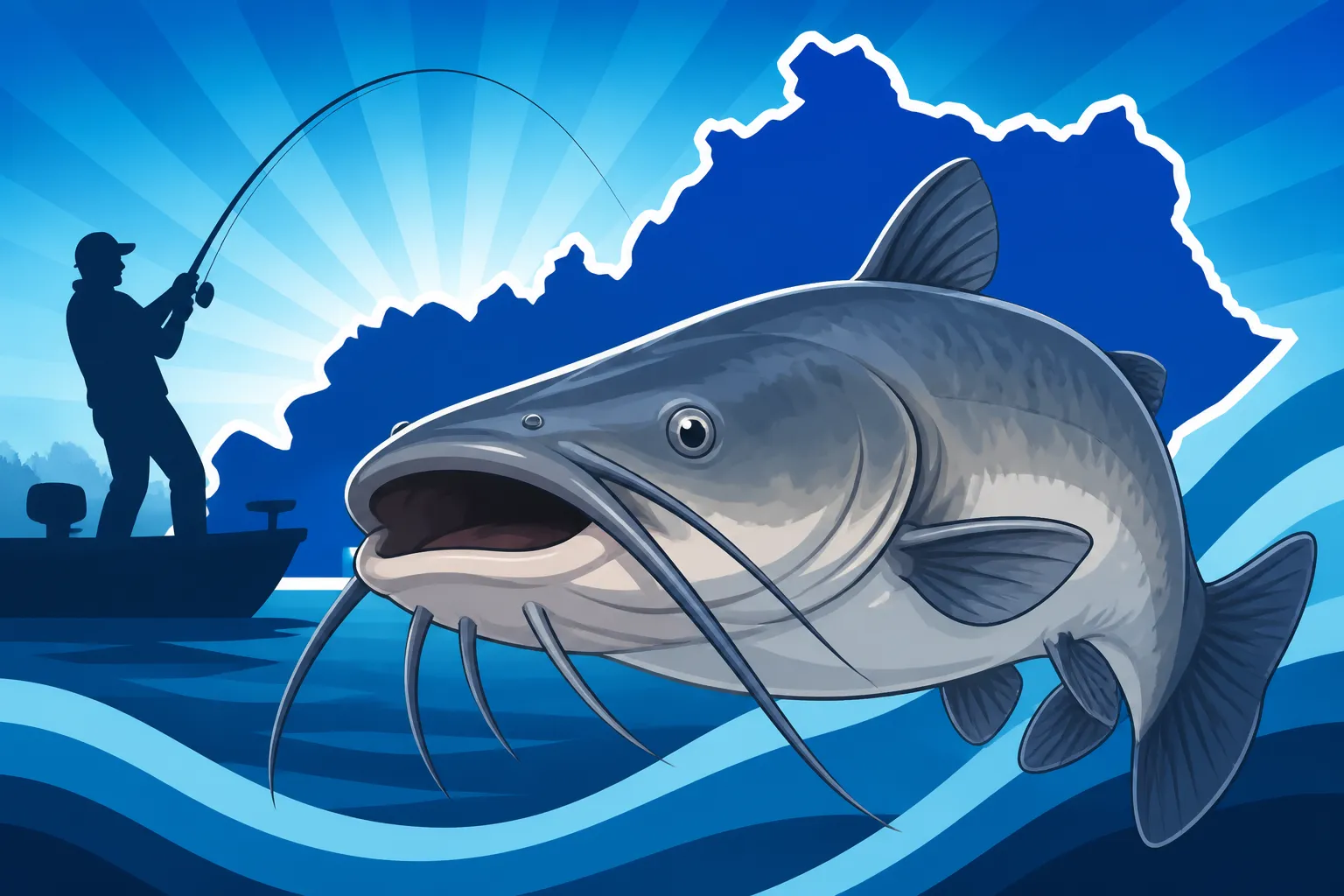
While many anglers might lump all catfish into one category, distinguishing blue catfish from other species, particularly channel catfish, is important, especially when pursuing a potential record. Blue catfish have a distinctive appearance that sets them apart. They typically possess a bluish-gray body coloration, often with a silvery sheen, which can sometimes appear almost white on their belly. One of their most defining features is a deeply forked tail, much more pronounced than the subtly forked tail of a channel catfish or the rounded tail of a flathead. Their head is also relatively small compared to their robust body.
Another key identifier is their anal fin. Blue catfish have a long, straight-edged anal fin that contains 30 to 35 rays. In contrast, channel catfish have a more rounded anal fin with fewer rays, typically 24 to 29. These characteristics become more subtle on smaller fish, but on the large, trophy-sized specimens, they are quite evident. Knowing these differences not only helps in accurate identification for record purposes but also deepens your appreciation for the unique biology of this incredible fish. When you're out on the water, take a moment to observe these features; it makes you a more knowledgeable and effective angler.
Why Blue Catfish Grow So Large in Kentucky
Kentucky's waters provide an ideal habitat for blue catfish to reach colossal sizes. Several factors contribute to their impressive growth, making our state a prime destination for trophy catfishing. Firstly, blue catfish are long-lived fish, capable of surviving for many years, which gives them ample time to grow. Their diet is another critical component. They are opportunistic predators and scavengers, feasting on a wide array of food sources, including smaller fish, mussels, crayfish, and even detritus. In large, nutrient-rich systems like the Ohio River or Kentucky Lake, there is an abundant and consistent food supply, allowing them to pack on pounds rapidly.
Furthermore, these large water bodies offer expansive deep-water habitats and strong currents that are perfect for blue catfish. They are often found in deep channels, river bends, and near structure like submerged timber or rock piles, where they can ambush prey or scavenge effortlessly. The warmer summer months in Kentucky also play a significant role, accelerating their metabolism and encouraging continuous feeding. Couple this with responsible management practices by the KDFWR, which often includes sensible bag limits like the Kentucky Catfish Limit: 15 Fish, Only 1 Over 25 Inches to protect large trophy fish, and you have an environment perfectly suited for these fish to become true giants. This combination of natural factors and thoughtful conservation efforts is why anglers can ask How Big Do Blue Catfish Get in Kentucky? and expect truly astonishing answers.
Prime Waters for Trophy Blue Catfish in Kentucky
Kentucky is blessed with some incredible waterways, and for blue catfish anglers, a few stand out as absolute meccas for trophy fish. These aren't just good fishing spots; they are legendary locations known for consistently producing some of the largest blue catfish in the country. If you're serious about targeting a truly massive blue cat, these are the places you need to put on your radar. The sheer size and depth of these waters, combined with their rich ecosystems, create the perfect conditions for these freshwater giants to thrive.
The Ohio River: A Legendary Blue Catfish Fishery
When discussing trophy blue catfish in Kentucky, the Ohio River invariably comes up as the undisputed champion. This mighty river, forming Kentucky's northern border, is not just large; it's a bustling aquatic highway teeming with life and offering miles upon miles of prime blue catfish habitat. Its deep channels, strong currents, and numerous tributaries provide a constant flow of food and diverse structures for blue cats to inhabit. It's no wonder that the state record blue catfish itself came from this very river. The river's vastness means that even with significant fishing pressure, there are always new areas to explore and hidden pockets where truly enormous fish can grow undisturbed.
Anglers on the Ohio River often target the deeper holes, the areas around power plant discharges, and the mouths of creeks and rivers that feed into the main stem. These spots concentrate baitfish and provide ideal ambush points for large predators. The presence of dams along the Ohio also creates prime fishing opportunities, as the turbulent waters below the lock and dams act as feeding grounds. Understanding the river's unique currents and bottom structure is crucial here. Where to Catch Trophy Catfish on the Ohio River is a question many anglers ponder, and the answer often involves extensive time on the water, using heavy-duty gear to contend with the powerful current and even more powerful fish. The Ohio River truly is a national treasure for blue catfish angling, and its potential for producing even larger records remains tantalizingly high.
Kentucky Lake and Other Big Water Hotspots
While the Ohio River holds a special place in the hearts of trophy blue catfish anglers, Kentucky is home to other expansive lakes that also boast incredible blue catfish populations. Kentucky Lake, forming part of the Land Between the Lakes National Recreation Area, is another premier destination. This massive reservoir, stretching over 160,000 acres, offers vast expanses of open water, extensive river channels, and countless submerged features that make it ideal for blue cats. Much like the Ohio River, its sheer size and diverse structure provide everything a blue catfish needs to grow to impressive proportions.
Beyond Kentucky Lake, other large reservoirs like Lake Barkley (which connects directly to Kentucky Lake via a canal), Lake Cumberland, and even some deeper sections of the Barren River Lake can produce significant blue catfish catches. These lakes often have deep, old river channels running through them, which are prime locations for schooling baitfish and, consequently, large blue catfish. Anglers targeting these lakes often focus on ledges, humps, and the deepest parts of the main lake channel, especially during warmer months. The Kentucky Catfish Fishing: Ohio River and Kentucky Lake Guide often emphasizes similar strategies across these big waters, adapting for the nuances of reservoir versus river fishing. Success in these lakes often comes down to covering a lot of water with appropriate electronics and persistent bait presentation.
Targeting Record-Sized Blue Catfish: Techniques and Tackle
Landing a blue catfish that approaches state record size isn't a stroke of luck; it's the result of intentional effort, specialized techniques, and the right gear. These fish are not only immense but also incredibly powerful, requiring anglers to be prepared for a serious battle. You wouldn't use ultralight gear to haul in a hundred-pound fish, right? So, equipping yourself properly and understanding the nuances of how these giants feed is absolutely essential.
Essential Gear for Trophy Catfishing
When you're chasing blue catfish that could weigh as much as a small person, your standard bass rod simply won't cut it. You need heavy-duty tackle that can withstand immense pressure. Starting with rods, look for strong, medium-heavy to heavy power rods, typically 7 to 9 feet in length, with a fast to moderate action. These rods provide the backbone needed to leverage a large fish away from cover and absorb powerful runs. Pair these with robust baitcasting reels, often conventional reels, designed for saltwater or heavy freshwater applications. Best Reels for Catfish Fishing will typically highlight models known for their powerful drag systems and high line capacity.
Speaking of line, forget about thin monofilament. Braided line in the 50 to 100-pound test range is standard for trophy blue catfishing. Its incredible strength, zero stretch, and abrasion resistance are paramount when battling a monster in current or near submerged structure. A heavy monofilament or fluorocarbon leader, usually 80 to 150-pound test, is then tied to the braid to provide extra abrasion resistance and absorb some shock. Don't forget about your terminal tackle: strong circle hooks (10/0 to 16/0 are common), heavy sinkers (3-8 ounces or more, depending on current), and quality swivels and snaps are non-negotiable. Many anglers will head to online retailers like Amazon to find these specialized, heavy-duty components that might not be available at every local tackle shop.
Best Baits and Rigging Strategies
Blue catfish are primarily piscivorous, meaning they love to eat other fish. When targeting trophy-sized specimens, fresh cut bait is king. Shad, skipjack herring, carp, and even large portions of perch or drum are all excellent choices. The key is freshness; the smellier and bloodier, the better, as blue catfish rely heavily on their sense of smell to locate food. Some anglers also use live bait, especially smaller live shad or bluegill, but cut bait generally gives off a stronger scent trail, drawing in fish from a wider area. Choosing the Best Bait for Blue Catfish Fishing often comes down to what's readily available and fresh in the waters you're fishing.
Rigging for these giants typically involves sturdy bottom rigs designed to hold your bait in place against current. The Carolina rig, with a heavy egg sinker above a swivel, and a leader to a large circle hook, is a perennial favorite. The Santee Cooper rig, which incorporates a float on the leader to lift the bait off the bottom, is also very effective, especially over soft bottoms or submerged structure. For those fishing from a boat, anchoring upcurrent from likely holding spots—such as deep holes, channel swings, or submerged timber—and fanning out multiple rods with different bait sizes and depths is a common and successful strategy. You'll often find a good selection of specialized rigs and weights on platforms like Amazon.
Mastering the Art of Big Catfish Hunting
Successfully targeting record-sized blue catfish requires more than just heavy gear and good bait; it demands a deep understanding of their behavior and habitat. These fish are not randomly distributed; they follow predictable patterns based on season, water temperature, and food availability. In colder months, blue catfish tend to congregate in deep holes, often in large schools, to conserve energy. As water temperatures rise in spring and summer, they become more active, moving into shallower feeding flats at night and retreating to deeper channels during the day.
Sonar and GPS technology are invaluable tools for locating these fish and their preferred structures. Anglers spend hours idling over prime areas, looking for baitfish schools and large fish arches on their fish finder screens. Once a promising spot is identified, precise anchoring and strategic bait placement are key. Patience is also paramount; trophy blue catfish bites can be few and far between, but when they hit, it's often a violent, unmistakable strike. Learning to read river currents, identify productive bottom structure, and even track migratory patterns of baitfish will significantly increase your odds of connecting with a true monster. The journey to catching a record-breaker is often one of continuous learning and adaptation, honing your skills on every trip out.
| Feature | Blue Catfish (Ictalurus furcatus) | Channel Catfish (Ictalurus punctatus) |
|---|---|---|
| Tail Shape | Deeply forked | Moderately forked |
| Anal Fin | Straight edge, 30-35 rays | Rounded edge, 24-29 rays |
| Body Color | Bluish-gray, silvery sheen | Olive-brown to gray, often with dark spots (younger) |
| Head Size | Relatively small compared to body | Medium-sized, more proportionate |
| Size Potential | Can reach well over 100 lbs (trophy species) | Rarely exceeds 30-40 lbs (smaller trophy potential) |
| Barbels | 8 barbels (2 nasal, 2 maxillary, 4 chin) | 8 barbels (2 nasal, 2 maxillary, 4 chin) |
| Primary Habitat | Large rivers, main lake channels, deep reservoirs | Rivers, streams, ponds, lakes (more adaptable) |
Responsible Angling and the Future of Blue Catfish Records
The pursuit of a state record blue catfish, while exciting, comes with a significant responsibility to protect these magnificent fish and ensure the health of our fisheries for future generations. It's not just about what you catch, but how you catch it, and what you do after the catch. Sustaining a population that can produce such giants requires thoughtful angling practices and a commitment to conservation. Every angler has a role to play in preserving Kentucky's incredible blue catfish resource.
Practicing Catch and Release for Giant Catfish
While the allure of a state record might suggest keeping every monster fish caught, many trophy blue catfish anglers advocate for catch and release, especially for the largest specimens. Giant blue catfish are often mature, long-lived breeding stock, contributing significantly to the population's genetic diversity and future recruitment. Removing these super-spawners can have a detrimental effect on the overall health and future trophy potential of a fishery. When you consider that some of these fish are decades old, their value to the ecosystem becomes immeasurable. Where to Catch a State-Record Blue Catfish often implies finding these older, larger individuals.
If you do catch a truly massive blue catfish and decide to release it, proper handling is absolutely crucial. Keep the fish in the water as much as possible, use a large landing net or lip gripper designed for big fish, and handle it gently. Avoid dragging it across rough surfaces or holding it by the gills. Support its body horizontally, especially its belly, if lifting it for a quick photo. Revive the fish by holding it upright in the water, facing into the current, until it can swim away strongly on its own. Releasing these giants unharmed ensures they can continue to grow, spawn, and be caught again, perhaps by another angler seeking their own personal best.
Contributing to Blue Catfish Conservation
Beyond individual catch and release practices, contributing to broader conservation efforts is vital for the long-term sustainability of Kentucky's blue catfish fisheries. This includes adhering strictly to all Kentucky Fishing Regulations Explained, including bag and size limits for catfish. These regulations are scientifically determined to protect fish populations and ensure healthy numbers for all species. Support for organizations that focus on river and lake conservation, habitat restoration, and water quality improvement is also incredibly important. These efforts directly impact the environment where blue catfish thrive.
Anglers can also contribute by reporting any unusual fish observations or potential poaching to the KDFWR. Participating in angler surveys, if offered, provides valuable data to fisheries biologists about catch rates, fish health, and population trends. Education plays a huge role too; sharing knowledge about responsible angling, proper fish handling, and the importance of conservation with fellow anglers, especially younger generations, helps instill a culture of stewardship. The blue catfish is an iconic species in Kentucky, and its continued presence as a trophy fish relies on the collective efforts of all who cherish our waterways and the incredible life they support.
Disclaimer
This article is for general informational purposes only and does not constitute professional advice. Laws, prices and regulations vary by location and change over time. Consult a qualified professional for guidance on your specific situation.