Kentucky’s Record Channel Catfish Weighed 32 Pounds
The thrill of landing a monster catfish is a feeling every angler dreams about, and in Kentucky, the benchmark for channel catfish excellence sits at a hefty 32 pounds. Many of us spend countless hours on the water, hoping to hook into something truly remarkable, but catching a fish of that magnitude requires a blend of knowledge, technique, and a bit of luck. This guide will take a deep dive into the legendary 32-pound Kentucky state record for channel catfish, exploring what makes these fish so special, where to find them, and the proven methods to increase your chances of landing your own personal best.
The Unforgettable Kentucky Channel Catfish Record: 32 Pounds of Pure Power
When we talk about a 32-pound channel catfish, we're not just talking about a big fish; we're talking about a true leviathan for its species in Kentucky waters. Channel catfish are known for their strong fight, but a fish of this size is on an entirely different level. It represents years of growth, successful evasion of predators, and a healthy ecosystem providing ample food. This record isn't just a number; it's a testament to the potential of Kentucky's waterways and the dedication of the angler who caught it.
Imagine the sheer power required to reel in such a beast. Most channel catfish caught by recreational anglers are in the 2-10 pound range, making a 32-pounder an absolute giant. This record-setting fish likely put up an incredible battle, testing the angler's tackle, patience, and skill. It's the kind of catch that becomes the stuff of local legend, inspiring others to cast their lines with renewed hope and determination. It pushes the boundaries of what many thought possible for channel cats in the Bluegrass State.
Why a 32-Pounder is a True Trophy
To put it into perspective, a 32-pound channel catfish is roughly equivalent to a small child in weight. Think about trying to lift and control that kind of weight on the end of a fishing line, especially when it's actively trying to pull away and dive for cover. These fish are not only heavy but also incredibly strong for their size, with powerful tails that can generate immense thrust. Their broad, muscular bodies are built for fighting current and escaping danger.
This record is also significant because channel catfish, while plentiful, don't typically grow to the immense sizes that blue catfish or flathead catfish can achieve. While you might hear tales of 100-pound blue cats from the Ohio River, a 30-plus pound channel catfish is truly exceptional. It signifies that the fish has found an abundance of food, evaded predators and anglers for a long time, and likely lives in a prime habitat with consistent water conditions and nutrient flow. It's a testament to the richness of Kentucky's aquatic environments.
Understanding Kentucky's Channel Catfish
Before you can hope to catch a record-breaker, it's crucial to understand the species itself. Channel catfish (Ictalurus punctatus) are one of the most popular game fish in Kentucky, cherished for their fighting ability and delicious table fare. They are widespread across the state, inhabiting rivers, large reservoirs, and even smaller lakes and ponds. Knowing their habits, preferred environments, and dietary preferences is the first step toward targeting bigger fish. You can learn more about all the different whiskered species in our Kentucky Catfish Species Guide: Channel, Blue, Flathead and White.
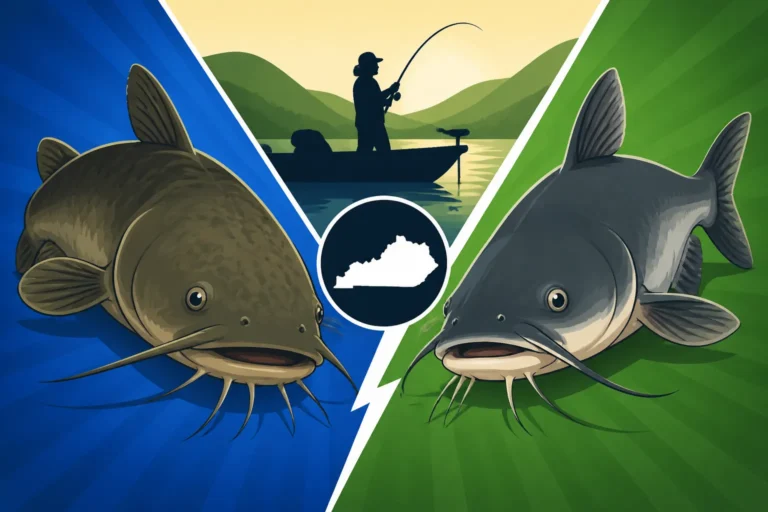
Channel catfish are easily identifiable by their slender bodies, deeply forked tails, and barbels (whiskers) around their mouths. They typically have dark spots on their sides when young, which often fade as they grow older. Their coloration can vary from olive-green to blue-gray on their backs, with lighter sides and white bellies, often adapting to the clarity and color of the water they inhabit. Unlike the broad, flat head of a flathead catfish or the larger, more robust body of a blue catfish, channel cats have a more streamlined appearance. Knowing how to differentiate them is key, as covered in Flathead Catfish Vs Channel Catfish: How to Tell Them Apart.
Preferred Habitats and Behavior
Channel catfish are incredibly adaptable, but they do have preferences that can guide your fishing efforts. In rivers like the Ohio River or the Cumberland River, they often congregate in deeper holes, around submerged timber, under cut banks, or near current breaks. These spots offer them shelter from strong currents and ambush points for passing prey. They are opportunistic feeders, meaning they'll eat just about anything, but they definitely have favorites.
In larger reservoirs and lakes, you'll find channel catfish along creek channels, points, humps, and ledges. They are also drawn to areas with submerged brush piles, rock piles, or artificial fish attractors. During warmer months, they might move into shallower water to feed, especially at night or during low-light conditions. As the water cools, they tend to retreat to deeper, more stable temperatures. Understanding these seasonal movements and habitat preferences is paramount to consistent success.
What Do Channel Catfish Eat?
Channel catfish are true omnivores with a highly developed sense of smell, which they use to locate food in murky waters or at night. Their diet includes a wide array of items: insects, crayfish, small fish, mussels, aquatic plants, and even fruits and berries that fall into the water. This varied diet is why so many different baits are effective for them.
For anglers targeting larger channel cats, common baits include cut bait (like shad, skipjack, or herring), live or dead minnows, nightcrawlers, and various prepared "stink baits" or dough baits. Many experienced anglers swear by fresh cut bait because it releases a strong scent trail that can attract catfish from a significant distance. The freshness and oil content of the bait are often key factors in its effectiveness. You can find a vast selection of bait-making ingredients or pre-made baits on Amazon if you're looking to experiment with different options.
Strategies for Catching Giant Channel Catfish
Catching a 32-pound channel catfish isn't just about luck; it's about smart fishing. You need to employ specific strategies, use the right gear, and understand the subtle nuances of catfish behavior. It's a game of patience and persistence, but when that rod doubles over, it's all worth it.
Essential Gear for Big Cats
To tackle a potential record-breaking channel catfish, you'll need gear that can handle the immense strain. Think heavy-duty.
- Rods: A medium-heavy to heavy action rod, usually 7 to 9 feet long, is ideal. This length provides leverage for casting heavier baits and fighting strong fish. Look for rods with a sturdy backbone but enough flexibility in the tip to detect subtle bites. Many reputable brands offer excellent catfish-specific rods that you can easily find on Amazon.
- Reels: A robust baitcasting reel or a large spinning reel with a smooth, powerful drag system is essential. The drag needs to be able to give line smoothly under extreme pressure without locking up, which could result in a broken line or pulled hook. Capacity is also important, as you'll want plenty of line to handle long runs. Best Rod and Reel Combo for Catfish Fishing offers more insights.
- Line: Opt for a strong monofilament line in the 20-30 pound test range, or a braided line of similar breaking strength (e.g., 50-80 pound test). Braided line offers superior sensitivity and strength for its diameter, but monofilament has more stretch, which can act as a shock absorber during violent head shakes. A quality line is a crucial link in the chain, so don't skimp here.
- Hooks: Use sharp, strong circle hooks or Kahle hooks ranging from 5/0 to 8/0, depending on your bait size. Circle hooks are often preferred by many catfish anglers because they tend to hook the fish in the corner of the mouth, leading to fewer gut-hooked fish and easier releases if you're practicing catch and release.
- Sinkers: Various sinkers, such as no-roll sinkers, pyramid sinkers, or egg sinkers, will be necessary to keep your bait on the bottom in current. Sizes will vary depending on the current strength and depth, but having a selection from 1 to 4 ounces is a good starting point.
Effective Rigs and Baits
For targeting big channel catfish, simple but effective rigs are usually best. The key is to present your bait naturally on or near the bottom, where these fish primarily feed.
- Carolina Rig/Slip Sinker Rig: This is perhaps the most popular and versatile rig for catfish. It consists of a slip sinker (egg sinker or no-roll sinker) on the main line, followed by a bead (to protect the knot), a swivel, and then a leader (12-24 inches) tied to your hook. This rig allows the fish to pick up the bait and run without feeling the weight of the sinker immediately, leading to more solid hooksets. Check out Best Rigs for Catfish Fishing in Current for detailed setups.
- Three-Way Swivel Rig: Useful in heavier current, this rig uses a three-way swivel, with one eye tied to your main line, another to a short leader with a sinker, and the third to a longer leader with your bait. This keeps the bait suspended slightly off the bottom or allows it to drift just above snags.
- Stink Baits and Prepared Baits: While cut bait is often king for bigger fish, specialized prepared baits can be incredibly effective, especially in stained water where scent reigns supreme. Dip baits, punch baits, and pre-formed dough baits are all popular options. Ensure you have the right bait holder hooks for these. Best Bait for Channel Catfish Fishing provides a comprehensive overview.
- Jug Fishing and Trotlines: For those looking to cover more water or fish multiple baits, methods like jug fishing or setting trotlines can be very productive. These techniques require specific regulations to be followed, so always check with the Kentucky Department of Fish and Wildlife Resources before deploying them. For a primer on jug fishing, refer to How to Jug Fish for Catfish Step by Step.
Top Spots to Target Trophy Channel Cats in Kentucky
Kentucky is blessed with an abundance of waters that hold impressive channel catfish. While the 32-pound record is a rare feat, knowing where these fish thrive significantly increases your odds. Focus on areas that offer deep water, structure, and a good food source.
The Mighty Ohio River
The Ohio River is a powerhouse for all catfish species in Kentucky, including some truly monstrous channel cats. Its vast expanse, diverse bottom structure, and constant flow provide an ideal environment. Look for channel catfish in:
- Deep Holes and Eddies: Especially downstream from dams, locks, and major confluences where current creates scour holes. These deep spots offer refuge and concentrate baitfish.
- Submerged Structure: Fallen trees, rock piles, old bridge pilings, and debris fields create perfect ambush points and cover for catfish.
- Tributary Mouths: Where smaller rivers and creeks empty into the Ohio, bringing nutrients and sometimes cooler water, attracting bait and therefore catfish.
For more detailed information, see Best Catfish Fishing Spots on Kentucky's Ohio River.
Kentucky's Major Reservoirs
Lakes like Kentucky Lake, Lake Barkley, Lake Cumberland, and Barren River Lake are also fantastic places to find large channel catfish. While they might not produce the sheer numbers of trophy fish that the Ohio River does for blue cats, they certainly hold their share of impressive channel cats.
- Kentucky Lake and Lake Barkley: These interconnected reservoirs are renowned for their incredible fishing. For channel catfish, focus on the main lake channels, deep creek arms, and areas with submerged timber or old roadbeds. The summer months, especially at night, can offer excellent opportunities for bigger fish as they move shallower to feed. Learn more about the summer bite in Kentucky Lake Summer Catfish Bite.
- Lake Cumberland: Known for its depth and clear water, Lake Cumberland also holds good channel catfish, particularly in its upper reaches and major creek arms.
- Barren River Lake: This lake is known for healthy populations of all catfish species. Targeting deeper areas with structure and feeding channels is key here.
Other Rivers and Smaller Lakes
Don't overlook Kentucky's numerous smaller rivers and larger ponds. Rivers like the Green River, Rough River, and Salt River can hold surprisingly large channel catfish, especially in their deeper pools and oxbows. Even well-managed farm ponds can produce impressive channel cats, though typically not to the record-setting size of 32 pounds. Remember to always confirm Kentucky Fishing License Needed for Public Lakes and Rivers and other regulations for any waters you plan to fish.
Tips for Hooking and Landing a Trophy Channel Catfish
Beyond the right gear and location, a few extra tips can make all the difference when you're targeting that once-in-a-lifetime channel catfish.
Patience and Persistence
Catfishing is often a waiting game. These fish aren't always actively chasing bait, especially the larger, more cautious ones. Set your lines, make yourself comfortable, and be prepared to wait. Sometimes, the bite won't pick up until later in the evening or even deep into the night. Night Fishing Techniques for Catfish can be particularly effective for large channel cats.
The Importance of Scent
As mentioned, channel catfish rely heavily on their sense of smell. Ensure your bait is fresh and has a strong scent. If using cut bait, cut it into chunks that release plenty of blood and oils. For prepared baits, make sure they are properly impregnated onto your bait holder. Some anglers even add scent attractants to their baits or dips to enhance their appeal.
Detecting the Bite
The bite of a large channel catfish can range from a subtle tap to a rod-bending yank. With a slip sinker rig, watch for the line to slowly pull off the reel or a steady bend in your rod tip. Resist the urge to set the hook immediately. Let the fish take the bait and swim off with it, allowing the circle hook to do its job and roll into the corner of its mouth. When the rod is heavily loaded, a firm, sweeping hookset will usually secure the fish.
The Fight of Your Life
Once hooked, a 32-pound channel catfish will put up an incredible fight. Keep your drag set appropriately – tight enough to control the fish but loose enough to allow line to be taken when the fish makes a strong run. Pump the rod to gain line, lifting the fish's head, then reeling down as you lower the rod. Avoid horsing the fish in, as this can tear the hook out or break your line. Be prepared for multiple strong runs, especially as the fish nears the boat or bank.
Safely Landing and Releasing
When you finally get that trophy channel cat to the surface, be ready with a large landing net or a sturdy set of lip grippers. If using lip grippers, ensure they are designed for large fish and can securely hold the fish without causing undue harm. If you plan to release the fish, handle it as little as possible. Support its body horizontally, avoiding hanging it vertically by its mouth, which can damage internal organs. Quickly snap a photo, and then gently release it back into the water, ensuring it swims away strongly.
| Channel Catfish Feature | Description for Trophy Identification |
|---|---|
| Weight | 20+ pounds (32 pounds for record) |
| Length | Usually over 30 inches, potentially over 40 inches |
| Body Shape | More robust and thicker than average channel cats |
| Coloration | Often darker, less pronounced spots in older, larger fish |
| Head Size | Proportionately larger, more defined head |
| Tail | Deeply forked, often wider and more powerful |
| Barbels | Long, prominent "whiskers" around the mouth |
| Habitat Preference | Deep holes, strong current breaks, abundant structure |
No matter if you're chasing the next state record or just a big fish for bragging rights, the quest for a trophy channel catfish in Kentucky is an exciting one. It connects you to the rich angling history of the state and the powerful, resilient fish that call its waters home. Always remember to check the latest Kentucky fishing regulations, including bag and size limits, before you head out. For instance, Kentucky Catfish Limit: 15 Fish, Only 1 Over 25 Inches gives important rules to follow. Good luck, and tight lines!
Disclaimer
This article is for general informational purposes only and does not constitute professional advice. Laws, prices and regulations vary by location and change over time. Consult a qualified professional for guidance on your specific situation.