How Big Do Longnose Gar Get in Kentucky Rivers?
As a seasoned angler and proud Kentuckian, I know there's a certain mystique around the longnose gar. Many folks wonder just how truly big these ancient, toothy predators can get when lurking in our waters. It's a valid question, especially when you're out on the river and suddenly a massive, log-like fish surfaces near your boat. This guide is here to demystify the longnose gar's size, explore where they grow largest, and help you understand what makes a Kentucky gar truly impressive.
Understanding Longnose Gar: The Kentucky Perspective
When we talk about longnose gar in Kentucky, we're not just discussing a fish; we're talking about a living fossil, a creature that's been plying our rivers for millions of years. Their distinct appearance, with that elongated snout full of needle-sharp teeth, often makes people think they're some kind of exotic, rare species. But here in Kentucky, particularly in our larger river systems, they're more common than you might think, and they can certainly grow to some formidable sizes.
The true size of a longnose gar is often surprising to anglers who aren't specifically targeting them. Many incidental catches might be smaller, but the potential for a real river monster is definitely there. We've got the ideal conditions in many of our waterways for these fish to reach impressive lengths and weights, largely due to abundant food sources and expansive, relatively undisturbed habitats.
Average Size Versus Trophy Potential
Most longnose gar you'll encounter in Kentucky rivers will fall into a general size range, but the truly large ones are what get anglers excited. Typically, a mature longnose gar in our waters might measure anywhere from 3 to 4 feet in length and weigh between 5 and 15 pounds. These are healthy, robust fish that put up a fantastic fight on appropriate tackle. They're strong, fast, and surprisingly acrobatic when hooked.
However, the "trophy" potential is what really catches the eye. We're talking about longnose gar that push well beyond that 4-foot mark, often reaching lengths of 5 feet or more, with weights that can easily exceed 20 or even 30 pounds. Imagine trying to haul in a fish that's as tall as you are, packed with muscle, and determined to stay in the water! These aren't your everyday catches, but they absolutely exist, especially in our major river systems. Factors like age, food availability, and the health of their environment all play a crucial role in how big a gar can ultimately grow. A gar in a nutrient-rich, stable environment with plenty of prey will naturally have a better chance of reaching its maximum potential.
Factors Influencing Gar Growth
Several key factors contribute to how large a longnose gar can grow within Kentucky's river systems. It’s a delicate balance of biology and environment, all working together to create conditions where these fascinating fish can truly thrive and reach impressive dimensions.
Firstly, the health of the river system itself is paramount. Rivers like the Ohio and the Mississippi, which form significant parts of Kentucky's borders, offer vast expanses of water, diverse habitats, and a robust ecosystem. These large, stable environments provide the necessary space for gar to live long lives without undue pressure from habitat loss or fragmentation. Clean water, healthy aquatic vegetation in slower-moving areas, and a lack of significant pollution all contribute to a thriving gar population, where individuals have the opportunity to grow steadily over many years.
Secondly, food availability is a huge component. Longnose gar are opportunistic predators, and their diet consists mainly of smaller fish, crustaceans, and insects. In rivers teeming with baitfish like shad, carp, and sunfish, gar have an endless buffet to fuel their growth. A consistent and abundant food supply means less competition for resources and more energy for the gar to convert into muscle and length. This is particularly evident in the fertile backwaters and oxbow lakes connected to our main river channels, which often act as nurseries for forage fish. You can learn more about Where to Find Longnose Gar in River Backwaters to understand these key feeding zones.
Finally, water temperature and genetics play their part. Gar, like many fish, are cold-blooded, and warmer water generally translates to faster metabolism and growth, up to a point. Kentucky's temperate climate, with long, warm summers, provides ample opportunity for gar to feed heavily and grow. Genetically, some individual gar might simply be predisposed to growing larger than others, much like any other species in the animal kingdom. While we can't control genetics, understanding these environmental factors helps us appreciate why certain areas might consistently produce larger specimens.
Kentucky's Longnose Gar Records and Notable Catches
Every angler dreams of catching a record-breaking fish, and with longnose gar, that dream is well within reach in Kentucky. These fish have a way of pushing the limits, both in terms of their size and the fight they put up. Our state’s waters have a history of producing truly remarkable longnose gar, solidifying their reputation as a premier sport fish for those seeking a real challenge.
While the exact numbers can vary over time, Kentucky consistently sees impressive longnose gar catches reported. These records aren't just statistics; they're proof of the incredible potential of our rivers and the resilience of these ancient fish. They inspire anglers to go out, brave the elements, and pursue their own personal best.
The Official Kentucky State Record
The official state record for Longnose Gar in Kentucky stands as a testament to the incredible size these fish can achieve in our waters. While specific numbers for records can fluctuate with new catches, historically, Kentucky has documented longnose gar weighing in the vicinity of 25 to 30 pounds, often exceeding 50 to 60 inches in length. These aren't just big fish; they are truly immense, representing years of growth and survival in our complex river ecosystems.
These record-breaking fish are usually caught in major river systems, places where gar have access to vast territories and abundant food sources. The Ohio River, for example, is a prime location for trophy longnose gar. Anglers who specifically target these giants with heavy-duty gear and patience are the ones most likely to encounter a fish of this caliber. It's a special moment when you land a fish that rivals or even breaks a state record, a true accomplishment in the world of freshwater fishing. The sheer power and unique challenge of battling such a large, prehistoric-looking fish make it an unforgettable experience.
Where Giants Roam: Prime Habitats in Kentucky
If you're looking to target a truly giant longnose gar in Kentucky, you need to know where they prefer to set up shop. While gar can be found in many water bodies, the biggest ones are typically found in specific environments that cater to their needs for space, food, and cover.
The Ohio River is arguably the pinnacle for trophy longnose gar fishing in Kentucky. Its vast size, slow-moving backwaters, and numerous tributaries create an ideal habitat. Gar love those sluggish, nutrient-rich sections, often near areas where smaller fish congregate. The river's expansive nature means less pressure on individual fish, allowing them to grow larger over a longer lifespan. Sections downstream from dams can also be productive, as the churning water disorients baitfish, making them easy prey for gar. The Longnose Gar Fishing on the Ohio River guide offers more specific insights into these prime locations.
Similarly, the lower sections of major Kentucky tributaries that feed into the Ohio River, such as the Kentucky River, Salt River, and Green River, can also hold substantial longnose gar populations. These areas often have extensive floodplains and oxbow lakes that provide excellent nursery grounds for baitfish, which in turn attract larger predators like gar. Look for areas with dense aquatic vegetation, submerged timber, or slow, deep pools—these are classic gar hangouts.
- Sluggish Backwaters and Oxbows: These areas provide refuge from strong currents and are often rich in aquatic life, making them ideal feeding grounds.
- Deep River Channels and Pools: While gar often hunt in shallower areas, larger fish will retreat to deeper water for safety and during colder periods.
- Confluence Zones: Where tributaries meet larger rivers, there's often an abundance of nutrients and baitfish, creating hotspot for predators.
Finding these prime habitats requires a bit of exploration, but the reward of hooking into a massive longnose gar is well worth the effort. It's truly incredible what kind of fish our Kentucky rivers hold!
Identifying and Encountering Kentucky's Longnose Gar
Getting out on the water in Kentucky, you might encounter several types of gar, but the longnose is perhaps the most iconic due to its distinct features. Being able to identify them correctly isn't just about showing off your fish ID skills; it's also important for understanding their behavior and knowing what to expect when you're targeting these unique predators. Their long, slender bodies and impressive snouts are unmistakable, but there are subtle differences between species that seasoned anglers know to look for.
Encountering a longnose gar, especially a large one, can be an exhilarating experience. They often surface with a slow, deliberate roll, giving you just a glimpse of their ancient form before they slip back beneath the murky water. Their presence is a reminder of the wildness that still thrives in our Kentucky rivers.
Key Identification Features
Identifying a longnose gar among its cousins in Kentucky is all about paying attention to a few key features, especially that distinctive snout. While Kentucky waters also host spotted gar and sometimes shortnose gar, the longnose stands out quite clearly once you know what to look for.
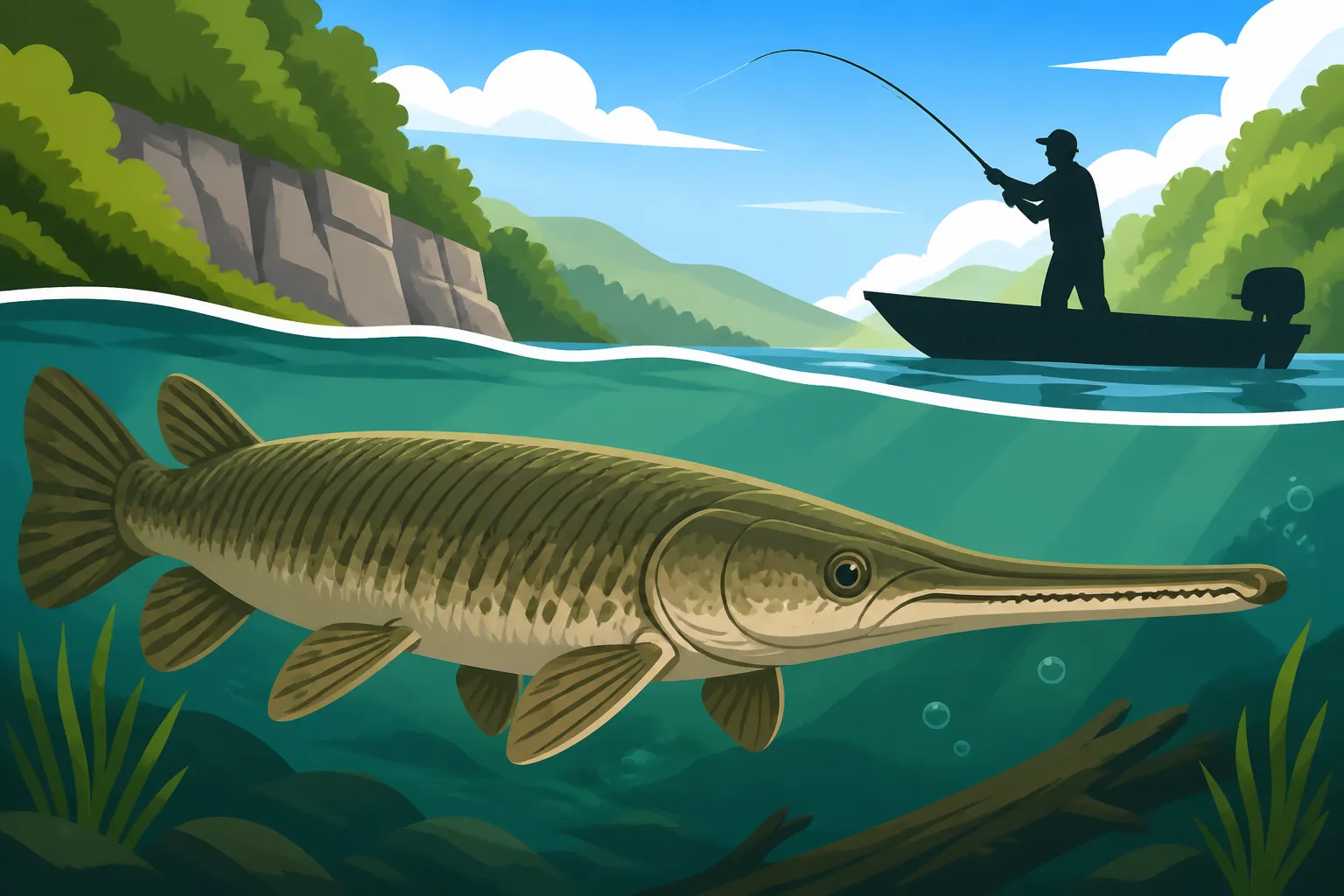
The most obvious characteristic is, of course, the longnose. Their snout is exceptionally long and slender, typically more than twice the length of the rest of their head. It's packed with a double row of sharp, needle-like teeth, perfectly adapted for snatching fast-moving prey. In contrast, a spotted gar has a shorter, broader snout, and a shortnose gar has an even stubbier, more rounded snout.
Beyond the snout, look at their body markings and coloration. Longnose gar generally have a greenish-brown back that fades to a lighter, silvery belly. They might have a few irregular dark spots, but these are usually concentrated on their fins and the rear part of their body, not densely covering their entire flanks like a spotted gar. Spotted gar, as the name suggests, are covered in distinct dark spots over their entire body, including the head and often the snout.
Another helpful identifier is the shape of their tail fin. Longnose gar have a rounded, symmetrical tail fin, whereas some other gar species might have a slightly more forked or asymmetric tail. When you bring one boatside, these details become much clearer. Getting a good look helps you confirm you've landed the specific gar you were targeting. Understanding Kentucky Fish Species Guide: 265 Types You Can Catch can provide broader context on other species you might encounter.
Here's a quick comparison to help you distinguish between the common gar species in Kentucky:
| Feature | Longnose Gar | Spotted Gar | Shortnose Gar |
|---|---|---|---|
| Snout Length | Very long and slender (more than 2x head length) | Moderately long and broad | Relatively short and broad (less than 2x head) |
| Snout Spots | Usually unspotted or very few | Distinct spots present | Usually unspotted or very few |
| Body Spots | Sparse, mainly on fins and rear body | Densely covered in distinct dark spots | Usually unspotted, sometimes mottled |
| Tooth Arrangement | Double row of large teeth on upper jaw | Single row of large teeth on upper jaw | Single row of large teeth on upper jaw |
| Max Size | Up to 5+ feet, 30+ lbs | Up to 3.5 feet, 10+ lbs | Up to 3 feet, 5+ lbs |
| Preferred Habitat | Large rivers, backwaters, deeper pools | Vegetated lakes, slow rivers, clear water | Turbid rivers, oxbows, ditches |
Gear and Techniques for Targeting Large Gar
Catching a longnose gar, especially a truly large one, isn't like typical bass or crappie fishing. These fish are tough, have bony mouths, and possess incredible strength. If you go out with light tackle, you'll likely end up frustrated with broken lines and missed opportunities. You need specialized gear and a bit of a different approach to successfully hook and land these ancient river dwellers.
First and foremost, heavy tackle is essential. Think medium-heavy to heavy action rods, around 7 to 8 feet long, paired with robust spinning or baitcasting reels loaded with strong line. Braided line in the 30-50 pound test range is highly recommended because of its abrasion resistance and zero stretch, which helps with hook sets. You can find excellent options for Best Rods and Reels for Kentucky Fishing that are suitable for this kind of challenge.
Next, you absolutely need steel leaders. Gar have rows of razor-sharp teeth that will easily cut through monofilament or fluorocarbon line. A steel leader, at least 12-18 inches long, is non-negotiable if you want to land your catch. You can often find pre-made steel leaders on sites like Amazon, or you can learn to make your own.
When it comes to baits, gar are primarily piscivorous, meaning they eat other fish. Live bait, such as shad, sunfish, or small carp, are incredibly effective. Present them on a large, strong treble hook (size 2/0 to 4/0) or a single circle hook, fished under a float or on a bottom rig. Cut bait can also work, especially if it's fresh and oily. Some anglers even use rope lures (frayed nylon rope that tangles in their teeth) for a unique challenge, though this often requires careful release techniques. For those interested in Best Catfish and Paddlefish Gear for Kentucky's Ohio River, much of the heavy-duty tackle can cross over for gar fishing.
Finally, patience and timing are key. Gar often "mouth" the bait before fully committing. It's crucial to let them take the bait and turn with it before setting the hook firmly. They can be particularly active during twilight hours and at night, making Night Fishing Techniques for Catfish also applicable to targeting gar, as they share similar active periods. Remember, successfully landing a large gar is a fantastic accomplishment, a testament to your angling skill and patience!
The Thrill of the Catch and Responsible Angling
There's an undeniable thrill that comes with hooking into a longnose gar, especially a big one from a Kentucky river. It's not just the size; it's their powerful runs, their thrashing leaps, and the sheer challenge of bringing such a prehistoric powerhouse to the boat. They are formidable opponents, and the satisfaction of a successful catch is immense. But with great power comes great responsibility, and it's important for all anglers to practice responsible techniques when fishing for these unique creatures.
Gar are an important part of our aquatic ecosystem, and while they might not be everyone's target species, they deserve our respect. Ensuring their continued health and population stability is part of what makes our Kentucky fishing heritage so rich. Whether you plan to keep a smaller gar for the table or release a trophy, doing it responsibly ensures future generations can experience the same thrill.
Releasing Trophy Gar
For many anglers, especially those targeting the biggest longnose gar in Kentucky, the goal isn't necessarily the dinner plate but the challenge and the experience of battling a truly massive fish. When you land one of these impressive specimens, especially a potential trophy or record breaker, responsible catch-and-release practices are crucial to ensure its survival.
Gar are incredibly hardy fish, but their unique anatomy requires specific handling. Avoid lifting a large gar vertically by its head or tail, as this can damage its internal organs or spine. Instead, use a large landing net or, even better, a pair of lip grippers (like those available on Amazon) to control the fish by its snout. When holding a gar, support its body horizontally to minimize stress.
Their long, bony snouts and sharp teeth can make hook removal tricky. Carry long-nosed pliers or dehooking tools to carefully extract the hook. If the hook is deeply set and removal would cause significant trauma, it's often better to cut the line as close to the hook as possible. Gar have remarkable healing capabilities, and a small hook can often work its way out. Get the fish back into the water quickly and allow it time to recover before letting it swim away. Seeing a powerful longnose gar swim strong after release is just as rewarding as catching it.
Conservation and Respect for the Species
Longnose gar, while sometimes viewed with apprehension due to their "toothy" appearance, are a vital part of Kentucky's aquatic ecosystems. They are apex predators in many of our river systems, playing an important role in controlling populations of other fish species, including rough fish. Their presence indicates a healthy and balanced environment. Understanding Statewide Bag and Size Limits by Fish Species can offer context on how different species are managed.
It's easy to dismiss a fish that isn't traditionally considered a "game fish," but longnose gar offer a unique sportfishing experience and are incredibly resilient. Practicing ethical angling means not just following regulations, but also treating the fish with respect. Don't waste fish, understand the local rules for retention (if any), and always prioritize the health of the fish you release.
By respecting the longnose gar and the role they play, we contribute to the overall health and diversity of Kentucky's rivers. Whether you're fishing for bass, crappie, or specifically targeting these ancient predators, every angler has a part to play in preserving our natural resources for generations to come.
Disclaimer
This article is for general informational purposes only and does not constitute professional advice. Laws, prices and regulations vary by location and change over time. Consult a qualified professional for guidance on your specific situation.