Kayak Fishing Tips for Big Lake Bass
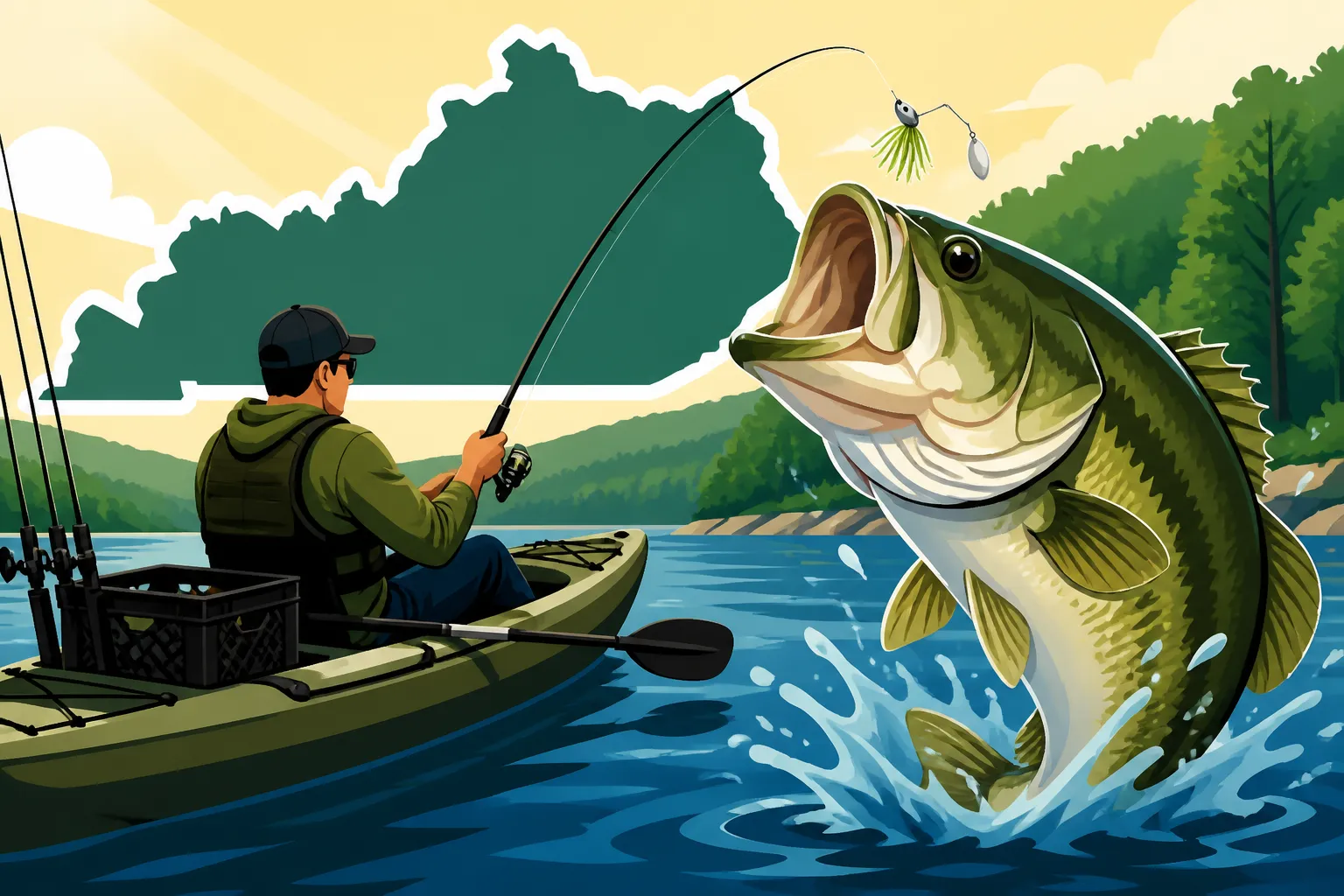
Venturing out onto Kentucky's vast lakes in a kayak can feel a bit daunting, especially when you're dreaming of landing those monster bass that hide in the deep, expansive waters. Many anglers find themselves wondering if their small, nimble craft is truly up to the challenge of currents, waves, and the sheer scale of lakes like Kentucky Lake or Lake Cumberland. This guide is here to equip you with the knowledge and strategies to confidently chase big lake bass from your kayak, turning those anxieties into successful and exhilarating fishing adventures.
Gearing Up for Big Water Kayak Bass Fishing
Fishing for big bass on Kentucky's expansive lakes from a kayak demands a slightly different approach to gear than what you might use for smaller ponds or gentle rivers. The elements are tougher, the fish are often larger, and your safety is paramount. Let's break down the essentials you'll need to feel confident and effective on these big waters.
Choosing the Right Kayak for Big Water
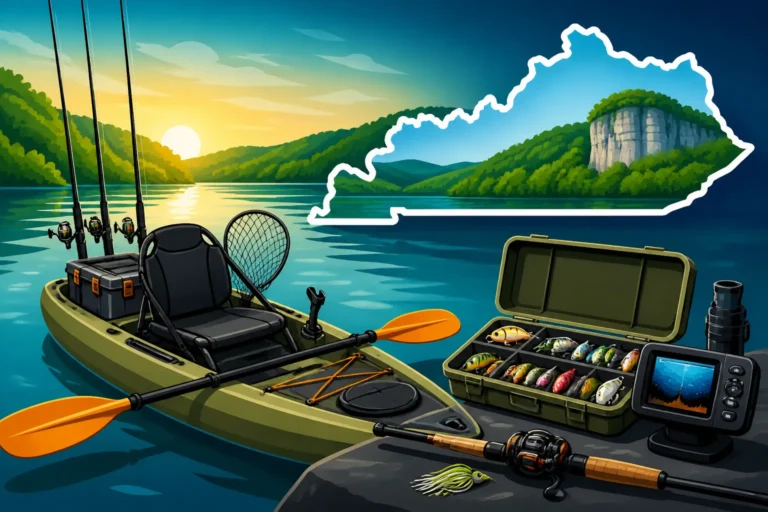
When you're facing down the mighty expanse of Kentucky Lake or the broad arms of Lake Barkley, a small, unstable recreational kayak just won't cut it. You need a kayak designed for stability, tracking, and the ability to handle chop. Look for fishing kayaks that are generally longer (12 feet or more) and wider, providing a more stable platform for casting, standing (if you're comfortable), and fighting a hefty bass. These longer boats also track much better in wind and current, which you'll definitely encounter on big lakes.
Consider models with a good amount of storage, both wet and dry, to keep your tackle, extra layers, and safety gear secure. Many big lake kayak anglers swear by pedal-driven kayaks, which allow for hands-free propulsion, a huge advantage when you're trying to fish a shoreline or hold position against the wind. Being able to keep your line in the water while maneuvering can make all the difference, especially when a school of bass suddenly erupts. Brands like Hobie and Old Town offer excellent pedal-drive options, providing that crucial mobility advantage.
Essential Safety Gear for Open Water
Safety is not just a recommendation; it's a non-negotiable requirement when you're kayak fishing on big lakes. The sheer size of these waters means that help can be a long way off if you get into trouble. Always, and I mean always, wear a Coast Guard-approved personal flotation device (PFD) or life jacket. Modern fishing PFDs are comfortable and designed with pockets and features that make them feel like a part of your fishing kit, so there's really no excuse not to wear one. It's not just about compliance with Life Jacket Rules for Boats in Kentucky; it's about your life.
Beyond your PFD, you'll need a whistle for signaling, a bright flag on a pole to increase your visibility to other boaters (especially important on busy lakes), and a reliable light source if there's any chance you'll be out at dawn, dusk, or after dark. A dry bag containing a fully charged cell phone, a first-aid kit, and a small patch kit for your kayak can be a lifesaver. Think about the "what ifs" and pack accordingly.
Specialized Rods, Reels, and Line
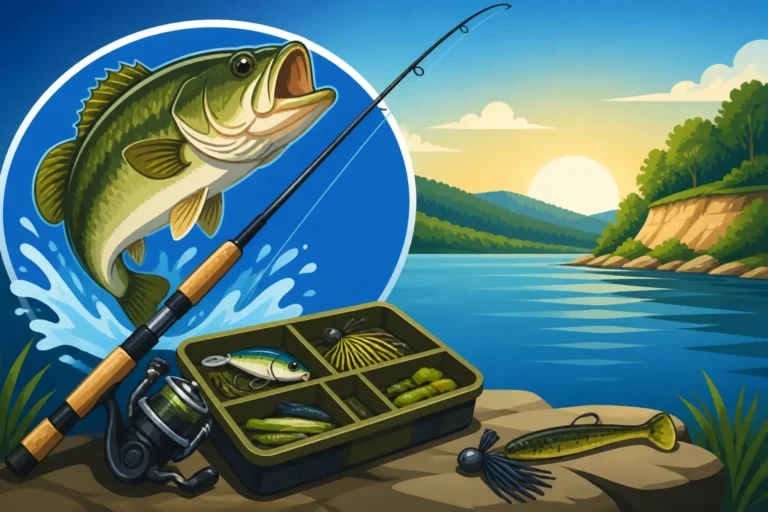
The bass in big lakes often grow to impressive sizes, and they're usually found around deeper, heavier cover. This means your ultralight spinning combo might not be up to the task. For big lake bass from a kayak, you'll want to lean towards medium-heavy to heavy action rods, typically 7 to 7.5 feet in length. These longer rods aid in casting distance, which is critical when you can't always get right on top of a spot, and they provide the leverage needed to pull big bass out of brush piles or submerged timber.
Pair these rods with baitcasting reels spooled with strong, abrasion-resistant line. Fluorocarbon or braided line in the 15-20lb test range for casting applications, and perhaps even heavier braid (30-50lb) for pitching into dense cover, will give you the confidence to tackle trophy fish. A quality leader, especially with braid, is often a good idea to maintain stealth and provide some shock absorption. You can find a wide array of options for Best Rods and Reels for Kentucky Fishing suitable for this task at your local Bass Pro Shops.
Electronics and Navigation Aids
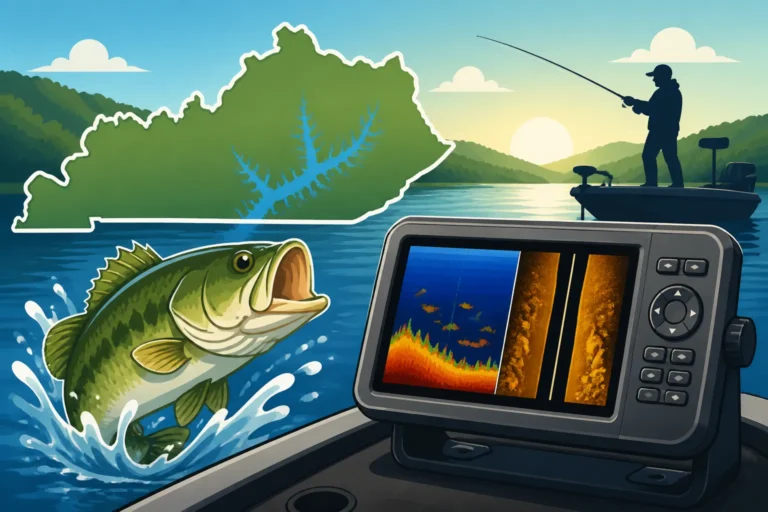
On vast bodies of water, finding fish can feel like searching for a needle in a haystack. This is where electronics become your best friend. A compact fish finder with GPS capabilities is an absolute game-changer for kayak anglers on big lakes. Look for units that offer side imaging or down imaging to help you identify underwater structure, baitfish schools, and lurking bass. Knowing the depth, water temperature, and bottom contours is vital for pattern fishing.
The GPS function is equally important. Not only does it help you navigate safely back to your launch point, but it also allows you to mark waypoints for productive fishing spots, submerged brush piles, or subtle depth changes that might hold fish. Many portable fish finders are perfect for kayaks and can be found on Amazon, offering incredible value and functionality. These tools provide a crucial advantage when you're trying to dissect a massive lake from a smaller craft. For more general information, you might check out Fish Finders and Electronics for Kentucky Lake Fishing.
Strategic Approaches for Targeting Big Lake Bass
Kayak fishing for big lake bass isn't just about showing up with the right gear; it's about employing smart strategies to overcome the challenges and capitalize on the opportunities these large fisheries offer. From understanding the nuances of the water to choosing the right presentations, every decision counts.
Understanding Big Lake Structure and How to Fish It
Big lakes in Kentucky are often flooded river systems, which means they have distinct features like old creek channels, river ledges, submerged roadbeds, and vast expanses of main lake points and humps. These aren't just random bumps on the bottom; they are highways and feeding grounds for big bass. From a kayak, learning to "read" the water and interpret your electronics is paramount. Instead of simply casting aimlessly, focus your efforts on these key structural elements.
Bass will often stage along channel edges, particularly where they intersect with points or humps. During different seasons, they'll migrate along these features, making them predictable ambush points. For instance, in pre-spawn, you might find bass staging on secondary points near spawning coves. Later in the summer, they'll often retreat to deep ledges or humps off the main lake. Use your fish finder to identify these structures and then strategically position your kayak to make precise casts, often parallel to the contour lines, to intercept cruising fish. Targeting submerged timber, rock piles, or old foundations that might be visible on your sonar can also prove incredibly fruitful.
Adapting to Wind, Current, and Weather Changes
One of the biggest differences between pond fishing and big lake fishing in a kayak is the constant battle with wind and current. A gentle breeze on a small pond can feel like a gale on Kentucky Lake, pushing you off your desired fishing line or making accurate casting nearly impossible. This is where adaptability and a few clever tools come into play.
Anchoring systems designed for kayaks, such as a stake-out pole for shallow water or a small grapnel anchor for deeper spots, are invaluable for holding your position. Drift socks can slow your drift in windy conditions, allowing you to thoroughly work a long stretch of structure. For serious big lake kayak anglers, a compact electric trolling motor is a game-changer. It provides silent, precise control over your movement, letting you maintain position, troll, or quickly move between spots without constant paddling. This hands-free operation is particularly useful when you're trying to navigate current or fish in a strong wind. You might even want to check out Best Trolling Motors for Kentucky Lake Bass Fishing for specific recommendations.
Effective Lure Selection and Presentation
Given that you're often casting longer distances and dealing with deeper water on big lakes, your lure selection needs to reflect these conditions. Versatile lures that can cover water efficiently and appeal to larger bass are key. For covering expansive flats or points, deep-diving crankbaits or lipless crankbaits are excellent choices, allowing you to quickly find active fish. Spinnerbaits and chatterbaits are also fantastic for working around submerged grass or timber, eliciting reaction strikes from aggressive bass.
When bass are holding tight to structure or in deeper water, jigs and soft plastics, such as Texas-rigged worms or shaky heads, become indispensable. These allow for a slower, more methodical presentation, probing individual pieces of cover. Topwater lures can be incredibly effective during low light conditions or when bass are schooling on baitfish, creating exhilarating strikes. Always consider the forage base in the specific lake you're fishing and try to "match the hatch" with your lure choices. Remember, presentation is key from a kayak; focus on accurate casts and subtle retrieves that mimic natural prey. For a deep dive into specific baits, consider reading Best Tackle for Big Lake Bass Fishing or Best Lures for Largemouth Bass on Big Water.
Safety and Logistics on Expansive Waters
Even the most seasoned kayak angler needs to pay close attention to safety and logistics when tackling Kentucky's big lakes. These aren't backyard ponds, and being prepared for anything can make the difference between an incredible day on the water and a potentially dangerous situation.
Weather Awareness and Trip Planning
Never, ever underestimate the weather on a big lake. Conditions can change rapidly, and what starts as a calm morning can turn into a white-capping, wind-swept nightmare in a matter of minutes. Before every trip, check the detailed weather forecast, paying particular attention to wind speed and direction. A strong wind can make paddling against it impossible and create dangerous waves. If the forecast calls for sustained winds over 10-15 mph, especially out of a direction that will create a long fetch across the lake, consider rescheduling or finding a more sheltered area.
It's also wise to have a "bail-out" plan. Know where public boat ramps or protected coves are located along your intended route in case you need to get off the water quickly. Inform someone on shore of your float plan, including where you're launching, your intended route, and when you expect to return. This simple step can be crucial in an emergency. Preparing for potential changes in weather by packing rain gear, extra layers, and plenty of water is always a smart move.
Launching and Landing Strategies
Launching and landing a fishing kayak on a big lake can sometimes be more challenging than the fishing itself. Many large lakes have busy boat ramps designed for much larger powerboats. Trying to navigate these ramps with a kayak, especially if you're alone, can be tricky. Look for designated kayak or paddlecraft launches if available. If not, try to find a quieter section of a main ramp or a shallower, less trafficked access point.
Consider investing in a kayak cart, which can greatly ease the process of transporting your loaded kayak from your vehicle to the water. When launching, try to get your kayak in the water and away from the main boat traffic as quickly and safely as possible. The same applies to landing; get clear of the ramp area to load your gear to avoid impeding others. Being mindful of other boaters and taking your time will ensure a smooth start and end to your trip.
Visibility and Communication on the Water
On busy big lakes, kayaks can sometimes be hard to spot by operators of larger, faster boats. Increasing your visibility is a critical safety measure. Always use a bright, high-visibility flag on your kayak, especially when you're out in open water or during peak boating hours. Wearing bright clothing, particularly a fluorescent PFD, also helps you stand out.
Beyond visual cues, having a reliable means of communication is essential. A waterproof VHF radio is a fantastic safety tool, allowing you to contact other boats or emergency services if needed, even outside of cell phone range. While a cell phone is good, it's not always reliable on vast water bodies. Consider a personal locator beacon (PLB) for remote areas, which can alert authorities to your exact location in a dire emergency. Having these tools provides immense peace of mind, knowing that you have options if things go awry. For general Kayak Fishing Safety Gear for Kentucky Waters, always review the recommendations.
Here's a quick comparison of kayak types for big lake bass fishing:
| Feature | Paddle Kayak | Pedal Kayak |
|---|---|---|
| Propulsion | Traditional paddle, hands-on | Pedal drive system, hands-free |
| Stability | Good, but often less stable than pedal models | Excellent, often wider and more stable |
| Speed | Moderate, depends on paddler effort | Faster, more efficient for covering distance |
| Maneuverability | Highly nimble, can turn on a dime with paddle | Good, can be precise with rudder and pedals |
| Hands-Free Fishing | Limited, requires paddle use for positioning | Primary advantage, great for continuous fishing |
| Weight | Generally lighter, easier to car-top | Heavier, often requires a trailer or cart |
| Maintenance | Low, simple moving parts | More complex, requires care for pedal drive |
| Best Use Case | Budget-friendly, shallow water, rivers | Long distances, fighting wind/current, trolling |
Mastering the Techniques for Big Bass
Once you're geared up and safely on the water, it's time to refine your fishing techniques specifically for the challenges and rewards of big lake bass from a kayak. This means thinking about how you approach different types of cover and how you manage fish once they're hooked.
Targeting Different Types of Cover from a Kayak
Big lakes offer a diverse array of cover, from dense submerged timber to rocky bluffs and vast grass flats. Each requires a slightly different approach when you're in a kayak.
When fishing submerged timber or brush piles, stealth is your ally. Approach quietly, using your pedal drive or a paddle for minimal disturbance. Cast soft plastics like jigs or Texas-rigged worms right into the heart of the cover, allowing them to slowly fall. Be ready for an immediate strike as the lure enters the bass's ambush zone. Once hooked, you need to be aggressive. Use your strong rod and heavy line to quickly turn the fish's head away from the snags, otherwise, it's often a lost battle. Your kayak's maneuverability can sometimes allow you to get into spots that larger boats can't, giving you an edge.
For rocky bluffs and main lake points, crankbaits, spinnerbaits, or even swimbaits can be highly effective. Position your kayak so you can cast parallel to the structure, allowing your lure to stay in the strike zone for a longer period. Bass often relate to subtle changes in rock type or small shelves along these features. Your fish finder will be crucial here for identifying those key transition areas. A controlled drift, maintaining a specific depth contour with your pedal drive, can be a deadly tactic.
When you encounter grass flats, particularly hydrilla or milfoil, look for edges, holes, or areas where the grass thins out. Flipping and pitching jigs or heavy Texas-rigged creature baits into these pockets can entice big bass hiding within. Topwater frogs or buzzbaits worked over the top of matted grass can also produce explosive strikes. From a kayak, you can often sneak into the quieter sections of these flats without spooking the fish that larger boats might push away.
Handling and Landing Big Bass
Hooking a five-pound-plus largemouth from a kayak is an exhilarating experience, but landing it safely requires a bit of technique and preparation. Unlike a bass boat where you have ample deck space, you're in a confined cockpit.
First, invest in a good landing net, specifically one with a wide hoop and a rubberized mesh. This type of net protects the fish's slime coat and is less likely to tangle hooks. When a big bass is on, keep your rod tip high and maintain steady pressure. Try to fight the fish in open water away from cover if possible. Once the fish is close, use your net to scoop it headfirst. Avoid trying to boat-flip a large bass into your kayak, as this often results in lost fish or unnecessary stress on the fish.
Once in the net, carefully bring the fish into your lap or a designated area in your kayak. Unhook the fish quickly and efficiently. If you plan to weigh or photograph the fish, do so responsibly. Keep the fish wet, minimize its time out of the water, and support its body horizontally to prevent jaw damage. A bump board for measuring length can be a handy tool. Releasing a healthy fish ensures the future of the fishery, and seeing a big bass swim away strong is one of the most rewarding parts of kayak fishing.
Disclaimer
This article is for general informational purposes only and does not constitute professional advice. Laws, prices and regulations vary by location and change over time. Consult a qualified professional for guidance on your specific situation.