Missouri, Virginia and West Virginia Anglers Fishing in Kentucky
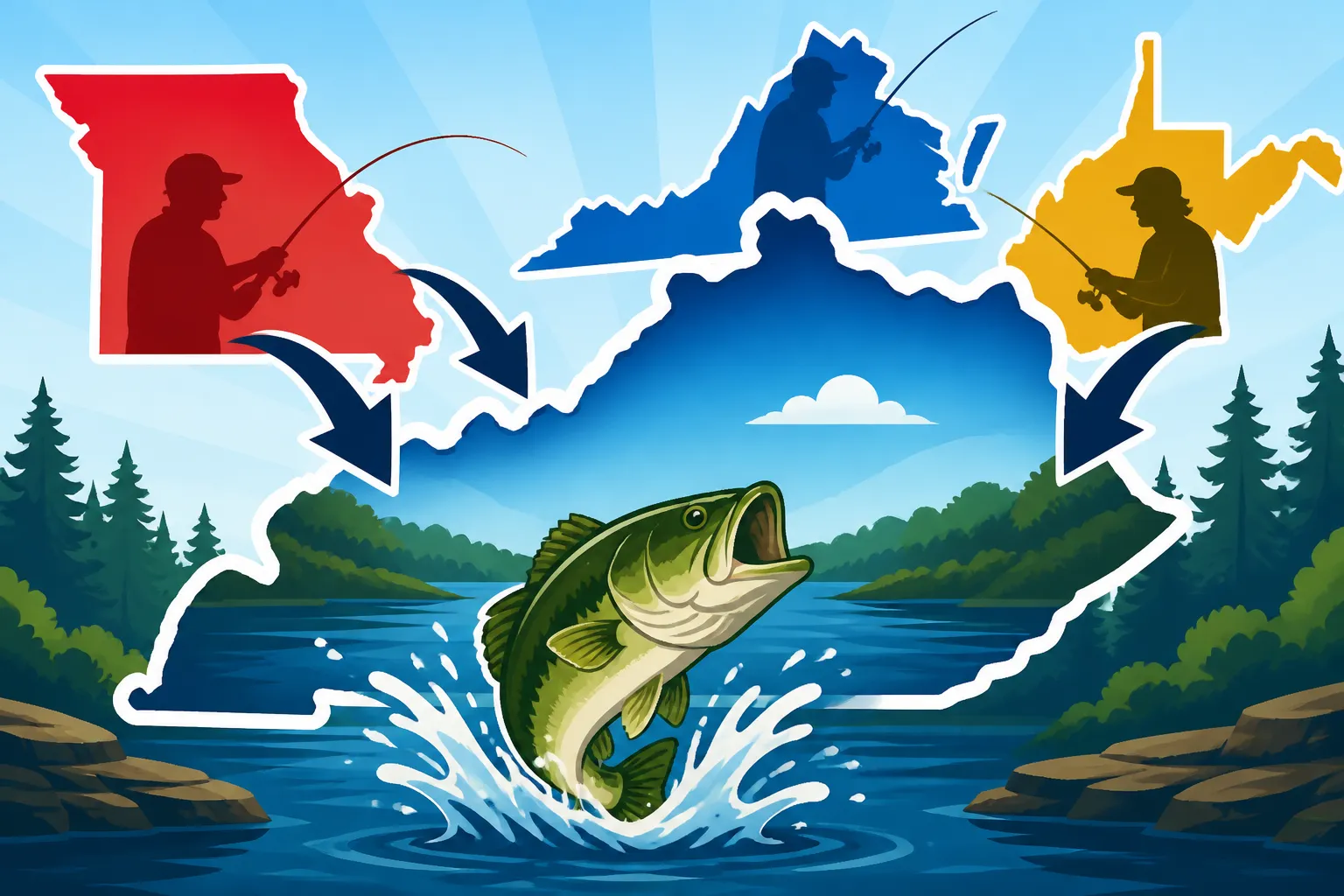
Heading out to the beautiful waters of Kentucky for a fishing trip sounds like a dream for many anglers, especially those just across state lines. But if you’re coming from Missouri, Virginia, or West Virginia, the excitement can quickly turn into confusion when you start wondering about fishing licenses. It's a common headache, really, trying to figure out if your home state license works, or if you need a whole new one. This guide is here to clear up that confusion, specifically for anglers from Missouri, Virginia, and West Virginia, ensuring you’re fully prepared and legal for your next Kentucky fishing adventure.
The Universal Truth: When You Fish Kentucky Waters, You Need a Kentucky License
It's a simple rule, but one that causes endless frustration for anglers crossing state lines: generally speaking, when you dip your line into the waters of a new state, you need that state's fishing license. Kentucky is no different. The Commonwealth has its own set of rules and regulations designed to manage its fisheries, and those rules apply to everyone, resident or not, who wants to enjoy its abundant lakes and rivers. Ignoring this basic principle can quickly turn a relaxing day of fishing into a costly encounter with a game warden.
Imagine you've driven hours, scouted out the perfect spot on Kentucky Lake, and finally cast your first line. You're feeling that familiar tug, anticipating a beautiful bass, only to have a Kentucky Department of Fish and Wildlife Resources (KDFWR) officer pull up and ask for your license. If you're holding up a Missouri, Virginia, or West Virginia license and nothing else, you're in for a rough day. The state agencies work hard to conserve fish populations, and license sales are crucial for funding those efforts, from stocking programs to habitat improvements. They don't differentiate between someone who "didn't know" and someone deliberately trying to skirt the rules when it comes to enforcement.
This isn't about being difficult; it's about proper resource management. Every state has unique ecosystems, fish populations, and conservation goals. Your fishing license fee directly contributes to maintaining the health and vitality of Kentucky's waterways. So, while it might feel like an extra hoop to jump through, especially if you're only visiting for a day or a weekend, it's a necessary step to ensure the fishing remains excellent for everyone, including future generations of anglers. You can dive deeper into the specific requirements in our comprehensive guide on Kentucky Fishing License Requirements for Kids if you're bringing along younger anglers.
Defining "Kentucky Waters" for Licensing Purposes
Understanding what exactly constitutes "Kentucky waters" is key, because it's broader than just the big, famous lakes. Essentially, if the water body is within Kentucky's geographical boundaries and is not a privately owned pond where you have explicit permission to fish without a license, it falls under the jurisdiction of the KDFWR. This includes all public lakes like Lake Cumberland, Dale Hollow Lake, and Herrington Lake, as well as rivers, streams, and even smaller community ponds.
Consider a scenario where you're fishing a small creek that eventually flows into a larger Kentucky river. Even if that creek feels insignificant, it's part of the state's aquatic system, and you'll need a Kentucky fishing license to legally fish there. The only real exceptions are genuinely private ponds that do not have a continuous flow of water in or out from public waterways, and where you've been granted direct permission by the landowner. Even then, if the pond is stocked by the state, or has a direct connection to a public body of water, a license may still be required. It’s always best to assume you need a license unless you’ve confirmed otherwise for a specific, truly private spot.
When you're planning your trip, think about where you'll be physically located when you cast your line. Are you standing on Kentucky soil? Is your boat floating in water clearly delineated as Kentucky territory? If the answer is yes to either, then you need a Kentucky fishing license. This rule holds true regardless of where you launched your boat or how far you traveled from your home state. It's not uncommon for anglers to believe that if they launch in their home state and simply cross a perceived "line" in the water, their license is still valid. However, that's rarely the case unless a specific, written reciprocity agreement is in place, and we'll delve into those details in the following sections for West Virginia anglers. For a more detailed breakdown of state-specific rules, check out Kentucky Fishing Rules by Lake and Water.
What Missouri and Virginia Anglers Need to Know Before Fishing in Kentucky
For our friends traveling from Missouri and Virginia, the licensing situation is quite straightforward because of geographical realities. Neither Missouri nor Virginia share any significant border waters with Kentucky that would typically involve complex reciprocity agreements for fishing licenses. This simplifies things, in a way: if you're coming from these states to fish in Kentucky, you'll need a Kentucky fishing license, plain and simple.
No Reciprocity: A Clear Distinction for Missouri Anglers
Missouri, despite being a neighboring state, does not share any major fishing waters that would necessitate a reciprocal fishing license agreement with Kentucky. The states are separated by Illinois and a portion of the Mississippi River, but not in a way that allows for fishing from one state's license while on the other's recognized waters. This means that if you're a Missouri angler making the drive to Kentucky to fish, perhaps targeting the famous bass fisheries of Kentucky Lake or the crappie in Lake Barkley, your Missouri fishing license is not valid.
Many anglers mistakenly believe that because states are adjacent, some form of automatic reciprocity exists. Unfortunately, this is a common misconception. Each state retains sovereignty over its natural resources, and agreements for shared waters are specific, often hard-won, and clearly outlined by the respective wildlife agencies. Since Kentucky and Missouri don't have such an agreement for fishing, you must treat Kentucky as an entirely separate jurisdiction. This means purchasing the appropriate Kentucky nonresident fishing license before you even make your first cast. It's a small investment compared to the potential fines and legal hassles of being caught without one, which we'll discuss later.
Planning ahead is crucial. You don't want to arrive at your favorite fishing spot, rods rigged and ready, only to realize you can't legally fish. Luckily, buying a Kentucky license is easier than ever, which we’ll cover in a bit. But for now, just remember: if you’re a Missouri resident, and you’re fishing anywhere in Kentucky, a Kentucky nonresident fishing license is required. Your Missouri license is a great document to have for your home state waters, but it won’t cut it in the Bluegrass State.
Virginia Anglers: Distant, But Still Subject to Kentucky Law
Virginia anglers face a similar situation to their Missouri counterparts, though with even more geographical distance. There are no shared water bodies between Virginia and Kentucky that would activate a reciprocal fishing license agreement. While Virginia offers fantastic fishing opportunities within its own borders, those privileges do not extend into Kentucky. Therefore, if you’re traveling from Virginia to fish Kentucky’s legendary waters, such as Lake Cumberland for its trout or the various reservoirs for bass, you must possess a valid Kentucky nonresident fishing license.
It’s easy to think, "I'm just visiting for a few days, surely there's a loophole." But Kentucky's regulations are quite clear on this. Whether you're coming for a quick weekend getaway or an extended vacation, the requirement for a Kentucky fishing license remains. The distance traveled doesn’t diminish the state’s authority over its natural resources. Many out-of-state anglers, especially those not bordering Kentucky, might not even think about this until they’re already en route or at their destination. This is why thorough planning, including a quick check of licensing requirements, is an indispensable part of preparing for any interstate fishing trip.
The excitement of exploring new waters and chasing different species often overshadows the administrative tasks, but a little pre-trip research goes a long way. Imagine the frustration of driving all the way from Virginia, only to find yourself unable to fish legally without first purchasing a Kentucky license. It’s far better to handle this ahead of time. By securing your Kentucky license before you leave Virginia, you ensure a stress-free start to your angling adventure in the Bluegrass State. This proactive approach allows you to focus purely on the joy of fishing, rather than worrying about legal technicalities.
Navigating License Purchases from MO or VA
Fortunately, getting your Kentucky fishing license from Missouri or Virginia is incredibly easy, thanks to modern technology. You don't need to be physically present in Kentucky to purchase one. The Kentucky Department of Fish and Wildlife Resources (KDFWR) offers a robust online portal where nonresidents can purchase licenses quickly and efficiently. This is by far the most convenient method for out-of-state anglers.
When you access the KDFWR’s licensing page, you’ll be prompted to provide some basic personal information, such as your name, address, and date of birth. You’ll also need to declare your residency status, selecting "nonresident." From there, you can choose the type of license that best suits your trip, whether it’s a 1-Day, 7-Day, or Annual Nonresident Fishing License. Don't forget, if you plan to target trout, you’ll also need to add a Kentucky Trout Permit, which is an additional endorsement on top of your fishing license. The entire process typically takes less than five minutes, and you can print your license or save a digital copy to your phone, which is perfectly acceptable as proof of license. Many anglers find the convenience of getting their license via the KDFWR website invaluable.
In addition to online purchases, Kentucky also has numerous license vendors across the state, including bait shops, sporting goods stores like those that might carry popular brands of gear you'd find on Amazon, and even some county clerk offices. While purchasing in person might be an option once you arrive in Kentucky, doing it online beforehand ensures you’re legal from the moment you cross the state line. Always keep your license readily accessible, whether it’s a physical printout in your wallet or a clear digital image on your smartphone. Remember, ignorance of the law is no excuse, and having your license easily verifiable makes any interaction with a game warden smooth and pleasant. For more details on purchasing, see How to Buy a Kentucky Fishing License Online.
Special Considerations for West Virginia Anglers on the Ohio River
Now, for our friends coming from West Virginia, the situation can be a little more nuanced, primarily because of the mighty Ohio River. The Ohio River forms a significant border between Kentucky and West Virginia, and shared waterways often come with special agreements regarding fishing licenses. It's not as simple as "you always need a Kentucky license," but it's also not as simple as "your West Virginia license is always fine." It's a prime example of why checking site-specific rules is absolutely vital.
The Ohio River Reciprocity Explained
The Ohio River operates under specific reciprocal agreements between the bordering states, including Kentucky and West Virginia. This agreement typically states that anglers possessing a valid fishing license from either Kentucky or West Virginia (or Ohio, Indiana, or Illinois, depending on the stretch of the river) are generally permitted to fish the main stem of the Ohio River. This means if you're a West Virginia angler fishing from a boat in the main channel of the Ohio River, your West Virginia fishing license should be valid, allowing you to fish without needing a separate Kentucky license for that specific body of water.
However, and this is a big "however," this reciprocity usually only applies to the main stem of the river. It’s critical to understand what that entails. It does not extend to tributaries, embayments, or any waters that are clearly and exclusively within Kentucky's jurisdiction. For instance, if you're fishing a backwater slough that connects to the Ohio River but is entirely on the Kentucky side, or if you venture into a creek or river that flows into the Ohio but is considered Kentucky territory, your West Virginia license will likely not be sufficient. This distinction is often a source of confusion and can lead to unintentional violations.
To illustrate, imagine you're fishing from your boat, drifting along the main channel near Ashland or Maysville. Your West Virginia license covers you. But if you decide to pull into a quiet cove or cast towards the Kentucky shoreline, or even fish a small tributary emptying into the Ohio on the Kentucky side, you are now very likely fishing in waters exclusively under Kentucky's jurisdiction, and a Kentucky nonresident license would be required. The best practice is always to err on the side of caution and ensure you understand the specific boundaries of any reciprocity agreement. If there's any doubt about where the main channel ends and Kentucky waters begin, having both licenses or sticking strictly to the main channel is advisable. For details on other reciprocal agreements, you might want to look at Tennessee-Kentucky Fishing License Reciprocity Rules.
Fishing from Kentucky Soil or Tributaries
This brings us to the crucial clarification for West Virginia anglers: if you plan on fishing from the Kentucky bank of the Ohio River, or in any river, stream, or lake that flows into the Ohio but is entirely within Kentucky's land boundaries, you absolutely must have a Kentucky nonresident fishing license. Your West Virginia license will not cover you in these specific situations. The reciprocity agreement for the Ohio River typically pertains to fishing from a boat on the main river itself, not from the adjacent land or connecting waterways of the opposite state.
Think about bank fishing. If you're standing on Kentucky soil, whether it's a public access point, a park, or a private property on the Kentucky side of the Ohio River, you are physically in Kentucky and subject to its laws. Therefore, a Kentucky fishing license is mandatory. The same principle applies if you decide to explore some of the fantastic fishing opportunities in Kentucky's inland waters that are not part of the Ohio River's main stem. For example, if you wanted to visit Taylorsville Lake or Cave Run Lake, your West Virginia license would be entirely irrelevant.
The key takeaway here for West Virginia anglers is: embrace the nuance. If your trip is solely focused on boating and fishing the main channel of the Ohio River, your West Virginia license may suffice. However, if there's any chance you'll step foot on Kentucky soil to fish, or venture into any tributary or inland lake, a Kentucky nonresident fishing license is a non-negotiable requirement. It's always better to be over-prepared than under-licensed when it comes to fishing regulations, especially on border waters where the lines can sometimes feel a little blurry.
Planning Your Ohio River Trip from West Virginia
When you're mapping out your fishing trip to the Ohio River from West Virginia, meticulous planning regarding your license is paramount. Don't just assume your West Virginia license covers everything. Start by clearly defining your target fishing areas. Are you staying strictly in the main channel, or do you anticipate exploring coves, tributaries, or fishing from the Kentucky shoreline? Your answers will dictate your licensing needs.
If your plans include fishing any part of the Ohio River from the Kentucky bank or entering any of Kentucky's inland waters, your first step should be to secure a Kentucky nonresident fishing license. As mentioned before, the KDFWR's online portal makes this incredibly easy. You can purchase your 1-Day, 7-Day, or Annual license well in advance of your trip. This proactive approach eliminates any last-minute stress or potential legal issues once you're on the water. Many anglers even keep a printed copy and a digital version on their phone for maximum convenience.
Beyond the license, remember to check Kentucky's specific fishing regulations for the Ohio River, as these can vary for different species (e.g., Kentucky Catfish Daily Limit and Trophy Fish Rule). While the reciprocal agreement might simplify the license aspect for the main channel, bag limits, size restrictions, and specific gear rules still apply and can differ from West Virginia's regulations. Tools like GPS units, often available on Amazon, can also help you understand your exact location on the river and ensure you stay within legal fishing zones if you're concerned about crossing into purely Kentucky waters without a valid license. Taking the time to understand these details will not only keep you legal but also enhance your overall fishing experience by ensuring you're targeting fish responsibly and effectively.
Deciphering Kentucky's Nonresident Fishing License Options
Kentucky understands that not every out-of-state angler needs an annual license. Many visitors come for a specific trip, a long weekend, or just a day. That's why the KDFWR offers a few different options for nonresident fishing licenses, designed to provide flexibility while still covering the necessary legal requirements. Choosing the right one can save you money and ensure you're compliant for the duration of your stay.
Understanding Your Nonresident License Choices
For nonresident anglers, Kentucky typically offers three main types of fishing licenses:
- Annual Nonresident Fishing License: This is your all-inclusive option, valid from March 1st through the last day of February of the following year. If you plan on visiting Kentucky multiple times within a license year, or for an extended period, this is often the most cost-effective choice. It allows you to fish statewide, though specific regulations (like bag and size limits) might vary by water body.
- 7-Day Nonresident Fishing License: This license is perfect for those planning a week-long fishing vacation or several shorter trips within a seven-day window. It activates on the date of purchase or a specified start date and remains valid for seven consecutive days. For many out-of-state anglers, this provides excellent value and flexibility.
- 1-Day Nonresident Fishing License: If you're only making a quick day trip, perhaps stopping over on a longer journey or just dipping your line for a few hours, the 1-day license is ideal. It’s the most economical choice for very short visits, though its cost-effectiveness can quickly diminish if you plan more than a couple of fishing days within a year. Sometimes, the Nonresident 1-Day Fishing License Price in Kentucky can seem a little high compared to an annual if you use it multiple times.
Before you buy, consider your travel plans carefully. Are you visiting just for the famous Kentucky Crappie Fishing: Spring Spawn Run Guide, or do you envision coming back for some Kentucky Bass Fishing: The April-May Peak Season? If you're unsure, comparing the cost of a couple of 1-day licenses versus a 7-day or even an annual can quickly show you the best value. Remember, these licenses cover general fishing; if you're after trout, there's an additional step.
The All-Important Kentucky Trout Permit
Here’s a detail that often catches out-of-state anglers by surprise: if you plan to fish for trout in Kentucky, you’ll need more than just your basic fishing license. Kentucky requires a separate Trout Permit, which is an additional endorsement purchased on top of your regular fishing license. This permit is crucial for anyone, resident or nonresident, who intends to harvest trout or fish in designated trout waters.
Kentucky takes its trout fishery seriously, especially in places like Lake Cumberland and various cold-water streams that are regularly stocked with rainbow, brown, and brook trout. The funds generated from trout permits directly support these stocking programs and habitat improvements, ensuring a robust trout population for anglers. So, if you're dreaming of catching some beautiful rainbows in the Cumberland River tailwater below Wolf Creek Dam or exploring other stocked streams, make sure that little extra permit is in your digital wallet or printed out. The permit costs the same for residents and nonresidents, but it’s an absolute requirement.
Forgetting your trout permit can lead to the same penalties as fishing without a general license, even if you have the main fishing license itself. It's a common oversight, so when you're purchasing your nonresident fishing license online, make a mental note to explicitly add the trout permit if trout fishing is on your agenda. It's an easy add-on during the online purchase process, ensuring you’re fully covered for all the incredible fishing Kentucky has to offer, from panfish to trophy trout. You can learn more about its cost and requirements in our Kentucky Trout Permit Guide.
Where and How to Secure Your Kentucky License
Getting your Kentucky fishing license, regardless of whether you're a Missouri, Virginia, or West Virginia angler, is refreshingly straightforward in this digital age. The easiest and most recommended method is to purchase it online directly through the Kentucky Department of Fish and Wildlife Resources (KDFWR) website.
The KDFWR's licensing portal is user-friendly and accessible 24/7. You can use it from your computer, tablet, or even your smartphone. You’ll navigate to the license section, indicate you're a nonresident, select the appropriate license type (annual, 7-day, or 1-day), and add the trout permit if needed. You’ll need a valid credit or debit card for payment, and once the transaction is complete, you'll receive an instant confirmation. You can then print your license immediately or save a digital image of it to your mobile device. Kentucky law accepts a digital copy as valid proof, so long as it's readable. This convenience is a huge benefit, allowing you to purchase your license literally minutes before you cast your line, though planning ahead is always best.
If you prefer an in-person transaction, or if you find yourself in Kentucky without an internet connection, there are numerous authorized license vendors throughout the state. These include most bait and tackle shops, many sporting goods stores (you might find some great fishing gear deals at these places, sometimes even rivaling prices on Amazon), and some county clerk offices. Just look for signs indicating "Kentucky Fishing Licenses Sold Here." While purchasing in person is an option, doing it online beforehand means one less thing to worry about once your actual fishing trip begins, letting you focus on the beautiful waters of Kentucky. For a step-by-step guide, check out How to Buy a Kentucky Fishing License Online.
| Nonresident Kentucky Fishing License Options (as of 2024-2025 license year) | Cost (approx.) | Best For |
|---|---|---|
| Annual Nonresident Fishing License | $58.14 | Frequent visitors or extended stays (Mar 1 – Feb 28) |
| Nonresident 7-Day Fishing License | $37.00 | Week-long trips or multiple short trips within 7 days |
| Nonresident 1-Day Fishing License | $15.86 | Single day trips, quick stops, or introductory experiences |
| Kentucky Trout Permit (Add-on) | $10.57 | Required for all anglers targeting or harvesting trout |
Note: Prices are subject to change by the Kentucky Department of Fish and Wildlife Resources. Always verify current costs on the official KDFWR website before purchase.
Don't Risk the Repercussions: Penalties for Fishing Without a License
It might seem like a minor oversight to fish without a license, but the Kentucky Department of Fish and Wildlife Resources (KDFWR) takes these violations seriously. Their conservation efforts rely heavily on license revenue, and game wardens are frequently patrolling Kentucky's lakes, rivers, and streams. Getting caught without the proper licensure, whether due to ignorance or deliberate avoidance, can result in significant penalties that will quickly sour your fishing trip and lighten your wallet.
The Legal Consequences of Non-Compliance
Fishing without a valid Kentucky fishing license is considered a misdemeanor offense in the Commonwealth. This isn't just a slap on the wrist; it's a legal charge that can carry substantial fines. While the exact amount can vary depending on the judge, the specific circumstances, and whether it's a first offense, you can generally expect a fine of several hundred dollars. In addition to the fine, you might also be assessed court costs and administrative fees, which can quickly add up to a considerable sum.
Beyond the immediate financial hit, a misdemeanor offense goes on your public record. While it might not seem like a big deal for a fishing violation, any legal infraction can have implications down the line, depending on your circumstances. For repeat offenders, the penalties can escalate, potentially including higher fines and even the suspension of hunting and fishing privileges in Kentucky for a period of time. This means not only would you be unable to fish, but you also couldn't purchase a license for a future trip until the suspension is lifted. It’s a very real deterrent designed to protect Kentucky’s precious natural resources and ensure compliance with its regulations.
Imagine being on a beautiful body of water like Lake Barkley, enjoying the tranquility, when a game warden checks your credentials. If you're missing that crucial Kentucky license, that tranquil moment instantly transforms into a stressful interaction, a ticket, and a future court date. It's a scenario no angler wants to face, and one that is easily avoidable with a little planning. The financial cost of a fine far outweighs the modest price of a nonresident fishing license. Our article on Penalties for Fishing Without a License in Kentucky details the specifics of these repercussions.
Other Unpleasant Outcomes
Beyond the fines and legal record, there are other unpleasant consequences that can stem from fishing without a license in Kentucky. One of the most immediate and frustrating is the potential confiscation of your fishing gear. A game warden has the authority to seize any equipment used in the commission of a violation. This could include your rod, reel, tackle box, and even your catch. Imagine losing your favorite fishing setup, which you might have purchased from a trusted retailer like Amazon, simply because you skipped buying a $15 1-day license.
Furthermore, any fish you might have caught while illegally fishing will almost certainly be confiscated. Not only do you lose your catch, but you've also contributed to the unauthorized harvest of fish from Kentucky's waters. This often feels like a double whammy for anglers: facing a fine and losing the very reason you were out there in the first place. It can be a disheartening and infuriating experience, making the lesson learned a very hard one.
Finally, there’s the sheer inconvenience and embarrassment of the situation. Being questioned, ticketed, and potentially having your gear taken can be an incredibly unpleasant and humiliating experience, especially if you’re fishing with family or friends. It disrupts your entire trip and leaves a sour taste in everyone's mouth. When you consider the small cost and easy availability of a Kentucky nonresident fishing license, it truly makes no sense to risk these outcomes. Protecting Kentucky's fisheries is a shared responsibility, and having your license is a fundamental part of that commitment.
Ensuring You're Always in the Clear
To ensure you're always in the clear when fishing in Kentucky, especially as an out-of-state angler, there are a few simple but crucial steps to follow. First and foremost, always purchase the appropriate Kentucky nonresident fishing license for the duration of your trip, and don't forget the Kentucky Trout Permit if you're targeting trout. Do this before you even head out to your chosen fishing spot.
Secondly, always carry proof of your license with you. A physical printout is ideal, as it doesn't rely on battery life or cell service. However, the KDFWR also accepts a digital copy displayed clearly on your smartphone. Make sure your phone is charged, and consider taking a screenshot of your license in case you're in an area with spotty reception. It's also a good idea to have some form of identification, like your driver's license, readily available, as a game warden may ask for it to verify your identity and match it to your fishing license.
Lastly, stay informed about the current regulations. Fishing rules, bag limits, and size restrictions can change, sometimes annually. A quick check of the KDFWR website before each trip is a great habit to adopt. By proactively taking these steps, you eliminate stress, avoid potential penalties, and ensure your time on Kentucky's beautiful waters is as enjoyable and legal as possible. Remember, a responsible angler is a happy angler. If you're wondering how wardens check, read about Game Warden Enforcement and License Checks While Fishing.
Practical Tips for a Smooth Kentucky Fishing Experience
Heading to a new state for fishing can be incredibly exciting, but a little preparation goes a long way in ensuring your trip is smooth, enjoyable, and completely compliant with local regulations. For anglers from Missouri, Virginia, and West Virginia, here are some practical tips to help you make the most of your Kentucky fishing adventure.
Always Check Current Regulations
While this guide provides general information, fishing regulations are dynamic and can change annually, or even sometimes mid-season if specific conservation needs arise. The Kentucky Department of Fish and Wildlife Resources (KDFWR) is the definitive source for all current rules and regulations. Before every single fishing trip to Kentucky, regardless of whether you’re a first-timer or a seasoned visitor, make it a habit to visit the official KDFWR website.
On the KDFWR site, you'll find detailed information on statewide bag and size limits for various species like bass, crappie, and catfish. More importantly, you'll discover site-specific regulations for many popular lakes and rivers. For example, while there might be a statewide bass limit, a particular lake like Lake Barkley might have a Lake Barkley Bass Size Limit Exception in Kentucky that differs. Similarly, Barren River Lake has a specific crappie size limit that's an exception to the statewide rule. These local variations are crucial to know, as violating them carries penalties just like fishing without a license.
Taking a few minutes to review the regulations ensures you're not caught off guard. You can often download or print a copy of the current fishing guide from the KDFWR website, which is a fantastic resource to have in your boat or tackle box (which you might have organized with compartments from Amazon to keep your lures like crankbaits or spinnerbaits in order). Knowing the rules not only keeps you legal but also helps you fish more effectively by understanding the local ecosystem and conservation goals.
Don't Forget the Trout Permit
We've touched on this before, but it bears repeating because it's such a common oversight: if you're planning to fish for trout in Kentucky, you must purchase a Kentucky Trout Permit in addition to your regular nonresident fishing license. This isn't just a recommendation; it's a legal requirement for anyone fishing in designated trout waters or keeping trout.
Kentucky has some fantastic trout fisheries, particularly in the cold waters below large dams, like the Cumberland River tailwater below Wolf Creek Dam, which feeds into Lake Cumberland, and certain stocked put-and-take streams. These areas are specifically managed for trout, and the revenue from trout permits directly supports the stocking efforts and habitat maintenance that make these fisheries so vibrant. Without that permit, even if you have your general fishing license, you could face penalties if caught with trout or fishing in a designated trout-only area.
So, when you're going through the online license purchasing process, or if you're buying in person, consciously ask for or add the trout permit if trout fishing is on your agenda. It’s an inexpensive addition compared to the cost of a fine, and it ensures you’re fully compliant and contributing to the excellent trout fishing opportunities Kentucky provides. Don't let a small oversight turn a promising trout outing into a disappointing one. You can read up on Why a Trout Permit Costs Extra on Top of Your Fishing License for more context.
Disclaimer
The information provided in this guide is intended for general informational purposes only and does not constitute legal advice. Fishing regulations in Kentucky, including license requirements, fees, and species-specific rules, are subject to change. While we strive to provide accurate and up-to-date information, it is the sole responsibility of the angler to verify all current regulations with the official Kentucky Department of Fish and Wildlife Resources (KDFWR) before engaging in any fishing activities. Failure to comply with all applicable laws and regulations may result in penalties.