Kentucky Bag Limits by Species: Bass, Crappie and Catfish
There's nothing quite like the excitement of a Kentucky fishing trip, but that feeling can quickly turn to anxiety when you start to second-guess yourself on the rules. Trying to keep up with all the different bag limits and size restrictions for bass, crappie, and catfish can be a real headache, especially when some lakes have their own special rules. This guide is here to clear up that confusion, giving you a comprehensive breakdown of Kentucky's fishing regulations so you can focus on the catch, not the consequences.
Understanding Kentucky's Bass Limits: Statewide and Local Exceptions
Kentucky is a fantastic state for bass fishing, offering anglers a chance to hook into largemouth, smallmouth, and spotted bass. However, knowing the specific rules for these popular game fish is crucial. It’s not just about how many you can keep, but often how big they need to be, and these rules can surprisingly change from one body of water to the next.
Statewide Largemouth, Smallmouth, and Spotted Bass Regulations
Across the vast majority of Kentucky's waters, the regulations for largemouth, smallmouth, and spotted bass are fairly straightforward. Anglers are generally allowed to keep a combined total of six bass per day, and each of those fish must meet a minimum size limit of 12 inches. This means you can't just keep any bass you catch; it needs to stretch out to that 12-inch mark from the tip of its snout to the tip of its tail. All three species count towards that combined six-fish daily limit, so if you catch three largemouth and three smallmouth, you've hit your daily quota.
These statewide rules are designed to protect the breeding stock and ensure a healthy population for future generations of anglers. It’s a conservation effort that benefits everyone in the long run. If you're out on a typical lake or river and you land a beautiful 10-inch largemouth, as much as it pains you, that fish needs to go back into the water to grow larger. Getting familiar with these basic tenets is the first step to being a responsible angler, and you can dive deeper into the specifics of these rules with our guide on Kentucky Statewide Bass Size and Daily Limit Rules.
You might find yourself in a situation where you've caught a few keepers, but then a smaller one bites. It's essential to have a reliable measuring device on your boat or in your tackle box – a simple folding ruler or a fish-measuring board is a must-have. Many anglers even carry a waterproof fish identification guide, which can be easily ordered from Amazon, to quickly confirm species, especially when distinguishing between a largemouth and a spotted bass which can look quite similar to an untrained eye. Don't risk a fine or a conversation with a game warden just because you weren't sure!
Special Bass Regulations for Specific Lakes
While the statewide regulations cover most areas, Kentucky is also known for its special management lakes, where rules are tailored to specific fish populations and ecological needs. The most prominent example for bass is without a doubt Lake Barkley. This stunning reservoir, renowned for its excellent fishing, has a stricter approach to bass conservation.
On Lake Barkley, the minimum size limit for largemouth, smallmouth, and spotted bass jumps from 12 inches to a more substantial 15 inches. The daily creel limit remains at six fish, but every single one of those six must be at least 15 inches long. This stricter regulation is in place to help grow larger, healthier bass and to prevent overharvesting of younger fish, ultimately contributing to the lake's reputation as a trophy bass destination. It's a prime example of how Kentucky's Department of Fish and Wildlife Resources adapts its strategies to suit the unique characteristics of each fishery. We explore this exception further in our article dedicated to Lake Barkley Bass Size Limit Exception in Kentucky.
Imagine planning a trip to Lake Barkley, excited to bring home some fresh bass, only to realize on the water that your usual 12-inch keepers are actually illegal there. It’s a frustrating scenario that can easily be avoided by a quick check of the local regulations before you leave. These lake-specific rules are often posted at boat ramps and marinas, but the most reliable source is always the KDFWR official website. Always double-check any water you plan to fish, especially if it's a new spot for you. Understanding these nuances is critical for a worry-free fishing experience.
Navigating Crappie Limits in Kentucky: The Barren River Lake Distinction
Crappie fishing is a beloved pastime for many Kentuckians, known for producing delicious fillets and offering fast-paced action, especially during the spring spawn. Both black and white crappie are common throughout the state, and generally, the rules are pretty generous.
Kentucky's Statewide Crappie Daily Limit
For most waters in Kentucky, crappie anglers are in luck! There is a statewide daily creel limit of 20 fish, which applies to both black and white crappie combined. This means you can keep a good number of these tasty panfish for a fantastic fish fry. What's even better for many anglers is that there is no statewide minimum size limit for crappie. You can keep any crappie you catch, as long as you don't exceed that 20-fish daily limit. This often comes as a pleasant surprise to anglers coming from states with stricter crappie regulations.
This approach acknowledges the prolific nature of crappie and their ability to reproduce quickly. The daily limit helps prevent excessive harvest, but the absence of a size limit allows anglers to enjoy catching and keeping smaller, younger fish that are still excellent table fare. It’s a balance that helps maintain healthy populations while maximizing recreational opportunities. You can find more details about these generous limits in our comprehensive guide, Kentucky Crappie Daily Limit Rules.
Think about a perfect spring day when the crappie are biting. You're catching fish left and right, and every one feels like a winner. With no minimum size limit, you don't have to worry about carefully measuring each one. Just count your catches, and once you hit that 20-fish mark, it's time to switch to catch-and-release or call it a day for crappie. This simplicity is part of what makes crappie fishing so enjoyable for families and seasoned anglers alike.
Barren River Lake's Unique Crappie Size Restriction
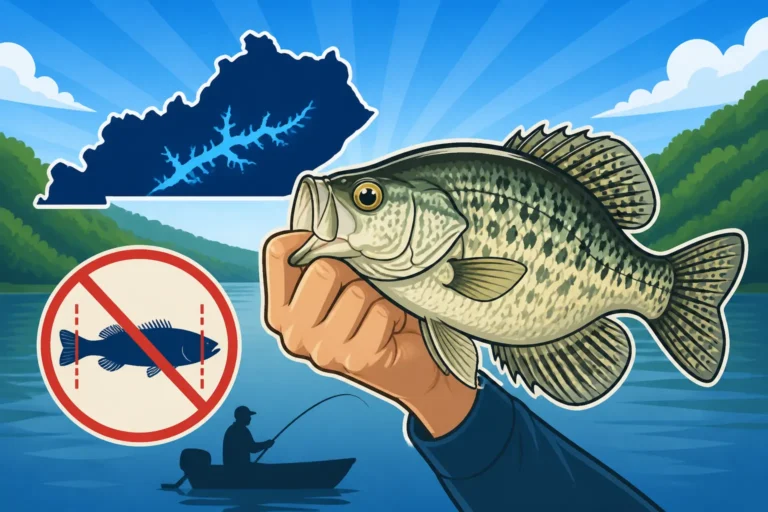
Just like with bass, there are exceptions to the statewide crappie rules, and Barren River Lake is the most significant one to remember. While most of Kentucky has no size limit for crappie, Barren River Lake, located in south-central Kentucky, implements a 10-inch minimum size limit for both black and white crappie. The daily creel limit remains at 20 fish, but each of those 20 must be at least 10 inches long.
This specific regulation for Barren River Lake is a management tool aimed at fostering a higher quality crappie fishery. By protecting the smaller, younger crappie, the hope is that they will have more time to grow to a larger, more desirable size, leading to an overall increase in the average size of crappie in the lake. It's about providing a better fishing experience and ensuring the sustainability of the fishery for years to come. Our article, Barren River Lake Crappie Size Limit in Kentucky, offers a deeper dive into this unique rule.
For anglers heading to Barren River Lake, a sturdy measuring board or tape is absolutely non-negotiable. You can easily find various measuring tools on Amazon, from stick-on boat rulers to foldable handheld versions. Getting caught with undersized crappie can lead to fines, so accurately measuring your catch is paramount. It's a minor inconvenience that prevents a major headache. Always measure your fish carefully before putting them on a stringer or in your livewell, and if it's not quite 10 inches, send it back with a wish for it to grow bigger!
Kentucky Catfish Regulations: Daily Limits and Trophy Fish Rules
Kentucky's rivers and lakes are home to an impressive array of catfish species, including channel, blue, and flathead catfish. These powerful fish are highly sought after for their fighting spirit and delicious meat. While the general limits are generous, there are important distinctions to remember, especially concerning those prized trophy-sized blues and channels.
Statewide Limits for Channel, Blue, and Flathead Catfish
When it comes to channel catfish and blue catfish, Kentucky has a combined daily creel limit of 15 fish. This means you can keep any mix of channel and blue catfish, up to a total of 15 per day. However, here's the crucial part for those targeting big ones: within that 15-fish limit, you are only allowed to keep one blue or channel catfish that measures 25 inches or longer. This "one over 25 inches" rule is a vital conservation measure designed to protect the large, mature brood stock of these species, ensuring they continue to reproduce and contribute to the fishery.
Flathead catfish, on the other hand, have their own distinct regulation. For flatheads, the daily limit is 5 fish, with no size restrictions. This separate limit acknowledges the different life histories and population dynamics of flatheads compared to blues and channels. Flatheads typically grow much slower and have different feeding habits, requiring tailored management strategies. Keeping these separate limits in mind is key to staying compliant. Learn more about these rules in our article, Kentucky Catfish Daily Limit and Trophy Fish Rule.
Imagine you're having an epic day on the Ohio River, pulling in several channel and blue catfish. You've got five nice 18-inch channels in the cooler, and then you hook into a monster 30-inch blue cat. You can absolutely keep that trophy! But now, if you catch another blue or channel that's also over 25 inches, it must be released. It's a rule that encourages you to enjoy that one big catch while still allowing a good harvest of smaller, equally delicious fish. This balance is what makes Kentucky's catfish regulations effective. Our guide on Why Blue and Channel Catfish Count Toward the Same Kentucky Limit delves into the specifics of this combined limit.
Why Catfish Limits Vary and How to Measure Your Catch
The varying limits for different catfish species and sizes aren't arbitrary; they are carefully determined by biologists based on population studies, growth rates, and reproductive success. Protecting larger, older blue and channel catfish, for example, is critical because these are the prime spawners that contribute significantly to the genetic diversity and health of the overall population. Allowing anglers to harvest a good number of smaller catfish, while limiting the trophy-sized ones, helps maintain a robust and sustainable fishery for all.
Accurate measurement is incredibly important when dealing with the "one over 25 inches" rule for blue and channel catfish. You need to measure your fish from the tip of its snout to the tip of its tail with the tail compressed. This ensures a consistent measurement. Trying to eyeball it or guess can lead to accidental violations. Just like with bass and crappie, a reliable measuring tape or board is an essential piece of gear. Many anglers prefer a flexible, waterproof tape measure that can easily be kept in a tackle box, or even a specialized ruler that attaches to the boat. Again, Amazon offers a wide selection of these tools, making it easy to prepare for your trip.
The excitement of landing a truly massive catfish can sometimes make anglers forget the rules in the heat of the moment. Taking a quick breath, consulting your regulations, and accurately measuring your catch ensures that the thrill of the catch isn't overshadowed by a potential penalty. If you're ever in doubt, the safest bet is always to release the fish. For more specific details on the trophy rule, you can check out our article on How Many Catfish Over 25 Inches Can You Keep?.
Essential Tips for Staying Compliant and Enjoying Your Trip
Nobody wants a fishing trip ruined by an unexpected fine or a misunderstanding with a game warden. Staying on the right side of the law means doing a little homework before you even cast a line. It’s about being prepared and respectful of Kentucky’s precious natural resources.
Always Check the Latest Regulations
Fishing regulations aren't set in stone forever. They can and do change, sometimes annually, based on biological data, environmental factors, and management goals. What was legal last year might not be this year, or rules might be updated mid-season. Relying on outdated information from memory or an old printout is a recipe for trouble. The absolute best practice is to check the official Kentucky Department of Fish and Wildlife Resources (KDFWR) website or their mobile app before every fishing trip, especially if you're venturing to a new lake or river.
It might seem like a hassle, but a five-minute check can save you from a hefty fine and a lot of frustration. The KDFWR website is user-friendly and usually has the most up-to-date fishing and boating guide available for download. Having the regulations saved on your phone or a printed copy in your tackle box means you can quickly reference them on the water. This proactive approach ensures you're always informed and compliant, letting you focus on the peace and enjoyment of being outdoors. Our comprehensive guide to Kentucky Fishing Regulations Explained is an excellent starting point to understand the broader legal framework.
Consider a scenario where new restrictions have been placed on a particular lake to help a recovering fish population. If you go out fishing unaware of these changes, you could easily violate the new rules, even with the best intentions. Checking the KDFWR site is like checking the weather; it's a routine step that ensures a successful and uneventful outing.
The Importance of Proper Measurement and Identification
We've talked about it for bass, crappie, and catfish, but it bears repeating: proper measurement and accurate fish identification are non-negotiable. Many violations occur not because an angler intentionally broke a rule, but because they misidentified a fish or poorly measured it. For example, distinguishing a spotted bass from a largemouth can be tricky for beginners, but their collective limits mean you need to know what you’ve got. Likewise, making sure that 12-inch bass is actually 12 inches, or that 10-inch crappie at Barren River Lake truly measures up, is critical.
Invest in good measuring tools. A flexible tape measure or a rigid bump board, both readily available on Amazon, are simple yet essential pieces of gear. Knowing how to correctly measure (snout to tip of compressed tail) is also vital. When you're excited about a catch, it's easy to rush, but taking a moment to confirm size and species can save you from a lot of stress. Carrying a small, laminated fish identification chart can also be a lifesaver, helping you differentiate between similar-looking species and ensuring you're compliant with their specific limits. For instance, knowing the exact 12-inch minimum for most bass is critical, as detailed in Kentucky Statewide Bass Limit: 12 Inches, 6 Fish a Day, and equally important for the 15-inch exception at Lake Barkley's 15-Inch Bass Size Limit Explained.
What Happens If You Break the Rules
While our goal is always to prevent violations, it's important to understand the potential consequences if you do accidentally (or intentionally) break Kentucky's fishing regulations. Game wardens are out on the water and along the banks specifically to enforce these rules, protecting the state's natural resources. They have the authority to check your fishing license, your catch, and your compliance with all regulations.
Getting caught with undersized fish, over the daily limit, or without a valid license can lead to fines, confiscation of your catch, and even the suspension of your fishing privileges. The exact penalties vary depending on the severity of the offense and whether it's a repeat violation. These aren't just minor inconveniences; they can be substantial financial penalties and a black mark on your angling record. The goal of enforcement isn't to punish recreational anglers, but to ensure everyone is playing by the rules and contributing to conservation efforts. Our article on Penalties for Fishing Without a License in Kentucky gives you an idea of the types of repercussions that can occur. Knowing that game wardens conduct Game Warden Enforcement and License Checks While Fishing should be a reminder to always be prepared and in compliance.
Staying informed, being prepared with the right measuring tools, and practicing responsible angling habits are the best ways to ensure every fishing trip in Kentucky is a positive and memorable one. By understanding and respecting these limits, you're doing your part to keep Kentucky's waters abundant for everyone.
Kentucky Fishing Bag and Size Limits Summary
To help you keep track of the most critical regulations, here's a quick summary of the statewide and key lake-specific limits for bass, crappie, and catfish in Kentucky:
| Species | Statewide Daily Limit | Statewide Size Limit | Key Lake Exception & Rule |
|---|---|---|---|
| Largemouth, Smallmouth, Spotted Bass (Combined) | 6 fish | 12 inches minimum | Lake Barkley: 6 fish daily, 15 inches minimum. |
| Black & White Crappie (Combined) | 20 fish | No size limit | Barren River Lake: 20 fish daily, 10 inches minimum. |
| Channel & Blue Catfish (Combined) | 15 fish | Only 1 over 25 inches | N/A (Statewide rule covers all major waters) |
| Flathead Catfish | 5 fish | No size limit | N/A (Statewide rule covers all major waters) |
Always refer to the official KDFWR regulations before each trip, as rules can change and other localized exceptions may apply.
Disclaimer
The information provided in this guide is for general informational purposes only and does not constitute legal advice. Fishing regulations are subject to change by the Kentucky Department of Fish and Wildlife Resources. Always consult the official and most current KDFWR regulations before engaging in any fishing activities. Compliance with all applicable laws and regulations is the sole responsibility of the angler.