White Bass and Yellow Bass Fishing in Kentucky
Oh, the thrill of a good school of fish! There's nothing quite like it, especially when you stumble upon a hungry frenzy of white bass or yellow bass. For many anglers in Kentucky, these feisty panfish offer some of the most consistent action and delicious table fare, but sometimes they get a little mixed up, or folks aren't quite sure where to find them. This guide is all about untangling the mystery of white bass and yellow bass, helping you identify each one, pinpoint their favorite haunts across the Bluegrass State, and equip you with the gear and techniques to consistently reel them in.
Understanding Kentucky's White Bass Population
White bass are truly one of Kentucky's unsung heroes of the angling world. They might not get the same press as a trophy largemouth or a massive catfish, but their willingness to bite and their schooling habits make for some incredibly memorable days on the water. If you're looking for fast action, especially in the spring, white bass are absolutely where it's at. They're strong fighters for their size, providing a fantastic challenge on light tackle.
Key Characteristics and Identification
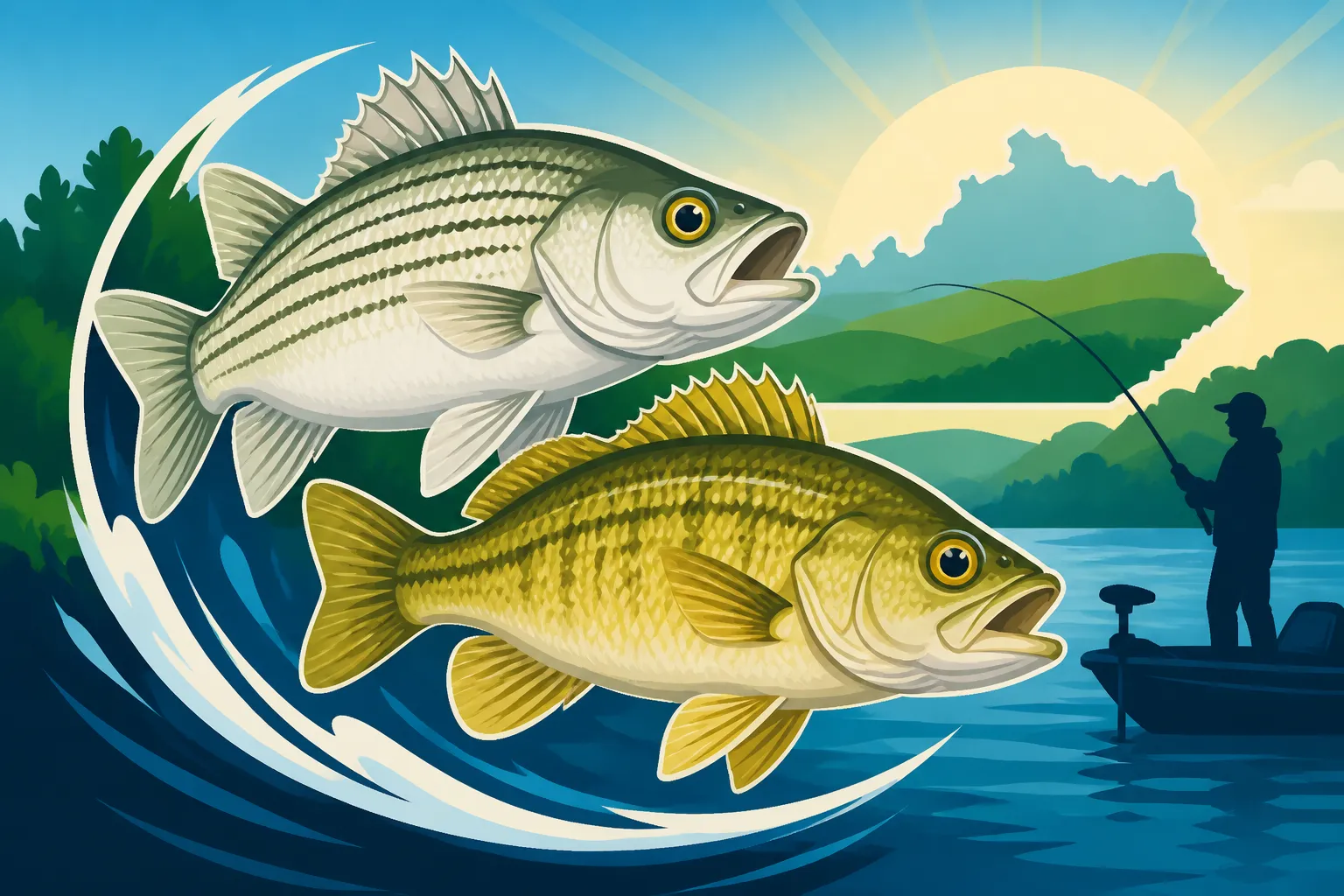
When you pull a white bass out of the water, you'll immediately notice its distinct silvery appearance with several prominent dark stripes running horizontally along its body. These stripes are usually unbroken, especially the ones above the lateral line, which is a key differentiator from other similar species. They tend to have a slightly deeper body profile compared to their yellow bass cousins, and their dorsal fins are completely separated. Most white bass you catch in Kentucky will be in the 1-2 pound range, though bigger ones are certainly out there, offering a surprisingly powerful fight. Their eyes are relatively large, and their mouth is moderately sized, perfect for gulping down smaller baitfish.
White bass are pelagic, meaning they love open water. You won't typically find them hugging tight cover or buried deep in submerged timber like some other species. Instead, they roam in schools, often chasing baitfish in vast open stretches of our larger reservoirs and rivers. When you find one, you've usually found a whole bunch, which is what makes fishing for them so exciting. They're often found suspended in the water column, especially during the warmer months, but will move shallower during their spawning runs. Kentucky's diverse waterways provide ample habitat for these prolific fish, from sprawling lakes to major river systems.
Prime White Bass Fishing Spots in Kentucky
Kentucky boasts some truly phenomenal white bass fisheries. If you're looking for consistent action, you really can't go wrong with our larger impoundments and main river channels. Lakes like Kentucky Lake and Lake Barkley are legendary for their white bass runs, especially in the spring when these fish move into feeder creeks and river arms. The sheer volume of water and abundant baitfish populations in these reservoirs create the perfect environment for healthy white bass populations to thrive. Anglers often target them around points, humps, and submerged roadbeds in the main lake basin.
Beyond the big two, other lakes such as Lake Cumberland, Barren River Lake, and Taylorsville Lake also hold excellent numbers of white bass. On Lake Cumberland, for instance, you'll often find them schooling up near the mouths of major creeks or around dam structures, especially when shad are abundant. On the Ohio River, they’ll concentrate around wing dams, rip-rap banks, and tributary mouths, particularly after heavy rains when currents draw them in. Always keep an eye out for surface activity – if you see baitfish scattering or water churning, chances are there's a school of white bass pushing them from below, creating what anglers call a "white bass boil." Best Fishing Spots in Kentucky has more general information, but these specific lake types are ideal for white bass.
White Bass Spawning Habits and Best Times to Fish
The white bass spawn is a highly anticipated event for many Kentucky anglers, and for good reason: it offers some of the most intense and predictable fishing of the year. White bass typically begin their spawning migration in early spring, usually when water temperatures climb into the low 50s to mid-60s Fahrenheit. This can vary a bit each year based on how quickly spring arrives, but generally, late March through May is prime time. They migrate upstream into rivers, creeks, and even shallow, rocky tributary arms of large lakes to deposit their eggs.
During this migration, white bass congregate in massive schools, making them relatively easy to locate and catch. They often prefer areas with some current and gravel or rocky bottoms. Anglers will line the banks of these creeks and rivers, casting small lures into the moving water. Once the spawn is complete, the fish disperse back into the main lake or river system, but they remain highly active throughout the summer, continuing to chase baitfish in open water. Even in the colder months, they can be caught, though they'll often suspend deeper. For tips on seasonal catches, check out Best Lures for Early Spring Fishing, which often includes white bass favorites.
Diving into Kentucky's Yellow Bass Fisheries
While white bass tend to get more of the spotlight, their smaller, but equally feisty, cousins—the yellow bass—offer a fantastic angling opportunity, especially for those looking for consistent bites and fun on ultralight tackle. Yellow bass might not grow as large as white bass, but they make up for it with sheer numbers and a willingness to bite throughout the year. They're a perfect target for beginners or for experienced anglers looking for non-stop action.
Yellow Bass Identification and Unique Traits
Yellow bass are easy to distinguish from white bass once you know what to look for. Their most striking feature is their coloration: they typically have a more brassy, yellowish hue on their sides and belly, which gives them their name. The dark horizontal stripes on a yellow bass are usually broken or offset below the lateral line, particularly towards the tail, unlike the more continuous stripes of a white bass. This broken stripe pattern is the most reliable way to tell them apart. Yellow bass also tend to be smaller, rarely exceeding a pound in Kentucky waters, with many catches being in the 4-8 ounce range. They have a slightly more compressed body shape than white bass, and their two dorsal fins are connected at the base, not completely separate.
Unlike white bass, which prefer open water, yellow bass often relate more to cover. You'll find them holding around submerged brush piles, weed beds, docks, bridge pilings, and other structures. While they do school, their schools are often tighter and more confined to specific areas of cover rather than roaming wide-open water. This preference for structure means you might not see the dramatic "boils" you associate with white bass, but once you locate a school of yellow bass on a piece of cover, you can often catch them repeatedly from that same spot. They are also known for their aggressive, almost "snappy" bite, even when they are small.
Top Yellow Bass Locations Across Kentucky
Kentucky offers numerous fantastic locations for targeting yellow bass. Many of the same lakes that hold white bass will also have healthy populations of yellow bass, but you'll often find them in different areas of the lake. For instance, on Kentucky Lake and Lake Barkley, while white bass might be out in the main lake chasing shad, yellow bass could be tucked into a quiet cove, associated with stumps or brush. They thrive in many of our mid-sized to large reservoirs, as well as some of the river backwaters.
Lakes like Green River Lake, Taylorsville Lake, and even some smaller public fishing lakes and large farm ponds can be honey holes for yellow bass. Look for areas with a good mix of submerged vegetation, standing timber, or rocky shorelines. On Barren River Lake, for example, you might find them congregated around old roadbeds or submerged creek channels, particularly where there's some woody debris. Because they stay tighter to cover, using a fish finder can be incredibly helpful for pinpointing these schools. Fish Finders and Electronics for Kentucky Lake Fishing can provide guidance on useful technology to locate these fish. Just remember, once you find them, stick around because there are usually more!
Yellow Bass Seasonal Behavior and Peak Fishing Periods
One of the great things about yellow bass is their consistent bite throughout much of the year, making them a reliable target when other species might be finicky. While they do have a spawning period, it's generally less dramatic and more drawn out than the white bass run. Yellow bass typically spawn in late spring to early summer, when water temperatures are in the high 60s to low 70s Fahrenheit. They'll move into shallower areas with gravel or sandy bottoms, often near vegetation or other cover, to lay their eggs. During this time, they can be caught in large numbers in these shallower zones.
However, unlike white bass, yellow bass don't typically undertake extensive migrations for spawning. They often just move from slightly deeper cover to shallower cover within the same general area. After the spawn, they quickly resume their patterns of schooling around structure. You can catch them consistently through the summer and into the fall, and even in winter, they will congregate in deeper holes or around dense cover, offering a fun challenge on cold days. Their year-round availability makes them a great option for anglers whenever they can hit the water.
Essential Gear and Techniques for White Bass and Yellow Bass
Fishing for white and yellow bass doesn't require a tackle shop's worth of specialized gear. In fact, that's part of their charm! They are very willing biters, which makes them excellent targets for light tackle, offering a spirited fight that feels much bigger than their actual size. Simplicity is often key, but having the right setup can definitely improve your catch rates and enjoyment.
Rods, Reels, and Line for Light Tackle Action
For both white and yellow bass, light to medium-light spinning tackle is the way to go. You want a rod that has a sensitive tip to detect subtle bites, but enough backbone to handle a feisty fish, especially when you hook into a larger white bass that's diving and pulling hard. An ultralight or light action rod, typically 5 to 6.5 feet long, paired with a small spinning reel (size 1000 to 2500) spooled with 4-8 pound test monofilament or fluorocarbon line is ideal. Braided line in a similar strength can also be effective, especially if you tie on a fluorocarbon leader for a bit more stealth. This setup allows for accurate casting of small lures and provides maximum sensitivity and fight for these smaller fish.
If you're targeting bigger white bass during a heavy run, you might opt for a slightly stiffer medium-light rod, maybe 6.5 to 7 feet, with 8-10 pound test line, just to give you a bit more control when you're pulling multiple fish out of a school. For yellow bass, the lighter the better! An ultralight setup truly lets these fish shine. Having a good quality reel with a smooth drag system is important, as these fish can make surprising runs, especially white bass in current. For a more general overview of suitable gear, take a look at Best Rods and Reels for Kentucky Fishing.
Top Lures and Baits for Both Species
When it comes to lures and baits, both white and yellow bass respond well to presentations that imitate small baitfish or aquatic insects. The key is often to "match the hatch" with something small and shiny. Small jigs are absolute killers for both species. Think 1/16 oz to 1/4 oz lead-head jigs dressed with small plastic grubs, tubes, or curly-tail baits in white, chartreuse, or pearl colors. You can find a huge selection of these plastics on Amazon at really affordable prices, allowing you to stock up for frequent use. These jigs can be cast and retrieved, or vertically jigged when fish are holding deeper.
Small inline spinners, like Mepps or Rooster Tail, are also incredibly effective, particularly for white bass. Their flash and vibration mimic fleeing baitfish perfectly. Tiny crankbaits, especially those with a tight wobble in chrome or shad patterns, can also be deadly, especially when fish are actively feeding on the surface or suspended. When the bite is tough, or you're just looking for consistent action, live bait such as small minnows or pieces of nightcrawler fished under a bobber can be irresistible to yellow bass and also work wonders for white bass. Don't forget small spoons, like a Kastmaster or a Little Cleo, which can be cast a long way and flutter enticingly on the retrieve.
Effective Fishing Techniques for Different Conditions
The techniques you use will depend a lot on whether you're targeting white bass or yellow bass, and what the fish are doing. For white bass, especially when they're schooling or during their spawning runs, a fast-paced approach is often best. When you see a "boil" on the surface, cast quickly into the disturbance and reel your lure back through the school. If they're suspended, try vertical jigging directly over them or trolling small crankbaits or spoons at the depth where you're seeing fish on your electronics. In river currents during the spawn, simply casting upstream and letting your jig or spinner drift downstream with a slow retrieve can be incredibly effective.
Yellow bass, with their preference for cover, often require a more targeted approach. Cast your small jig or live bait directly to brush piles, weed edges, or around docks. A slow, steady retrieve with occasional twitches can entice a bite. When they're holding tight to cover, sometimes a simple drop-shot rig or a jig fished under a slip bobber that allows your bait to hover right in their strike zone can be the ticket. They're not usually as aggressive as white bass in chasing down prey, so a more subtle presentation often pays off. For general jigging techniques that apply to many panfish, you might find How to Jig for Crappie in Shallow Water helpful, as the methods are similar.
Mastering the Art of Finding and Catching White and Yellow Bass
Finding and catching these schooling fish can go from frustrating to fantastic with a few key strategies. It’s not just about what lure you throw, but where and how you present it, and how you interpret what the water is telling you. Understanding their behavior and reacting quickly is what separates a good day from an epic one.
Reading the Water: Signs of Active Bass
Paying attention to the water is paramount when targeting schooling fish like white and yellow bass. For white bass, the most obvious sign of activity is surface commotion. Look for birds diving, baitfish scattering, or water churning in a small area – these are classic "white bass boils" or "jumps" where a school is actively pushing baitfish to the surface. When you spot this, get a lure in there fast, because the feeding frenzy might only last a few minutes. You'll often see them around points, humps, or open water flats, especially during dawn and dusk, which are prime feeding times. Best Time of Day to Catch Bass has more on this.
Yellow bass are a bit more subtle. Since they often relate to cover, you might not see them busting the surface. Instead, look for them on your fish finder around submerged timber, rock piles, or old creek channels. Another visual cue could be small dimples on the water's surface near cover, indicating a school of smaller baitfish that yellow bass might be herding. Sometimes, just the presence of other anglers catching fish in a particular area is your best clue, as these fish tend to congregate. Don't be afraid to slow down and really "feel" for the cover with your lure.
Tactics for Successful Schooling Fish Encounters
Once you've found a school of white or yellow bass, the game is on! For white bass, speed and repetition are key. If they're boiling, cast beyond the school and retrieve your lure through it. If the bite slows, try varying your retrieve speed or the depth of your lure. Often, they'll hit on the fall or during a pause. If you're fishing from a boat, approach carefully and quietly. Try to stay on the downwind side of the school so your boat drifts over them naturally, rather than running your motor right into them. Getting a good anchor can also help hold your position once you've found a productive spot. Check out How to Fish From a Boat Without Spooking Fish for more boat-specific tactics.
For yellow bass, especially if they're tight to cover, a more methodical approach works well. Fan-cast around the cover, trying different angles. If you get a bite, pinpoint that exact spot and keep casting there. Sometimes, a vertical jigging presentation right over a brush pile, gently lifting and dropping your jig, will outperform a cast-and-retrieve. Don't be afraid to try different lure colors or sizes if the bite is slow; sometimes a slight change is all it takes. Because yellow bass are so prolific, you can often stay on one school for a good while, catching fish after fish.
Dealing with Bag Limits and Regulations
While white and yellow bass are plentiful, it's always crucial to be aware of and adhere to Kentucky's fishing regulations. These rules are in place to ensure healthy fish populations for everyone to enjoy for years to come. Generally, white bass and yellow bass fall under specific or general panfish limits, but these can change, and sometimes there are lake-specific exceptions. Before you head out, always double-check the current Kentucky Department of Fish and Wildlife Resources (KDFWR) regulations.
Typically, there are generous daily creel limits for white and yellow bass, often allowing anglers to keep a good number for a fish fry. Size limits are less common for these species than for, say, largemouth bass, but it's always smart to verify. Keeping a copy of the regulations with you, or having the KDFWR app on your phone, is a good habit. You can find comprehensive information about these regulations in resources like Kentucky Fishing Regulations Explained and Statewide Bag and Size Limits by Fish Species. Remember, responsible angling means knowing the rules before you cast a line!
| Feature | White Bass | Yellow Bass |
|---|---|---|
| Average Size | 1-2 lbs (up to 4+ lbs) | 0.25-1 lbs (typically under 1 lb) |
| Coloration | Silvery with distinct, unbroken dark stripes | Brassier, yellowish with broken/offset dark stripes |
| Dorsal Fins | Completely separated | Connected at the base |
| Body Shape | Deeper body profile | More compressed body profile |
| Habitat | Open water, main lake basin, rivers | Around cover (brush, weeds, docks), coves |
| Schooling | Roaming, often visible surface boils | Tighter schools, often related to specific cover |
| Primary Lure | Jigs, inline spinners, small crankbaits | Small jigs, live bait, micro-spoons |
| Best Fishing | Spring spawn run, summer surface activity | Consistent year-round bite around cover |
Why White and Yellow Bass Offer Unique Fishing Experiences
There's something uniquely satisfying about fishing for white and yellow bass. They're not always the biggest fish in the lake, but they offer an unparalleled combination of accessibility, action, and table quality that makes them a favorite for many anglers, myself included. Whether you're a seasoned pro or introducing a child to fishing for the first time, these species consistently deliver.
The Thrill of the White Bass Run
If you've never experienced a white bass run, you're truly missing out on one of Kentucky's angling highlights. Imagine hundreds, even thousands, of fish migrating upstream into rivers and creeks, all bunched up and aggressively feeding. It's an explosion of activity! Casting a small jig or spinner into the current and feeling that instant thump as a white bass hammers your lure is an adrenaline rush. Then, the spirited fight on light tackle, with the fish often making strong runs and quick turns, is incredibly fun.
These runs provide an amazing opportunity for high-volume catches. It's not uncommon to catch dozens of fish in a single outing, making it fantastic for filling a cooler for a delicious fish fry. This also makes it an ideal scenario for teaching new anglers, especially kids, because the consistent action keeps them engaged and excited. They get to experience the thrill of a bite and a fight without having to wait hours for a single fish. It's a special time of year that really celebrates the abundance of our Kentucky waters.
The Consistent Fun of Yellow Bass Fishing
Yellow bass might not create the dramatic "runs" of their white bass cousins, but they offer something equally valuable: consistent, reliable fun. They are truly one of the most accessible fish in Kentucky, thriving in a wide variety of habitats, including many smaller lakes and even larger ponds. Their willingness to bite makes them an absolutely perfect target for family outings or for anyone who simply wants to get a bend in their rod. You don't need fancy gear or complex techniques; a simple ultralight rod, a small jig, or a worm under a bobber is often all it takes.
Because they tend to stay in schools around cover, once you find them, you can often catch fish for hours from the same spot. This makes them great for bank fishing from a pier or dock, or from a kayak exploring coves. Yellow bass are also fantastic eating fish, with firm, white, flaky meat that's excellent fried or baked. Their smaller size means they often cook up perfectly whole. If you're looking for a fish that provides non-stop action and a tasty meal, yellow bass are hard to beat. They embody the simple joy of fishing.
Conservation and Sustainable Practices
While white and yellow bass populations are generally robust and prolific, practicing good conservation habits is always important. Even with generous creel limits, it's wise to only keep what you'll realistically eat. If you're catching a lot, consider practicing catch and release for some of them, especially if you've already filled your quota for dinner. Handle fish gently if you plan to release them, minimizing their time out of the water and using wet hands to protect their slime coat.
Understanding the role these species play in the ecosystem, particularly as forage for larger predatory fish, helps us appreciate them even more. By respecting the resource and adhering to all regulations, we ensure that the thrilling white bass runs and the consistent yellow bass action will continue to be a cherished part of Kentucky fishing for generations to come. Having a Kentucky Fishing License Guide is the first step to ensuring you're fishing legally and sustainably.
Disclaimer
This article is for general informational purposes only and does not constitute professional advice. Laws, prices and regulations vary by location and change over time. Consult a qualified professional for guidance on your specific situation.