Tournament Angler License Rules and Requirements
Trying to navigate the complex world of fishing tournaments in Kentucky can feel like casting into a dense fog – you know there are fish out there, but you're not quite sure where the lines are drawn. Many anglers, seasoned pros and enthusiastic newcomers alike, get tripped up by the specific rules and requirements for competitive fishing, often mistakenly thinking a standard license is all they need. This comprehensive guide will untangle the knots, clarifying exactly what tournament anglers need to know about licenses, permits, and critical regulations to ensure a smooth, legal, and successful day on the water.
Understanding Kentucky's Basic Fishing License for Tournaments
Before you even think about signing up for a tournament, you need to ensure your fundamental fishing privileges are in order. Tournament fishing, while competitive, still falls under the umbrella of general fishing activities in Kentucky. This means the very first step is securing the appropriate state fishing license. No special "tournament license" exists at the individual angler level in Kentucky; instead, it's about making sure your standard license covers the dates and locations of your competition.
The Foundation: Your Annual or 1-Day License
For most anglers, the choice comes down to either an annual license or a short-term option. If you're a Kentucky resident and plan on fishing more than a couple of times a year, including any tournaments, investing in the annual fishing license is almost always the most economical and hassle-free choice. This license is valid from March 1st through the last day of February each year. Imagine the peace of mind knowing you're covered for every spontaneous trip and every planned tournament without having to worry about expiration dates mid-season. For those living in the Commonwealth, the cost of a Kentucky Resident Annual Fishing License Costs $24.31, a small price for a year of angling freedom.
However, if you're an occasional angler, perhaps only participating in one or two specific tournaments throughout the year, a 1-day fishing license might seem appealing. For residents, the Kentucky Resident 1-Day Fishing License Costs $7.40. While this can save you money for a single event, it requires meticulous planning. You must ensure the 1-day license covers the exact date(s) of your tournament. Many tournaments span two days, meaning you would need two separate 1-day licenses, or a more extended temporary option if available, making the annual license quickly more attractive. Always double-check your tournament schedule against your license validity to avoid any last-minute scramble or, worse, being caught fishing without the proper documentation. Remember, even a single cast without a valid license can lead to significant penalties, including fines and potential disqualification from your tournament.
Trout Permit: When It Applies to Tournament Fishing
Now, here's a detail that often trips up even experienced tournament anglers: the Kentucky trout permit. While not every tournament targets trout, if your competition takes place on waters designated as "put-and-take" trout streams, tailwaters below dams, or lakes with significant trout populations (like Lake Cumberland or a section of the Cumberland River), you absolutely need this additional permit. The Kentucky Trout Permit Costs $10.57 for Everyone, residents and nonresidents alike. This isn't just a suggestion; it's a mandatory requirement to legally fish for or possess trout in these specific waters.
Even if you're primarily targeting bass or crappie in a tournament, but the tournament water happens to also be a designated trout water, you might still need that permit. Why? Because the possibility exists that you could accidentally catch a trout. Or, if you're fishing a multi-species tournament, trout might be an eligible species. Always consult the official Kentucky Department of Fish and Wildlife Resources (KDFWR) regulations for the specific body of water where your tournament will be held. The rule of thumb is: if trout are present and can be legally fished for or harvested in that water, you need the permit. It's much better to have it and not need it than to need it and face potential fines or disqualification. Think of it as an extra layer of protection, just like carrying a spare prop. You might want to review the Kentucky Trout Permit Guide for more in-depth information.
Junior Anglers and License Exemptions
For our younger tournament participants, the rules are a bit more lenient, which is fantastic for encouraging the next generation of competitive anglers. In Kentucky, children under the age of 16 are generally exempt from needing a fishing license to fish. This applies to tournament fishing as well. So, if you have a budding angler under 16 years old participating in a junior division or fishing alongside an adult in a team event, they likely won't need their own state fishing license or even a trout permit.
However, it's crucial for parents, guardians, or tournament organizers to verify this exemption with the specific tournament rules and the KDFWR regulations each year, as laws can occasionally change. While the state exemption is broad, some private tournament circuits or venues might have their own age-based participation requirements or recommendations. Always err on the side of caution and confirm. This exemption is a wonderful incentive for kids to get involved in the sport, reducing barriers to entry and letting them focus purely on the thrill of the catch. For more detailed information, check out Kentucky Fishing License Requirements for Kids.
Specific Tournament Angler Requirements and Permits
While individual anglers don't need a special "tournament license" in Kentucky, the world of competitive fishing does involve specific rules and, sometimes, permits that apply more broadly to the event itself rather than just the individual. These often fall under the responsibility of the tournament organizers, but knowing about them empowers you as an angler to ensure you're participating in a legitimate and well-regulated event.
Are There Special Tournament Licenses?
This is a common question, and it stems from a valid concern. People want to know if there's an extra hoop to jump through, a special card to carry that proclaims them a "tournament angler." The short answer for individual anglers in Kentucky is no. As an individual, if you have your valid state fishing license and any necessary permits like a trout permit, you're legally good to go from the state's perspective. The state doesn't issue a separate license for tournament participation.
However, the misconception often arises because tournament organizers frequently need to apply for permits with the KDFWR. These permits are typically for events that involve specific areas, large numbers of participants, or require special considerations for weigh-ins, fish handling, or access. The state wants to ensure that these organized events are conducted responsibly, minimizing environmental impact and maximizing fish survival, especially for catch-and-release tournaments. So, while you, the angler, don't get a "tournament license," the tournament itself might be operating under a KDFWR permit, which is a key distinction. Always ask your tournament director if their event has all necessary state and local permits.
Permits for Tournament Organizers vs. Individual Anglers
This distinction is absolutely vital. Imagine a large bass tournament bringing hundreds of boats to Kentucky Lake. Such an event would require significant logistical planning, and it must have the appropriate permits from the KDFWR. These permits ensure things like proper fish handling protocols are in place, that designated weigh-in sites are approved, and that any potential environmental impacts are mitigated. Organizers might need to submit a plan detailing how fish will be cared for in livewells, how quickly they'll be transported to weigh-ins, and how they'll be released to maximize survival.
As an individual angler, you aren't directly responsible for obtaining these event-level permits. That burden falls squarely on the shoulders of the tournament director or organization. However, as a participant, you have a vested interest in ensuring the tournament you're fishing is properly permitted. Participating in an unpermitted event could lead to headaches for everyone involved, including potential disruption by game wardens or, in extreme cases, fines for organizers and even participants if rules are being flagrantly violated. When you sign up for a tournament, don't hesitate to ask if they have obtained the necessary KDFWR permits for organized events. A reputable tournament will be transparent about this.
Livewell Requirements and Fish Handling Rules
One of the most critical aspects of tournament fishing, particularly for catch-and-release events, revolves around the proper care and handling of fish. The KDFWR has stringent rules designed to ensure the health and survival of caught fish, especially bass, crappie, and other popular tournament species. These rules directly impact how you, the angler, must operate during a tournament.
First and foremost, your livewell system is paramount. Most bass boats are equipped with advanced livewell systems that circulate fresh, oxygenated water. However, it's your responsibility to ensure it's functioning correctly and that you're actively monitoring water temperature and oxygen levels. Many tournaments provide additives for livewells, like Rejuvenade or Catch & Release formulas, which help reduce stress on fish. Using these is often a mandatory rule. Furthermore, KDFWR regulations often specify minimum livewell capacity and aeration requirements for tournament boats. For example, some tournaments may impose penalties for fish brought to the weigh-in that are deceased or appear to be in poor health.
Beyond the livewell, proper fish handling practices are essential. This means minimizing the time a fish is out of water, handling it gently with wet hands, and supporting its full body weight, especially for larger fish. The KDFWR's guidelines on Statewide Bag and Size Limits by Fish Species also often include provisions for how fish are measured and handled. For instance, bass must typically be measured with their mouth closed and tail fanned, and this often needs to happen on a specific type of measuring board. Understanding these detailed fish care protocols is not just good sportsmanship; it's often a strict rule that, if violated, can lead to penalties, including loss of fish weight or even disqualification. Every angler serious about tournaments should be intimately familiar with these practices. You can often find detailed guidance on proper fish handling through resources like those available on Amazon, from specialized aerators to livewell conditioners.
Navigating Reciprocity and Out-of-State Tournament Anglers
Kentucky is a fantastic destination for fishing tournaments, attracting anglers from all over the country. But if you're traveling from another state, or even if you're a Kentucky resident fishing a border lake, understanding license reciprocity and nonresident requirements is crucial. This can be one of the trickier areas of tournament fishing regulations.
Border Water Agreements and the Need for a Kentucky License
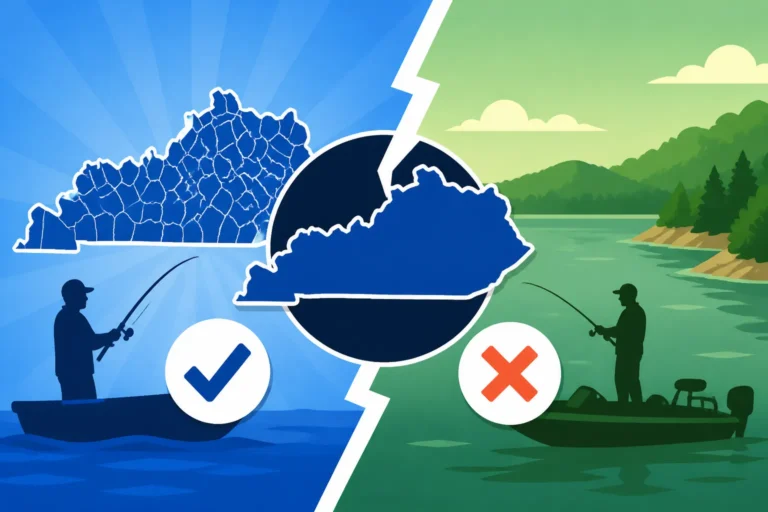
Kentucky shares major waterways with several neighboring states, including the Ohio River with Ohio, Indiana, and Illinois; the Mississippi River with Missouri; and Dale Hollow Lake and Lake Barkley with Tennessee. These border waters often have specific reciprocal agreements regarding fishing licenses. For instance, if you're a Kentucky resident fishing the Ohio River, your Kentucky license might allow you to fish certain portions of the river that technically fall into Ohio or Indiana waters, provided you don't dock or launch in those states. The same applies in reverse for anglers from those states.
However, these agreements are not universal and often come with caveats. For example, while Tennessee-Kentucky Fishing License Reciprocity Rules exist on shared waters like Dale Hollow Lake or Lake Barkley, they often specify that you can fish anywhere on the lake with either state's license, but if you launch from or return to a marina in the other state, you might need their license. And if a tournament is entirely within Kentucky waters, or you plan to launch and weigh in within Kentucky, you will absolutely need a valid Kentucky fishing license, regardless of your home state or any reciprocity agreements. Always verify the specifics for your tournament's exact location, especially if it's on a border water. It's a complex dance, and a quick call to the KDFWR or consulting the latest regulations guide is always a good idea.
Nonresident License Options for Tournament Participants
For anglers from out-of-state coming to Kentucky for a tournament, purchasing a Kentucky nonresident fishing license is usually necessary. Just like residents, nonresidents have options, though the prices are, understandably, higher. If you're planning on fishing multiple tournaments throughout the year in Kentucky, the Nonresident Annual Fishing License Cost in Kentucky will set you back around $58.14. This provides coverage from March 1st through the end of February, just like the resident annual license.
However, if you're only coming for a single weekend tournament, Kentucky offers short-term nonresident licenses that can be more cost-effective. A Nonresident 1-Day Fishing License Price in Kentucky is approximately $15.86, and a 7-day option costs about $37.00. Again, careful planning is essential. If your tournament spans two days, you might need two 1-day licenses, or the 7-day option might be a better value. Remember, these licenses must be valid for the entire duration you are fishing in Kentucky waters. Don't risk a fine or disqualification by trying to skirt the rules; the cost of the license is minimal compared to the potential penalties. Make sure to review the Kentucky Nonresident Fishing License Guide for all the details before your trip.
Specific State Reciprocity
Let's dive a little deeper into some of Kentucky's neighbors.
- Tennessee: As mentioned, areas like Dale Hollow Lake and Lake Barkley often have specific agreements. If you have a valid Tennessee fishing license, you can usually fish anywhere on these shared lakes. However, if you plan to solely fish Kentucky waters or launch and retrieve your boat exclusively from Kentucky, a Kentucky license is still recommended to avoid any ambiguity. It’s always best to carry both if you’re frequently crossing state lines on the water.
- Ohio: For anglers primarily fishing the Ohio River, a valid fishing license from either Kentucky or Ohio will generally allow you to fish the main stem of the Ohio River that forms the border. This typically means you can fish from the bank or a boat on either side without needing both. However, this reciprocity generally does not extend to the tributaries of the other state. So, if you're an Ohio angler with an Ohio license and decide to fish a Kentucky creek that feeds into the Ohio River, you'll need a Kentucky license. This nuance is crucial for tournament anglers who might be exploring feeder creeks for better catches. More info can be found in Ohio Anglers Fishing in Kentucky Waters.
- Indiana and Illinois: Similar to Ohio, anglers from Indiana and Illinois can often fish the main stem of the Ohio River bordering Kentucky with their respective state licenses. The same rule about tributaries applies: venturing into a Kentucky tributary requires a Kentucky license. For tournaments covering larger sections of the Ohio River, this means understanding the exact boundaries of where your license is valid. Indiana and Illinois Anglers Fishing Kentucky Waters provide additional specific details for these states.
- Missouri, Virginia, and West Virginia: For anglers from Missouri, especially on the Mississippi River border, and those from Virginia or West Virginia, generally, no specific reciprocity agreements exist that would exempt you from needing a Kentucky license if you are fishing in Kentucky waters. If your tournament is anywhere within Kentucky's jurisdiction, or on waters bordering these states where no specific agreement is in place, you absolutely need a Kentucky fishing license. Always assume you need the local license unless an explicit, documented reciprocity agreement states otherwise. See Missouri, Virginia and West Virginia Anglers Fishing in Kentucky for further specifics.
The bottom line for out-of-state anglers is this: When in doubt, buy the Kentucky license. It’s a small investment for peace of mind and legal compliance.
Common Pitfalls and How to Avoid Them
Even the most experienced tournament anglers can occasionally make mistakes when it comes to licenses and regulations. The pressure of competition, combined with the often-complex rules, can lead to oversight. Understanding these common pitfalls is the first step in avoiding them and ensuring a smooth tournament experience.
Expired Licenses and Misunderstanding License Years
One of the most frequent issues encountered by anglers is fishing with an expired license. In Kentucky, the fishing license year runs from March 1st to the last day of February. This means that if you bought your annual license in, say, June of last year, it will still expire at the end of February of the current year, not a full 12 months from your purchase date. Many anglers, especially those who only fish in the spring and summer, forget this and get caught in March or April with an expired license.
Imagine planning for a big April tournament on Kentucky Lake, confident you bought your license last summer. Then, a game warden checks you, and you discover it expired over a month ago. Not only is that embarrassing, but it can lead to immediate fines and disqualification from your tournament, ruining your day and potentially costing you prize money. To avoid this, mark your calendar or set a reminder on your phone for late February or early March each year to purchase your new license. The KDFWR website usually allows you to renew early. You can also review Kentucky Fishing License Year Runs March 1 to February 28 to clarify the exact dates.
Ignoring Site-Specific Regulations
While Kentucky has statewide bag and size limits for various species, many popular tournament lakes and rivers have site-specific regulations that supersede the general rules. This is particularly true for highly managed fisheries or those facing specific biological challenges. For example, while the statewide bass limit might be 12 inches and six fish per day, a particular lake might have a slot limit (e.g., no fish between 13-16 inches may be kept) or a different minimum size.
Tournament directors will usually outline these site-specific rules in their pre-tournament briefings, but it is ultimately your responsibility as an angler to know and abide by them. Don't rely solely on what you think you know or what another angler told you. Always consult the most current KDFWR fishing guide for the specific body of water where your tournament is held. Ignoring these can lead to penalties like loss of fish, disqualification, or even a citation from a game warden. Take the time to verify the rules for the specific lake, creek, or river before you ever cast a line. It’s not uncommon for rules to vary slightly for certain species; for instance, the Barren River Lake Crappie Size Limit in Kentucky differs from the statewide regulations. Always double-check Kentucky Anglers: Check Site-Specific Rules Before You Fish.
Failing to Carry Proper Identification and License Proof
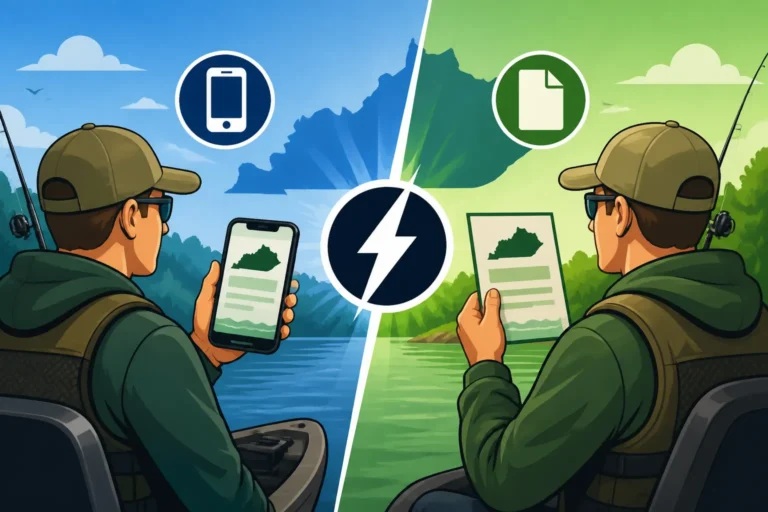
When a Kentucky game warden conducts a license check, they're not just looking for a piece of paper. They want to verify that the person holding the license is indeed the legal owner. This means you must carry valid photo identification, such as a driver's license, along with your fishing license. While many anglers now carry digital copies of their license on their phones, it's always wise to have a physical printout as a backup, especially in areas with spotty cell service. What happens if your phone battery dies? Or if your phone gets wet?
Imagine you’re having a fantastic day on the water, you’ve got a livewell full of potential winners, and a game warden pulls up. You confidently pull out your phone, only to realize the battery is at 2%, or worse, you left it charging back at the ramp. Or maybe you simply didn't download the digital copy and assumed the email receipt was enough. These situations, while seemingly minor, can quickly escalate. Without proper proof of license and identification, you could be treated as if you're fishing without a license, leading to fines and a ruined tournament day. Make it a habit to always carry a physical copy of your Kentucky Fishing License Guide and a government-issued photo ID. Keep them in a waterproof bag or wallet, easily accessible but secure. You'll thank yourself later when the game warden gives you a quick nod and sends you on your way. You might also be interested in how Game Warden Enforcement and License Checks While Fishing work.
Essential Gear and Documentation for Tournament Day
Being prepared for a tournament goes beyond having the right lures and rods. It means having your essential documentation and gear in order, especially the items that ensure you're legal, ethical, and ready for any situation a game warden might present. This prep work saves you stress and protects your investment in the tournament.
Your License, Trout Permit, and ID: Always on Hand
Let's reiterate this because it's that important: your valid Kentucky fishing license, any required trout permits, and a government-issued photo ID are your golden tickets to tournament participation. Without them, you're not just out of the competition; you're breaking the law. These documents need to be physically on your person or immediately accessible in your boat.
Many anglers prefer to print a physical copy of their license and keep it laminated or in a waterproof holder. This ensures readability even if it gets wet and provides a backup if your phone fails. While Digital vs Printed Kentucky Fishing License on the Water are both generally accepted, having both gives you ultimate peace of mind. Some tournament directors even require a physical copy at check-in. It's not enough to have a license; you must be able to produce it upon request from a game warden or tournament official. Don't risk your hard work and potential winnings on a simple oversight. Make it the very first thing you check before you head to the ramp. Knowing What Happens at a License Check on the Water? can help you prepare.
Proper Livewell and Aeration Systems
Tournament fishing, especially catch-and-release events, places a huge emphasis on fish care. Your livewell isn't just a holding tank; it's a critical piece of equipment designed to keep your catch healthy and alive until weigh-in. The KDFWR and tournament organizers mandate specific requirements for livewell size, aeration, and water quality. A functional, well-maintained livewell system is non-negotiable.
Ensure your livewell pumps are working perfectly, circulating fresh water and providing adequate oxygenation. Many tournament anglers invest in additional portable aerators or oxygenating tablets, which can be purchased from retailers like Amazon, to provide extra support on hot days or during long runs. You'll also want to monitor your water temperature and consider adding ice (non-chlorinated, melted slowly) during hot summer tournaments to keep fish cool and reduce stress. Penalties for dead fish at weigh-in can be severe, often resulting in weight deductions or disqualification. A healthy fish population depends on responsible anglers, and tournaments play a vital role in promoting these practices.
Rules Checklists and Digital Resources
The sheer volume of rules in tournament fishing can be overwhelming. Beyond state regulations, each tournament typically has its own set of specific rules covering everything from start times, off-limits areas, permissible baits, and fish handling. To stay organized, many successful tournament anglers create personal checklists or utilize digital apps to keep all relevant information at their fingertips.
Before each tournament, create a quick checklist:
- Valid Kentucky fishing license (and trout permit, if applicable)? Check.
- Photo ID? Check.
- Current KDFWR regulations for the specific lake/river? Check.
- Tournament-specific rulebook reviewed? Check.
- Livewell working, and aerator additives on board? Check.
You can download the KDFWR fishing guide to your phone for offline access, or bookmark the relevant pages on their website. Some tournament series even have their own apps that provide rules, schedule updates, and live leaderboards. Being digitally prepared ensures you can quickly reference a rule if a question arises on the water, rather than guessing or relying on outdated information. This proactive approach will not only keep you compliant but also give you a competitive edge.
Staying Up-to-Date with Kentucky Fishing Regulations
The world of fishing regulations isn't static. Rules can change, sometimes annually, sometimes mid-season if critical conservation needs arise. For tournament anglers, staying informed isn't just a suggestion; it's a necessity to remain competitive and compliant. Relying on old habits or hearsay is a recipe for disaster.
Official KDFWR Resources and Communication
Your primary and most reliable source for all Kentucky fishing regulations is, without a doubt, the Kentucky Department of Fish and Wildlife Resources (KDFWR). They publish an annual fishing guide, which is available both in print at license vendors and online on their official website. This guide is your bible for all things regulatory, including statewide and site-specific bag and size limits, license requirements, and any special permits.
Beyond the annual guide, the KDFWR often communicates important updates through their website, social media channels, and email newsletters. It's a smart move for any serious angler to subscribe to these updates. For instance, if a specific lake experiences a sudden change in its bass slot limit due to biological monitoring, KDFWR will typically issue an alert. Missing such an update could lead to inadvertent violations during a tournament. Make it a routine to check their website before each season and before any major tournament. Never assume old rules still apply; always verify with the official source. You can find detailed information by looking up the Kentucky Fishing Regulations Explained.
Tournament Rule Books and Pre-Tournament Briefings
While KDFWR rules set the baseline, individual tournament circuits and events will always have their own supplementary rule books. These rules often go into much greater detail about specific aspects of the competition, such as eligible species, scoring systems, off-limits areas, weigh-in procedures, boat inspection protocols, and even conduct expectations. These rules are in addition to and cannot supersede state regulations. For example, a tournament might require a 15-inch minimum for bass when the state minimum is 12 inches, but it cannot allow you to keep a 10-inch bass if the state says 12 inches is the minimum.
Most reputable tournaments will distribute their rule books well in advance, either digitally or physically. It is absolutely imperative that every tournament angler reads these rules thoroughly. Furthermore, many tournaments conduct mandatory pre-tournament briefings. These briefings are not just a formality; they are where tournament directors will highlight any rule changes, clarify ambiguities, and answer questions. Missing a briefing can leave you at a significant disadvantage, unaware of critical information that could impact your performance or compliance. Always attend, pay close attention, and ask questions if anything is unclear.
The Importance of Personal Responsibility
Ultimately, while KDFWR and tournament organizers provide the rules and information, the burden of understanding and adhering to them rests squarely on the shoulders of the individual angler. Personal responsibility is the cornerstone of ethical and legal tournament fishing. You can't claim ignorance as an excuse if you're caught violating a regulation.
Think of it this way: your reputation as an angler, your potential winnings, and even the integrity of the sport itself depend on everyone playing by the rules. This means taking the time to purchase the correct Kentucky Fishing License Costs and Types, understanding local exceptions to Statewide Bag and Size Limits by Fish Species, and ensuring your gear, like livewells, meets all standards. It means actively seeking out information, clarifying doubts, and always erring on the side of caution. Being a responsible tournament angler not only protects you from penalties but also contributes to the conservation of Kentucky's incredible fisheries, ensuring that future generations can enjoy the thrill of competition on its beautiful waters.
Disclaimer
Please note that fishing regulations, license costs, and requirements can change. Always consult the most current official publications from the Kentucky Department of Fish and Wildlife Resources (KDFWR) or contact them directly for the latest and most accurate information before engaging in any fishing activities or tournaments. This guide is for informational purposes only and should not be considered legal advice.