How to Fish a Spinnerbait for Bass
It's easy to get lost in the seemingly endless array of lures available for bass fishing these days. Walk into any tackle shop, and you're bombarded with colors, shapes, and actions that promise to be the "next big thing." This overwhelming choice can leave even experienced anglers scratching their heads, wondering which lure truly deserves a spot on their line. This guide is all about cutting through that noise and focusing on a true classic: the spinnerbait, helping you master its use for consistent bass success in Kentucky's waters.
The Enduring Power of the Spinnerbait in Bass Fishing
Despite the constant influx of newfangled baits, the humble spinnerbait has remained a steadfast staple in bass anglers' tackle boxes for decades, and for very good reason. It’s not just an old-school lure; it’s a time-tested workhorse that continues to put bass in the boat when many other baits fall short.
Why This Classic Lure Still Dominates Tackle Boxes
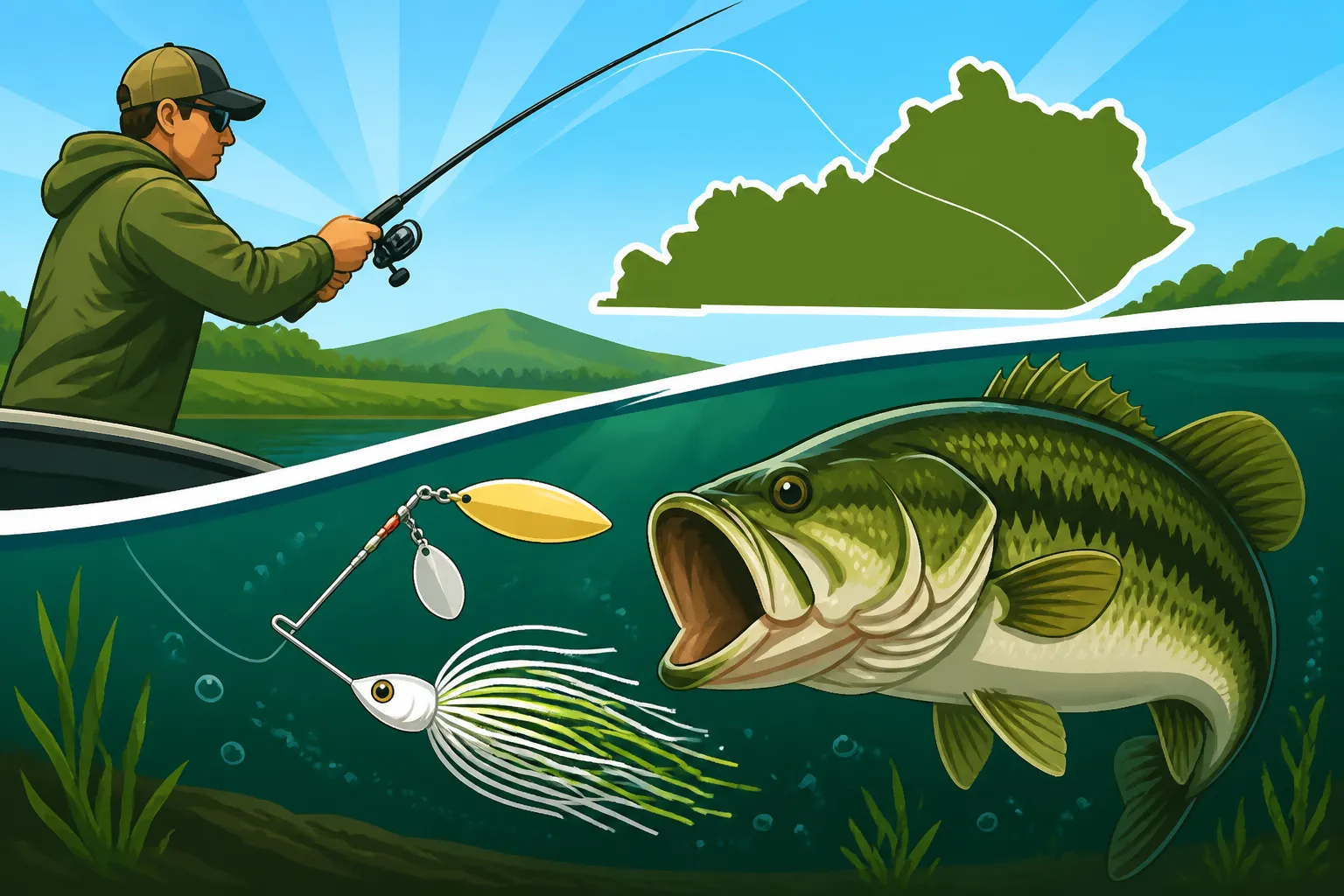
A spinnerbait offers a unique combination of visual flash, irresistible vibration, and a lifelike profile that perfectly mimics an injured baitfish—a prime target for hungry bass. The flashing blades create a beacon in the water, especially in stained or murky conditions, while their rotation sends out vibrations that bass can feel through their lateral lines, even if they can't see the lure clearly. This dual appeal makes it incredibly versatile, performing exceptionally well in a wide range of water conditions, from crystal clear lakes to the muddy backwaters of Kentucky's larger rivers.
What truly sets the spinnerbait apart is its incredible ability to navigate through heavy cover. Its single hook, protected by the wire frame and a silicone skirt, makes it remarkably weedless and snag-resistant. You can bang it off logs, crawl it through submerged vegetation, and even deflect it off dock pilings without constantly getting hung up, which is a major advantage when targeting bass in their preferred ambush spots. This adaptability means it’s a year-round producer, triggering both active feeding strikes and powerful reaction bites from sluggish fish. Whether you're fishing the expansive flats of Kentucky Lake or the clearer coves of Lake Cumberland, a spinnerbait is a lure you can confidently tie on. If you're looking for other great options, check out our guide on the Best Lures for Spring Bass Fishing.
Unpacking the Spinnerbait: Components and Their Purpose
To truly understand how to fish a spinnerbait, you need to appreciate what each part contributes to its overall effectiveness. It's a surprisingly simple lure, yet each component plays a critical role.
At its core, a spinnerbait consists of a lead head molded onto a wire frame. The lead head's shape (often bullet-shaped or a wedge) is designed to help the bait track straight through the water and deflect off cover without snagging. Directly behind the head is the skirt, typically made of silicone, rubber, or sometimes natural hair. This skirt provides the bait's body profile, pulsating and breathing in the water to create a lifelike appearance. Different skirt materials offer varied actions, with silicone being popular for its durability and wide range of colors, while living rubber provides a more subtle, natural movement.
The most distinctive feature, of course, is the blade(s). These are attached to the wire frame via a swivel or clevis and are responsible for the flash and vibration. There are several primary blade styles, each with distinct characteristics. Colorado blades are round and broad, generating significant vibration and lift, making them ideal for slower retrieves or deeper presentations. Willowleaf blades are long and narrow, resembling a willow leaf, producing less vibration but more flash and allowing for faster retrieves and deeper running. Indiana blades are a hybrid, oval-shaped, offering a balanced combination of flash and vibration. Some spinnerbaits feature tandem blades, combining two different styles (like a Colorado and a Willowleaf) to achieve a unique action. Understanding these components is the first step to truly mastering the lure.
Decoding Spinnerbait Retrieves for Every Bass Mood
The beauty of the spinnerbait lies not just in its design, but in the myriad ways you can work it through the water. There's no single "right" way to retrieve a spinnerbait; instead, the most effective technique often depends on the bass's mood, the water conditions, and the type of cover you're fishing. Experimentation is key, but a few foundational retrieves will cover most scenarios you'll encounter on Kentucky's waterways.
The Fundamental Slow Roll and Steady Retrieve
This is arguably the most common and often the most effective retrieve, especially when bass are less aggressive or in colder water. The slow roll involves a consistent, slow reeling motion, just enough to keep the blades spinning and the skirt pulsating. The goal is a subtle, steady presentation that allows the bass to get a good look at the lure and decide to strike without feeling rushed. This retrieve shines when bass are holding tight to deep structure, staging in post-spawn areas, or when a cold front has made them sluggish.
Imagine you're fishing a deep hump on Kentucky Lake in early spring. Bass might be lethargic, hugging the bottom. A slow-rolled spinnerbait, particularly one with a single Colorado blade for maximum thumping vibration, can entice those weary fish into biting. You'll want to cast it out, let it sink to the desired depth, and then begin a slow, methodical retrieve, feeling the blades turn through your rod. This technique is also excellent for working along deep weed lines or the contours of submerged points, giving bass plenty of time to react. The slow roll is a staple, especially during the prime fishing windows discussed in our Kentucky Bass Fishing: The April-May Peak Season guide.
Triggering Aggression with Burning and Ripping Techniques
Sometimes, bass aren't looking for a leisurely meal; they want something fast and frantic, something they have to ambush immediately or miss out. That's where burning and ripping techniques come into play.
"Burning" a spinnerbait involves a very fast, continuous retrieve, keeping the lure high in the water column, often just below the surface. This technique is designed to mimic a panicked baitfish fleeing for its life. It's incredibly effective when bass are actively chasing bait, especially in shallow water or around schooling fish. The speed doesn't give bass much time to inspect the lure, often resulting in a violent reaction strike out of pure instinct. If you're seeing shad flickering on the surface or notice bass busting bait near the shore on a windy day on Lake Barkley, burning a spinnerbait can be deadly. The flash and blur of the blades moving at high speed can trigger a feeding frenzy.
"Ripping" is a more aggressive, stop-and-go retrieve, often used when fishing through heavy vegetation like hydrilla or coontail. You'll cast your spinnerbait into or over the grass, then use sharp, upward snaps of the rod to rip the lure free from the weeds. This erratic action, combined with the sudden burst of vibration and flash, often infuriates bass into striking. It imitates a baitfish that's been momentarily trapped and then makes a desperate escape attempt. This method is fantastic for drawing strikes from bass buried deep within the cover, especially in the thick grass beds found in many of Kentucky's fertile reservoirs.
The Art of Deflection and Stop-and-Go Presentations
Perhaps one of the most underutilized, yet highly effective, spinnerbait tactics is fishing it to intentionally deflect off cover. Bass are ambush predators, and a lure that unexpectedly changes direction often triggers their attack instinct.
When your spinnerbait bumps into a log, rock, or even a dock piling, allow it to pause for a split second, then give it a slight twitch or a quick reel turn to make it jump off the obstruction. This sudden, erratic movement perfectly mimics a disoriented baitfish trying to escape, and that brief moment of vulnerability is often when a bass will pounce. Think about working a spinnerbait along a rocky point on the Kentucky River or through the submerged timber of Herrington Lake. Each time your lure contacts an object, it creates a strike opportunity. The effectiveness of deflection is a key principle, similar to what we discuss in our guide on How to Fish a Crankbait Around Cover, where bumping the lure off structure is paramount.
The "stop-and-go" or "yo-yo" retrieve is another powerful tactic. This involves reeling for a few seconds, then pausing, allowing the spinnerbait to fall or flutter. As it falls, the blades might helicopter, or the skirt will flare, creating an irresistible action. Then, quickly reel again, making the lure dart forward. This mimics an injured baitfish struggling to swim, pausing, and then making another attempt. This can be particularly effective in cooler water or when bass are suspended in the water column and need a little extra encouragement to commit.
Selecting Your Spinnerbait: A Guide to Blades, Colors, and Weight
Choosing the right spinnerbait for the conditions at hand can dramatically increase your success rate. It's not about having every spinnerbait imaginable, but understanding how blade type, skirt color, and weight interact with different environments and bass behaviors.
Matching Blades to Water Clarity and Light Conditions
The blades are the heart of the spinnerbait, generating the flash and vibration that attract bass. Understanding the nuances of each blade type is crucial.
Colorado blades, being round and broad, displace the most water and create the strongest vibration. This "thump" is easily detected by bass in low-visibility conditions. They also provide the most lift, allowing for slower retrieves and fishing in shallower water, or keeping the bait high over submerged cover. They're your go-to for murky water, overcast days, or early morning/late evening low light conditions. If you're fishing the stained waters of the Ohio River or a cloudy day on a central Kentucky pond, a single Colorado blade spinnerbait will excel.
Willowleaf blades, long and slender, produce less vibration but significantly more flash due to their shape and rotation. They cut through the water with less resistance, making them ideal for faster retrieves and deeper presentations. When fishing clear water, bright sunny days, or when you need to cover a lot of water quickly, willowleaf blades are the top choice. They imitate the slender profile of shad or shiners, which are common baitfish in many Kentucky lakes.
Indiana blades are the middle ground—oval-shaped, offering a balanced combination of flash and vibration. They are incredibly versatile and a great "all-around" choice if you're unsure about the conditions or want a lure that can handle a bit of everything. Many anglers start with an Indiana blade setup before fine-tuning.
Finally, tandem blade configurations (e.g., a small Colorado in front of a larger Willowleaf) are very popular. This combination offers a blend of strong vibration from the Colorado and ample flash from the Willowleaf, making it highly adaptable to a variety of situations. You can find an incredible array of blade combinations and styles on platforms like Amazon, allowing you to tailor your selection precisely.
The Critical Role of Skirt Color
Just like blade type, skirt color plays a vital role in attracting bass. The general rule of thumb is to match the hatch and adjust for water clarity and light conditions.
- Natural Colors: In clear water and on bright, sunny days, bass rely heavily on sight. Opt for natural baitfish patterns like white, shad grey, chrome, or even translucent skirts with glitter. These colors accurately mimic common forage like shad, shiners, or alewives prevalent in many Kentucky reservoirs.
- Brighter Colors: When the water is stained, muddy, or on heavily overcast days, brighter colors help the lure stand out. Chartreuse, white/chartreuse combinations, lime green, or even firetiger patterns can be incredibly effective. These colors create a more visible silhouette in low visibility and can sometimes trigger a strike even if the bass isn't actively feeding.
- Darker Colors: For night fishing or in extremely dark, heavily stained water, black, blue/black, or black/red combinations work wonders. These dark colors create a strong silhouette against the surface or the sky, making them easier for bass to track. They also contrast sharply with bioluminescent plankton if present, making the lure pop. Consider using a crawfish color (like brown, orange, or green pumpkin) around rocky banks, especially in the spring or fall when crawfish are active.
Weight and Wire Frame for Optimal Performance
The weight of your spinnerbait directly impacts its casting distance, sink rate, and the depth it can be fished. Lighter weights (1/4 oz to 3/8 oz) are best for shallow water, fishing over sparse grass, or when you want a slower fall and more subtle presentation. Heavier weights (1/2 oz to 1 oz or more) are necessary for deeper water, strong currents (like in sections of the Ohio River), or when you need to punch through thick cover. A heavier spinnerbait will also cast further, which can be crucial for covering large areas of water.
The wire frame's thickness also matters. A heavier wire frame offers increased durability, especially when fishing around abrasive cover like rocks or wood, but it can slightly dampen the vibration transferred from the blades. A lighter, thinner wire frame maximizes blade vibration and flexibility, making the lure more "alive" in the water, but it's more prone to bending or breaking in heavy cover or with larger fish. Understanding this balance helps you select a spinnerbait that's robust enough for the environment yet sensitive enough to attract bites. Pairing the right spinnerbait with your rod's power and action is also key, as discussed in our Best Rod Action and Power for Bass Fishing article.
Prime Kentucky Spots for Spinnerbait Success
Kentucky offers a fantastic diversity of fishing environments, from vast reservoirs to meandering rivers and smaller impoundments. The good news is that spinnerbaits are incredibly effective in almost all of them, especially when you know where to cast them.
Exploiting Vegetation and Submerged Cover
One of the spinnerbait's greatest strengths is its ability to be fished through various forms of aquatic vegetation without constantly fouling up. Bass love to ambush prey from the cover of hydrilla, coontail, lily pads, or even emergent grass. The single upturned hook and the wire frame act as a weed guard, allowing the blades to spin freely while the body slides through.
When you find thick weed lines, cast your spinnerbait parallel to them, allowing the lure to tick the edges of the grass. For submerged grass beds, cast over the top and let the spinnerbait fall into pockets or along the edges, then rip it free from any snags. On lakes with extensive grass fisheries like Kentucky Lake or Lake Barkley, working a spinnerbait through these areas can be incredibly productive, especially during the spring and fall. The flash and vibration can draw bass out of even the densest cover. Our general guide on the Best Fishing Spots in Kentucky will give you more ideas for where to find these vegetative havens.
Targeting Wood, Rock, and Man-Made Structures
Beyond weeds, bass also gravitate heavily towards hard cover. Spinnerbaits are excellent for probing laydowns, standing timber, stump fields, and brush piles. The key here is to allow the spinnerbait to make contact with the cover. Cast past the target, retrieve it until it bumps the wood, then pause or twitch it, letting it deflect. This erratic movement often triggers strikes from bass that are tucked tight to the structure.
Rocky points, riprap banks (common along many Kentucky reservoirs and river sections), and bluff walls are also prime spinnerbait territory. The blades bouncing off the rocks create noise and an irregular action that bass find irresistible. Don't overlook man-made structures either: boat docks, bridge pilings, and culverts often hold ambush-minded bass. Casting a spinnerbait tight to these structures and letting it fall or deflecting it off the hard surfaces can be incredibly effective. For instance, the varied structure on Lake Cumberland: Kentucky's Best All-Around Fishing Lake offers numerous opportunities for spinnerbait fishing around both natural and man-made cover.
Wind-Blown Banks and Stained Water Opportunities
Wind can be a major factor in bass fishing, and a spinnerbait is often the perfect tool for windy conditions. Wind creates current, pushes baitfish into certain areas, and oxygenates the water, making wind-blown banks incredibly active feeding zones for bass. The chop on the water's surface also helps break up the angler's silhouette, making you less visible to wary fish.
When fishing windy banks, cast your spinnerbait parallel to the shore, allowing it to cover the active feeding zone. The spinnerbait's vibration and flash are also exceptionally effective in stained or murky water. Where visibility is low, bass rely more on their lateral line to detect vibrations. The thumping blades of a Colorado or Indiana blade spinnerbait cut through the murk, sending out clear signals that bass can home in on. If you're faced with muddy water after a heavy rain, don't shy away from your spinnerbaits. In fact, understanding How Rain Affects Fishing and What to Do About It can give you a significant edge when applying these techniques.
Spinnerbait Blade Selection Guide
Knowing which blade to tie on can make a big difference in your spinnerbait success. Here’s a quick overview:
| Blade Type | Key Characteristics | Best Conditions | Retrieve Speed | Vibration Level | Flash Level |
|---|---|---|---|---|---|
| Colorado | Round, broad, cups significant water, creates lift | Murky water, low light, deep water, colder water | Slow, deliberate | High | Moderate |
| Willowleaf | Long, narrow, resembles a willow leaf, cuts water well | Clear water, bright sun, shallower water, fast retrieve | Fast, burning | Low | High |
| Indiana | Oval-shaped, hybrid between Colorado and Willowleaf | Versatile, general purpose, moderately stained water | Moderate, varied | Medium | Medium |
| Tandem | Combination (e.g., Colorado/Willowleaf, or two Willows) | Adaptable to mixed conditions, customizable action | Varied, highly flexible | Varied | Varied |
Essential Gear and Advanced Tactics for Kentucky Anglers
While the spinnerbait itself is a potent lure, pairing it with the right gear and knowing a few advanced tactics can significantly elevate your fishing game, helping you convert more strikes into landed bass.
Optimizing Your Rod, Reel, and Line Setup
The right setup provides the perfect balance of casting power, sensitivity, and control needed to effectively fish a spinnerbait and handle the bass it attracts.
For a rod, a medium-heavy power, fast action casting rod is generally ideal. A length between 6'6" and 7'6" offers excellent casting distance for covering water while still providing the backbone needed for powerful hook sets and pulling bass out of heavy cover. The fast action tip gives you the sensitivity to feel the blades working and detect subtle bites, while the robust mid-section and butt give you the leverage for those hard-fighting Kentucky bass. For more details on choosing the right stick, consult our guide on Best Rods and Reels for Kentucky Fishing.
Pair your rod with a reliable baitcasting reel that has a gear ratio between 6.3:1 and 7.1:1. This range offers excellent versatility; a 6.3:1 allows for slower, more controlled retrieves (perfect for slow rolling), while a 7.1:1 is great for burning a spinnerbait or quickly taking up slack. You can find many suitable rod and reel combos from top brands on Amazon.
When it comes to line, 15-20 lb test fluorocarbon is an excellent choice. Its low stretch provides superior sensitivity, allowing you to feel every vibration and bump, and its abrasion resistance is a huge asset when fishing around wood, rocks, and thick vegetation. If you prefer a bit more forgiveness or are fishing in open water, 15-20 lb monofilament also works well, offering more stretch and floatation, which can be useful for keeping a spinnerbait higher in the water column.
The Importance of Trailer Hooks and Soft Plastic Additions
Even with the perfect retrieve, bass can sometimes be finicky, just nipping at the skirt rather than fully engulfing the bait. This is where a trailer hook becomes indispensable. A short-shanked, sharp single hook threaded onto the main hook of your spinnerbait dramatically increases your hook-up ratio by extending the hook point further back into the skirt. Always ensure the trailer hook points up to maintain the lure's weedless properties.
Beyond trailer hooks, adding soft plastic trailers can significantly enhance your spinnerbait's appeal.
- Grub tails: A simple single or double-tail grub threaded onto the main hook adds subtle action and bulk.
- Paddletails: Small swimbait-style trailers provide a thumping action that can complement the spinnerbait's blades, creating a larger profile and more vibration.
- Crawfish imitations: Especially around rocky areas, a small crawfish trailer can make your spinnerbait look even more natural to bass.
These trailers can alter the lure's fall rate, give it a different profile, or add a scent if impregnated, all of which can be crucial when bass are being particular. Experiment with different colors and shapes to see what works best on any given day. You can find excellent options for soft plastic trailers, including those perfect for our local fish, by checking out Best Bait for Largemouth Bass in Kentucky Lake.
Seasonal Tweaks for Year-Round Spinnerbait Success
The spinnerbait's versatility truly shines when you adapt your approach to the changing seasons in Kentucky.
- Spring: As water temperatures rise, bass move shallow to spawn. Slow roll spinnerbaits near spawning flats, targeting submerged vegetation, isolated cover, and transition areas from deeper water. Use brighter colors if the water is stained from spring rains.
- Summer: When bass move deeper, focus on offshore structure like humps, points, and deep weed lines. Burn spinnerbaits over grass beds during low light hours, or slow roll heavier models along deep breaks. Don't overlook night fishing with dark-colored spinnerbaits, especially on clear nights around docks and lighted areas.
- Fall: As baitfish school up, bass gorge themselves in preparation for winter. This is a prime time for covering vast amounts of water quickly with a spinnerbait. Focus on creek mouths, main lake points, and areas where baitfish are congregating. Match your skirt colors to the predominant baitfish.
- Winter: Often overlooked, but heavy spinnerbaits can still produce in winter. Slow roll them along deep breaks, channel swings, or even vertical jig them over deep structure to tempt sluggish bass. The key is to slow down considerably and be patient.
For a more comprehensive look at what to expect throughout the year, refer to our Kentucky Fishing Seasons: What to Catch Each Month guide. Specific spots like those detailed in Best Bass Fishing Spots on Kentucky Lake also have seasonal considerations that apply to spinnerbait use. Always be mindful of local regulations, including those on Kentucky Statewide Bass Size and Daily Limit Rules, no matter the season.
Final Thoughts on Spinnerbait Mastery
The spinnerbait is more than just a lure; it's a versatile tool that, once mastered, can consistently put bass in your boat across all seasons and conditions in Kentucky. From the flash of the blades to the thump of the vibration and the enticing pulse of the skirt, it's designed to appeal to a bass's every predatory instinct. Don't be afraid to experiment with different retrieve speeds, blade combinations, and colors. The more you fish it and learn its nuances, the more confidence you'll gain in this timeless classic.
Disclaimer
Please be aware that fishing regulations, license requirements, and local rules can change. Always consult the latest Kentucky Department of Fish and Wildlife Resources (KDFWR) guidelines before heading out on the water. This information is intended for general guidance and educational purposes only.