Where to Catch Sauger on the Ohio River in Kentucky
Finding sauger on the vast expanse of the Ohio River in Kentucky can feel like searching for a needle in a haystack, especially with its dynamic currents and diverse underwater structures. Many anglers struggle to pinpoint exactly where these elusive, hard-fighting fish gather, often wasting precious fishing time in unproductive waters. This comprehensive guide is dedicated to equipping you with the insider knowledge and practical strategies needed to consistently locate and land sauger along Kentucky's Ohio River stretch, turning your next trip into a productive adventure.
Understanding Sauger on the Ohio River
The Ohio River, a true gem for Kentucky anglers, offers a unique and challenging environment for sauger fishing. These fish are perfectly adapted to the river's conditions, and understanding their behavior and habitat preferences is the first step toward a successful outing. Forget everything you know about still-water fishing; river sauger demand a different approach, a respect for current, and an eye for subtle underwater clues.
What Makes the Ohio River Prime for Sauger?
The Ohio River isn't just a waterway; it's a bustling aquatic highway with a fantastic sauger population, especially along the Kentucky side. What makes it so good for them? It comes down to a few critical factors: consistent current, abundant forage, and a varied bottom structure that offers plenty of hiding and ambush spots. Unlike some of our other lakes, like Lake Barkley where sauger are also popular, the Ohio River presents a continuous flow that sauger thrive in. This constant movement brings a steady supply of baitfish right to their doorstep, making them opportunistic feeders. They love areas where they can expend minimal energy while waiting for a meal to drift by. Think of current seams, eddies, and the slower water behind obstructions.
The bottom itself is a mosaic of rock piles, gravel beds, ledges, and channels. These features create natural current breaks and sanctuaries where sauger can hide from stronger flows and ambush unsuspecting prey. Many sections of the Ohio River are characterized by significant depth changes, especially around navigation dams and confluent streams, providing ideal wintering and summering grounds. Furthermore, the sheer size and connectivity of the Ohio River system mean a healthy, migrating population of sauger, constantly moving and replenishing. It's a living, breathing ecosystem that supports these fish throughout their life cycle.
Identifying Sauger vs. Walleye vs. Saugeye
One of the common confusions anglers face on the Ohio River is telling the difference between a sauger, a walleye, and their hybrid cousin, the saugeye. While they might look similar at first glance, especially if you're excited about a bite, there are distinct features that set them apart. Understanding these differences isn't just about bragging rights; it's crucial for adhering to specific fishing regulations, as limits can vary by species. If you're keen to learn more about these fascinating fish, we have a detailed guide on how to tell them apart in our article, Walleye Vs Sauger Vs Saugeye: How to Tell Them Apart.
Let's break down the key identifiers:
-
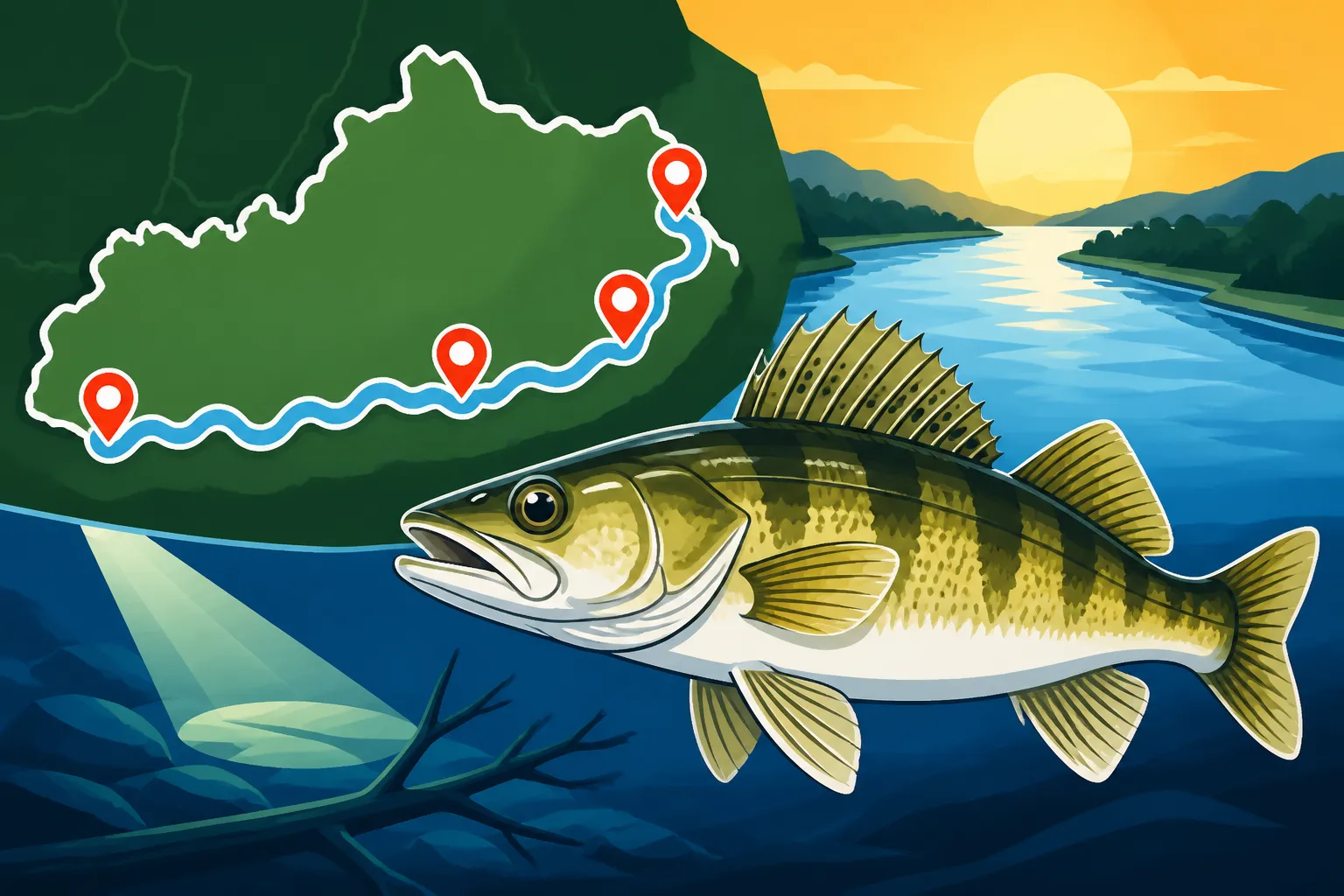
Sauger: These are generally smaller than walleye, typically ranging from 12 to 20 inches in the Ohio River, though bigger ones are certainly caught. The most definitive characteristic is the presence of distinct, dark spots on their dorsal fin. They also have dark blotches or saddle markings along their sides, which can sometimes fade in larger fish. Their body shape is usually more slender compared to a walleye.
-
Walleye: Often larger and more robust than sauger, walleye can grow to impressive sizes in the Ohio River. The key visual cue for a walleye is a distinct dark spot at the base of the last few rays of the dorsal fin, but no distinct spots over the rest of the fin itself. They also have a white tip on the lower lobe of their tail fin, which sauger lack. Walleye tend to prefer slightly clearer water than sauger, though their habitats can certainly overlap.
-
Saugeye: This is a hybrid cross between a female walleye and a male sauger, and they exhibit characteristics of both. They often have the dark spots on the dorsal fin like a sauger, but they also typically display the white tip on the lower tail fin lobe like a walleye. Their body shape and coloration can be intermediate, often making them the trickiest to identify. Saugeye are stocked in some Kentucky lakes, but are less common naturally in the main stem of the Ohio River.
| Feature | Sauger | Walleye | Saugeye |
|---|---|---|---|
| Dorsal Fin | Distinct dark spots across the entire fin | No spots on fin, but a dark spot at base of last rays | Spots on fin and a dark spot at base of last rays (often) |
| Tail Fin | No white tip on lower lobe | White tip on lower lobe | White tip on lower lobe (typically) |
| Body Markings | Dark blotches/saddle markings along sides | Uniform olive/gold coloration, no distinct blotches | Variable, often subtle blotches with walleye coloration |
| Average Size | Smaller (12-20 inches common) | Larger (18-30+ inches common) | Intermediate, often larger than sauger |
| Preferred Water | Turbid, current-laden rivers | Clearer lakes and rivers | Variable, tolerates both turbid and clearer water |
Keeping these distinctions in mind will serve you well on the water, ensuring you're compliant with regulations and truly appreciating the species you've caught.
Key Hotspots for Sauger Fishing on the Ohio River in Kentucky
The Ohio River is a massive waterway, and while sauger can be found throughout its Kentucky stretch, certain areas consistently produce better catches. These hotspots are not random; they are specific locations where the river's characteristics align perfectly with the sauger's instinctual preferences for food, shelter, and current breaks. Knowing where to focus your efforts dramatically increases your chances of success and helps you avoid just aimlessly drifting.
Below the Dams: Natural Funnels for Sauger
If there's one golden rule for sauger fishing on the Ohio River, it's "fish below the dams." The navigation dams along the Ohio River create literal fish magnets, acting as massive funnels that concentrate sauger, especially during periods of generation or increased flow. Water rushing through the dam gates or over the spillways creates turbulent, oxygen-rich environments that baitfish adore. And where the baitfish go, the sauger follow. The sudden depth changes, scour holes, and rocky structures below these dams provide perfect ambush points for sauger to feed without expending too much energy fighting the main current. This is true for any species that loves current, including a lot of the trophy catfish found in the Ohio River. For some great tips on how to target those, check out our guide on Best Catfish Fishing Spots on Kentucky's Ohio River.
Anglers often find the best sauger action in the eddy lines and current seams directly below the dams. These are areas where the fast current meets slower water, creating a distinct line on the surface. Sauger will sit in the slower water, darting out into the faster current to grab passing bait. Specific dams along the Kentucky stretch that are known sauger producers include:
- McAlpine Locks and Dam (Louisville): Downstream from Louisville, this dam is a perennial hotspot. The confluence of the Ohio River and the Salt River, combined with the dam's structure, creates a complex current system that sauger absolutely thrive in.
- Markland Dam (near Warsaw): Further upstream, Markland Dam offers excellent sauger opportunities, particularly in late fall and winter. The tailwaters here are extensive and hold a good population.
- Meldahl Dam (near Augusta): Another significant dam that consistently produces sauger. Look for deep holes and current breaks.
- Cannelton Locks and Dam (near Hawesville/Tell City, IN): While technically bordering Indiana, the Kentucky side offers fantastic access and fishing in the tailwaters. The deep water here is a sauger haven.
- Newburgh Locks and Dam (near Henderson): Another Indiana border dam, but its Kentucky tailwater access is excellent for sauger, especially in colder months.
- Smithland Locks and Dam (near Paducah): Downstream, this dam is another powerhouse for sauger, often producing some of the largest fish in the western Kentucky section of the river.
Fishing these areas requires caution due to strong currents and potential debris, so always prioritize safety and keep an eye on river conditions.
Tributary Mouths and Current Breaks
Beyond the immediate dam areas, sauger also congregate at the mouths of tributary rivers and creeks that feed into the Ohio. Why? Because these smaller waterways often bring in warmer or colder water, depending on the season, as well as a fresh supply of baitfish and nutrients. The change in current flow where a tributary meets the main river creates ideal current breaks and eddies, much like those found below dams, but on a smaller scale. These spots become ambush points where sauger can lurk and feed.
Think about places where the Licking River, Kentucky River, Green River, or Cumberland River flow into the Ohio. The deltas and confluence zones often feature deeper channels carved by the tributary, along with fallen trees, rock piles, and other structures that provide cover. During periods of heavy rain, these tributaries can also bring in muddy water, pushing baitfish (and therefore sauger) towards the clearer main channel or the edges of the muddy plume.
Similarly, any significant current break along the main river channel can hold sauger. These include:
- Wing Dams and Dikes: Man-made structures designed to direct current flow. Sauger will often stack up on the downstream side of these, in the slack water.
- Bridge Pilings: The pilings of large bridges create current breaks and offer vertical structure that sauger relate to.
- Deep River Bends: Outer bends of the river often have deeper scour holes where sauger will hold, especially during strong currents.
- Submerged Riprap and Rock Piles: These natural or man-made structures provide excellent cover and current breaks.
- Barge Tie-Ups and Commercial Docks: The structures of these industrial areas create unique underwater topography and current disruptions that attract bait and sauger.
When you're out on the river, keep an eye on your fish finder for sudden depth changes or clusters of baitfish near these current breaks. That's your cue that sauger might be holding there.
Specific Kentucky Ohio River Sections to Target
While the dams and tributary mouths are universal sauger magnets, let's get a bit more hyper-local for Kentucky anglers. The Kentucky side of the Ohio River offers numerous access points and stretches that consistently produce good sauger fishing.
-
Louisville Area: Beyond McAlpine Dam, the stretch of river around the Louisville waterfront, particularly near the Second Street Bridge and the various boat docks and marinas, can be surprisingly productive. The urban environment might not look like a traditional fishing spot, but the deeper channels and complex structures here hold fish. For those living in the city, there are many Best Fishing Spots Near Louisville, Kentucky that offer good access to the river.
-
Near Paducah: As the Ohio River approaches its confluence with the Mississippi, the waters near Paducah become incredibly fertile. The Smithland Dam tailwaters, mentioned earlier, are a prime example. The numerous river islands, deep channels, and barge traffic areas near Paducah create a complex ecosystem that supports a robust sauger population. Anglers often find success here by focusing on the deeper current seams and structured edges. The area around Paducah is also known for excellent catfish action, if you're looking for other species; check out Best Fishing Spots Near Paducah, Kentucky for more insights.
-
Maysville/Augusta Stretch: Further upstream, the section of the Ohio River around Maysville and Augusta, particularly downstream from Meldahl Dam, offers a mix of deep pools and current breaks. This area is less industrialized than some other stretches, providing a more natural riverine experience with plenty of subtle sauger holding spots. Look for rocky banks, submerged timber, and the mouths of smaller creeks.
-
Henderson/Owensboro Area: This stretch is influenced by the Newburgh Dam and various tributaries like the Green River. The expansive nature of the river here means focusing on the main channel edges, deeper holes, and any significant current disruptions is key. Public boat ramps and access points in these cities make it easier to launch and explore.
When targeting these specific areas, it's always a good idea to consult local fishing reports or talk to bait shop owners. They often have the most up-to-date information on where the fish are biting and what techniques are working best. Don't be afraid to explore, as sauger can be found in unexpected places, especially if you understand their preferred habitat.
Optimal Conditions and Seasons for Ohio River Sauger
Sauger are seasonal creatures, and their behavior is heavily influenced by water temperature, river levels, and weather patterns. Understanding these optimal conditions is paramount to timing your Ohio River fishing trips for maximum success. It's not just about showing up with a rod; it's about showing up when the sauger are most active and willing to bite.
The Best Time of Year for Sauger Action
When it comes to sauger fishing on the Ohio River, the cooler months are generally your best bet. Unlike bass that are super active in the spring and summer, sauger truly shine when the water temperatures drop.
- Late Fall (October-November): This is often considered the kickoff to prime sauger season. As the leaves change and air temperatures cool, sauger begin to migrate from deeper summer haunts into more accessible areas, often concentrating below dams and at tributary mouths. They're actively feeding to bulk up for winter, making them aggressive biters.
- Winter (December-February): This is arguably the peak of sauger season on the Ohio River. While many anglers shy away from the cold, hardy sauger enthusiasts know this is when the biggest fish are often caught. Sauger are cold-blooded, and their metabolism slows down, but they still need to feed. They'll stack up in deep holes and current breaks, providing fantastic opportunities for vertical jigging. If you're looking for other species that are active in the cold, our guide on What Fish Are Biting in Kentucky in February might offer some good winter angling ideas. This is also the time when other sauger fisheries, like those on Lake Barkley, are at their best; you can learn more about that in Best Time to Catch Sauger at Kentucky's Lake Barkley.
- Early Spring (March-April): As water temperatures begin to rise, sauger undertake their spawning migration. They'll move upstream towards spawning grounds, often congregating in incredible numbers in certain river stretches. Post-spawn, they'll remain active feeders before dispersing to deeper, cooler water for the summer. This can be a fantastic time for action, but it's often short-lived as water temperatures continue to climb.
Summer fishing for sauger on the Ohio River is generally tougher. They tend to seek out deeper, cooler, more oxygenated water, making them harder to locate and tempt. While not impossible, your best chances are definitely outside of the hot summer months.
Ideal Water Temperatures and River Levels
Water temperature is perhaps the single most important factor influencing sauger activity. They are a cold-water species, preferring cooler temperatures for their most active feeding.
- Optimal Temperature Range: The sweet spot for sauger on the Ohio River is typically between 40°F and 55°F. Within this range, sauger are actively feeding and can be found in a variety of depths and structures. Below 40°F, their metabolism slows significantly, and they may become more lethargic, often holding tight to the bottom in deep holes. Above 60°F, they start to become less active and move to deeper, cooler sections of the river.
River levels and current are also critical.
- Stable to Falling River Levels: Generally, sauger fishing is best during stable or slowly falling river levels. Rising water, especially after heavy rains, can lead to increased turbidity and strong, unpredictable currents that scatter fish and make fishing difficult. When the river is falling back into its banks, the water often clears, and fish begin to reposition themselves in predictable current breaks.
- Moderate Current: Sauger love current, but not extreme current. They prefer to sit in current breaks, just out of the main flow, where they can dart into the passing current to ambush prey. Finding the "sweet spot" of current, where it's strong enough to bring food but not so strong that the fish have to fight it constantly, is key. Low flow conditions can make sauger more spread out and less aggressive. High flow can push them out of typical spots into more protected slack water.
Always check current river conditions and forecasts before heading out. Websites for the Ohio River Valley Water Sanitation Commission (ORSANCO) or USGS stream gauges can provide invaluable real-time data on water levels and temperatures.
Weather Patterns and Their Impact on Sauger
Just like any other fish, sauger are influenced by the weather. While temperature and river levels are paramount, understanding how weather fronts and daily conditions can affect their bite can give you an edge.
- Pre-Frontal Conditions: Before a cold front moves in, fish, including sauger, often become more active and feed aggressively. The barometric pressure drops, and this change often triggers a feeding frenzy. If you can get out on the water a day or two before a major cold front arrives, you might hit some fantastic action.
- Post-Frontal Conditions: After a cold front passes, fishing typically becomes tougher. The skies are often clear, the wind can be brisk, and the barometric pressure is high and stable. This often makes sauger lethargic and less willing to bite. They may hold tighter to cover and be much more difficult to tempt. During these times, slowing down your presentation and using subtler baits can sometimes elicit a strike.
- Overcast Days: Overcast or cloudy days are often excellent for sauger, especially during the day. Like walleye, sauger have light-sensitive eyes, and the dim light penetration makes them more comfortable moving and feeding in shallower or more exposed areas.
- Wind: A moderate chop on the water, caused by light to moderate wind, can actually be beneficial. It breaks up the surface, making it harder for fish to see you and your boat, and also creates subtle current movements that can trigger bites. However, extremely windy conditions make boat control difficult and can make fishing unsafe and unproductive.
- Rain: Light, steady rain can sometimes improve sauger fishing, as it increases turbidity and often coincides with falling barometric pressure. However, heavy downpours can muddy the water quickly and create strong, dangerous currents, making fishing difficult and pushing sauger into deep, secluded areas.
Being adaptable and checking the long-range forecast before your trip is crucial. Sometimes, delaying a trip by a day or two to hit a pre-frontal bite or avoid post-frontal lockjaw can make all the difference.
Essential Gear and Techniques for Ohio River Sauger
Successfully targeting sauger on the Ohio River requires specific gear and honed techniques. It's not just about having a rod in your hand; it's about using the right tools in the right way to combat current, detect subtle bites, and effectively present your lures.
Rods, Reels, and Line for River Sauger
When you're fighting current and trying to feel light bites from sauger, your rod, reel, and line become an extension of your senses. Don't skimp on quality here.
-
Rods: For sauger fishing, a medium-light to medium power spinning rod, typically 6'6" to 7' in length, is ideal. You want a fast or extra-fast action tip. This responsive tip is crucial for detecting those subtle "thunks" or feeling the light weight of a sauger picking up your bait. The fast action also provides enough backbone to drive a hook into a sauger's bony mouth while still being forgiving enough to play a fish without tearing the hook out. A graphite rod is preferred for its sensitivity. If you're looking for general recommendations, our guide on Best Rods and Reels for Kentucky Fishing covers a variety of options that would work well.
-
Reels: A reliable spinning reel in the 2000-3000 size range is perfect. It should have a smooth drag system, which is important when a sauger uses the river current to its advantage. A smooth retrieve is also key for maintaining consistent lure action. Brands like Shimano, Daiwa, or even a solid Pflueger President XT offer great performance for the price.
-
Line: This is where things get a little nuanced for river fishing.
- Main Line: 6-10 lb test braided line is a fantastic choice for sauger. Its minimal stretch provides incredible sensitivity, allowing you to feel every bump and bite, even in current. It also cuts through the water better than monofilament, reducing bow in your line. However, braid is visible in clear water.
- Leader: To combat braid's visibility and provide abrasion resistance against rocks, always use an 8-12 lb test fluorocarbon leader, typically 2-4 feet long. Fluorocarbon is nearly invisible underwater and holds up well against sharp structures. Connect it to your braid with a strong knot like an FG knot or a double uni knot.
- Monofilament: Some anglers prefer 8-10 lb test monofilament for its stretch, which can act as a shock absorber. However, you sacrifice a lot of sensitivity compared to braid. It can be a good choice for beginners.
Remember, the goal is to feel the bite, battle the fish effectively, and avoid break-offs in rugged river conditions.
Go-To Lures and Baits for Ohio River Sauger
Sauger are opportunistic feeders, and a variety of lures and baits can tempt them. However, some stand out as consistent producers on the Ohio River.
- Jigs: This is probably the most iconic sauger lure. Lead head jigs, typically 1/4 oz to 1 oz depending on current and depth, tipped with either soft plastic bodies or live bait, are deadly.
- Soft Plastics: Grubs (like a B'n'M Bucks Jig or a Mister Twister curly tail), paddle tails, and minnow-imitating swimbaits in colors like chartreuse, white, black, or natural shad patterns are excellent. The action of the plastic in the current is often irresistible.
- Live Bait: A live minnow or a fathead minnow hooked through the lips or back on a jig head is often the ultimate sauger candy, especially in colder water when they prefer a slow, natural presentation.
- Blade Baits: Lures like a Silver Buddy or a Heddon Sonar are incredibly effective for sauger, particularly when vertical jigging in deep holes. The vibration and flash they produce are a strong attractant. Sizes from 1/4 oz to 3/4 oz are most common.
- Jigging Spoons: Similar to blade baits, jigging spoons (like a Rapala Jigging Rap or a Swedish Pimple) are fantastic for vertical presentations. They mimic dying baitfish with their erratic fall and flutter.
- Bottom Bouncers/Three-Way Rigs: When drifting or trolling, a bottom bouncer or a three-way swivel rig is a great way to present live bait or a crawler harness near the bottom. The heavy weight keeps your offering in the strike zone, while your bait or lure trails behind.
- Crankbaits: While not as common for vertical presentations, diving crankbaits can be effective when casting or trolling parallel to current breaks, especially in slightly shallower water. Choose baits that dive to the depth you're targeting and have a tight wobbling action. Brands like Rapala Shad Rap or Berkley Flicker Shad are good options.
Always carry a variety of lure weights and colors, as sauger preferences can change with water clarity, light conditions, and current strength.
Effective Fishing Techniques for Current and Structure
Fishing for sauger on the Ohio River is all about understanding how to present your bait effectively in current and near structure. This isn't passive fishing; it requires active engagement.
- Vertical Jigging: This is perhaps the most effective technique, especially below dams and in deep holes. Position your boat directly over or slightly upstream of where you believe sauger are holding. Drop your jig or blade bait straight down until it touches the bottom. Then, lift it 6-12 inches with a sharp snap, letting it fall back on a semi-slack line. Most bites occur on the fall. Keep your bait in the bottom 2-3 feet of the water column. This technique is similar to what you'd use for other deep-holding fish; you can find more details in our How to Jig for Sauger in Deep Water guide.
- Drifting: Often done in conjunction with vertical jigging. Use your trolling motor or the natural current to slowly drift over sauger holding areas. Keep your lure just off the bottom, adjusting weight as needed to maintain contact without constantly snagging. This allows you to cover more water and find active fish.
- Anchoring/Spot Locking: Once you locate a concentration of fish on your fish finder, or if you're in a known hotspot like below a dam, anchoring or using a GPS-enabled trolling motor (like a Minn Kota Terrova or Ulterra) to "spot lock" can be highly effective. This allows you to precisely target a small area, making repeated presentations to the same fish.
- Fan Casting: If you're fishing from the bank or in an area with less distinct current, fan casting jigs or crankbaits can help you cover a wider area. Cast upstream and allow your lure to swing downstream, covering different depths and current lines.
- Reading the River: Pay attention to the subtle cues the river provides. Swirling water indicates an eddy, a calm patch next to a ripple signifies a current break, and debris lines can show you where different currents meet. Your fish finder is your best friend here, revealing depth contours, submerged structure, and baitfish schools. Being able to read the river and understand what fish relate to is a skill that takes time, but it's invaluable for sauger success.
Always maintain tension on your line when possible to feel bites, as sauger often strike lightly. A sauger bite often feels like a subtle tap, or simply a sudden heaviness on your line. Don't be afraid to set the hook at the slightest indication.
Navigating Regulations and Safety on the Ohio River
Fishing and boating on the Ohio River, especially in shared border waters, come with specific regulations and safety considerations that every angler must be aware of. Neglecting these can lead to fines, dangerous situations, or worse. Staying informed and prepared is as important as having the right bait.
Kentucky Fishing Regulations for Sauger
Since you're fishing the Ohio River along the Kentucky border, it's crucial to understand Kentucky's specific fishing regulations. While the Ohio River is shared, Kentucky sets its own limits for sauger caught on its side, and vice versa for Ohio and Indiana.
- Fishing License: First and foremost, you need a valid Kentucky fishing license. If you're a resident, you'll need a Kentucky Resident Annual Fishing License. Non-residents will need a Kentucky Nonresident Annual Fishing License Costs $58.14 or a short-term option like a 1-day or 7-day license. You can easily purchase your license online through the Kentucky Department of Fish and Wildlife Resources (KDFWR) website. Our guide on How to Buy a Kentucky Fishing License Online walks you through the steps. It's always wise to have a copy (digital or physical) of your license with you. Getting caught without one can result in significant penalties; our article on What Happens If You Fish Without a License in Kentucky? explains the consequences.
- Reciprocity: A common question is about license reciprocity on the Ohio River. Generally, if you are licensed in Kentucky, you can fish the entire main stem of the Ohio River (up to the opposite bank) even if you launch from Ohio or Indiana, as long as you remain on the Ohio River itself. However, if you venture into a tributary that is solely within Ohio or Indiana, you'd need that state's license. The same applies for Ohio or Indiana licensed anglers fishing Kentucky waters. For a deeper dive into reciprocity, particularly for our neighbors to the north, check out Ohio Anglers Fishing in Kentucky Waters.
- Size and Creel Limits for Sauger: Regulations can change, so always check the most current KDFWR Fishing & Boating Guide, but typically for sauger on the Ohio River:
- Size Limit: There's usually a minimum size limit, often around 14 inches.
- Creel Limit (Daily Bag Limit): There's a daily bag limit, which dictates how many sauger you can keep, often around 10 fish per angler.
- Combined Walleye/Sauger/Saugeye Limit: Sometimes, regulations specify a combined creel limit for walleye, sauger, and saugeye, with only a certain number allowed to be walleye. This is why knowing how to identify each species is so important.
Always verify current regulations through the KDFWR official channels before each trip, as these can be updated seasonally or annually. Our article on Statewide Bag and Size Limits by Fish Species provides a general overview, but always check the Ohio River specific rules.
Ohio River Boating Safety and Considerations
The Ohio River is a large, working river, and safety should always be your top priority. It's not a calm lake, and its conditions can change rapidly.
- Life Jackets: This is non-negotiable. Every person on board your boat must have an easily accessible, Coast Guard-approved life jacket. Children under a certain age (typically 12 in Kentucky) are often required to wear them at all times while underway. Ensure everyone knows where they are and how to use them. Our guide on Life Jacket Rules for Boats in Kentucky provides all the necessary details.
- Navigation: The Ohio River is a major commercial shipping channel. Always be aware of barge traffic. Barges are massive, cannot stop quickly, and create significant wakes. Give them a wide berth. Understand navigation markers – red buoys usually mark the right side of the channel when heading upstream, and green on the left.
- Weather Awareness: River conditions can change quickly. A clear morning can turn into a stormy afternoon. Always check the weather forecast before heading out and keep an eye on the sky. High winds can make boating dangerous, and thunderstorms can bring lightning and torrential rain.
- Boat Registration and Safety Gear: Your boat must be properly registered with the state of Kentucky. Our article on Kentucky Boat Registration Requirements Explained will help you with this. Beyond registration, ensure you have all required safety equipment on board, including a fire extinguisher, distress signals (flares or flag), a sound-producing device (horn or whistle), navigation lights, and a throwable flotation device. These are not just recommendations; they are often legal requirements. For a comprehensive list, check out Safety Gear Checklist for Kentucky Boaters.
- Motor and Fuel: Make sure your motor is in good working order and you have plenty of fuel, plus a reserve. Distances can be deceiving on the river, and running out of gas in strong current can put you in a dangerous situation.
- Communication: Always tell someone where you are going and when you expect to return. Carry a fully charged cell phone, but don't rely on it as your sole means of communication, as reception can be spotty in some areas. A VHF radio is a safer bet for river boating.
- Current Awareness: Always be mindful of the powerful currents of the Ohio River. They can pull you into danger quickly. If your motor dies, deploy your anchor immediately to avoid drifting uncontrollably. Know how to properly set and retrieve an anchor in a strong current.
Fishing on the Ohio River can be incredibly rewarding, but it demands respect. Prioritize safety, know the rules, and you'll have many enjoyable and successful trips.
Planning Your Ohio River Sauger Trip
A well-planned trip is often the difference between a frustrating day on the water and a memorable sauger haul. From finding public access to leveraging local expertise, a little preparation goes a long way when tackling a dynamic fishery like the Ohio River.
Finding Public Access and Boat Ramps
The Ohio River borders Kentucky for hundreds of miles, and thankfully, there are numerous public access points and boat ramps scattered along its length. Knowing where to launch and where you can safely bank fish is crucial.
- Kentucky Department of Fish and Wildlife Resources (KDFWR): The KDFWR website is an invaluable resource. They maintain a comprehensive list and map of public boat ramps and access points throughout the state, including many on the Ohio River. You can search by county or water body to find ramps that suit your needs.
- Local Parks and Marinas: Many towns and cities along the Ohio River, such as Louisville, Owensboro, Henderson, Maysville, and Paducah, have municipal parks or private marinas that offer boat ramps, some with fees. These often provide amenities like restrooms and ample parking. For specific locations, our article Where to Launch a Boat on the Ohio River in Kentucky might be helpful.
- Corps of Engineers Sites: The U.S. Army Corps of Engineers manages the Ohio River navigation system and often provides public access, including boat ramps, particularly around the locks and dams.
- Bank Fishing Access: While many sauger hotspots require a boat, some areas, especially directly below dams, offer bank fishing opportunities. Look for designated public fishing areas or parks along the river. Always respect private property and be mindful of your surroundings.
Before you head out, check the condition of the ramp and parking availability, especially during peak seasons. Some ramps can be shallow during low water periods or have strong currents directly at the launch.
Using Fishing Resources and Guides
Even the most experienced anglers can benefit from local knowledge. The Ohio River is massive and constantly changing, and tapping into community resources can significantly improve your chances of success.
- Local Bait and Tackle Shops: These are goldmines of information. The folks working there live and breathe local fishing. They can tell you what lures are hot, where the fish are biting, and what the latest river conditions are. Don't be shy; stop in, buy some bait, and ask questions!
- Online Fishing Forums and Social Media Groups: Many dedicated Kentucky fishing forums and Ohio River specific angling groups exist online. These communities are great places to ask questions, share reports, and learn from other experienced sauger anglers.
- Fishing Guides and Charters: For the ultimate learning experience or if you're visiting the area, consider hiring a professional fishing guide. A good guide specializes in Ohio River sauger and can teach you the techniques, show you the hotspots, and provide all the necessary gear. Services like FishingBooker can help you find and book reputable local guides who specialize in Ohio River sauger. They know the river intimately and can significantly shorten your learning curve. Even one trip with a guide can teach you more than weeks of trial and error on your own.
- KDFWR Fishing Reports: The KDFWR often publishes regular fishing reports for various Kentucky waters, sometimes including segments of the Ohio River. These reports provide general conditions and what species are biting.
- Navigational Charts: Invest in a good set of NOAA or local navigational charts for the Ohio River. These charts show depths, channels, submerged structures, and navigation hazards, all of which are invaluable for locating sauger and safely navigating the river. Many modern fish finders also have detailed mapping capabilities for the Ohio River.
Combining your own research with local wisdom and professional guidance will undoubtedly lead to more successful and enjoyable sauger fishing trips on the majestic Ohio River.
Disclaimer
Please note that fishing regulations, including license requirements, size limits, and creel limits, are subject to change. Always consult the most current Kentucky Department of Fish and Wildlife Resources (KDFWR) Fishing & Boating Guide or their official website before any fishing trip to ensure compliance. This guide is for informational purposes only and should not replace official regulatory documents. Safety on the water is paramount; always wear appropriate safety gear and be aware of your surroundings, especially on large rivers like the Ohio.